
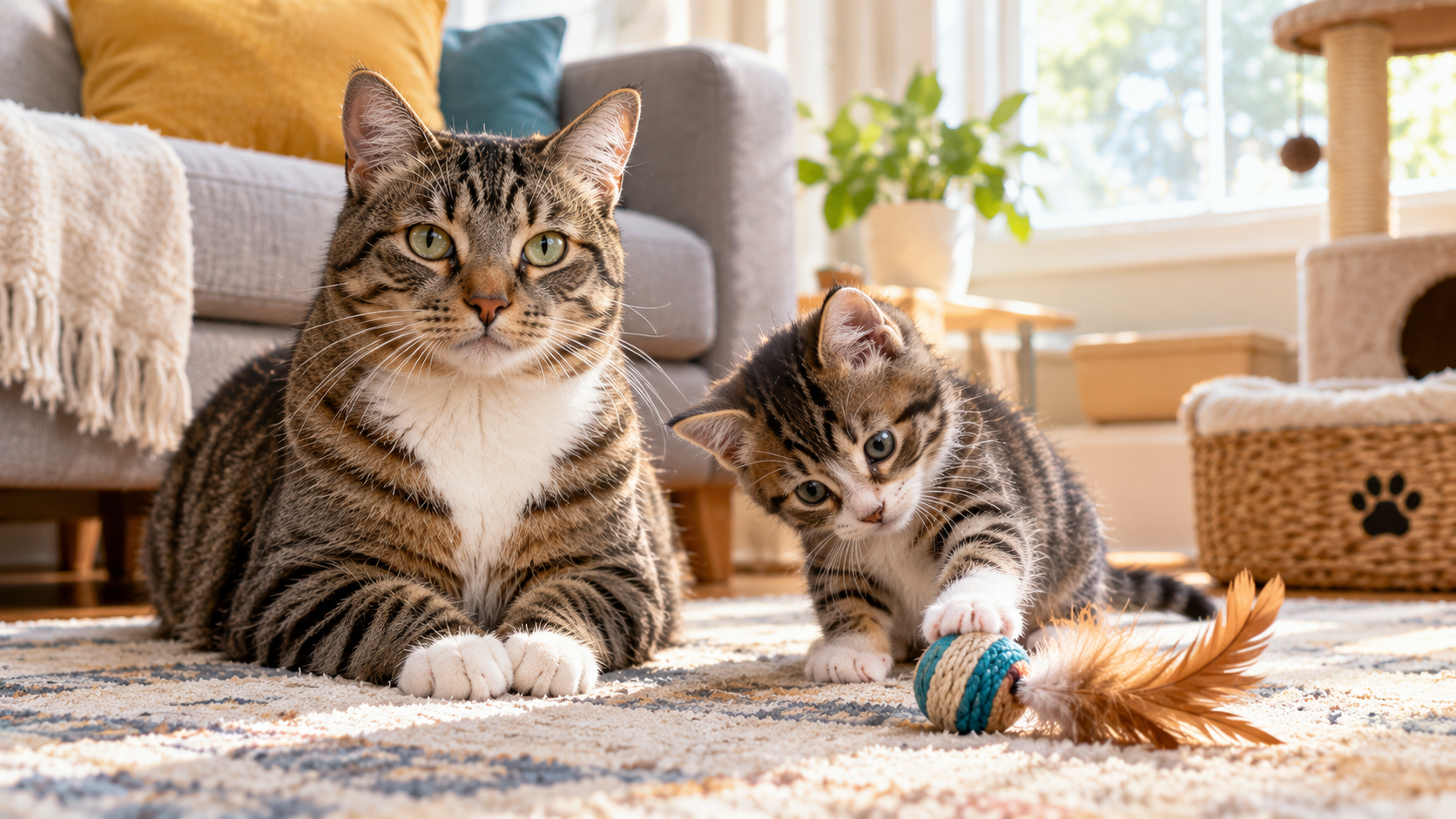
Choosing between an older cat and a kitten can be surprisingly difficult. Kittens are adorable, playful, and full of curiosity. Older cats, on the other hand, often have calmer personalities and are easier to understand. So, which one makes a better pet?
The honest answer is that neither is automatically better. It depends on your lifestyle, how much time you have, your experience with cats, and the kind of companionship you’re looking for.
If you want a playful companion and enjoy raising a pet from a young age, a kitten might be the right choice. If you’d rather have a more settled companion whose personality is already developed, an adult or senior cat may be a better fit.
Before making your decision, it’s worth understanding how their personalities, care requirements, activity levels, and health needs compare.
What Counts as an Older Cat?
First, it’s helpful to understand what people mean when they talk about older cats. A seven-month-old cat, a three-year-old cat, and a twelve-year-old cat have very different needs.
According to the 2021 American Animal Hospital Association (AAHA) and American Association of Feline Practitioners (AAFP) Feline Life Stage Guidelines, cats generally fall into these age groups:
- Kitten: Birth to 1 year
- Young adult: 1 to 6 years
- Mature adult: 7 to 10 years
- Senior: Older than 10 years
These age ranges are helpful guidelines, not strict rules. Some ten-year-old cats remain energetic and healthy, while others need extra attention as they age.
For this comparison, an older cat generally means an adult or senior cat rather than a young kitten.
How Do Older Cats and Kittens Compare Day to Day?
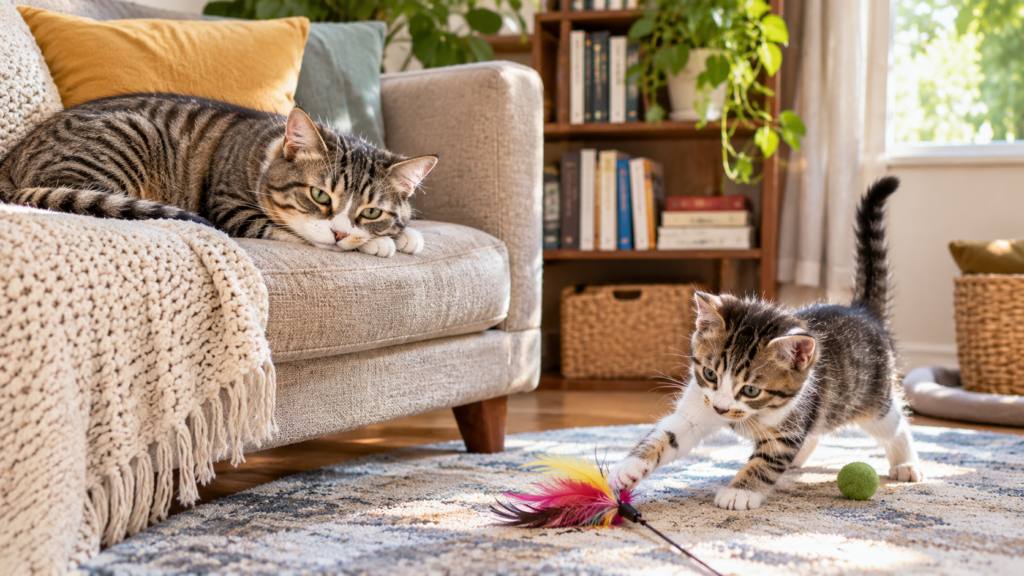
The biggest differences usually show up in daily routines. Kittens need more supervision, frequent play, and help learning household rules. Adult cats are often more independent and have established habits.
| Feature | Kittens | Older Cats |
|---|---|---|
| Energy level | Usually high | Often moderate or low |
| Personality | Still developing | More established |
| Supervision | Usually needs more | Often needs less |
| Playtime | Frequent active play | Depends on health and personality |
| Training | Needs guidance and consistency | May already know household routines |
| Health care | Vaccinations and early preventive care | Age-appropriate preventive care and health monitoring |
| Personality predictability | Still changing | Usually easier to assess |
| Best fit | Active households with time to supervise | People who prefer a more settled companion |
Of course, every cat is different. Some adult cats love running around the house, while some kittens are naturally quieter. Age can give you a general idea of what to expect, but individual personality matters just as much.
What Are the Advantages of Getting a Kitten?
There’s a reason so many people fall in love with kittens. They’re playful, curious, and entertaining. Watching a little kitten explore its surroundings and gradually grow into an adult cat can be a wonderful experience.
1. You Get to Watch Them Grow Up
One of the biggest advantages of adopting a kitten is getting to experience its early development. You can watch it discover new things, develop preferences, and become more confident in its surroundings.
You also get the opportunity to introduce positive routines from an early age. For example, you can gradually get your kitten comfortable with brushing, nail trimming, carrier travel, and gentle handling.
Early positive experiences can make these everyday activities easier as your cat grows older.
2. Kittens Are Usually Full of Energy
If you enjoy an active and playful pet, kittens can be a great match. They often spend their days chasing toys, climbing cat trees, exploring new spaces, and investigating practically everything.
Interactive toys, scratching posts, and supervised play sessions help kittens use their energy in healthy ways. Play also gives you a chance to build a positive relationship with your new companion.
Just remember that kittens need plenty of rest, too. A young cat shouldn’t be expected to stay active all day.
3. You Can Build Good Habits Early
Bringing home a kitten gives you a chance to introduce household routines from the beginning.
You can encourage appropriate scratching, establish regular feeding times, and reward positive behavior. You can also help your kitten become comfortable around different people and normal household activities through gradual, positive introductions.
However, getting a kitten doesn’t mean you can completely shape its personality. Genetics, early experiences, and individual temperament all influence how a cat behaves as an adult.
4. Kittens May Adjust Well to Existing Pets
In some households, a kitten may be accepted more easily by an existing pet than an unfamiliar adult cat. Cornell University College of Veterinary Medicine notes that kittens may be more readily accepted by pets already living in the home.
That doesn’t mean every kitten will get along with every dog or cat. Introductions should always be gradual, supervised, and based on the animals’ individual temperaments.
What Are the Disadvantages of Getting a Kitten?
As cute as kittens are, they’re not always the easiest pets to care for.
- More supervision: Kittens can squeeze into small spaces, climb furniture, chew inappropriate objects, and get into trouble when left unsupervised.
- Frequent play: They need regular interaction and appropriate toys to stay mentally and physically engaged.
- Training takes patience: You’ll need to encourage appropriate scratching, handling, and household behavior.
- Early veterinary expenses: Vaccinations, parasite prevention, wellness visits, and spaying or neutering may be part of the initial care plan.
- Unpredictable adult personality: You won’t know exactly how energetic, affectionate, or independent your kitten will become.
If you have a packed schedule or spend long hours away from home, think carefully about whether you can provide the attention a young kitten needs.
Why Might an Older Cat Be a Better Choice?
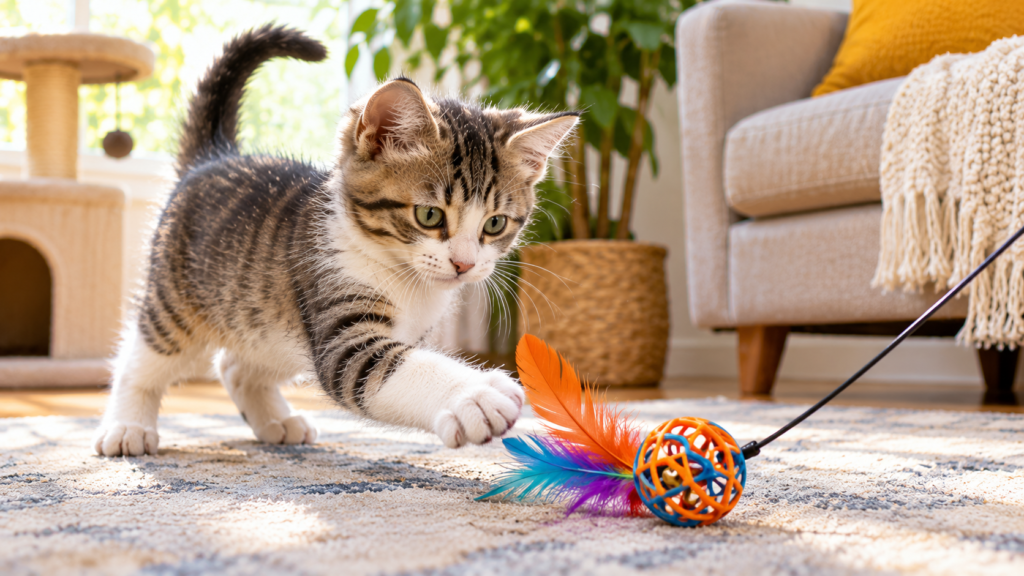
Older cats don’t always get the attention they deserve. Many people head straight for the kitten section when visiting an animal shelter, overlooking adult and senior cats that can make wonderful companions.
In fact, adopting an older cat can be an excellent choice for someone who wants a loving pet without the demanding early months of kitten care.
1. Their Personalities Are Already Developed
This is one of the biggest advantages of adopting an adult cat.
With a kitten, you’re still learning what kind of personality it will develop. With an older cat, you can usually get a much better idea of its temperament before bringing it home.
Does it enjoy being held? Does it prefer sitting beside you rather than on your lap? Is it playful, shy, independent, or particularly affectionate?
A shelter or foster caregiver may already know the answers to many of these questions.
That makes it easier to find a cat whose personality fits your household.
2. They Often Have More Settled Routines
Many adult cats are comfortable with familiar household routines. They may already know how to use a litter box, recognize feeding times, and understand where they’re allowed to sleep or scratch.
That can make the transition into your home easier, although every adopted cat needs time to settle in.
Older cats still need attention, affection, environmental enrichment, and opportunities to play. They aren’t maintenance-free pets.
3. They May Be a Better Match for Busy Owners
If you work full-time, study, or have a busy household, an adult cat may fit your schedule more comfortably than a young kitten.
Healthy adult cats generally need less intensive supervision than kittens. They can often entertain themselves for reasonable periods, provided they have access to toys, comfortable resting areas, fresh water, food, and a clean litter box.
Still, cats are social animals. An older cat needs companionship and daily interaction, too.
4. Their Energy Levels May Suit a Quieter Home
Many older cats enjoy a more relaxed lifestyle. Instead of spending hours climbing curtains or racing through the house, they may prefer watching birds through a window, enjoying a sunny sleeping spot, or relaxing beside their favorite person.
This can make them a lovely match for people who prefer a quieter home.
However, don’t assume every older cat is inactive. Plenty of adult cats remain playful well into their senior years.
5. You Can Give an Overlooked Cat a Home
Adult and senior cats are sometimes passed over because potential adopters prefer younger animals.
Adopting an older cat gives an animal that may have spent a long time in a shelter another opportunity to enjoy a stable home.
There’s something special about helping a cat settle into a safe environment, learn to trust its new family, and enjoy everyday comforts.
What Are the Disadvantages of Getting an Older Cat?
Older cats have plenty to offer, but there are a few things to consider before adopting one.
- Potential health concerns: Some older cats may need additional monitoring, medication, dental care, or treatment for age-related conditions.
- Different activity needs: A senior cat may not enjoy the same level of rough play or climbing as a young kitten.
- Adjustment time: Some older cats need extra patience before they feel comfortable in a new home.
- Established preferences: An adult cat may already have strong preferences about food, litter, handling, and its environment.
- Potentially shorter remaining lifespan: An older cat may have fewer years ahead than a kitten, although individual health and longevity vary considerably.
These aren’t reasons to avoid older cats. They’re simply factors worth understanding before making a long-term commitment.
Which Cat Is Easier to Care For?
For most people, a healthy adult cat is easier to care for than a young kitten. Adult cats generally require less supervision, and their personalities and daily habits are more established.
However, easier doesn’t mean every adult cat has fewer needs. A senior cat with a chronic medical condition may require more attention than a healthy young kitten.
Here’s what daily care generally looks like for each age group.
Daily Care for Kittens
- Provide age-appropriate kitten food and fresh water.
- Offer several opportunities for interactive play.
- Keep the litter box clean and accessible.
- Supervise exploration and remove household hazards.
- Introduce grooming and handling gradually.
- Follow a veterinarian’s recommended vaccination and parasite-prevention plan.
Daily Care for Older Cats
- Provide a balanced diet suited to the cat’s age and health.
- Keep fresh water available in an accessible location.
- Maintain a clean litter box that’s easy to enter.
- Offer gentle play and mental stimulation.
- Provide comfortable resting spots and easy access to favorite areas.
- Watch for changes in appetite, mobility, grooming, or litter box habits.
For senior cats, small adjustments can make a meaningful difference. A low-entry litter box, soft bedding, and steps to reach favorite resting places may help cats experiencing mobility problems.
Are Older Cats More Expensive Than Kittens?
There’s no universal answer because veterinary costs depend on the individual cat, its health history, location, and the care it needs.
However, the types of expenses can differ between kittens and older cats.
Kittens often need an initial series of preventive veterinary visits. These may include vaccinations, parasite control, health checks, and discussions about spaying or neutering.
Adult cats may already have received many of these services, especially if they’ve been living in a responsible home or have a documented shelter medical history.
On the other hand, older cats may need additional examinations, dental treatment, medication, or monitoring for chronic health conditions.
The AAHA/AAFP feline life stage recommendations call for at least annual examinations for cats generally and at least six-monthly examinations for senior cats.
Before adopting either age group, ask the shelter or previous owner for available medical records. Also, create a realistic budget for food, litter, preventive care, and unexpected veterinary expenses.
It’s better to choose a cat based on the care you can consistently provide than to assume one age group will always be cheaper.
Which Is Better for First-Time Cat Owners?
If you’ve never owned a cat before, a friendly, healthy adult cat is often a great starting point.
Why? Because you can choose an animal with a personality and temperament that are already reasonably well understood.
For example, a foster family may know that a particular cat enjoys human company, uses its litter box reliably, and is comfortable living indoors. That information can make the adoption decision much easier.
Kittens can also be wonderful first pets, but they require more time, supervision, and patience. You’ll need to help them learn household routines and provide plenty of appropriate play.
Before deciding, think about how much time you can spend with your cat every day. Be honest about your schedule, experience, and ability to handle unexpected expenses.
How Do You Choose the Right Cat for Your Home?
Instead of focusing only on age, look at the individual cat. A friendly adult cat may be a much better match for your lifestyle than a kitten, while an energetic kitten may be perfect for someone who has plenty of time to play and supervise.
Here are some practical things to consider before adopting.
Think About Your Daily Schedule
If you spend most of the day outside your home, consider whether you can meet a kitten’s need for supervision and interaction.
An adult cat with a more independent temperament may be a better fit. But remember that no cat should be left without appropriate care, food, water, and a clean environment.
Consider Children and Other Pets
If you have young children, look for a cat that has a known history of being comfortable around children. Teach children to approach cats gently and respect their boundaries.
If you already have another cat or a dog, ask about the new cat’s experience with other animals. Introduce them gradually and provide separate resources while they get used to each other.
Age alone doesn’t determine whether two animals will become friends.
Ask About Health and Medical History
Before adopting, ask for information about vaccinations, parasite prevention, previous illnesses, medications, and any known health concerns.
Arrange a veterinary examination after bringing your new cat home. Your veterinarian can assess its health and recommend an appropriate preventive care plan.
Spend Time With the Cat Before Adopting
If possible, meet the cat more than once. Watch how it responds to people, toys, handling, and unfamiliar surroundings.
Ask the shelter or foster caregiver questions such as:
- Does the cat enjoy being around people?
- Does it like being picked up or prefer staying on the floor?
- Is it comfortable around children or other pets?
- Does it have any known medical or behavioral concerns?
- What type of food and litter is it used to?
- How does it usually behave when left alone?
These details can tell you much more than age alone.
How Can You Help a New Cat Adjust to Your Home?
Whether you adopt a kitten or an older cat, moving into a new home can feel overwhelming.
Start by preparing a quiet room with everything your cat needs. Set up a litter box, food and water bowls, a comfortable bed, and a few appropriate toys.
Give your new companion time to explore without forcing interaction. Some cats become comfortable within a few days, while others need several weeks or longer.
Keep familiar food and litter available initially, if possible. Sudden changes can make the adjustment more difficult.
If you have other pets, don’t rush introductions. Let them become familiar with each other’s scent before arranging short, controlled meetings.
Most importantly, be patient. A successful adoption isn’t about making a cat affectionate immediately. It’s about creating an environment where it feels safe enough to develop trust.
Frequently Asked Questions
1. Are older cats more affectionate than kittens?
Not necessarily. Some older cats are extremely affectionate, while others prefer their personal space. Kittens can also be very loving. A cat’s individual personality, socialization, and experiences matter more than age alone.
2. Are kittens harder to take care of than older cats?
Generally, yes. Kittens need more supervision, frequent play, early socialization, and help learning household routines. Healthy adult cats usually require less intensive supervision, although their individual health and behavior needs still matter.
3. Is a 7-year-old cat too old to adopt?
No. A seven-year-old cat is considered a mature adult under the AAHA/AAFP feline life stage guidelines, not a senior. Many cats at this age remain active, affectionate, and healthy. With appropriate care, they can enjoy many more happy years in a loving home.
4. Should a first-time owner adopt a kitten or an adult cat?
A friendly adult cat is often a good choice for a first-time owner because its personality is more established and it may already be familiar with household routines. However, a kitten can also be a good match if you have enough time and patience for early care and training.
5. Do older cats need more veterinary visits?
Senior cats generally benefit from more frequent health monitoring. AAHA/AAFP guidelines recommend at least annual examinations for cats and examinations at least every six months for senior cats. Your veterinarian may recommend a different schedule depending on your cat’s health.
6. Can an older cat bond with a new owner?
Absolutely. Older cats can form strong, loving relationships with new owners. Some may take longer to feel comfortable in unfamiliar surroundings, so give them a safe space, a predictable routine, and time to build trust.
Final Verdict: Should You Get an Older Cat or a Kitten?
So, which is better: older cats or kittens?
If you want a playful companion, enjoy teaching new habits, and have plenty of time for supervision, a kitten may be the right choice.
If you prefer a more settled companion, want a better idea of its personality before adopting, and have a busy lifestyle, an adult cat may be a better fit.
Senior cats can also make wonderful companions, especially for people who appreciate a quieter home and are prepared to meet their individual health needs.
At the end of the day, there’s no winner in the older cat versus kitten debate. Both deserve loving homes, proper care, and plenty of attention.
Rather than choosing the youngest or oldest cat available, choose the one whose personality, energy level, and needs fit your life. That’s the best way to build a happy relationship that lasts for years.
Refferences
Cornell University College of Veterinary Medicine — cat selection, personality, supervision and veterinary care. Cornell Vet Medicine
AAHA/AAFP — feline life stages and age-specific care recommendations. (DOI)
American Veterinary Medical Association — kitten supervision, socialization and choosing an adult cat. American Veterinary Medical Association