
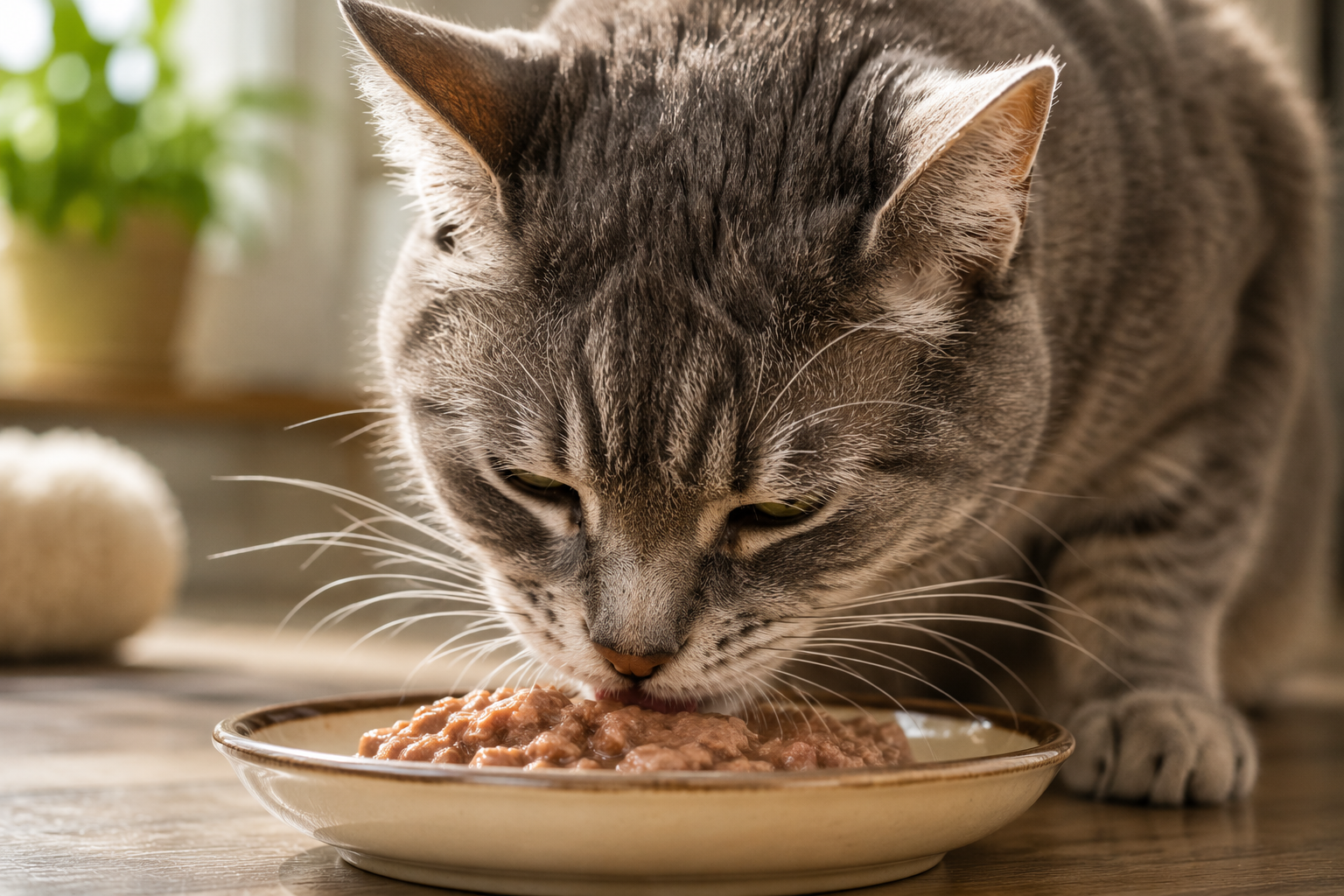
There’s no single “best” wet food that fits every senior cat. Still, the strongest options share a few traits: an AAFCO nutritional adequacy statement for adult maintenance or all life stages, a named animal protein listed first, calorie content appropriate for a less active body, and a texture your cat can comfortably eat. Wet food’s biggest advantage for senior cats is moisture, which matters more as kidney function and thirst drive both tend to decline with age.
If your senior cat has become pickier, seems less interested in dry kibble, or you’re simply trying to build the healthiest diet for her stage of life, wet food deserves a closer look. This guide covers what separates a genuinely good senior wet food from one that’s just marketed toward older cats, plus how to match it to your cat’s specific situation.
Why Wet Food Matters More as Cats Age
Wet food isn’t just a texture preference; it plays a specific nutritional role that becomes more relevant with age.
Moisture supports hydration. Wet food is roughly 70–80% water, compared to about 6–10% in dry kibble. Cats evolved from desert-dwelling ancestors with a naturally low thirst drive, so they don’t always compensate by drinking more water on a dry-food-only diet. This matters more in senior cats, since kidney function commonly declines with age, and adequate hydration helps support that function.
Lower calorie density can help with weight management. Because of its high water content, wet food is generally less calorie-dense per volume than dry food, which can make portion control easier for a less active senior cat.
Texture can be easier to eat. Many senior cats develop some degree of dental disease, and soft wet food is typically more comfortable to chew than hard kibble.
Aroma can help stimulate appetite. A cat’s sense of smell can diminish with age, and wet food, especially when slightly warmed, tends to have a stronger aroma than dry food, which can help encourage eating in cats with a reduced appetite.
None of this makes wet food mandatory or dry food unsafe; see our guide on dry vs. wet food for senior cats if you’re still deciding between the two, or considering a mix of both.
What to Look for on the Label
1. An AAFCO Nutritional Adequacy Statement
Look for language confirming the food is “complete and balanced” for “adult maintenance” or “all life stages.” As with dry food, AAFCO doesn’t have a specific regulated “senior” life-stage category, so the word “senior” on a can is a marketing term, not a guaranteed nutrient profile. That doesn’t make senior-labeled wet food meaningless; many brands do genuinely adjust calorie density and added nutrients for older cats, but it’s worth checking the actual nutrient panel rather than relying on the label alone.
2. Named Protein Sources
Look for a specific named animal protein (chicken, tuna, salmon) as the first ingredient, rather than vague terms. For most healthy senior cats, high-quality animal protein supports muscle maintenance, which matters more with age due to a natural tendency toward muscle loss.
3. Calorie Density Matched to Activity Level
Because wet foods vary meaningfully in calorie density between brands and formulas, check the calories per can or per ounce rather than assuming all wet foods are similarly “light.”
4. Moisture and Broth-Based Options
Pate, shredded, and broth-based textures all provide high moisture. Still, broth-based formulas typically offer slightly more free water, which can be especially useful for cats who need extra hydration support.
5. Ingredient Simplicity for Sensitive Stomachs
Fewer, more recognizable ingredients tend to be easier to evaluate and often easier to digest for senior cats prone to digestive upset.
Comparing Wet Food Textures
| Pate | Cats with dental discomfort; easy to eat | Can be higher calorie density per can |
| Shredded/chunks in gravy | Palatability, variety | Gravy can add extra sodium in some formulas |
| Broth-based | Maximum hydration support | Often slightly lower in calories, may need larger portions |
Best Wet Food for Senior Cats by Situation
For a generally healthy senior cat
Look for an AAFCO-adequate formula with a named protein source, moderate-to-high protein, and calorie content matched to your cat’s ideal weight. Pate or shredded textures both work well here.
For a senior cat with dental discomfort
Pate or finely shredded textures are usually easiest to eat comfortably. Avoid formulas with large chunks or tough pieces that require more chewing.
For a senior cat prone to weight gain
Choose a lower-calorie formula and measure portions precisely rather than free-feeding. See our guide on weight management for overweight senior cats for a more complete approach.
For a senior cat with reduced appetite
Broth-based or strongly aromatic formulas, served slightly warmed, can help encourage eating. If reduced appetite is a new or ongoing issue, it’s worth a veterinary visit first; see our guide on senior cat weight loss to understand when this warrants medical attention.
For a senior cat with kidney disease
Don’t self-select a “kidney support” wet food. These are typically prescription therapeutic diets that need to match your cat’s specific stage of disease and bloodwork. Talk to your vet, or our guide on the best food for senior cats with kidney disease covers this in more detail.
For a senior cat with a sensitive stomach
Look for limited-ingredient formulas with a single novel protein source and minimal fillers. Introduce any new food gradually to avoid triggering digestive upset.
Wet Food Storage and Serving Tips
- Refrigerate opened cans and use within the timeframe listed on the packaging, typically 24–72 hours.
- Don’t leave wet food out for more than 30–60 minutes at room temperature, since it spoils faster than dry food.
- Warm gently, never hot, to just below body temperature to help release aroma without risking a burned mouth.
- Use a shallow, wide bowl if your cat seems hesitant at the bowl; a deep, narrow dish can cause “whisker fatigue,” where sensitive whiskers repeatedly brushing the sides discourage eating.
Common Mistakes Owners Make
- Switching foods too quickly. A sudden switch, even to a high-quality wet food, can cause digestive upset—transition gradually over 7–10 days.
- Leaving wet food out too long, which can lead to spoilage and reduced palatability.
- Assuming “senior” on the can guarantees a different nutrient profile. Check the actual nutrient panel, not just the label.
- Overfeeding because wet food “seems lighter.” Calorie density still varies significantly between products; always check.
- Choosing a kidney or other therapeutic formula without a diagnosis. These diets are formulated for specific medical needs.
- Ignoring reduced appetite as “just pickiness.” A genuine drop in interest in food, especially if new, is worth a veterinary visit.
Myth vs. Fact
| “Wet food doesn’t provide complete nutrition the way dry food does.” | A properly AAFCO-labeled wet food is just as nutritionally complete as dry food the nutrients are simply delivered with more moisture. |
| “Senior cats should eat only wet food as they age. | Both wet and dry food can be part of a healthy senior diet; the right mix depends on your cat’s individual health and preferences. |
| “All wet food is low-calorie.” | Calorie density varies significantly between wet food brands and formulas — always check the label rather than assuming. |
| “Wet food cleans teeth better than dry food.” | Neither wet nor dry food offers meaningful dental cleaning on its own; dental disease still requires proper veterinary dental care. |
Signs Your Senior Cat’s Wet Food May Not Be Working
- Ongoing vomiting or soft stool after a full transition period
- Noticeable weight loss or gain over a few months
- Consistent refusal of a specific texture or formula
- Increased thirst or urination alongside appetite changes
Bring these up with your veterinarian rather than repeatedly switching foods on your own.
Frequently Asked Questions
Is wet food better than dry food for senior cats?
Neither is universally “better”; wet food offers more moisture, which supports hydration and can matter more as kidney function declines with age, while dry food is more convenient and shelf-stable. Many owners feed a combination of both.
How much wet food should a senior cat eat per day?
This depends on your cat’s ideal body weight and the specific product’s calorie density. Check the feeding guidelines on the label and adjust based on your cat’s body condition, ideally with veterinary input.
Can senior cats eat wet food exclusively?
Yes, as long as it’s a complete and balanced formula meeting AAFCO standards for adult maintenance or all life stages.
Is pate or shredded wet food better for senior cats?
Pate is often easier for cats with dental discomfort to eat, while shredded or chunk textures may appeal more to cats who enjoy more variety in texture.
Should I warm my senior cat’s wet food?
Gently warming wet food to just below body temperature can help release aroma and encourage eating, especially in cats with a reduced sense of smell. Always test the temperature first.
How long can wet food sit out before it spoils?
Generally no more than 30–60 minutes at room temperature. Refrigerate unused portions and use within the timeframe listed on the packaging.
Can wet food help my senior cat gain weight?
It can be part of a weight-gain plan, especially energy-dense formulas, but the underlying cause of weight loss should be evaluated by a veterinarian first. See our guide on helping a senior cat gain weight for more detail.
Is wet food safe for a senior cat with kidney disease?
The higher moisture content can be beneficial, but the specific formula matters; cats with kidney disease typically need a veterinarian-recommended therapeutic renal diet rather than a standard wet food.
Why won’t my senior cat eat wet food anymore?
This can be due to changes in smell or taste preference, dental pain, or an underlying health issue. If it’s a new or persistent change, a veterinary visit is worth considering.
Does wet food help with hairballs in senior cats?
Wet food itself isn’t specifically formulated to reduce hairballs, though adequate hydration and fiber (found in some formulas) can support healthy digestion overall.
Final Takeaways
- There’s no single “best” wet food for every senior cat; the right choice depends on her health, dental comfort, and any diagnosed conditions.
- Wet food’s biggest advantage is moisture, which supports hydration and can matter more as kidney function changes with age.
- Look past the word “senior” on the can and check for an AAFCO adequacy statement, named protein sources, and calorie content suited to your cat’s activity level.
- Cats with dental discomfort often do better with pate or finely shredded textures, while cats needing extra hydration may benefit from broth-based formulas.
- Any new or worsening symptoms appetite changes, weight change, increased thirst deserve a veterinary visit before a food switch, not after.
- If you’re deciding between formats altogether, our guide on dry vs. wet food for senior cats breaks down the full comparison.