
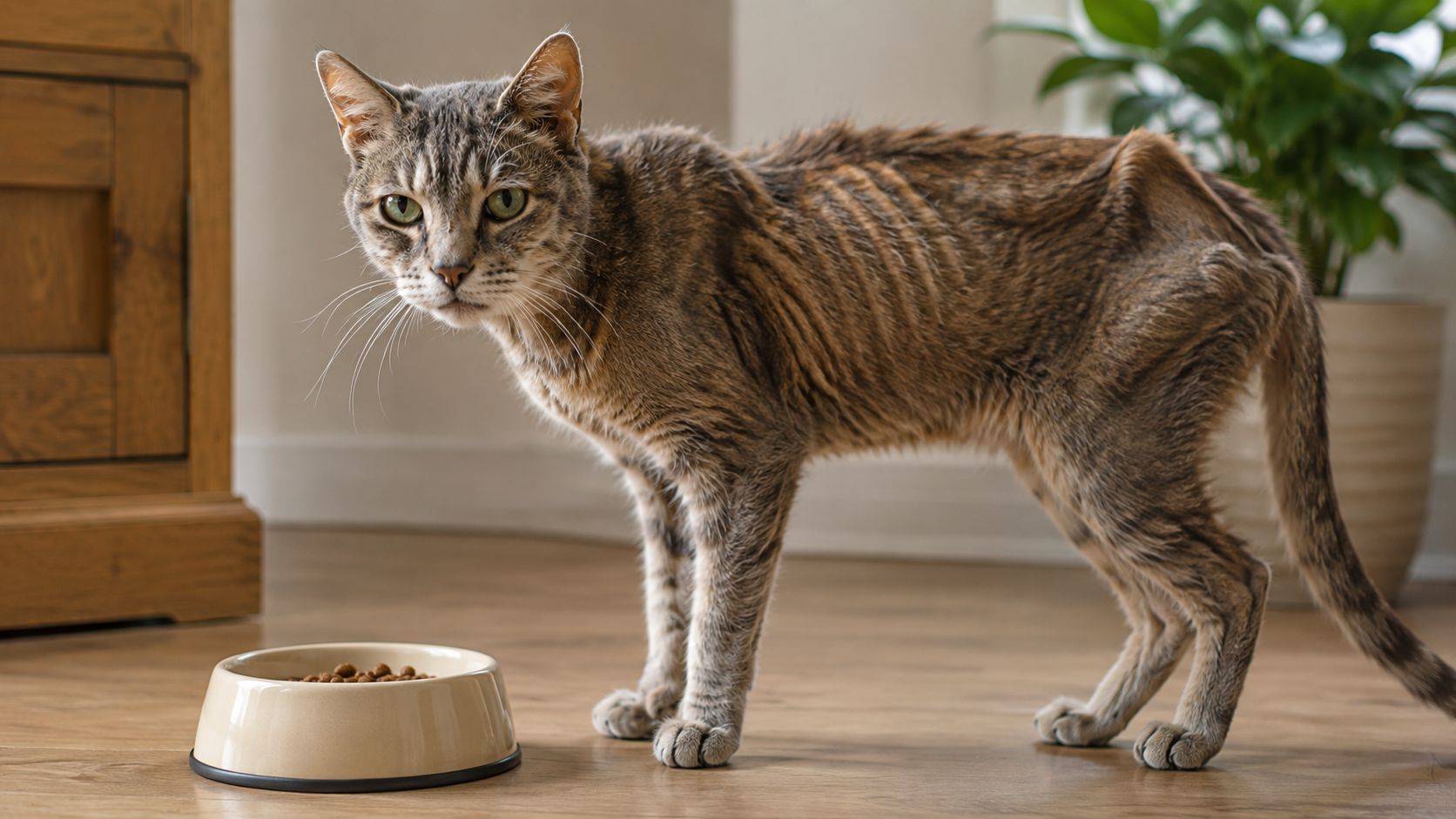
Weight loss in a senior cat is a symptom, not a normal part of aging, and it should always prompt a veterinary visit rather than a wait-and-see approach. While mild, very gradual muscle loss can happen with age, noticeable weight loss over weeks to months is frequently linked to a treatable underlying condition, most commonly chronic kidney disease, hyperthyroidism, diabetes, dental disease, or a gastrointestinal problem. Catching it early generally leads to better outcomes than waiting for other symptoms to appear.
If you’ve noticed your older cat’s spine or hip bones are easier to feel, her coat looks different, or she seems smaller than she used to, it’s natural to wonder whether that’s just “getting old.” In most cases, it isn’t, and this guide explains why, what typically causes it, and exactly when to call your vet.
Is Weight Loss Normal in Senior Cats?
Not usually, and this is one of the most misunderstood points in senior cat care. It’s true that many cats gradually lose some lean muscle mass as they age, a process called sarcopenia, even without an obvious illness. But a visible drop in body weight is different from quiet, slow muscle loss, and it’s not something aging alone typically explains.
Cats are also notoriously good at hiding illness. Many will keep eating, grooming, and acting mostly normal while steadily losing weight over weeks or months, which is exactly why weight loss often shows up before other obvious symptoms do. That makes it one of the most useful early warning signs an owner can catch, but only if you’re watching for it.
Common Causes of Weight Loss in Senior Cats
Several conditions become more common with age, and each affects weight through a different mechanism. This isn’t a list to self-diagnose from; it’s here so you understand why a veterinary workup, not guesswork, is the right next step.
| Chronic kidney disease (CKD) | Reduces appetite and can cause nausea, contributing to gradual weight and muscle loss |
| Hyperthyroidism | Speeds up metabolism, often causing weight loss despite a normal or increased appetite |
| Diabetes mellitus | Prevents the body from properly using glucose for energy, which can cause rapid weight loss |
| Dental disease | Makes chewing painful, reducing food intake even when a cat seems hungry |
| Gastrointestinal disease (including IBD or intestinal lymphoma) | Interferes with nutrient absorption or causes vomiting/diarrhea that reduces intake |
| Arthritis | Can reduce mobility to the food bowl and reduce appetite through chronic discomfort |
A cat can also be losing muscle while her body weight looks stable, or losing weight with a good or even increased appetite; both patterns still warrant a veterinary visit, since the pattern itself (weight loss with normal eating vs weight loss with reduced eating) gives your vet useful diagnostic clues.
Weight Loss With a Good Appetite vs. Weight Loss With a Poor Appetite
This distinction matters more than most owners realize, and it’s worth paying attention to before your vet visit.
| Losing weight while eating normally or more than usual | Hyperthyroidism or diabetes are common considerations |
| Losing weight with reduced appetite | Kidney disease, dental pain, or gastrointestinal disease are more common considerations |
| Losing weight with vomiting or diarrhea | Gastrointestinal disease, pancreatitis, or other digestive causes are worth investigating |
None of these patterns confirm a diagnosis on their own; only your veterinarian can determine the actual cause through an exam and testing. But noting which pattern you’re seeing, along with how long it’s been happening, will make your vet visit far more productive.
Body Weight vs. Muscle Condition: Why Both Matter
A cat can maintain a stable number on the scale while still losing meaningful muscle mass; this is part of why body condition score (how much fat a cat is carrying) and muscle condition score (how much lean muscle remains, especially along the spine and hips) are assessed separately by veterinarians.
You can get a rough sense of muscle condition at home by gently feeling along your cat’s spine and shoulder blades. Prominent, easily felt bones with little muscle padding can indicate muscle loss even if your cat’s overall weight hasn’t dropped dramatically. This isn’t a substitute for a veterinary exam, but it’s a useful thing to mention if you bring it up at your next visit.
How Much Weight Loss Is Concerning?
There’s no single “safe” threshold. Still, as a general guide, a loss of more than about 5% of body weight over a few months is typically considered clinically significant and worth investigating, and anything above 10% is generally treated as a more urgent concern. For a 10-pound cat, a 5% loss is half a pound, which can be easy to miss without regular weigh-ins.
| Under 5% | Worth monitoring; mention at next vet visit |
| 5–10% | Warrants a veterinary visit, ideally soon |
| Over 10% | Should be evaluated promptly |
These are general reference points, not diagnostic thresholds. A smaller loss combined with other symptoms (vomiting, lethargy, increased thirst) can be just as urgent as a larger loss on its own.
Warning Signs That Mean You Shouldn’t Wait
Some accompanying symptoms mean a weight change deserves prompt veterinary attention rather than a “let’s watch it for a few more weeks” approach:
- Not eating for 24 hours or more.
- Vomiting or diarrhea that continues beyond a day
- Increased thirst or urination
- Lethargy or reduced activity
- Difficulty jumping or noticeable stiffness
- Hiding more than usual
- A palpable lump, mass, or visibly enlarged abdomen
Any of these alongside weight loss is a reason to contact your veterinarian promptly rather than waiting for the next scheduled checkup.
Common Mistakes Owners Make
- Assuming it’s “just old age.” Genuine weight loss in a senior cat is a symptom worth investigating, not an expected part of aging.
- Waiting for other symptoms before seeking care. Weight loss is often the first sign, and waiting for additional symptoms means the underlying condition has more time to progress.
- Relying on visual impression instead of an actual scale. A cat’s coat can hide weight changes for a while; regular weigh-ins catch it sooner.
- Increasing food quantity without a diagnosis. More food won’t fix weight loss caused by an underlying disease, and in some cases (like advanced kidney disease) the wrong type or amount of food can do more harm than good.
- Switching foods repeatedly without veterinary guidance can make it harder to identify the actual cause and may upset digestion further.
Myth vs. Fact
| “All older cats get thin eventually — it’s normal.” | Some minor age-related muscle loss can occur, but noticeable weight loss is usually linked to an underlying, often treatable condition, not aging by itself. |
| If my cat is still eating, weight loss isn’t serious. | Some of the most common causes, like hyperthyroidism, cause weight loss despite a normal or increased appetite. |
| I’ll just feed more to help my cat gain the weight back. | Increasing food doesn’t address the underlying cause and may not help — and in some conditions, like kidney disease, the wrong food changes can be harmful. |
| “A little weight loss isn’t worth a vet visit.” | Even modest, sustained weight loss (roughly 5% or more) is generally considered worth investigating, since early diagnosis usually means better treatment outcomes. |
What to Expect at the Vet
A veterinarian evaluating unexplained weight loss in a senior cat will typically start with a physical exam, including body and muscle condition scoring, followed by baseline bloodwork and a urinalysis. These tests commonly screen for thyroid hormone levels, kidney values, and blood glucose, since hyperthyroidism, kidney disease, and diabetes are among the most frequent findings in cats presenting with this symptom. Depending on the results, additional testing like imaging or a dental exam may follow. This is a general description of a typical workup, not a substitute for what your own veterinarian recommends for your cat specifically.
Practical Tips While You Wait for Your Vet Visit
- Weigh your cat on the same scale consistently (a baby scale or a small pet scale works well) to track any trend before your appointment.
- Keep a simple log of appetite, water intake, litter box habits, and energy level; this kind of pattern is genuinely useful to your vet.
- Don’t switch foods on your own in the days before a diagnostic workup, since new foods can affect stool consistency and complicate the picture.
- Make food and water easily accessible, especially if arthritis or mobility issues might be part of what’s going on.
- Avoid delaying the appointment in hopes the weight will come back on its own. Early evaluation is consistently linked to better outcomes across the conditions most likely to cause this symptom.
Frequently Asked Questions
Is it normal for a senior cat to lose weight?
Not typically. Some minor age-related muscle loss can happen gradually, but a noticeable drop in body weight is usually linked to an underlying condition and should be evaluated by a veterinarian.
Why is my senior cat losing weight but still eating?
This pattern is common with hyperthyroidism and diabetes, both of which can cause weight loss despite a normal or increased appetite. A vet visit with bloodwork can help identify the cause.
What’s the most common cause of weight loss in older cats?
Chronic kidney disease, hyperthyroidism, diabetes, dental disease, and gastrointestinal conditions are among the most frequently diagnosed causes, but only veterinary testing can determine which applies to your cat.
How much weight loss in a cat is considered serious?
A loss of roughly 5% or more of body weight over a few months is generally worth a veterinary visit, and losses above 10% are typically treated as more urgent.
Can dental problems cause weight loss in senior cats?
Yes. Dental pain can make chewing uncomfortable enough that a cat eats less, even if she still seems interested in food.
Should I feed my senior cat more if she’s losing weight?
Not without a veterinary diagnosis first. Increasing food won’t resolve weight loss caused by an underlying condition, and in some cases the type of food matters more than the amount.
Can stress cause weight loss in a senior cat?
It’s possible changes in the household, the loss of a companion animal, or other stressors can reduce appetite in some cats. But because stress-related weight loss can’t be distinguished from a medical cause without ruling out illness first, a vet visit is still the right first step.
What tests will my vet run for unexplained weight loss?
A typical starting workup includes a physical exam with body and muscle condition scoring, bloodwork (including thyroid and kidney values), and a urinalysis. Additional testing may follow based on those results.
Is muscle loss the same as weight loss in senior cats?
Not exactly. A cat can lose muscle while her overall weight stays stable, which is why veterinarians assess muscle condition separately from body weight.
How often should I weigh my senior cat?
Monthly weigh-ins at home, or at each veterinary visit, are a reasonable baseline for most healthy senior cats; more frequent tracking may be recommended if a condition is already being managed.
Final Takeaways
- Weight loss in a senior cat is a symptom that deserves a veterinary visit, not something to attribute to “just getting older.”
- Common underlying causes include chronic kidney disease, hyperthyroidism, diabetes, dental disease, and gastrointestinal conditions, all of which require proper diagnosis, not guesswork.
- Weight loss can occur with a normal, increased, or reduced appetite, and the pattern itself offers useful clues for your vet.
- A loss of roughly 5% or more of body weight over a few months is generally worth investigating; anything paired with vomiting, lethargy, or increased thirst warrants prompt attention.
- Regular weigh-ins and body condition checks at home are the most practical way to catch changes early, since senior cats are skilled at hiding illness.
- If you’re building out a broader senior care routine, pairing this with a consistent senior cat feeding schedule makes weight changes far easier to catch early.
2 thoughts on “Senior Cat Weight Loss: Common Causes and When to Worry”
Comments are closed.