
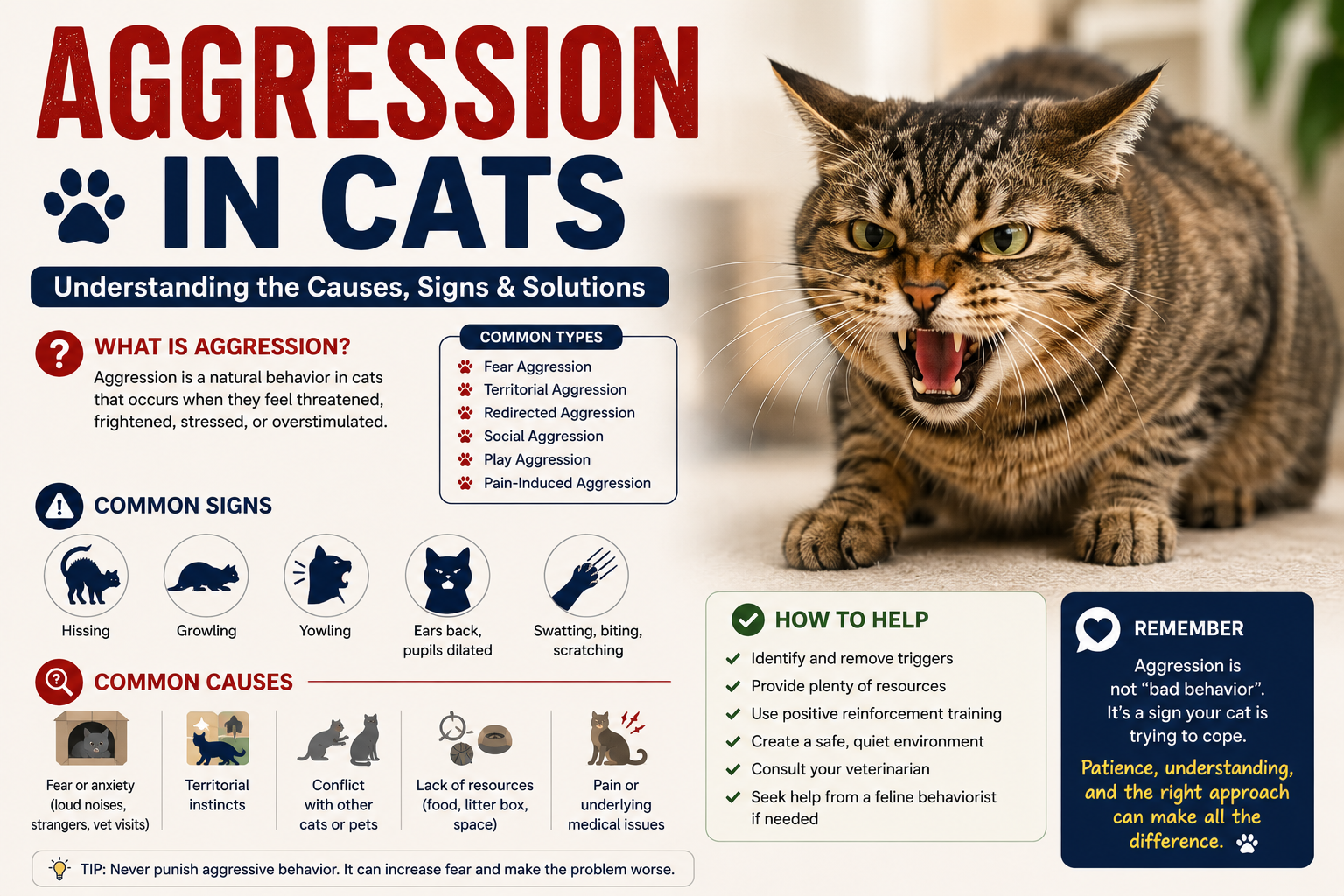
You are sitting on the couch, petting your favorite feline companion, when their tail suddenly twitches. Before you can react, they turn around, hiss, and swat at your hand. Dealing with sudden aggression in cats can feel incredibly shocking, heartbreaking, and deeply frustrating for any pet owner.
You want a peaceful home where your animal feels safe and happy. When behavioral problems crop up, it is easy to assume your pet has simply turned mean or spiteful. However, felines do not act out without a solid reason. Here are the ten real reasons behind these behaviors and the practical, real-world steps you can take to rebuild trust with your pet.
What Exactly Controls Aggression in Cats?
Aggression in cats is primarily controlled by their natural survival instincts, pain levels, and stress responses to environmental changes. Felines use aggressive body language like hissing, swatting, or biting to express fear, defend territory, or signal physical discomfort. Understanding these root causes allows you to address the behavior effectively.
You might think your pet is acting unpredictable, but they are almost always communicating a specific boundary. If you learn to read their subtle warnings, you can prevent a bite before it happens.
| Common Mistake | Better Approach |
| Punishing the cat for hissing | Back away and give the cat physical space |
| Forcing interaction when they hide | Allow them to come out on their own terms |
| Yelling to stop a physical fight | Use a loud clap or cardboard barrier to break focus |
Medical and Physical Triggers for Sudden Attacks
When you notice a sudden shift in your companion’s mood, your first step should always be to look at their health. Physical ailments frequently manifest as behavioral changes.
1. Hidden Pain and Underlying Illness
If a gentle pet suddenly bites when you touch their lower back, they are likely dealing with hidden physical pain. Conditions like arthritis, dental disease, or a painful urinary tract infection will make any animal highly defensive.
You must realize that cats hide their pain to avoid looking vulnerable to predators. When you touch a sore spot, their only defense is to lash out to stop you.
| Pain Symptom | Common Underlying Cause |
| Hissing when touched on the back | Arthritis or spinal discomfort |
| Snapping when chewing dry kibble | Severe dental disease or abscessed tooth |
| Aggression near the litter box | Urinary tract infection or blockages |
2. Hyperthyroidism and Hormonal Imbalances
An overactive thyroid gland speeds up a feline’s metabolism, causing them to feel constantly hungry, anxious, and hyperactive. This hormonal surge directly causes aggression in cats who were previously completely calm.
A simple blood test at your veterinarian’s clinic can identify this issue. Senior cats are especially prone to this condition, which is highly treatable with daily medication or specialized diets.
3. Age-Related Cognitive Decline
Just like humans, aging felines can suffer from dementia and cognitive dysfunction. This mental decline causes them to become easily confused, lost in familiar rooms, or startled by their own owners.
When an elderly cat loses their sense of security because of confusion, they often resort to defensive biting. Keeping their environment stable and using nightlights can help reduce this midnight panic.
Behavioral and Environmental Sources of Feline Rage
Once your veterinarian rules out medical issues, you need to examine your household environment. Small changes can trigger major stress responses.
4. Fear-Induced Defensiveness
A scared cat is a dangerous cat. If an animal feels cornered, trapped, or terrified by a loud noise, their natural fight-or-flight response kicks into overdrive.
If you try to approach a frightened pet to comfort them, they will see your reaching hand as a threat. The best way to help is to open up an escape route so they can run and hide in a closet or under the bed.
| Fear Trigger | Defensive Action |
| Carrying a plastic carrier | Running away, growling, and scratching |
| Unfamiliar visitors in the room | Pinned ears, low hiding, and hissing |
| Loud thunder or fireworks | Pacing nervously and swatting if approached |
5. Redirected Aggression From Outdoor Threats
This is one of the most misunderstood aspects of aggression in cats. Your indoor pet looks out the window and spots a stray cat walking across the driveway. Your pet becomes highly agitated but cannot physically reach the intruder.
Suddenly, your other indoor cat walks into the kitchen. The frustrated animal turns around and brutally attacks their completely innocent housemate. To fix this, you must block the view of outdoor strays with window film.
6. Overstimulation and Petting Intolerance
Many owners misunderstand how much physical contact their pets actually enjoy. You might think you are giving a nice, long belly rub, but the repetitive motion is actually overloading their nervous system.
The cat will tolerate the petting up to a specific limit, then suddenly snap at your fingers. Pay close attention to their subtle warnings, like a twitching tail or shifting ears, to know when to stop petting.
| Overstimulation Sign | Action to Take |
| Rapidly twitching tail tip | Stop petting immediately and move away |
| Rippling skin on the back | Remove your hand from the cat completely |
| Turning the head toward your hand | Give the animal a break from physical contact |
7. Territorial Guarding in Multi-Pet Homes
Felines are hardwired to protect their personal space and resources. If you force multiple pets to share a single food bowl or litter box, conflict is guaranteed to erupt.
A dominant animal will block access to the bathroom or kitchen, creating massive tension. You can reduce this friction by placing duplicate resources in completely separate rooms.
Social and Frustration-Based Conflicts
A lack of proper boundaries or stimulation can cause behavioral issues to develop over time. You must teach your pet how to handle their energy safely.
8. Play Aggression and Poor Socialization
If a kitten is taken from their mother too early, they never learn that biting hurts. They treat your ankles like moving prey, pouncing on you from behind doors.
You must never use your bare hands as toys during play. If your pet pounces on your feet, immediately redirect their energy onto a long feather wand or a kick-toy.
9. Parental Protection and Maternal Instincts
A mother cat protecting her new litter of kittens will naturally display intense territorial guarding. This is a temporary, instinctual behavior designed to keep her vulnerable babies safe from potential predators.
Give the new mother a quiet, low-traffic room away from other household animals and visitors. Avoid handling her kittens excessively during the first few weeks to keep her stress levels low.
10. Lack of Environmental Enrichment
Boredom can easily transform into physical frustration. An indoor animal with no toys, scratching posts, or window views has no healthy way to burn off their hunting instincts.
They will eventually release that pent-up energy by chasing your feet or bullying other animals. Adding vertical spaces like cat trees gives them a healthy outlet for their natural behavior.
| Enrichment Problem | Practical Solution |
| Cat stalks your ankles out of pure boredom | Introduce puzzle feeders to challenge their minds |
| Cat scratches furniture aggressively | Provide tall, sturdy sisal scratching posts |
| Cat fights with housemates constantly | Add window perches so they can watch birds |
Frequently Asked Questions About Feline Behavioral Shifts
How do you calm down an aggressive cat?
To calm an aggressive animal, immediately remove yourself from their sight and stop all physical contact. Dim the lights in the room, remove any loud noises, and allow the pet several hours alone to bring their adrenaline down naturally.
Can a cat suddenly become aggressive out of nowhere?
No, a cat never becomes aggressive out of nowhere. There is always an invisible trigger, such as a hidden injury, sudden illness, environmental anxiety, or a stray animal outside that you simply did not notice.
Final Thoughts
Living with aggression in cats can test your patience, but identifying the root cause changes everything. The biggest lesson you can take away is that your pet is not acting out of malice; they are simply trying to tell you that something is physically or emotionally wrong. By working closely with your vet to rule out illness and modifying your home environment, you can safely guide them back to peace.
Rebuilding a broken bond takes time, consistency, and a lot of understanding. Avoid the urge to punish your pet, protect their personal space, and celebrate the small steps of progress along the way. With the right adjustments, you can successfully turn your tense home back into a safe haven for everyone.