
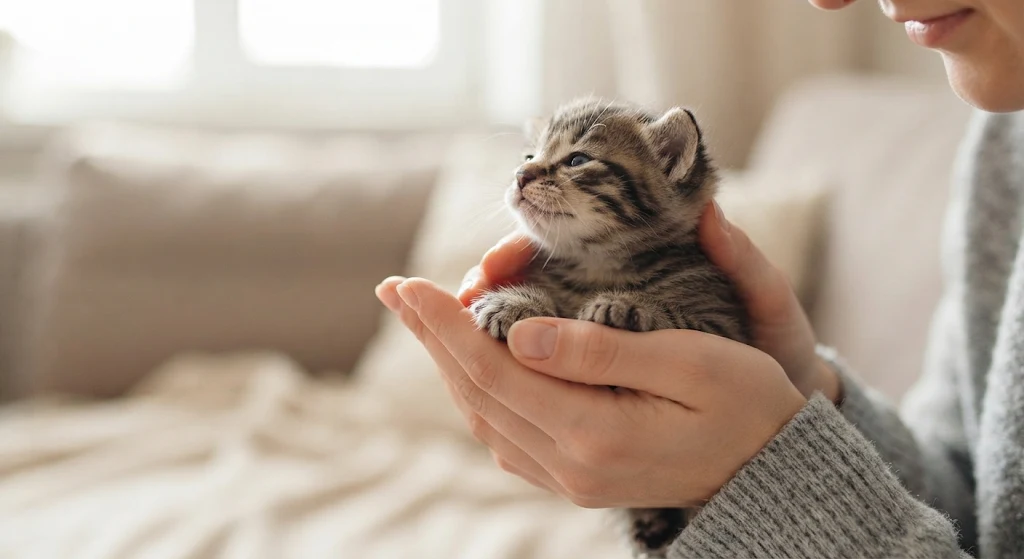
You see a litter of newborn kittens tucked against their mother and want to pick one up. Or perhaps you’ve just brought home an older kitten and want to start bonding. In either case, it helps to know when a little handling is useful and when it puts unnecessary pressure on a young animal. Is it safe to hold kittens right away? The answer depends on their age, health, and surroundings.
Quick Answer: Avoid unnecessary handling of healthy newborn kittens during their first days, especially if their mother is unsettled. Necessary health checks or rescue care may require earlier handling. Around two weeks, brief, gentle contact can often begin if the mother is comfortable. For a newly adopted older kitten, let it settle and approach you voluntarily before picking it up.
Can You Touch Newborn Kittens Right After Birth?
Healthy newborn kittens belong with their mother whenever possible. They depend on her milk, warmth, and care, and are vulnerable to getting cold or going too long without feeding. Keep the nest quiet and watch without disturbing them unnecessarily.
The RSPCA’s newborn kitten care guidance, updated in November 2026, recommends minimizing disturbance at first and beginning gentle handling around two weeks when the kittens’ eyes have opened, provided the mother is comfortable. If a kitten needs a medical examination or a caregiver needs to assess its health, earlier handling may be necessary. Ask your vet how to perform any recommended weight checks safely.
Don’t assume that touching a kitten once will make its mother reject it. The practical concern is how the mother and litter respond to disturbance. If she is growling or repeatedly trying to move the litter, give her space and speak with a vet or experienced caregiver.
When Can You Start Handling Kittens by Age?
The calendar helps you plan, but it doesn’t override the kitten’s condition or the mother’s comfort. This is a general guide for healthy kittens with appropriate veterinary care, not a medical timetable.
| Approximate age | Appropriate approach |
|---|---|
| Birth to two weeks | Keep unnecessary contact to a minimum; perform essential checks with veterinary guidance |
| Around two to seven weeks | Begin brief, gentle positive handling as appropriate; keep kittens near their mother and warm |
| Seven to eight weeks and older | Continue voluntary interaction, play, and safe familiarization with ordinary care |
| Newly adopted older kitten | Let the kitten explore a safe room and approach before attempting a lift |
The AAHA/AAFP kitten life-stage guidance describes a sensitive socialization period beginning around two to three weeks and potentially closing by nine to ten weeks. The range is not fixed for every kitten. The quality of experiences matters as much as their timing.
Cats Protection’s kitten socialization guide emphasizes short, pleasant exposure and reducing contact if a kitten becomes distressed. You don’t need to make a kitten tolerate being carried by every visitor in the house. Quiet experiences with willing people are enough to start.
How to Hold a Young Kitten Safely
Wash your hands and choose a warm, draft-free area. Sit close to the nest or on the floor with a stable surface beneath your arms. A small kitten can slip or wriggle unexpectedly, even if it seemed asleep a second earlier.
Support the chest and hindquarters together. Keep the kitten in a natural position with its head and airway unobstructed. Avoid squeezing the abdomen, turning the kitten onto its back for photos, or lifting it by the scruff. If you must handle a very young kitten for a health check, follow the caregiver’s or veterinarian’s instructions and return it promptly to its warm nest.
Watch the mother throughout the contact. If she seems anxious, approaches repeatedly, calls, or tries to retrieve the kitten, return it safely and reduce the disturbance. Never place your face near a kitten’s face or let other pets investigate during the handling session.
For older kittens, start with a few seconds of petting or supported lifting when they approach. Put them down before they struggle. Gradual positive encounters help them learn that human hands can be safe without making restraint part of the experience.
What If You Find Kittens Outside?
An outdoor nest is a different situation from a litter born in your home. The mother may be feeding nearby or waiting for you to leave before returning. Don’t scoop up warm, healthy kittens simply because you don’t see her at that moment.
Alley Cat Allies’ guide to finding kittens outdoors advises checking for danger and watching from a distance when young kittens appear healthy. Ask an experienced rescue how to assess the situation without driving the mother away. If the kittens are cold, injured, weak, exposed to dangerous weather, or struggling to breathe, seek urgent veterinary or rescue assistance rather than waiting for her to return.
Orphaned neonatal kittens need specialized care around the clock, including warmth and appropriate feeding. Don’t try to feed a cold, weak kitten or give it cow’s milk; get instructions from a veterinary professional or experienced neonatal foster caregiver. Our stray cat safety guide explains how to prepare a separate room and protect resident pets.
Can You Hold a Newly Adopted Kitten on the First Day?
An older kitten arriving home doesn’t necessarily need days without human contact. Some walk out of their carrier and seek attention right away. Others hide for a while. Open the carrier in the prepared room, sit nearby, and let the kitten decide whether to approach.
Offer familiar food and a litter box. If the kitten rubs against you or climbs onto your lap, gently pet it and see how it responds. Do not reach into a hiding place and pull the kitten out to cuddle. A kitten that associates your approach with being trapped might become harder to handle later.
A household with children should make the first encounter calm. Have children sit on the floor under adult supervision and let the kitten approach. An older child can learn supported handling from an adult once the kitten is comfortable. If you’re still choosing what sort of cat to adopt, our older cat versus kitten guide explains the differences in care and supervision.
When to Stop Handling and Call a Veterinarian
End the session if a kitten cries repeatedly, struggles, becomes stiff, or tries to hide. If it is weak, unusually cold, unable to nurse, breathing with difficulty, or not gaining weight as expected, it needs veterinary assessment rather than more socialization. A newborn that stops feeding is an urgent concern; do not wait for the next scheduled handling session.
A kitten that hasn’t had positive contact with people may be frightened even if it appears healthy. Give it space and ask a qualified rescue about gradual socialization. A kitten that is not ill but has boundless energy still needs sufficient rest and safe play. See our guide to excessive play in cats for ways to adjust activity.
Frequently Asked Questions
Will a mother cat abandon kittens if humans touch them?
Not automatically. Necessary gentle handling does not inevitably cause abandonment, but frequent disturbance and stress may affect maternal care. Monitor the mother’s response and seek help if she stops nursing or caring for the young.
Can I hold newborn kittens to weigh them?
Yes, when necessary for a veterinary or foster-care monitoring plan. Keep the check brief, support the body, use a safe surface, and return the kitten to warmth promptly.
Is it safe to let visitors hold two-week-old kittens?
Don’t rush into passing kittens around. Begin with familiar, gentle caregivers, use good hand hygiene, and increase contact only if the kittens and mother remain comfortable. Ask your vet about infection precautions.
Can I separate kittens from their mother once I start handling them?
No. Socialization and weaning are different. A kitten can learn to tolerate gentle contact without being removed from its mother. Ask a veterinarian or rescue about an appropriate adoption age and development.
What if my adopted kitten won’t let me hold it?
Start with voluntary approaches, brief petting, and play. Don’t force the lift. A kitten may need time to adjust, and sudden reluctance or pain warrants veterinary attention.
Give Kittens a Good First Experience
If the kittens are newborns, keep their nest quiet and let their mother care for them. Introduce gentle handling as they develop or when necessary for health care. If an older kitten has just arrived home, sit nearby and let it make the first move. The goal is trust, not how quickly you get to hold them.