
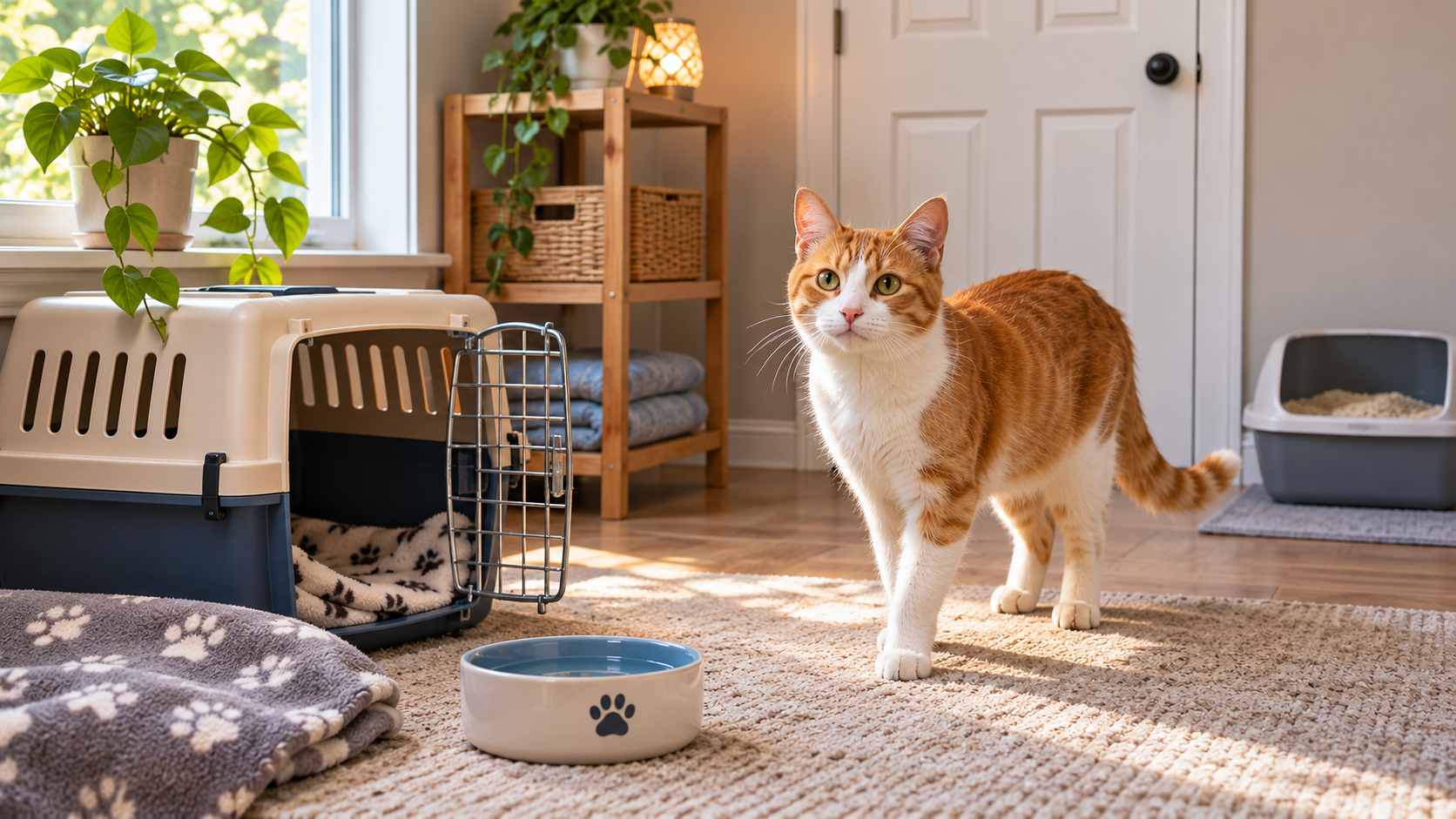
Is it safe to bring a stray cat inside? Often, yes, if the cat is approachable and you can provide a separate, secure room while you arrange a veterinary visit and look for an owner. Don’t pick up a frightened or aggressive cat. Keep the newcomer away from your pets until a veterinarian advises it’s safe to introduce them.
A cat waiting on your porch can be hard to ignore, especially when it’s cold or raining. You want to help, but you may worry about fleas, disease, or whether the cat belongs to someone nearby. You don’t have to decide on adoption today. Start by making the safest choice for the cat, your family, and any pets you already have.
Key Takeaways
- A friendly, apparently healthy cat can often stay temporarily in a closed-off room, not loose in the house.
- Check for an owner. A friendly outdoor cat isn’t necessarily homeless, even without a collar.
- Arrange a veterinary exam promptly. A cat can look healthy and still have parasites or an infection.
- Keep the cat separate from resident pets until your veterinarian advises on testing, treatment, and introductions.
- Don’t handle an unsocialized cat or move young kittens without checking whether their mother is nearby.
Is It Safe to Bring a Stray Cat Inside Right Now?
First, watch the cat from a safe distance. Its behavior and condition matter more than whether it followed you home.
| What you notice | Safer next step |
|---|---|
| Friendly cat approaching calmly, no obvious injury | Offer a quiet room if you can keep it separate, then arrange an owner search and vet visit |
| Cat hissing, lunging, or panicking when approached | Don’t grab or corner it. Contact a local rescue or animal control for guidance |
| Cat struggling to breathe, collapsed, bleeding heavily, or badly injured | Call an emergency veterinarian or animal rescue immediately; don’t risk a bite trying to handle it |
| Healthy, ear-tipped cat that avoids people | Ask local community-cat caretakers or a trap-neuter-return group before moving it |
| Mother cat with kittens, or kittens alone outdoors | Check for immediate danger and contact a rescue for age-appropriate advice before separating them |
An ear tip, a small section surgically removed from one ear, often indicates a cat has been sterilized through a community-cat program. It does not prove the cat is homeless, fully vaccinated, or safe to handle. Humane World for Animals explains why outdoor cats may be lost pets, owned roaming cats, or community cats with caretakers.
How to Bring a Friendly Stray Cat Indoors Safely
If the cat approaches willingly and you’re able to handle it without forcing contact, keep the first day simple.
1. Prepare one room before opening the door
A spare bathroom or bedroom with a door that closes is better than giving the cat the whole house. Remove medications, cleaners, loose cords, and toxic plants. Block dangerous hiding spaces behind appliances, but offer a cardboard box or covered bed where the cat can retreat.
Put fresh water, an appropriate cat food, a litter box, and a soft resting spot in the room. Place the litter box away from food and water. Keep windows and screens secure. If possible, give the cat a little quiet time before visitors come in.
2. Let the cat enter a carrier willingly
Place a small amount of cat food inside a secure carrier and allow the cat to walk in. Don’t chase, corner, or carry an unfamiliar cat against its will. Even a friendly cat may panic when restrained. If you can’t contain it safely, ask a rescue about humane trapping or transport instead.
3. Keep your pets out and practice good hygiene
Use separate bowls, bedding, and litter supplies. Don’t allow nose-to-nose greetings through a cracked door. Wash your hands after touching the newcomer or cleaning its room, and clean up waste promptly.
The CDC’s guidance on staying healthy around cats notes that cats can carry germs even when they look well. Young children shouldn’t handle an unfamiliar cat unsupervised. If someone in your home is pregnant or has a weakened immune system, ask a healthcare professional about extra precautions, and have someone else clean the litter box when possible.
4. Book a veterinary exam as soon as you can
Tell the clinic that the cat was found outdoors and has an unknown medical history. Ask about a microchip scan, an exam for injuries or respiratory illness, flea and intestinal parasite treatment, FeLV and FIV testing, and age-appropriate vaccinations.
The Cornell Feline Health Center recommends keeping a newcomer with an unknown health history apart from resident cats until a veterinarian has examined it. Your vet can also explain whether repeat testing or a longer separation period is needed. As the AAFP retrovirus testing guidelines explain, a single negative result may not rule out a very recent infection.
Don’t use a flea product meant for dogs or guess at a medication dose. Some flea and tick chemicals are dangerous to cats.
Could a Stray Cat Make Your Family or Pets Sick?
There are real risks, but most are easier to manage when you avoid bites, keep the cat separated, and get veterinary advice.
Fleas, intestinal worms, ringworm, and respiratory infections are possible concerns. Feline leukemia virus (FeLV) and feline immunodeficiency virus (FIV) are also reasons to discuss testing before a new cat joins a multi-cat home. The risk isn’t identical for every illness, and not every stray has an infection.
If the newcomer has sneezing, runny eyes, or stops eating, contact your veterinarian. Our guide to feline respiratory infections and weight loss explains why a congested cat may eat less. If a cat is thin or losing weight, intestinal parasites are one possible cause, but a vet needs to assess the actual reason.
What if the cat bites or scratches you?
Immediately wash the wound thoroughly with soap and running water. The CDC advises washing potential rabies-exposure wounds for 15 minutes and promptly contacting a healthcare professional or local public health department to assess rabies risk. Cat bites can also cause serious bacterial infections, even when the puncture looks small. Ask about tetanus protection too.
Don’t wait to see whether the cat develops symptoms before getting medical advice. If the animal can be safely identified or located, tell animal control or public health officials; don’t try to manage a rabies observation period yourself.
How Long Should You Keep a Stray Cat Separate?
There isn’t one safe number of days for every stray cat. The separation period depends on the exam, any symptoms, parasite treatment, your resident pets, and whether follow-up tests are needed. Ask the veterinarian when direct contact can begin rather than assuming that seven, ten, or fourteen days automatically makes the cat safe.
Once medical concerns are addressed, introduce cats gradually. Start with scent exchanges, then calm meetings through a barrier, followed by brief supervised time together. Let either cat retreat. If you’re unsure whether your home can comfortably support another cat, our guide on having one cat versus two can help you think through space, compatibility, and costs.
Before You Decide to Keep the Cat, Look for Its Owner
A cat without a collar might still be a cherished pet. Even a hungry cat might belong to someone. Try these steps while keeping the animal safe:
- Ask neighbors and check local lost-pet posts for a matching description.
- Have a veterinarian or shelter scan for a microchip if the cat can be transported safely.
- File a found-cat report with local animal services or shelters and check their rules for found animals.
- Post a clear found-cat notice, but ask anyone claiming the cat to provide photos or identifying details.
- Follow local reporting and holding requirements before adopting or rehoming the cat. These rules differ by location.
The American Animal Hospital Association’s found-pet guide covers microchip checks, shelter notifications, and finding an owner. A chip with outdated contact information doesn’t necessarily mean the cat was abandoned.
If you can’t offer a separate room or pay for care, ask a shelter or rescue about foster options. Helping a cat doesn’t always mean taking it home yourself.
What About Feral Cats, Nursing Mothers, and Kittens?
A feral or unsocialized adult cat may become extremely frightened if confined indoors. Don’t try to pick one up or force it into a house. A local trap-neuter-return (TNR) group can assess whether outdoor care, veterinary treatment, or an experienced foster home is appropriate.
If you find kittens, don’t assume they were abandoned just because their mother isn’t there. She may be out finding food. Unless they’re injured or in immediate danger, observe from a distance and contact a local rescue for guidance. Alley Cat Allies’ guidance on kittens found outdoors explains why very young kittens should usually remain with their mother and when intervention is necessary.
If a mother cat seems to be nursing, ask for advice before moving her. Her kittens could be hidden nearby. If a cat or kitten is cold, weak, struggling to breathe, or visibly injured, seek urgent veterinary or rescue help instead of waiting.
Frequently Asked Questions
Can I let a stray cat sleep inside for one night?
Often, yes, if the cat is calm enough to enter safely and you can keep it in a separate, secure room. Provide water, a litter box, a hiding place, and appropriate food. Keep other pets away and make a plan for a vet visit and owner search.
Is it safe to touch a friendly stray cat?
Being friendly doesn’t tell you whether a cat is healthy or vaccinated. Let it approach, avoid putting your face near it, wash your hands afterward, and don’t pick it up if it resists. Seek medical advice for bites or scratches.
Can a stray cat give my indoor cat fleas or an illness?
Yes. Fleas and some infections can pass between cats, sometimes before obvious symptoms appear. Separate them and ask your veterinarian about testing, parasite prevention, and when introductions are appropriate.
Should I bathe a stray cat as soon as it comes indoors?
Usually not. A frightened cat may scratch or bite if forced into a bath. Let a veterinarian identify skin or parasite problems and recommend cat-safe treatment. A bath alone won’t resolve most medical risks.
How do I know whether a stray cat wants to live indoors?
A cat that voluntarily approaches people and relaxes in a quiet room may adapt well. A cat that remains panicked or avoids all human contact needs a different plan. Behavior can change with time, so ask an experienced rescue or feline behavior professional for help if you’re unsure.
Can I adopt a stray cat immediately if it follows me home?
You can sometimes give it temporary shelter right away, but that isn’t the same as establishing ownership. First check for identification, report the found cat, and follow local rules before deciding to keep it permanently.
The Safest Next Step
If a calm cat is waiting outside your door, you may be able to help it tonight without making a permanent decision. Prepare one separate room, avoid forced handling, arrange a vet visit, and start looking for an owner. If the cat is frightened, sick, or caring for kittens, call a rescue or veterinarian before moving it. The goal is a safe outcome for the cat and everyone already in your home.