
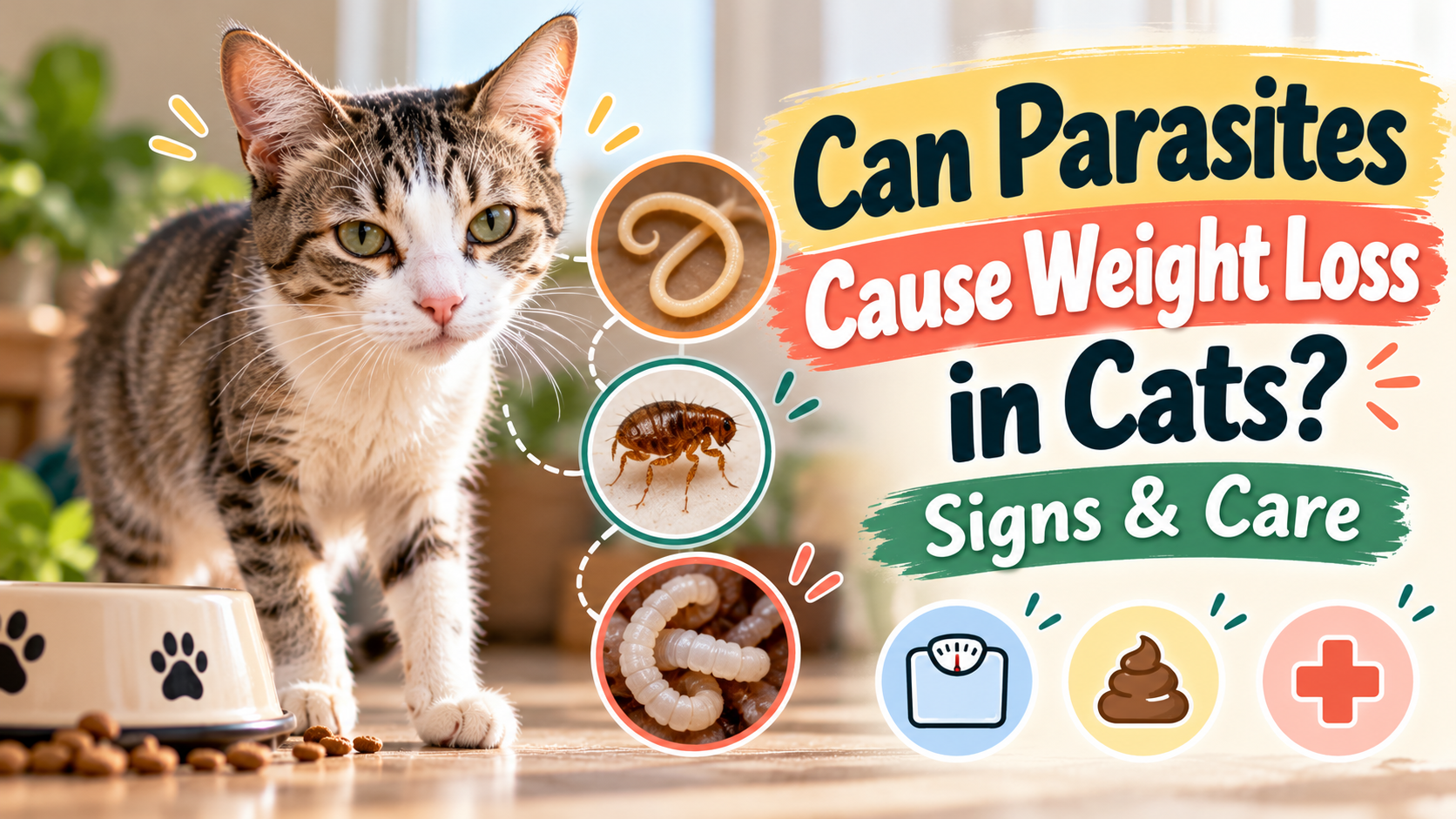
Can parasites cause weight loss in cats?
The short answer: yes, but not every thin cat has parasites
Yes, parasites can cause weight loss in cats. Intestinal worms and protozoa may steal nutrients, irritate the gut, trigger diarrhea or vomiting, or cause blood loss, all of which can lower body weight over time.[1][2] Still, weight loss does not automatically mean parasites. Dental disease, diabetes, hyperthyroidism, chronic stomach or intestinal disease, and cancer can also make cats lose weight.[3][7] Indoor cats are not fully protected either, because fleas, contaminated objects, shared litter, and prey that enter the home can expose them.[1][9]
Why this symptom needs context
Weight loss becomes more suspicious for parasites when it happens with diarrhea, vomiting, soft stool, bloating, dull coat, low energy, or poor growth in kittens.[1][2] Some cats lose weight while eating normally, while others eat less because they feel nauseated. Those patterns matter. This article explains what parasite-related weight loss can look like, how veterinarians confirm it, and why self-diagnosis is risky.
Which parasites are most likely to cause weight loss?
Hookworms: a top concern when weight loss comes with diarrhea or anemia
Hookworms are a major concern because they feed on blood in the intestines. That can lead to diarrhea, weakness, pale gums, anemia, and weight loss.[1][6] Kittens are especially vulnerable because even a smaller amount of blood loss can affect them quickly. If a cat is losing weight and also seems tired or has pale gums, hookworms move higher on the concern list.[1]
Roundworms and tapeworms: common worms owners often ask about
Roundworms are among the most common intestinal worms in cats. They may contribute to poor growth, a potbellied look, vomiting, and reduced body condition, especially in younger cats.[1][2] Tapeworms are often noticed because segments can look like grains of rice near the rear end or bedding.[2][8] Tapeworms do not always cause dramatic weight loss by themselves, but they can contribute, and flea exposure is a classic clue because fleas are part of the tapeworm life cycle.[1][6]
| Parasite | How weight loss happens | Common clues | Usually visible? |
|---|---|---|---|
| Hookworms | Blood loss, gut irritation | Diarrhea, pale gums, weakness | No |
| Roundworms | Nutrient competition, digestive upset | Potbelly, vomiting, poor growth | Sometimes |
| Tapeworms | Milder nutrient loss, chronic irritation | Rice-like segments, flea exposure | Segments may be seen |
| Giardia | Reduced absorption, diarrhea | Soft stool, chronic GI upset | No |
| Stomach worms | Vomiting, poor intake | Chronic vomiting, thin body condition | No |
Giardia and other intestinal parasites that interfere with absorption
Giardia is a protozoan parasite, not a worm, but it can still play a big role in weight loss. It commonly causes soft stool or diarrhea and can interfere with normal absorption of nutrients.[1][2] Over time, chronic digestive upset can make a cat lose weight even without obvious worms in the stool. That is important because many owners expect every parasite to be visible, and Giardia usually is not.[1]
Stomach worms and less common parasites
Less common parasites can matter in stubborn cases. Cornell notes stomach worms such as Ollanulus among feline gastrointestinal parasites.[1] These infections may be linked with chronic vomiting, poor appetite, and poor body condition. They are not the first cause most owners think of, but they deserve consideration when a cat keeps losing weight and basic explanations do not fit.
How parasites make cats lose weight
Five main pathways behind parasite-related weight loss
Parasites can lower a cat’s weight in several ways:[1][2]
- They compete for nutrients inside the digestive tract.
- They inflame the intestines, which reduces absorption.
- They cause vomiting or diarrhea, so calories and fluids are lost.
- Some, especially hookworms, cause blood loss that can lead to anemia.
- They create discomfort or nausea, which may reduce appetite.
Dehydration can also make a cat look thinner and sicker when vomiting or diarrhea is frequent.[2]
Weight loss despite normal appetite vs weight loss with poor appetite
Some cats with parasites keep eating normally, or seem hungrier, yet still get thinner because nutrients are not being used well.[2] Others lose interest in food because of nausea, belly discomfort, or ongoing vomiting. Both patterns are possible, which is why appetite alone cannot confirm or rule out parasites. Other diseases can look similar.[3][7]
Other symptoms to watch for and when it is urgent
Common symptoms that often appear with parasite-related weight loss
Besides weight loss, common signs include vomiting, diarrhea, soft stool, bloating, changes in appetite, dull coat, scooting, visible tapeworm segments, and poor growth in kittens.[1][2][8] Some cats seem less playful or sleep more. Stool may look loose, dark, or mucus-covered. Kittens may fail to gain weight normally, which can be one of the earliest clues that something is wrong.[1]
Red flags that need prompt or urgent veterinary attention
Contact a veterinarian the same day if your cat has repeated vomiting, severe diarrhea, black or bloody stool, pale gums, marked lethargy, signs of dehydration, collapse, or rapid weight loss.[1][2] These signs can point to anemia, fluid loss, or a more serious illness than a simple upset stomach. Kittens can decline faster than adult cats, so urgency is even higher in very young or medically fragile cats.[1]
How a veterinarian diagnoses whether parasites are the cause
Step-by-step diagnostic workflow
Diagnosis usually starts with a history. A veterinarian may ask about appetite, vomiting, stool changes, flea exposure, hunting, outdoor access, recent adoption, and how quickly the weight loss developed.[1][3] The physical exam may include body condition, hydration, gum color, abdominal feel, and coat quality. Fecal testing is often the next step. Depending on the case, that can include fecal flotation, direct fecal testing, and antigen testing for parasites that may be missed on a simple exam.[1][2] Because some parasites are shed off and on, repeat samples may be needed even when the first test is negative.[1]
Why vets also rule out other causes of weight loss
Parasites are only one piece of the puzzle. Veterinarians may also consider hyperthyroidism, diabetes, dental disease, inflammatory bowel disease, other gastrointestinal disorders, or cancer when a cat is losing weight.[3][7] That broader approach matters because the right treatment depends on the right diagnosis. A dewormer will not fix a thyroid problem, and thyroid medicine will not clear Giardia.
Treatment: what usually helps and what to avoid
Treatment depends on the parasite found
Treatment is based on the parasite involved. One dewormer does not treat every infection, and some parasites need medications that are different from standard worm treatments.[1][2][8] A veterinarian may also recommend supportive care if the cat is dehydrated, anemic, vomiting often, or too weak to maintain weight. Follow-up fecal checks are important because they help confirm the infection has cleared and catch reinfection early.[1] Flea control, litter box hygiene, and cleaning the environment may also be part of the plan, especially with tapeworm risk.[6][8]
Why natural remedies are not recommended
Natural or DIY remedies are not recommended for suspected parasites. They may not kill the specific organism involved, may delay effective treatment, and can allow ongoing weight loss, diarrhea, anemia, or dehydration to continue.[2][8] Some home remedies can also upset the stomach further. Parasite treatment works best when it is specific, tested, and guided by a veterinarian.
Prevention, indoor-cat risk, and human safety
How to lower the risk of parasite-related weight loss
Prevention usually includes routine parasite control as advised by a veterinarian, strong flea control, prompt stool cleanup, regular litter box hygiene, and handwashing after litter handling.[1][6] Reducing hunting and scavenging can also lower exposure to infected prey or contaminated areas.[1] Indoor cats still face risk through fleas, newly adopted pets, shared litter spaces, or contaminated shoes and objects brought into the home.[1][9] Because recommendations vary by lifestyle and age, local veterinary advice on fecal screening and kitten deworming schedules is worth following.
Can humans get worms from cats?
Some feline parasites carry zoonotic risk, meaning they can affect people in certain situations.[1][6] The practical response is simple: wash hands after handling litter, use gloves if needed, keep children away from soiled litter, clean the box promptly, and stay on top of flea control. The level of risk depends on the parasite, so the exact diagnosis matters.
Quick answers to common questions
What do cat worms look like?
Tapeworm segments may resemble small grains of rice, but many parasites are microscopic or are not consistently visible in stool.[2][8]
What happens if worms or parasites go untreated?
Untreated infections can lead to ongoing weight loss, poor coat quality, vomiting, diarrhea, dehydration, anemia, and worse illness in kittens or already fragile cats.[1][2]
How much does it cost to deworm a cat?
Cost varies by clinic, fecal testing, medication, parasite type, and whether follow-up care is needed. There is no reliable universal price.[5]
Frequently Asked Questions
Can humans get worms from cats?
Some feline parasites can pose a zoonotic risk. Wash hands after litter handling, clean boxes promptly, control fleas, and ask a veterinarian which parasite is involved.[1][6]
How do you get rid of worms in cats naturally?
Natural or DIY remedies are not recommended. Effective treatment depends on the specific parasite, and delaying veterinary care can allow weight loss, diarrhea, anemia, or reinfection to continue.[2][8]
What happens if worms in cats go untreated?
Untreated parasites may cause ongoing weight loss, vomiting, diarrhea, poor growth, dull coat, dehydration, or anemia. Kittens and medically fragile cats are at higher risk of serious complications.[1][2]
What do cat worms look like?
Some tapeworm segments may look like small grains of rice near the rear end or bedding, but many parasites are microscopic or not consistently visible in stool.[2][8]
How much does it cost to deworm a cat?
Costs vary by clinic, parasite type, fecal testing, medication, and follow-up care. Any exact price depends on the case and region.[5]
Can indoor cats still get parasites that cause weight loss?
Yes. Indoor cats can be exposed through fleas, contaminated shoes or objects, newly adopted pets, shared litter areas, or prey that enters the home.[1][9]
References
- Gastrointestinal Parasites of Cats | Cornell University College of Veterinary Medicine
- Worms in Cats | PetMD
- Cats Losing Weight: Causes and What to Do in Boynton Beach, FL – Colonial Animal Hospital & Colonial Gateway Veterinary Center
- Parasites That Cause Weight Loss in Cats | Pets – The Nest
- Parasitic Infection in Cats – Symptoms, Causes, Diagnosis, Treatment, Recovery, Management, Cost
- Gastrointestinal Parasites of Cats Brochure | Cornell University College of Veterinary Medicine
- Unexpected Weight Loss in Cats: 7 Causes & Treatment Advice
- Cat Dewormer, Tapeworms, Roundworms, Symptoms and Treatment
- Internal Parasites in Cats: The Silent Threat You Shouldn’t Ignore