
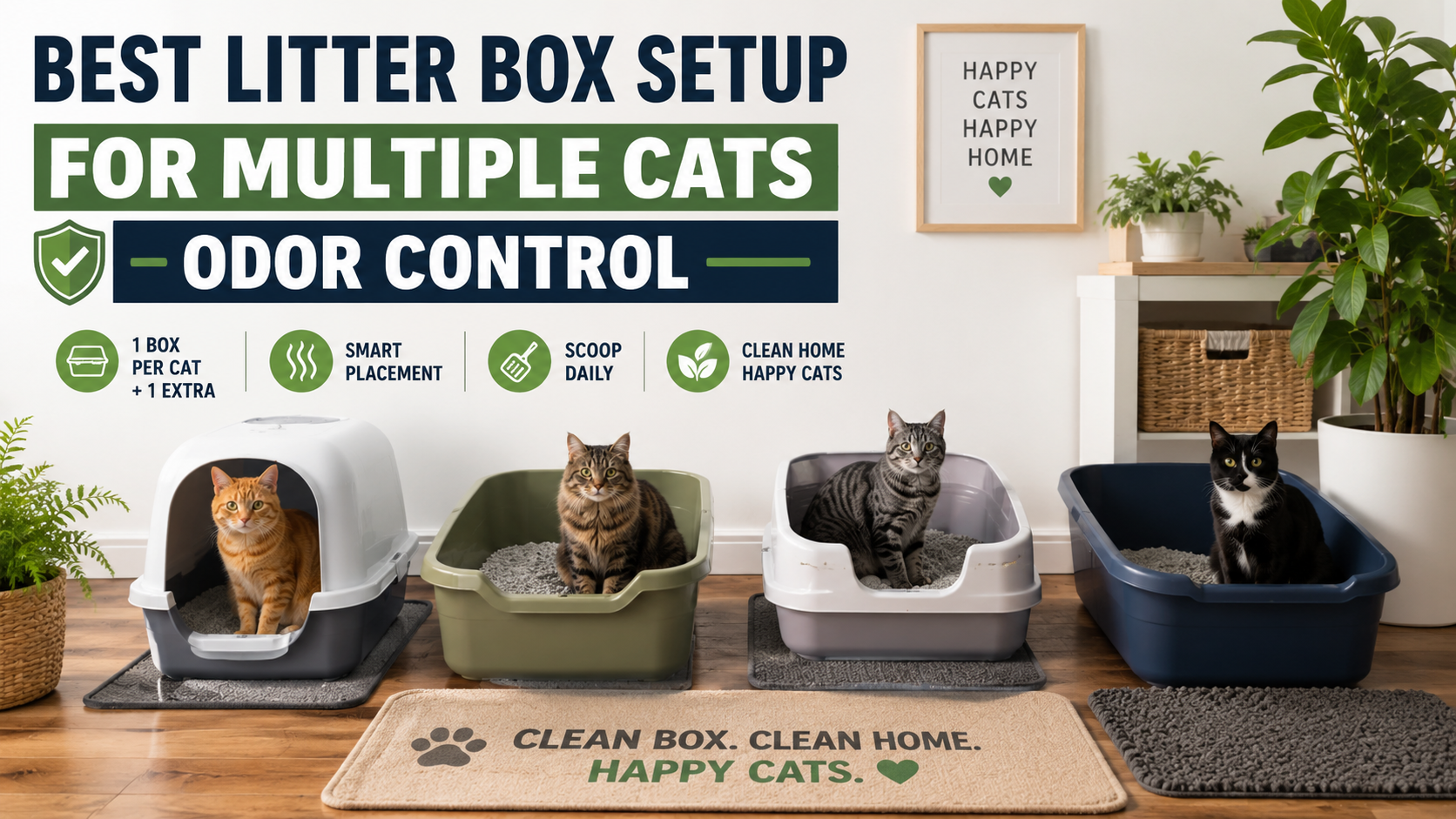
If you live with more than one cat, you already know that keeping the house fresh is not as simple as buying a bigger litter box. Finding the best litter box setup for multiple cats odor control took me more trial and error than I expected. I tried putting every box in one corner, switched litter brands too often, and even relied on air fresheners. None of those solved the real problem.
Once I started paying attention to box placement, cleaning habits, and how each cat behaved, the smell became much easier to manage. In this guide, I’ll walk you through what worked, what didn’t, and the small changes that made the biggest difference.
Why the best litter box setup for multiple cats odor control starts with enough boxes
The first mistake many people make is thinking one large litter box can replace several smaller ones. Cats usually disagree.
A simple rule that has worked well in my experience is to have one litter box per cat, plus one extra. It sounds excessive at first, but it helps reduce stress, accidents, and odor buildup.
| Number of Cats | Recommended Boxes |
|---|---|
| 2 | 3 |
| 3 | 4 |
| 4 | 5 |
When cats have options, they are less likely to hold their urine or avoid a dirty box. That alone helps reduce strong smells.
Don’t place every litter box together
Putting every box side by side may save space, but cats often see that as one giant bathroom.
Instead, spread them throughout your home if possible. This gives each cat a quieter option and prevents one heavily used area from becoming an odor hotspot.
| Placement | Result |
|---|---|
| All boxes together | Odor builds quickly |
| Boxes in different rooms | Better airflow and less crowding |
Choose litter boxes that fit your cats, not just your space
I used to buy litter boxes based on what looked neat. Later I realized my cats cared far more about comfort than appearance.
Large, open litter boxes usually stay cleaner because cats have enough room to dig and cover waste properly.
Open vs. covered litter boxes
Covered boxes can hide smells from people, but they often trap odors inside. Many cats dislike walking into a box that already smells unpleasant.
| Feature | Open Box | Covered Box |
|---|---|---|
| Airflow | Excellent | Limited |
| Odor inside box | Lower | Higher |
| Cat acceptance | Often better | Depends on the cat |
If you use covered boxes, clean them more often because trapped odors become stronger over time.
Pick a litter that controls odor without overwhelming your cats
Not every “odor control” litter performs the same.
After trying several types, I found that clumping litter made daily cleaning much easier because urine formed solid clumps instead of soaking into the bottom.
Strong perfumes may smell pleasant to us, but some cats avoid heavily scented litter.
| Litter Type | Best For |
|---|---|
| Unscented clumping clay | Reliable odor control |
| Natural plant-based litter | Lower dust and mild smell |
| Silica crystal litter | Long-lasting moisture control |
The cleaner the litter stays, the less you need artificial fragrances.
Cleaning habits matter more than expensive products
This surprised me the most.
Buying premium litter helped a little, but changing my cleaning routine made a much bigger difference.
Scoop more often than you think
In a multi-cat home, waste builds up fast.
A quick scoop in the morning and another before bed keeps odors from settling into the litter.
| Cleaning Task | Frequency |
|---|---|
| Scoop waste | Twice daily |
| Add fresh litter | Every few days |
| Wash litter box | Every 2 to 4 weeks |
Skipping even one or two days allows ammonia odors to become much harder to remove.
Replace old litter completely
Simply adding fresh litter on top of old litter doesn’t solve the problem.
Eventually the bottom layer becomes saturated with tiny urine particles that continue producing odor even after scooping.
A full litter change followed by washing the box with mild soap and warm water keeps everything much fresher.
Small setup changes that reduce odor surprisingly well
Some improvements don’t cost much but make a noticeable difference.
I learned that airflow matters almost as much as litter quality.
Keep litter boxes in well-ventilated areas
Avoid placing boxes inside tiny closets or sealed cabinets.
Fresh air helps moisture evaporate instead of lingering around the box.
Use litter mats
Litter tracked across the floor eventually carries tiny bits of waste and dust throughout the room.
A good litter mat catches most of it before it spreads.
Keep food and water away from litter boxes
Cats naturally prefer eating far from where they use the bathroom.
Separating these areas encourages normal bathroom habits and keeps feeding spaces cleaner.
Common mistakes that make odor worse
Some habits seem helpful but actually create bigger problems.
| Mistake | Better Approach |
|---|---|
| Using too little litter | Keep 2 to 3 inches of litter |
| Waiting until the box smells | Scoop before odors develop |
| Using strong air fresheners | Fix the litter box instead |
| One giant box for several cats | Multiple boxes in different spots |
| Ignoring cat preferences | Watch which boxes they actually use |
One lesson I learned is that if you can smell the litter box from across the room, your cats probably noticed it much earlier.
When odor means something more than a dirty litter box
Sometimes strong smells have nothing to do with the setup.
If one cat suddenly produces unusually strong urine odor, urinates outside the box, or changes bathroom habits, it’s worth paying attention.
Signs you shouldn’t ignore
These changes may point to an underlying health issue rather than poor litter management.
| Observation | What to Do |
|---|---|
| Sudden strong urine odor | Contact your veterinarian |
| Frequent small urinations | Schedule an exam |
| Blood in urine | Seek prompt veterinary care |
| Avoiding the litter box | Rule out medical causes first |
A healthy cat with a clean litter box usually develops consistent bathroom habits.
Simple questions people often ask
Does baking soda help with litter box odor?
A small amount mixed into clean litter can help absorb odor, but it shouldn’t replace regular scooping.
Should every cat have its own litter box?
Ideally, yes. Some cats happily share, but having enough boxes reduces competition and keeps them cleaner.
Is scented litter always better?
Not necessarily. Many cats prefer unscented litter, and regular cleaning usually controls odor better than added fragrance.
How often should litter boxes be washed?
Every two to four weeks works well for most multi-cat households. Homes with several cats may benefit from washing them more often.
Final thoughts
Finding the best litter box setup for multiple cats odor control isn’t about buying the most expensive products. It’s about creating a system that works with your cats’ natural habits instead of against them.
The biggest improvements usually come from having enough litter boxes, placing them in smart locations, scooping consistently, and using a litter your cats actually like. Once those basics are in place, keeping your home fresh becomes much easier, even with several cats sharing the same space.