
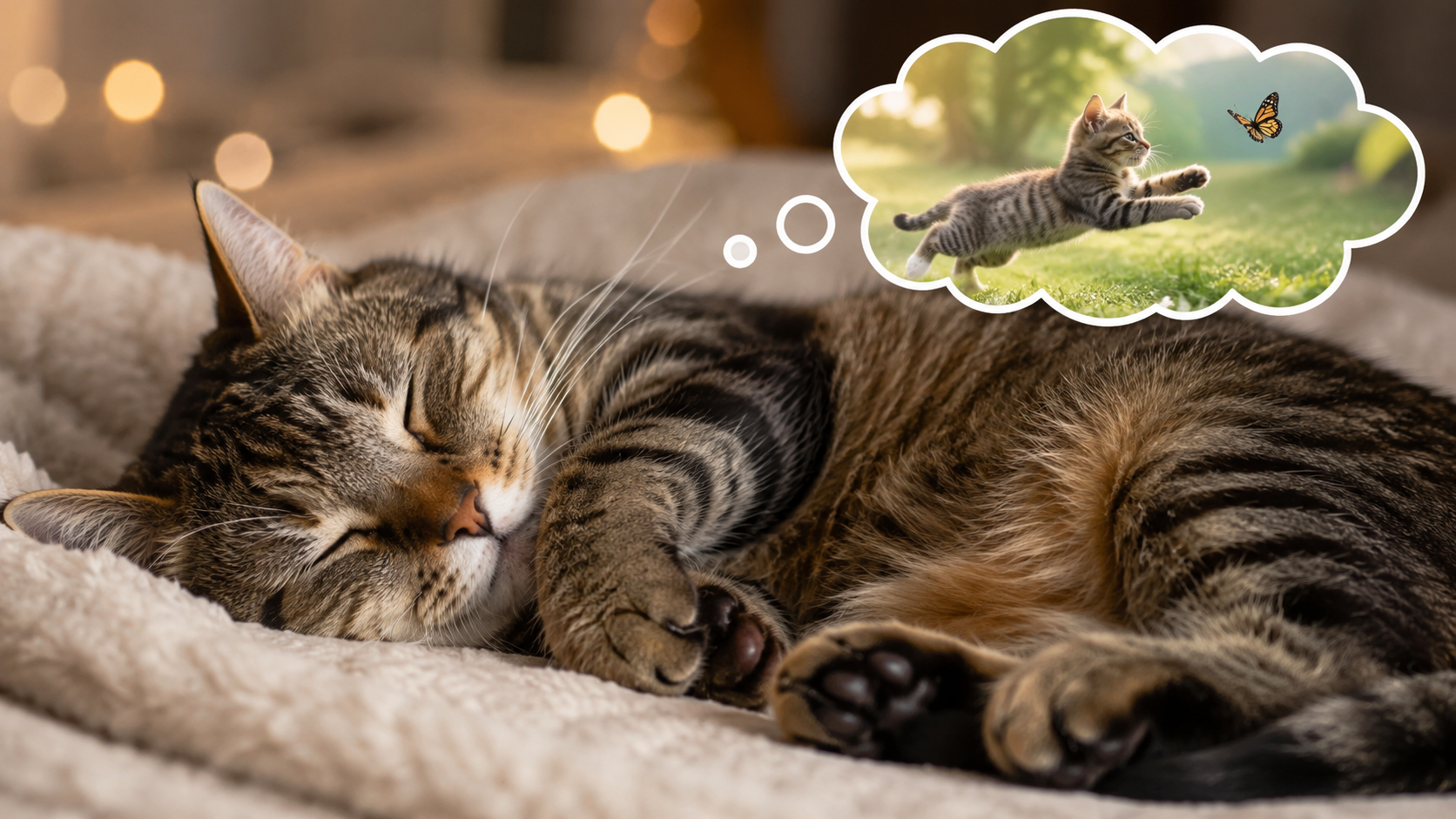
If you’ve ever watched your cat twitch during a nap, you’ve probably asked yourself, “What Do Cats Dream About When They Twitch?” It’s one of the most common questions cat owners have when they notice paw movements, whisker twitches, or little sounds coming from a sleeping cat.
At first, those movements can seem strange. You might even wonder if something is wrong. The good news is that sleeping cat twitching is usually a normal part of feline REM sleep and healthy cat sleep behavior.
While no one can know exactly what cats dream about, research on feline REM sleep gives us some interesting clues. Many experts believe cats process memories, experiences, and instinctive behaviors while they sleep.
So, Why Do Cats Twitch in Their Sleep?
Here’s the short answer: cats go through different stages of sleep, just like we do. And one of those stages is called REM sleep. That’s when the brain gets really active, even though the body is still lying there doing nothing.
REM stands for Rapid Eye Movement. You’ve probably heard that term before in school or maybe on TV. In humans, REM sleep is when we experience dreaming. Scientists believe the same thing happens with cats.
During REM sleep, your cat’s brain is basically running a whole movie. And sometimes, their body reacts to whatever’s going on in that dream. That’s where the twitching comes from.
You might see things like:
- Paws moving, almost like they’re walking or chasing something
- Ears flicking back and forth
- Whiskers are doing little wiggles
- The tail swishes around
- Small sounds, like little chirps or quiet meows
- Tiny jerks in their body
All of that is completely normal. It just means your cat is deep in a dream.
Okay, But What Do Cats Actually Dream About?
That’s the fun question, isn’t it?
The honest answer is nobody knows for sure. There’s no way to crack open a cat’s dream and take a look. But researchers have studied how animals sleep, and they have some pretty good guesses.
Hunting is a big one. Even if your cat has never been outside a day in their life, they still have those hunting instincts built in. When your cat stalks a toy mouse across the floor or sits at the window watching birds, that experience gets stored somewhere in their brain. And at night? Their brain might replay it. That could be why some cats look like they’re literally running while they’re asleep they might be chasing something in their dream.
Their daily routine probably shows up too. Think about what your cat does all day. They eat, they play, they nap in that one sunny spot, they follow you to the bathroom for some reason. Sleep researchers believe the brain uses dream time to process and sort through recent memories. So there’s a good chance your cat is dreaming about their food bowl, their favorite toy, or even you.
And yes, they probably dream about the people they love. Cats form real bonds with the people they live with. If your cat curls up next to you or headbutts you every morning, those interactions matter to them. It makes sense that you’d show up in their dreams too, even if we can’t prove it.
How Much Do Cats Even Sleep?
A lot. Like, a lot a lot.
Most adult cats sleep somewhere between 12 and 16 hours every single day. Kittens and older cats sleep even more than that. So when people say “cat nap,” they really mean it.
Here’s a quick breakdown of how their sleep works:
| Sleep Stage | What’s Happening |
|---|---|
| Light Sleep | They’re still a little alert might wake up if you make noise |
| Deep Sleep | Their body is resting and recovering |
| REM Sleep | Brain is active, dreaming might be happening |
They cycle through these stages over and over throughout the day. The twitching usually happens during that REM stage.
Kittens Twitch More, Here’s Why
If you have a kitten, you might have noticed they move around a ton in their sleep. Like, full-on kicking and making little noises. That’s normal.
Young cats spend more time in REM sleep because their brains are still growing and developing. All that extra twitching and wiggling is just part of that process. As they get older, it usually calms down a bit.
Should You Wake Your Cat Up If They’re Twitching?
Generally, no. Let them sleep.
If you suddenly wake a dreaming cat, they can get startled and confused, and they might even swipe at you before they realize where they are. A scared or disoriented cat isn’t having a good time, and neither will you.
The best thing to do is just watch from a distance. It’s honestly kind of entertaining. Most of the time, the twitching only lasts a few seconds, and then your cat settles right back down.
If it seems like your cat is having a really good dream, paws moving, little sounds, the whole thing just enjoy it. You’re getting a front-row seat to whatever adventure is happening inside their head.
When Should You Actually Be Worried?
Most of the time, twitching is nothing to stress about. But some signs are worth paying attention to.
| This is Usually Fine | Talk to Your Vet About This |
|---|---|
| Small paw twitches | Their whole body is shaking |
| Quick ear or tail movements | Their limbs look stiff or locked up |
| Soft little sounds | They seem out of it or hard to wake |
| Short episodes that stop on their own | It keeps happening over and over |
If something feels off like the movements are really intense, last a long time, or your cat seems confused after waking up it’s a good idea to call your vet. Seizures can sometimes look like dreaming, and it’s better to get it checked out than to guess.
One helpful tip: if something happens that worries you, try to record a short video on your phone. That way, you can show your vet exactly what you saw, which makes it a lot easier for them to figure out what’s going on.
How to Help Your Cat Sleep Well
Good sleep matters for cats, just like it does for people. Here are a few simple ways to support your cat’s sleep health:
Give them a quiet spot. Cats like to sleep somewhere they feel safe. A cozy corner, a soft blanket, a sunny window ledge, find what works for your cat and let them have that space.
Keep a routine. Cats are creatures of habit. When their schedule is consistent, with meals at the same time, play sessions, and bedtime, they tend to sleep better.
Play with them during the day. A tired cat is a well-rested cat. Spending even 10 or 15 minutes playing with your cat each day can make a big difference in how they sleep at night.
Keep stress low. Big changes in the house, new pets, new people, loud noises can mess with a cat’s sleep. If something like that is happening, give your cat some extra space and patience.
The Bottom Line
The next time you see your cat’s paws moving in their sleep, or you hear them make a little sound out of nowhere, they’re probably just in the middle of a dream. Maybe they’re chasing a bird. Maybe they’re reliving breakfast. Maybe, in some small way, they’re dreaming about you.
Whatever’s going on in that little furry head, it’s almost always normal.
Just keep an eye out for anything that seems really unusual, and if you’re ever unsure, your vet is always the best person to call. But for most sleeping cat twitching? It’s just your cat living their best dream life.
According to guidance from the American Veterinary Medical Association and feline health specialists, occasional sleeping cat twitching is usually associated with normal feline REM sleep. However, sudden changes in cat sleep behavior should always be discussed with a veterinarian.
Trusted Resources for Cat Owners
American Veterinary Medical Association (AVMA)