
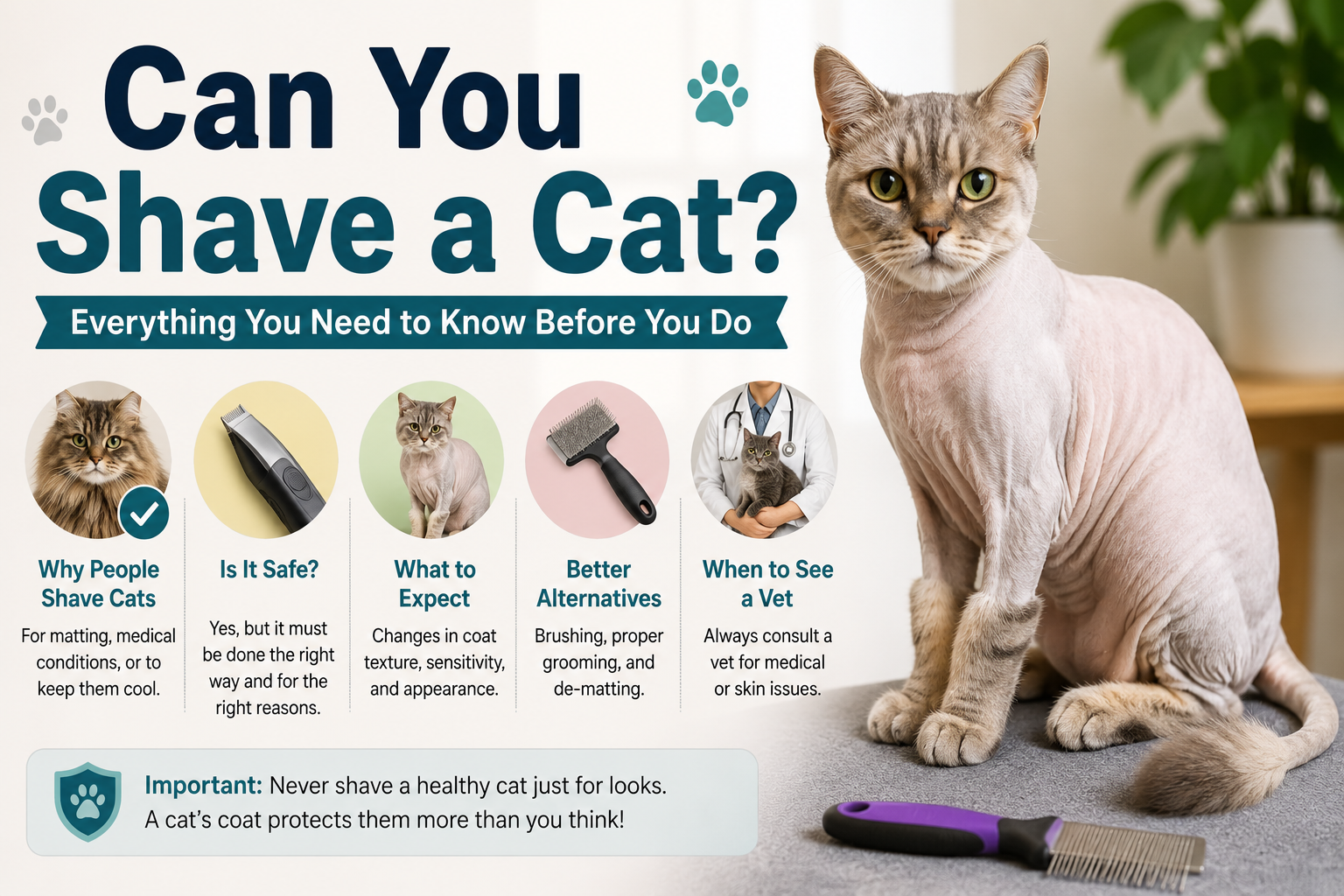
You are staring at a massive clump of tangled fur on your cat’s back, or maybe you are just exhausted by the endless shedding covering your furniture. In a moment of frustration, you have probably asked yourself: can you shave a cat? It seems like a perfectly logical solution to beat the summer heat or stop the constant vacuuming.
You want to keep your feline friend comfortable, clean, and happy. But cats have highly complex coats that do not work the same way human hair does. Before you grab a pair of clippers, you need to understand the real-world risks involved, the hidden dangers to their skin, and the specific situations where a haircut is actually the right move.
Can you shave a cat?
Yes, you can shave a cat, but you generally should not do it unless it is medically necessary. Vets and professional groomers only recommend shaving a cat to remove severe, painful fur mats or to prepare the skin for surgery. Shaving a healthy cat destroys their natural ability to regulate body temperature and causes extreme stress.
When you look at a fluffy cat panting in the summer, shaving them feels like a favor. However, you are actually removing their built-in defense against the elements.
| Common Myth | Feline Reality |
| Shaving keeps a cat cool | Fur actually insulates them against intense heat |
| Shaving stops all shedding | They still shed, but the hairs are just shorter |
| Cats feel better without fur | Sudden fur loss causes deep anxiety and stress |
Why You Should Usually Avoid Shaving a Cat
It is incredibly easy to misunderstand how feline fur works. Your cat’s coat is basically a high-tech climate control system. Messing with that system usually does more harm than good.
If you completely remove their fur, you leave them completely exposed. You might solve a shedding problem, but you create several new health risks in the process.
How a Cat’s Coat Controls Temperature
Cats have a double coat. The top layer consists of coarse guard hairs that block water and dirt. The bottom layer is a soft, dense undercoat. In the winter, this undercoat traps warm air against their skin. In the summer, they shed some of this undercoat, allowing cool air to circulate naturally.
If you shave the coat away, the heat from the sun hits their skin directly. They lose their natural insulation, making them much hotter in the summer and dangerously cold in the winter.
The Risk of Sunburn and Skin Damage
Cat skin is unbelievably thin and delicate. It is not meant to be exposed to direct sunlight. Without their protective layer of fur, a cat sitting in a sunny window can easily suffer severe sunburns.
Sunburns in cats are painful, take a long time to heal, and increase the risk of skin cancer. You always have to protect their exposed skin if they lose their fur.
| Grooming Problem | A Much Better Approach |
| Extreme summer heat | Provide cooling mats, shade, and fresh water |
| Heavy house shedding | Brush daily with a high-quality deshedding tool |
| Minor fur tangles | Gently work them out using a metal grooming comb |
When Is It Actually Necessary to Shave a Cat?
Despite all the warnings, there are a few real scenarios where shaving is the only humane option left. Sometimes, a cat’s coat gets entirely out of control, and brushing is no longer possible.
If your cat is elderly, overweight, or sick, they often stop grooming themselves. When this happens, a professional shave provides instant medical relief.
Dealing with Severe Matting and Pelting
If you miss a few brushing sessions with a long-haired cat, their undercoat can quickly knot together. These knots turn into hard mats. If left alone, these mats merge together into a solid shell of fur called a “pelt.”
Pelts pull tightly on the skin every time the cat takes a step. This causes tearing, bruising, and severe pain. In this scenario, brushing is impossible and highly cruel. The only solution is to have a professional carefully shave under the mats to free the skin.
| Coat Condition | Professional Recommendation |
| Small, loose tangles | Comb out gently at home with a detangling spray |
| Tight mats pulling the skin | Have a groomer spot-shave the affected areas |
| Solid pelt across the back | Requires a full “lion cut” from a vet or groomer |
Common Mistakes When Trying to Groom a Cat
If you decide your cat absolutely needs a trim, doing it yourself in the bathroom often leads to an emergency vet visit. Many well-meaning owners accidentally injure their pets while trying to help.
Cats have loose, highly elastic skin. When you pull on a mat, the skin pulls up into the fur, making it nearly impossible to see where the fur ends and the skin begins.
| DIY Grooming Mistake | The Hidden Danger |
| Using human hair clippers | Human clippers catch, pull, and tear fine cat hair |
| Cutting mats with scissors | You can easily slice right through their paper-thin skin |
| Forcing a panicked cat | Leads to deep bite wounds and severe pet trauma |
Why You Should Never Use Scissors
You might think snipping a single knot with household scissors is safe. It is not. Because feline skin “tents” or pulls upward easily, thousands of cat owners accidentally cut their cat’s skin wide open every year.
A scissor cut on a cat rarely heals on its own. It almost always requires an emergency trip to the vet for expensive stitches and antibiotics. Never point scissors at a cat’s mat.
How to Keep Your Cat Cool Without Shaving
If your main motivation for researching can you shave a cat was beating the summer heat, you have much better, safer options. You can keep them comfortable without ruining their coat.
Cats naturally know how to find cool spots in the house. Your job is simply to give them the right tools to bring their body temperature down naturally.
| Cooling Method | How It Actually Helps |
| Gel cooling mats | Absorbs body heat instantly without needing electricity |
| Multiple water stations | Encourages extra hydration to lower internal body temp |
| Brushing out the undercoat | Removes dead fur so cool air easily reaches the skin |
Creating a Summer-Safe Environment
Keep your air conditioning running, or set up a fan near the floor where your cat likes to sleep. Close the blinds during the hottest part of the afternoon to block direct sunlight.
You can also drop a single ice cube into their water bowl. It provides a fun, cold toy that encourages them to drink more water, which is the best way to prevent heatstroke.
Should You Try Shaving Your Cat at Home?
Even if shaving is 100% medically necessary due to extreme matting, you really should not attempt it yourself. The buzzing noise of the clippers terrifies most felines. A panicked cat will thrash, scratch, and bite.
Professional groomers and veterinarians have quiet clippers designed specifically for fine animal fur. More importantly, they know exactly how to hold the cat safely and stretch the skin so it does not get caught in the blades.
Final Thoughts
Figuring out can you shave a cat usually leads to a clear conclusion: leave their beautiful coat exactly as it is, unless a vet tells you otherwise. The biggest lesson you can take away is that regular, daily brushing is the absolute best way to prevent the painful mats that make shaving necessary in the first place.
If your cat’s fur has already reached the point of severe matting, swallow your pride and call a professional groomer. It might cost a little money upfront, but it saves you from causing accidental injuries and spares your cat from a highly traumatic experience. Stick to routine brushing, keep them cool with fresh water, and let their natural fur do exactly what it was designed to do.