
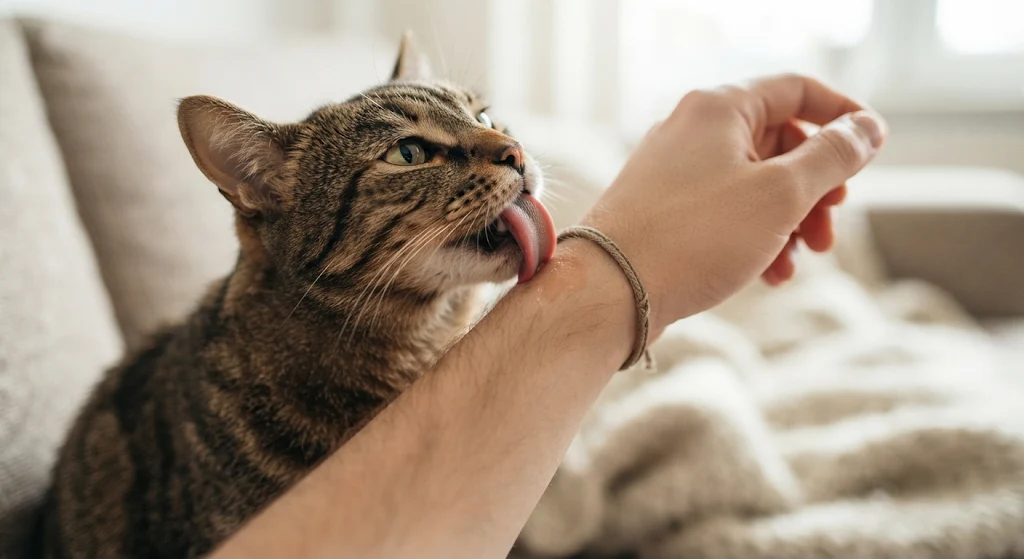
A cat may lick your cheek while you’re sitting on the couch or wake you up by grooming your forehead. It can seem like a harmless sign of affection. But a cat’s tongue carries saliva, and saliva can carry germs. Is it safe for my cat to lick my face? A brief accidental lick isn’t the same as a bite, but intentionally allowing face licking is not the safest habit.
Quick Answer: It’s best not to let your cat lick your face, particularly your eyes, mouth, nose, or broken skin. A lick on healthy intact skin is usually lower risk, but cat saliva can contain harmful bacteria. Wash the area afterward. Seek prompt medical advice if saliva contacts a wound or mucous membrane from an unfamiliar, sick, or potentially rabid animal.
Why Cat Saliva Can Be a Health Risk
A cat may look healthy and be well cared for while still carrying bacteria in its mouth. Routine vaccinations and parasite prevention help protect against specific diseases, but they don’t sterilize saliva.
Cornell University’s guidance on diseases people can catch from cats recommends avoiding face and wound licking as a basic hygiene measure. That doesn’t mean you need to stop petting your cat or sharing the couch. It’s a practical way to reduce unnecessary exposure.
One example is Capnocytophaga, a group of bacteria found in dogs’ and cats’ mouths. The CDC’s Capnocytophaga information explains that infection is uncommon but can be serious if bacteria enter a wound. People with certain health conditions, particularly weakened immune systems, face a higher risk.
Don’t confuse the diseases cats can carry with the ways those diseases spread. CDC’s toxoplasmosis transmission guide describes how swallowing the parasite from contaminated material or undercooked food can cause infection. Ordinary saliva contact is not the usual route. Cat scratch disease most often follows scratches contaminated by flea-related bacteria; infected cats can also spread the bacteria by licking open wounds.
Which Types of Licks Deserve More Attention?
Consider where the saliva landed, whether the skin was broken, and what is known about the cat’s health. The following table is a general safety guide, not an individual medical risk assessment.
| Contact | Recommended response |
|---|---|
| Brief lick on intact cheek or forehead by a healthy pet | Wash the area; avoid making it a habit |
| Saliva near lips, inside mouth, nose, or eyes | Rinse with clean water; seek prompt advice if the animal is unfamiliar, sick, or may have rabies |
| Saliva on broken skin, acne lesions, cut, or recent surgical wound | Wash promptly and contact a healthcare professional for guidance |
| Bite or scratch that breaks skin | Wash immediately and obtain prompt medical advice |
| Saliva from a possibly rabid animal contacting eyes, mouth, or broken skin | Seek urgent medical or public health assessment |
An accidental lick on intact skin from your healthy indoor pet usually doesn’t require panic. The skin acts as a protective barrier. But exposures involving broken skin or mucous membranes, especially from an animal with an unknown health history, need a different response.
Can You Get Rabies From a Cat Licking Your Face?
Rabies is transmitted when infectious material, often saliva, enters the body through broken skin or mucous membranes. The CDC’s clinical rabies screening guidance distinguishes these exposures from casual contact. Contact of saliva with intact skin alone is not a typical rabies exposure.
If a potentially infected cat licks the inside of your mouth, eyes, nose, or an open wound, seek urgent advice. Don’t try to rule out rabies based on whether the cat seems friendly. Your healthcare provider or local health department can assess exposure, vaccination status, and local risk and decide whether preventive treatment is needed.
For a possible exposure wound, CDC’s rabies prevention guidance recommends thorough washing with soap and water for 15 minutes. Flush exposed mucous membranes with clean water rather than putting soap into your eyes. If there was a bite, significant injury, or uncertain exposure to an unfamiliar cat, call for professional advice promptly.
Who Should Be Especially Careful Around Cat Saliva?
Young children may not recognize when a cat is becoming uncomfortable, and they may place their hands in their mouths after handling pets. People with weakened immune systems, including those without a functioning spleen or receiving certain treatments, may be more vulnerable to serious infections. Discuss personal precautions with a healthcare professional rather than relying on a generic rule for every person.
If you have a newborn, don’t encourage the cat to lick the infant’s face or hands. Supervise every interaction and keep the cat out of the baby’s sleeping area. Our guide to cats around newborns explains how to manage introductions and hygiene in a household with babies.
The CDC’s general cat hygiene advice recommends handwashing after contact with saliva and pet supplies, alongside regular veterinary care. A person who has received personal infection-prevention instructions should follow those instructions even if their cat appears healthy.
Why Does My Cat Keep Licking My Face?
Cats groom themselves and sometimes groom animals or people with whom they interact closely. Licking can be part of social contact, a familiar habit, or an attempt to investigate an interesting scent or taste. It isn’t possible to know precisely what a cat is thinking from one lick.
Your cat may learn that licking your cheek earns a laugh, petting, or a reaction that encourages the behavior. A cat that licks, then nips, may be responding to excitement or discomfort during the interaction. Our guide to why cats bite and then lick explains why the context matters.
If the licking is new and repetitive, or occurs alongside drooling, changes in appetite, restlessness, or grooming changes, discuss it with your veterinarian. Medical problems and stress can affect behavior. A normal social habit should not be confused with a sudden change that needs attention.
How to Stop Face Licking Without Punishing Your Cat
Let your cat sit close, but gently turn your face away whenever it tries to lick you. If it persists, calmly end the interaction for a moment or offer a toy. Reward settling beside you instead of rewarding contact with your mouth or eyes.
Don’t push the cat away roughly or spray it with water. If the cat has been allowed to lick your face for years, you may need to repeat the new routine consistently. Everyone in the household should follow the same boundary.
Handwashing, normal veterinary and dental care, flea control, and appropriate food handling are useful protections. Do not use mouthwash, disinfectant, or human toothpaste on your cat to reduce saliva bacteria. Ask your vet about pet-safe dental care instead.
What If You Develop Symptoms After Contact?
Contact a healthcare professional promptly for a cat bite, concerning wound exposure, or redness, swelling, increasing pain, pus, or fever after contact. Tell them you had contact with a cat and whether saliva may have entered broken skin. Rapidly worsening illness, confusion, or severe symptoms require emergency medical care. People with higher infection risks should seek advice earlier rather than waiting to develop symptoms.
If the cat is unfamiliar, sick, or suddenly behaving abnormally, avoid further contact and contact animal control or a veterinarian as appropriate. Our stray cat safety guide explains precautions for bringing an animal of unknown health status into a home.
Frequently Asked Questions
Is an indoor cat’s saliva safe because it doesn’t go outside?
No. Indoor living reduces some exposures, but indoor cats still have normal mouth bacteria. Avoid face licking and contact with open wounds even with a vaccinated indoor cat.
Is it safe for my cat to lick my hand?
A lick on intact hand skin is generally lower risk than contact with an open wound or mucous membrane. Wash your hands afterward, especially before eating.
What should I do if my cat licks my eye?
Rinse with clean water. Contact a healthcare professional if irritation develops, if you have a higher infection risk, or if the animal may be sick or rabid. Possible rabies exposure requires urgent assessment.
Is cat saliva a natural disinfectant?
No. Don’t let a cat lick cuts or wounds to help them heal. Saliva can introduce bacteria and should not replace appropriate wound care.
Does face licking always mean my cat loves me?
No single behavior proves affection. Licking may reflect social grooming, interest in a scent, or a learned habit. You can encourage other comfortable ways to interact.
Keep the Affection, Change the Habit
You don’t need to avoid your cat to practice good hygiene. Let it curl up beside you, enjoy gentle petting, or play with a toy instead of licking your face. Wash accidental saliva contact and get appropriate medical advice for wounds or high-risk exposures. Small changes can protect your health without disrupting your relationship with your cat.