
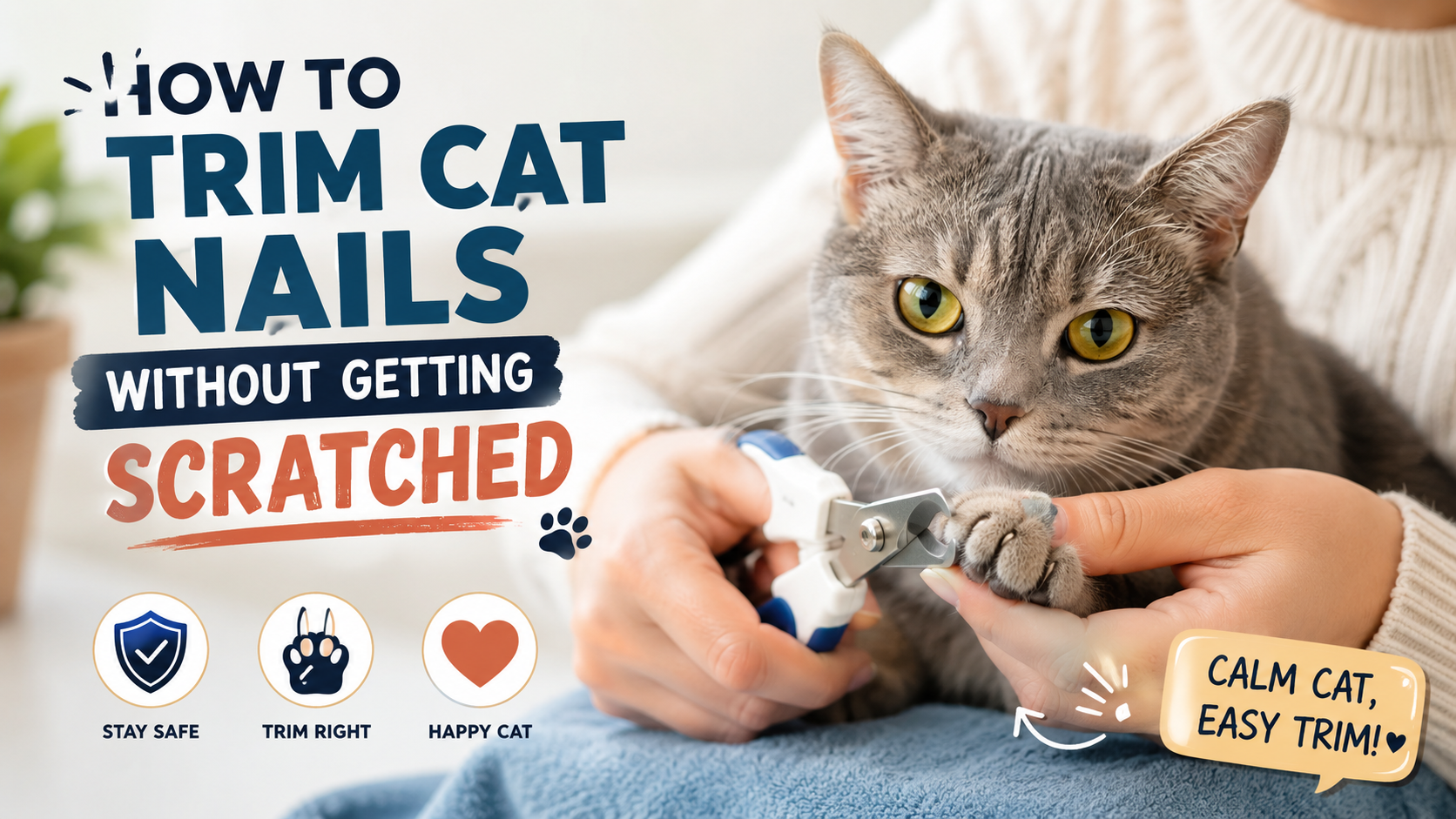
If you’ve been putting off nail trims because you’re worried about getting scratched, you’re not alone. Many cat owners feel the same way. The good news is that you can trim your cat’s nails safely without turning it into a stressful experience for either of you.
Learning how to trim cat nails without getting scratched is less about holding your cat firmly and more about using the right timing, technique, and mindset. With a little patience and a calm approach, you can make nail trims quick, safe, and much easier over time.
Why your cat scratches during nail trims
Understanding why your cat reacts the way it does helps you avoid many common problems before they start.
In most cases, your cat isn’t trying to hurt you. Scratching is usually a natural response to fear, discomfort, or feeling restrained.
| Reason | What you may notice |
|---|---|
| Fear | Pulling paws away or trying to escape |
| Overstimulation | Tail flicking and restless movements |
| Discomfort | Sudden jerks or vocal sounds |
If your cat already seems anxious or irritated, wait until another time. A calm cat is much easier to handle.
Choose the right time before you start
Timing can make a bigger difference than the clippers you use.
You’ll usually have the best results after your cat has eaten, finished playing, or settled down for a nap. At these times, your cat is more relaxed and less likely to resist.
Signs your cat is calm enough
Watch your cat’s body language before you begin.
| Good signs | Wait until later |
|---|---|
| Slow blinking | Dilated pupils |
| Relaxed muscles | Fast tail swishing |
| Calm posture | Flattened ears |
If your cat shows signs of stress, don’t force the session. Waiting even a few minutes can improve the experience.
Gather the right tools first
Having everything ready helps you stay calm and keeps the session short.
| Tool | Why it helps |
|---|---|
| Cat nail clippers | Designed for clean, controlled cuts |
| Small towel | Helps gently support nervous cats |
| Favorite treats | Creates positive associations |
Keeping styptic powder nearby is also a good idea. You may never need it, but it’s useful in case you accidentally trim too close to the quick.
How to trim cat nails without getting scratched step by step
Following a consistent routine helps your cat know what to expect.
Get your cat comfortable with paw handling
Before clipping any nails, spend a few days gently touching and holding your cat’s paws during quiet moments.
Reward calm behavior with praise or treats. This simple habit makes future nail trims much easier.
Extend one claw at a time
Hold the paw gently and apply light pressure above and below one toe until the claw extends.
Avoid squeezing too hard or forcing the paw open.
Trim only the sharp tip
Look carefully before clipping.
If your cat has light-colored nails, you’ll easily see the pink quick inside the nail. Stay well in front of it.
If your cat has dark nails, trim only a very small amount each time.
| Nail type | Safe trimming method |
|---|---|
| Light nails | Stay clear of the visible quick |
| Dark nails | Trim tiny amounts gradually |
Keep sessions short
You don’t have to trim every nail in one sitting.
If your cat becomes restless after a few nails, stop and continue later. Several short sessions are usually more successful than one long struggle.
Common mistakes that increase your chances of getting scratched
Small mistakes often lead to unnecessary stress for both you and your cat.
| Mistake | Better approach |
|---|---|
| Holding too tightly | Support your cat gently |
| Moving too quickly | Work slowly and calmly |
| Ignoring body language | Pause when your cat becomes tense |
| Trying to finish every nail | Break the task into smaller sessions |
| Chasing your cat | Wait for a calmer opportunity |
The goal is to make every nail trim feel predictable rather than stressful.
Should you use a towel?
A towel can help in certain situations, but it isn’t the right solution for every cat.
When a towel helps
If your cat squirms constantly, wrapping the body loosely while leaving one paw exposed can provide gentle support and reduce sudden movements.
When a towel isn’t the best choice
Some cats become more anxious when wrapped. If your cat struggles harder after being wrapped in a towel, stop and try a different approach another day.
| Situation | Recommendation |
|---|---|
| Mild anxiety | Try trimming without a towel |
| Constant squirming | Use a loose towel wrap |
| Extreme stress | End the session and try later |
How often should you trim your cat’s nails?
Most indoor cats need their nails trimmed every 2 to 4 weeks, but there isn’t a schedule that works for every cat. Your cat’s age, activity level, and scratching habits all affect how quickly the nails grow.
Instead of following the calendar, check your cat’s nails regularly. You’ll usually notice when it’s time for another trim.
Signs it’s time for a nail trim
| Sign | What it means |
|---|---|
| Nails catch on blankets or carpets | The claws are becoming too long |
| You hear clicking on hard floors | The nail tips need trimming |
| Playtime leaves painful scratches | The nails are sharper than usual |
| Claws look noticeably curved | A trim is overdue |
Regular maintenance is much easier than waiting until the nails become excessively long.
What to do if your cat refuses nail trims
Some cats accept nail trims quickly, while others need more time to build trust. If your cat resists every attempt, don’t force the process.
Instead, break the task into smaller steps and reward calm behavior throughout.
Build confidence one step at a time
Rather than aiming to trim every nail, focus on small wins.
For example:
- Gently touch one paw.
- Offer a treat.
- Extend one claw.
- Reward your cat again.
- Trim a single nail.
- End the session on a positive note.
Over time, your cat will begin to associate paw handling with rewards instead of stress.
What if you accidentally cut the quick?
Even experienced cat owners occasionally trim too close to the quick. If it happens, stay calm.
Apply styptic powder according to the product directions, or use gentle pressure with clean gauze until the bleeding stops. Most minor cuts stop bleeding within a few minutes.
Avoid rushing through the remaining nails. Give your cat time to relax before trying again another day.
| Problem | What you should do |
|---|---|
| Minor bleeding | Apply styptic powder or gentle pressure |
| Your cat becomes frightened | End the session calmly |
| You’re unsure how much to trim | Clip smaller amounts next time |
A single mistake doesn’t mean future nail trims will be difficult. Your calm reaction matters more than the mistake itself.
Frequently Asked Questions
Can you use human nail clippers?
Small human nail clippers may work in an emergency, but cat nail clippers are designed for feline claws and usually provide cleaner, safer cuts.
Is it better to trim all the nails at once?
Not necessarily. Many cats do better with short sessions. If your cat becomes restless after a few nails, continue another day.
Should someone help you?
If you’re new to trimming cat nails or your cat is particularly active, having another person gently comfort your cat can make the process much easier.
Do scratching posts replace nail trimming?
Scratching posts help wear down the outer layer of the nails and support healthy scratching behavior, but they don’t eliminate the need for regular nail trims for most indoor cats.
How can you make future nail trims easier?
Keep every session calm, reward good behavior, and avoid forcing your cat to continue once it becomes stressed. Consistency helps build trust over time.
Final thoughts
Learning how to trim cat nails without getting scratched is about creating a calm routine, not finding a perfect technique. When you pay attention to your cat’s body language, work slowly, and trim only a few nails at a time if needed, the process becomes much less stressful.
Remember that every cat learns at its own pace. Stay patient, keep sessions short, and reward positive behavior whenever possible. With regular practice, nail trimming can become a simple part of your cat’s grooming routine instead of something both of you dread.