
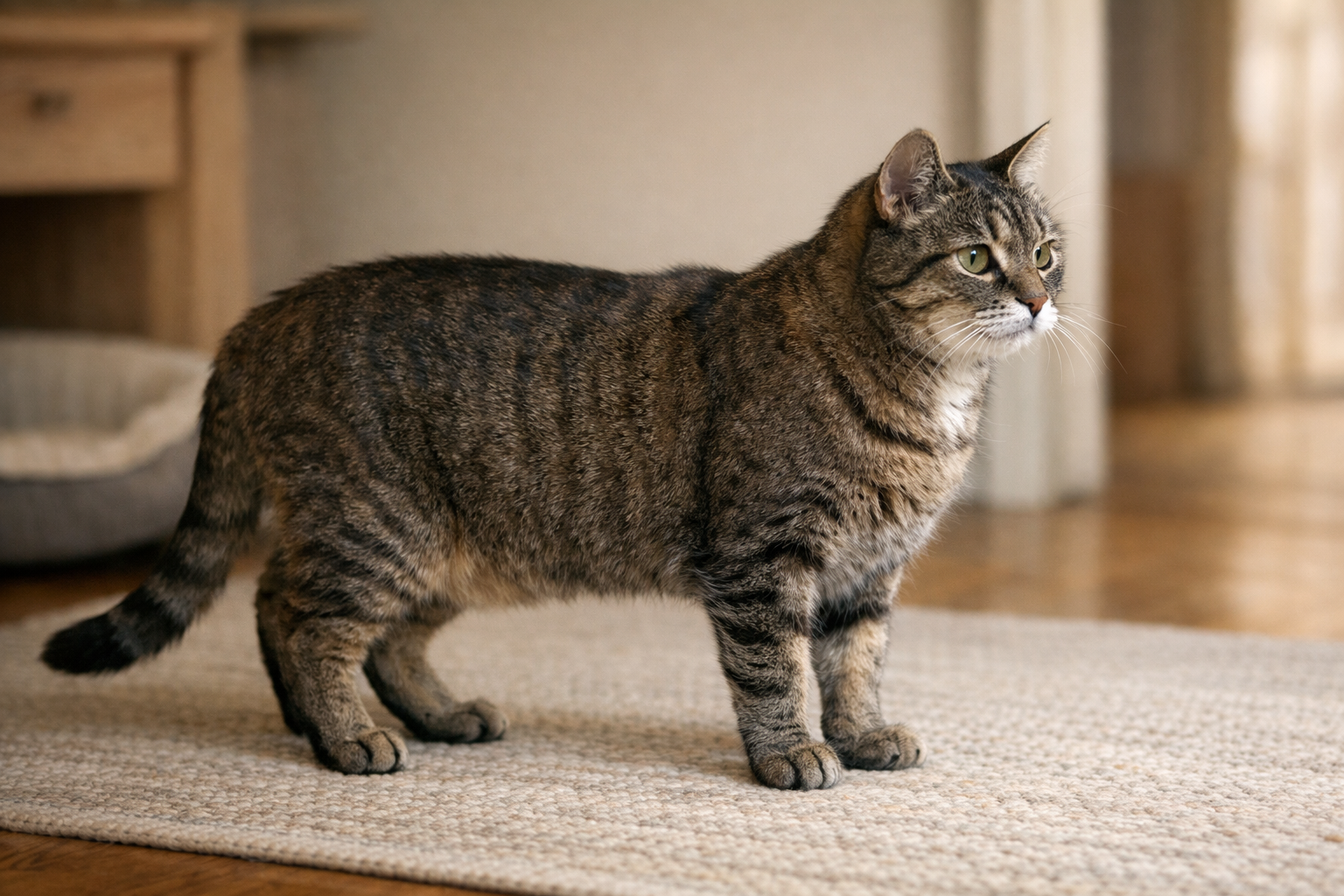
No, older cats should ideally be lean, not underweight. A healthy senior cat has enough body fat to cover the ribs lightly and enough muscle to support movement. Becoming bony, losing muscle, or dropping weight without an intentional plan isn’t a beneficial part of aging.
If you’re asking, “Is it better for elder cats to be thin?” the key distinction is between a healthy, lean body and a body that’s losing needed tissue. Excess weight can make movement and grooming harder, but too little weight can signal inadequate nutrition or illness. Neither extreme is the goal.
The most useful checks are your cat’s body condition, muscle condition, and weight trend, not age or a number on the scale alone.
Lean is healthy; becoming thin needs an explanation
A lean older cat generally has ribs you can feel easily beneath a light covering of fat, a visible waist when viewed from above, and no prominent, sharply outlined bones. Some cats naturally have a slender build and remain healthy at a weight that would be too low for a larger-framed cat.
An underweight cat may have ribs, hip bones, or a spine that feel unusually sharp. The body may look narrow, with little tissue covering the skeleton. Long fur can hide these changes, so looking isn’t enough.
Muscle loss is a separate concern. A cat can lose muscle over the back, shoulders, or hindquarters while retaining belly fat. That cat might weigh the same, or still be overweight, even as strength declines.
| Body condition | What you may notice | What to do |
|---|---|---|
| Lean, with preserved muscle | Ribs easily felt, light fat covering, visible waist, stable weight | Maintain the feeding plan and monitor trends |
| Underweight or losing muscle | Prominent bones, shrinking hindquarters, declining weight | Arrange a veterinary assessment |
| Overweight | Ribs difficult to feel, little waist, excess body fat | Ask about gradual weight management that protects muscle |
A cat who has always been slim and remains stable is different from a cat who has recently become thin. Unplanned weight loss deserves attention even if your cat started out overweight.
How to tell whether your older cat is lean or underweight
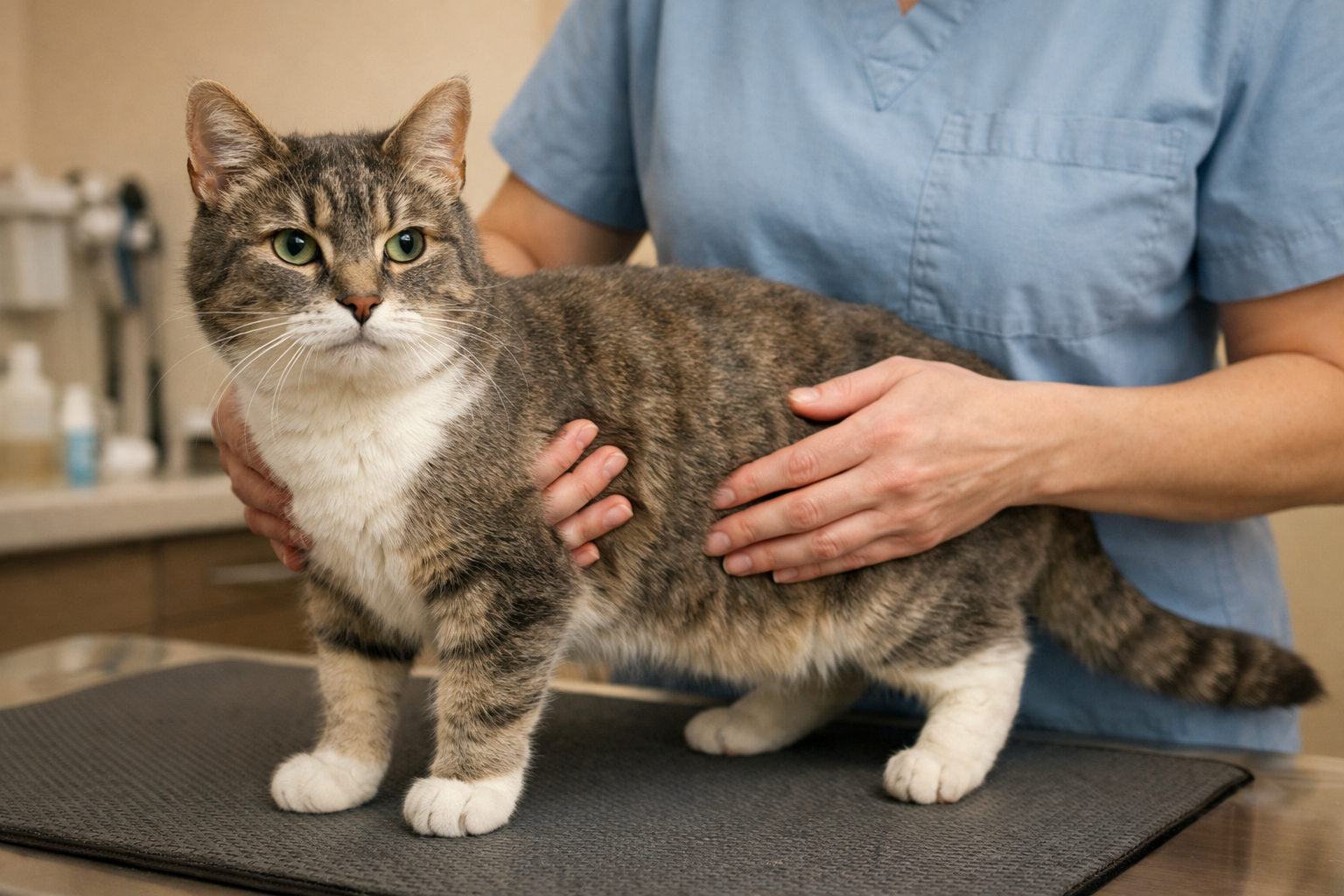
A hands-on check helps you notice changes between veterinary visits. Keep it gentle, and stop if your cat seems uncomfortable. Pain, arthritis, or sensitivity can make handling unpleasant.
Check the ribs, waist, and spine
Run your fingertips lightly over the sides of your cat’s chest. You should usually be able to feel the ribs without pressing hard, but they shouldn’t feel bare or sharply protruding.
Next, look down at your standing cat. A modest narrowing behind the ribs is expected in many healthy cats. A very deep waist combined with prominent bones can suggest insufficient body fat.
Feel lightly along the back and hips, too. Newly prominent bones matter more than a single impression, especially in a cat whose coat makes their shape difficult to see.
Veterinary teams commonly use a nine-point body condition score, with 4–5 out of 9 generally considered ideal. Ask your veterinarian to demonstrate the assessment on your own cat; coat length and body shape can make charts difficult to interpret.
Look for shrinking muscles
Muscle condition is assessed separately from body fat. Changes may show up as:
- More pronounced bones around the shoulders or spine.
- Thinner hind legs or reduced fullness around the pelvis.
- Hollowing around the temples on the head.
- Less strength when standing, climbing, or jumping.
These signs don’t identify a cause. Reluctance to jump, for example, may reflect joint pain rather than muscle loss, or both. A veterinarian can assess muscle condition and investigate related changes.
Follow the trend on a consistent scale
There’s no single ideal weight for all senior cats. Frame size, build, and muscle mass vary too much for a universal target in pounds.
For a stable older cat, weighing every two to four weeks can help reveal a trend. If weight loss is already a concern, ask your veterinarian how often to weigh them; weekly checks may be useful during an assessment or feeding adjustment.
Use the same scale under similar conditions. A pet or infant scale can show smaller changes more clearly than many bathroom scales. Record appetite, vomiting, stool changes, and thirst alongside weight rather than relying on memory.
Why an older cat may lose weight
Aging can change activity, digestion, and muscle maintenance. However, age alone doesn’t explain away weight loss. Several conditions become more common in older cats, and more than one problem may be present.
Eating less than they need
Dental disease, nausea, pain, reduced sense of smell, or difficulty reaching a feeding area can reduce food intake. In a multicat household, another cat may also block access or finish the older cat’s meals.
Clues can be subtle: approaching food and walking away, dropping pieces, chewing on one side, or accepting treats while leaving regular meals. Eating a few bites doesn’t necessarily mean a cat is getting enough calories.
Losing weight despite a good appetite
A strong appetite doesn’t rule out illness. Hyperthyroidism and diabetes can cause weight loss even when a cat seems hungry. Digestive disease can interfere with the use of nutrients, and other illnesses may also contribute.
Tell your veterinarian if weight loss comes with increased thirst, larger urine clumps, restlessness, vomiting, or diarrhea. These combinations help guide the evaluation, but they aren’t enough to make a diagnosis at home.
Chronic disease and muscle loss
Chronic kidney disease, intestinal disease, cancer, and other illnesses can affect appetite, nutrient use, or muscle maintenance. Pain can reduce activity and make eating more difficult.
Age-associated muscle loss, sometimes called sarcopenia, can also occur. Still, visible muscle loss shouldn’t simply be labeled “old age” without checking for treatable contributors.
Avoid assuming that a thinner cat just needs a richer food. Extra calories may help some cats, but they won’t address untreated pain, nausea, thyroid disease, or another underlying problem.
When weight loss needs veterinary attention
Arrange a veterinary appointment for unexplained weight loss or new muscle loss, even if your cat is still eating and acting fairly normally. Don’t wait until the ribs are visibly protruding. Cats can hide illness, and gradual changes are easy to miss.
Call promptly if the weight change accompanies increased thirst or urination, repeated vomiting, persistent diarrhea, difficulty eating, or a clear drop in activity.
A cat who stops eating needs more urgent advice. Contact your veterinarian the same day if your older cat refuses food or eats almost nothing, especially if they have diabetes, another medical condition, or are already frail. Don’t wait beyond 24 hours without food to seek care. Prolonged inadequate intake can lead to serious complications, including hepatic lipidosis, particularly in overweight cats.
Seek emergency care for signs such as:
- Trouble breathing, collapse, or severe weakness.
- Repeated vomiting with an inability to keep water down.
- Straining to urinate with little or no urine.
- Marked distress or an inability to stand.
The urgency depends on the whole picture, not just the amount of weight lost.
What a veterinary weight assessment may involve
Bring weight records, the names of foods and supplements, and an estimate of how much your cat actually eats. Include treats, table food, and food taken from other pets’ bowls.
Your veterinarian may assess body and muscle condition, examine the mouth, check hydration, and look for pain or other abnormalities. Depending on the findings, blood tests, urinalysis, thyroid testing, or further investigations may be recommended.
The goal isn’t only to choose a target weight. It’s to determine whether your cat is losing fat, muscle, or both, and why.
Useful questions to ask include:
- What are my cat’s body condition and muscle condition scores?
- Should the goal be weight gain, weight maintenance, or gradual fat loss?
- Does an existing condition change the best food choice?
- How much should I offer each day, and when should we recheck?
A specific daily feeding target is more useful than a general instruction to “feed more.” It should account for the food’s calorie content, your cat’s intake, and their health needs.
Helping an older cat maintain a healthy weight safely
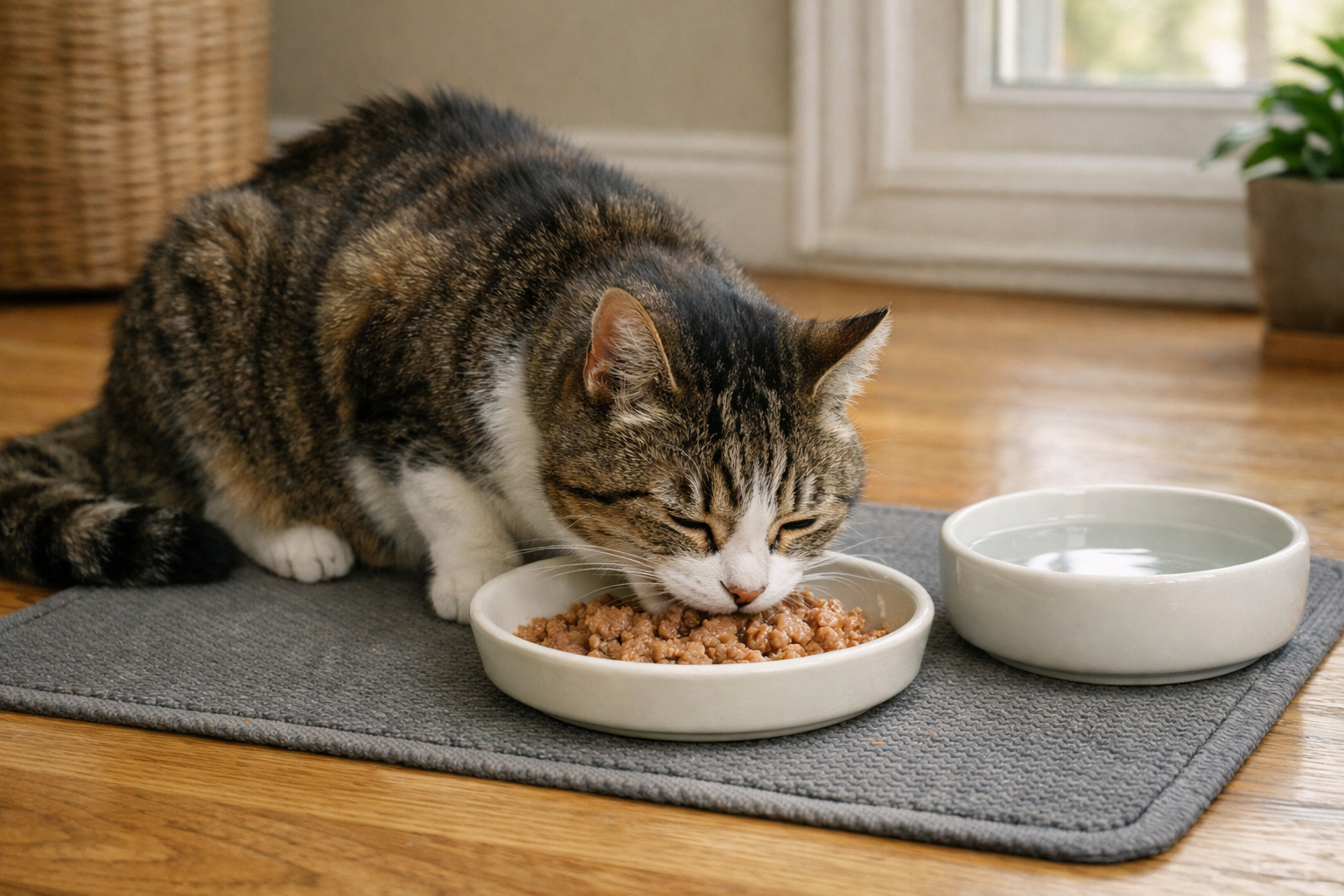
Once medical concerns are being addressed, small feeding and environmental changes can make adequate intake easier.
Make meals accessible and appealing
Offer food in a quiet place where your cat won’t be interrupted by other animals. Keep meals on an easily reached level rather than requiring a jump onto a counter or a trip up stairs.
Some older cats prefer several small meals. A wide, shallow dish may be comfortable, and gently warming wet food can increase its aroma. Stir it and check the temperature before serving; it should never be hot.
If another pet steals food, feed them separately and observe what the older cat actually finishes. Measuring the portion offered isn’t enough if much of it remains uneaten.
Choose nutrition for the individual, not just the age label
A complete and balanced food appropriate to your cat’s life stage is the starting point unless a veterinarian recommends a therapeutic diet. A product labeled “senior” isn’t automatically the best choice for every older cat.
Healthy older cats need adequate protein to help maintain muscle. Don’t restrict protein solely because of age. Cats with conditions such as chronic kidney disease may need a carefully selected therapeutic diet, so avoid changing a prescribed food without veterinary guidance.
If weight gain is needed, your veterinarian may recommend a more calorie-dense food or another feeding adjustment. Plain meat, tuna, treats, and calorie supplements aren’t substitutes for a complete diet. Adding large amounts can unbalance nutrition or crowd out the food your cat needs.
Don’t force-feed or syringe-feed a reluctant cat without veterinary direction. Poor intake may need treatment for nausea, pain, or another cause, along with a safe nutritional plan.
Protect strength as well as weight
Comfortable movement helps support function. Offer short, gentle play sessions if your cat enjoys them, and provide nonslip walking surfaces, easy-access resting places, and a low-entry litter box when needed.
Don’t push a weak or painful cat to exercise. Difficulty moving warrants assessment, not a more demanding activity plan.
If your cat is overweight, avoid crash dieting. Any weight-loss plan should be gradual, monitored, and designed to preserve muscle. A cat who stops eating during a diet needs veterinary advice, not a stricter calorie limit.
Aim for a stable, well-muscled older cat
The healthiest goal isn’t “as thin as possible.” It’s a comfortable body condition, preserved muscle, adequate food intake, and a weight trend that makes sense for your cat.
If your older cat has recently become thinner, schedule an assessment rather than assuming it’s normal aging. If they’re naturally slender and stable, ask your veterinarian to confirm their body and muscle condition at routine visits. That gives you a useful baseline for spotting future changes.