
Cats can show true changes in mood after disruptions to their routine or environment; household-level context matters because nearly 40 million U.S. households have pet cats, so owners commonly face questions about behavior and wellbeing.
Quick Answer
A cat might be depressed if it shows sustained changes in appetite, activity, social interaction, or grooming after a clear change (for example, moving to a new house or losing a companion). Rule out medical causes first with your veterinarian before treating behaviorally.
Key Takeaways
- Recognize routine-linked changes: Cats are creatures of habit, and disruptions in routine often underlie behavioral shifts that look like sadness.
- Consider major life events: Moving to a new house or losing a companion are established triggers for decreased activity or withdrawal in cats.
- Prioritize veterinary checkups: Loss of appetite or drinking changes can indicate medical problems and should prompt veterinary evaluation.
- Interpret behavior in context: Boarding, sitter changes, or other short-term separations can cause stress that resembles depression; observe changes relative to recent events.
What This Means for You and Your Cat
A change in your cat’s behavior that looks like low mood is often a reaction to concrete changes in the cat’s environment or body rather than a human-like clinical sadness: for example, moving house, reduced space to explore, being separated from a familiar owner, or loss of mobility can make a cat withdraw, lose interest in play, or seem listless, and these observations are consistent with veterinary discussions of feline depression and behavior change.
Because cats influence household wellbeing and form attachments with people, shifts in their activity and interest matter for owners as well as pets; owners may misread withdrawal or reduced interaction as simple aloofness when it can reflect real distress tied to loss of enrichment or routine.
Practical focus should be on observable signs and triggers: look for a sustained drop in play, appetite, grooming, or attention to usual spots and people, and ask whether a recent event such as boarding, a move, or new physical limitations could explain the change; these situational links are emphasized in clinical guidance and pet-health reviews as common contributors to depressed behavior in cats.
Next, consider documenting specific behavior changes and recent events to share with your veterinarian so they can distinguish treatable medical causes from behavior-related depression.
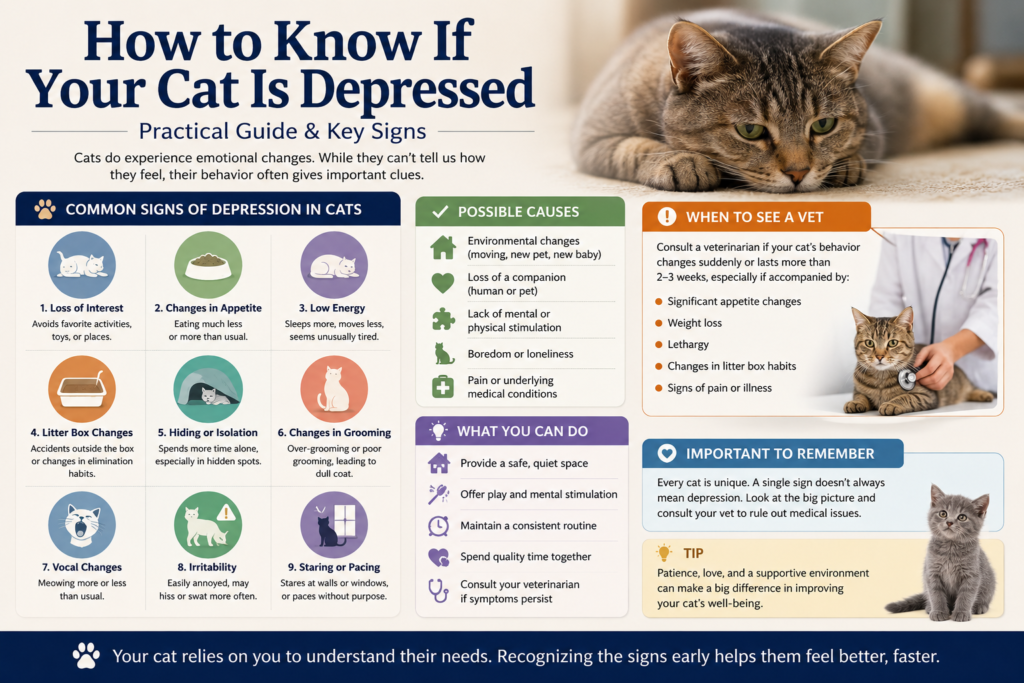
Common Signs That Suggest Depression or Emotional Distress
Changes in behavior often reflect either medical problems or emotional distress; rule out illness first with a vet before assuming depression.
| Sign | What to watch for and why it matters |
|---|---|
| Loss of appetite: reduced interest in food or treats | Appetite drops can indicate unhappiness but also signal medical issues; consult a veterinarian if a cat refuses food or water for more than about a day because it may be sickness rather than only mood change. |
| Reduced activity and play: less interest in toys or jumping | A previously active cat that becomes less exploratory or stops using favorite high spots may be depressed from environmental change or limited by pain such as arthritis; check for both behavioral and physical causes. |
| Withdrawal and hiding: avoiding interaction or retreating | Extended hiding, social withdrawal, or loss of interest in people/other pets can follow major changes (moving home, loss, or new household members) and may reflect distress requiring enrichment or veterinary assessment. |
| Poor grooming or coat changes: matted fur or neglect | Neglected grooming can signal emotional withdrawal or pain; combine grooming decline with vet evaluation because dental, arthritis, or other medical problems can be the root cause. |
| Irritability or aggression: sudden snapping or growling | New aggression or sensitivity to touch often accompanies hiding and may indicate pain or severe stress; a vet should rule out medical triggers before behavior-focused interventions. |
Trade-off: act promptly to have a vet exclude medical causes doing so narrows the problem to behavioral solutions but may mean addressing environment and pain management together.
Step-by-Step: How to Rule Out Medical Causes First
Before assuming a behavioral cause, check for medical problems that commonly change appetite, activity, grooming and social behaviour; ruling out illness is the priority because veterinarians can treat many underlying conditions and because some illness signs overlap with emotional distress.
- Observe appetite and weight: note any loss of appetite or sudden weight loss and seek veterinary evaluation when eating drops or body condition changes, since these signs more strongly indicate illness than mood alone.
- Watch for pain or aggression: respond to new hiding plus irritability, growling when touched, or sudden aggression by arranging a vet check, because those behaviours can signal physical discomfort.
- Check grooming and oral health: if grooming declines or you notice bad breath, drooling, or matted fur, have a veterinarian examine your cat for dental disease, systemic illness, or pain-related causes.
- Monitor food refusal duration: act promptly if your cat refuses food beyond one day and a second day without improvement, since persistent refusal often needs medical assessment rather than only environmental fixes.
- Document behaviour changes: record when changes began, what changed, and any other signs (vomiting, litter-box changes, breathing differences) to share with your veterinarian for faster diagnosis.
- Contact the veterinarian: describe observed signs and your records so the clinic can advise whether urgent testing or an in-person exam is needed; early veterinary assessment is less stressful and helps rule out treatable causes before behavioral plans.
Trade-off: prioritise a veterinary exam to exclude medical causes first this may delay behavioral interventions briefly but reduces the risk of missing a treatable illness.
Practical Changes to Try at Home
Start by checking health and recent changes: before changing routines, rule out illness or pain because medical problems often cause appetite loss, hiding, poor grooming, or sudden weight loss; a vet can identify issues like arthritis or dental pain that mimic depression.
- Restore routine: cats are creatures of habit, so backtrack recent daily changes and re-establish consistent feeding, play, and sleep patterns to reduce stress and help appetite recover.
- Address medical causes: if you notice appetite loss, weight loss, poor grooming, drooling, or signs of pain, prioritize a veterinary exam because these red flags point more toward illness than mood alone.
- Add short interactive play: introduce daily interactive sessions, even brief ones, to stimulate interest and reduce withdrawal while monitoring whether activity and eating improve.
- Increase environmental enrichment: provide puzzle feeders, food-dispensing toys, window perches or bird-viewing spots, and accessible scratching posts to give mental stimulation and safe outlets for energy.
- Create safe retreats: set up quiet, elevated hiding spots where your cat can feel secure and choose when to interact, which helps reduce stress after household changes like moving or new pets.
- Monitor food and water closely: if your cat is eating less, track intake and watch for refusal to eat or drink that persists, since prolonged loss of appetite or drinking can indicate a serious problem needing veterinary attention.
- Consider alternative comfort therapies: when a medical exam rules out urgent illness, discuss gentle options such as massage, acupuncture, or aromatherapy with your veterinarian as adjuncts to behavioral support.
If home changes and enrichment don’t improve appetite, grooming, or interaction, return to the veterinarian for reassessment so medical causes aren’t missed before continuing behavioral strategies.
When to Call Your Veterinarian or an Emergency Clinic
Seek veterinary care immediately for red-flag signs: refusal to eat for more than a day, rapid behavior change, sudden aggression or withdrawal, visible signs of pain such as growling when touched, severe drooling or bad breath, and unexplained weight loss these symptoms more strongly suggest illness than behavioral depression and require medical evaluation.
Call an emergency clinic when basic first-aid or waiting for a routine appointment would delay care: persistent refusal to eat or drink, signs of severe pain or sudden violent behavior, and any abrupt deterioration in grooming or activity warrant urgent attention so a veterinarian can rule out reversible medical causes.
Early veterinary assessment is less stressful and more likely to catch treatable medical problems that present like depression, though routine behavioral support can follow once illness is ruled out.
Comparing Interventions: Enrichment, Behavior Changes, and Medical Options
Practical comparison: match the likely cause to the least invasive, backed option first. If recent environmental change, loss of a companion, or reduced space fits your cat’s history, start with enrichment and routine restoration; when appetite or drinking fall sharply, or pain-related signs appear, prioritize veterinary evaluation and treatment.
| Intervention | When to prefer it and what it does | Limitations and when to escalate |
|---|---|---|
| Environmental enrichment: increase stimulation | Use when the cat shows withdrawal, lost interest in play, or recent routine/environment changes; adds hiding spots, vertical space, toys, and predictable daily interaction to restore engagement. | May not help if appetite loss, drinking reduction, or pain are present; if behaviour and eating don’t improve, seek veterinary exam. |
| Behavioral adjustments: routine and social management | Prefer when triggers include moving house, changed household composition, or temporary absence of owner; re-establish routine, gradual introductions for new pets, and consistent play times to reduce stress. | If lethargy, grooming loss, or hiding persist despite consistent routine, or if signs suggest pain, arrange veterinary assessment. |
| Medical evaluation and treatment | Choose when there is appetite loss, reduced drinking, weight change, new pain or mobility issues, or abrupt behavior shifts; vets can diagnose conditions (eg, dental disease, arthritis) that cause low mood-like signs and treat them. | Medical treatment is essential for illness-driven behavior; don’t delay if eating or drinking drops significantly or pain is suspected. |
| Alternative and supportive therapies | Consider when conventional steps leave residual withdrawal or stress; options mentioned include massage, acupuncture, or aromatherapy as adjuncts to enrichment and medical care. | is adjunctive; use only alongside veterinary guidance and after ruling out treatable medical causes. |
Decision cue: if environment- and routine-focused changes don’t restore appetite or activity, or if drinking and pain signs appear, escalate to veterinary evaluation rather than persisting with only home adjustments.
Common Mistakes Owners Make When They Suspect Depression
Owners often misread ordinary stress signals as chronic depression, which delays appropriate care. Cats are creatures of habit, so sudden routine changes commonly explain short-term appetite loss or hiding; backtracking recent changes can reveal a clear trigger and point to fixes without assuming a psychiatric problem.
- Assuming loss of appetite equals depression: Many cats eat less after a routine change, so first check for recent disruptions before labeling the behavior as depression.
- Waiting on medical checks: Treat sustained refusal to eat or drink as a possible medical emergency and seek veterinary care rather than attributing it solely to mood.
- Ignoring illness red flags: Signs like appetite loss beyond a day, sudden weight loss, poor grooming, drooling, or increased aggression can indicate illness and need a vet assessment.
- Overlooking environmental loss: Moves, reduced space, or changes in household company can reduce stimulation and activity, which may look like depression but respond to enrichment and space adjustments.
- Skipping enrichment before medicating: Owners sometimes rush to medication when adding interactive play, puzzle feeders, window perches, and safe retreat spots may restore interest and activity.
Trade-off: rule out medical causes fast, then try targeted environmental fixes first doing both narrows causes but may mean extra vet time up front.
Troubleshooting: If Changes Don’t Help After Two Weeks
If basic routine and enrichment changes don’t improve your cat’s mood or behavior, follow a stepwise approach that rules out illness and then adds targeted support.
- Re-check for red flags: Confirm there’s no refusal to eat or drink, sudden weight loss, signs of pain, or abrupt aggression; these point toward medical causes that need a vet.
- Schedule a veterinary exam: Ask the vet to evaluate for illness, pain, or conditions such as arthritis that can reduce mobility and enrichment and mimic depression.
- Document behavior changes: Keep a short log of appetite, litter use, grooming, hiding, and interactions to bring to the vet; clear notes help distinguish medical from behavioral issues.
- Increase targeted enrichment: If the vet rules out medical causes, add interactive play, puzzle feeders, window perches, and safe retreat spaces to restore stimulation and routine.
- Consider environmental loss adjustments: If the cat experienced a move or lost space or companions, restore vertical space and predictable routines to counteract reduced activity.
- Follow up with the vet: If problems persist despite environmental fixes and no clear medical diagnosis, return to the veterinarian to reassess and discuss behavioral or medical interventions.
Next consideration: persistent or worsening signs after these steps suggest deeper medical or behavioral consultation, which may require more specialized assessment.
FAQ
What if my cat is hiding more but still eating?
If your cat is hiding more but still eating, start by observing other behaviors and grooming; hiding plus normal appetite can reflect stress or environmental changes rather than illness, but worsening signs like appetite loss or poor grooming warrant a vet check to rule out medical causes.
Can moving to a new house make my cat depressed?
Yes, major changes such as moving to a new home can trigger withdrawal or low activity in cats because the altered environment and reduced familiar territory may cause stress and reduced interest in normal behaviors.
How long before behavior changes are serious?
Treat persistent changes in appetite, drinking, grooming, or increased hiding as potentially serious and seek veterinary evaluation promptly; loss of appetite or not drinking for more than a short period especially points toward medical problems that should be checked without delay.
Are there medications for cat depression?
Medications and behavioral therapies can be part of treatment for cats showing true depressive-type behavior, but a veterinarian should first rule out medical causes and then recommend appropriate drug or behavioral options tailored to the individual cat.
Could a physical illness look like depression in cats?
Yes, many illnesses produce signs that mimic depression, including appetite loss, poor grooming, hiding, irritability, or weight loss, so a veterinarian should evaluate any change in behavior to exclude medical conditions.
How can I help my cat recover after a stressful change?
Support your cat with environmental enrichment (interactive play, perches, safe hiding spots, and puzzle feeders), keep routines consistent, reintroduce social contact gradually, and consult your veterinarian if behavior doesn’t improve so medical or behavioral interventions can be considered.
Conclusion
Changes that look like low mood in cats most often reflect a medical issue or a concrete change in their environment rather than a human-style depression. Start by ruling out illness or pain with your veterinarian, especially for loss of appetite, weight loss, hiding, poor grooming or sudden aggression; these signs point to treatable medical causes. If a vet clears physical problems, restore predictable routines, add enrichment tailored to your cat’s mobility and preferences, and address recent household changes (moving, altered access, or loss of a companion). If basic adjustments don’t improve behaviour and you still see red-flag signs or abrupt deterioration, revisit the vet for further diagnostics or referral to a behavior specialist.
References
- Cats | Healthy Pets, Healthy People | CDC — https://www.cdc.gov/healthy-pets/about/cats.html
- Ask a Vet: Could my cat be depressed? – MRFRS | The Merrimack River Feline Rescue Society — https://mrfrs.org/ask-a-vet-could-my-cat-be-depressed/
- Is Cat Depression Real? | PetMD — https://www.petmd.com/cat/behavior/can-cats-get-depressed
- Is Your Cat Sad? Signs & Causes of Cat Depression — https://www.eastgateanimalhospital.com/site/blog/2023/11/15/cat-sad-depression
- 5 Signs Your Cat Is Depressed — and How to Help — https://yourpetandyou.elanco.com/us/health-and-care/5-signs-your-cat-is-depressed
- Signs of Depression in Cats: How to Tell If Your Cat Is Depressed or Sick – Autumn Trails Veterinary — https://autumntrailsvet.com/signs-of-depression-in-cats/
- Is My Cat Depressed? What are the Signs & How to Help — https://www.mountpleasant.com.sg/education/cat-depression/