
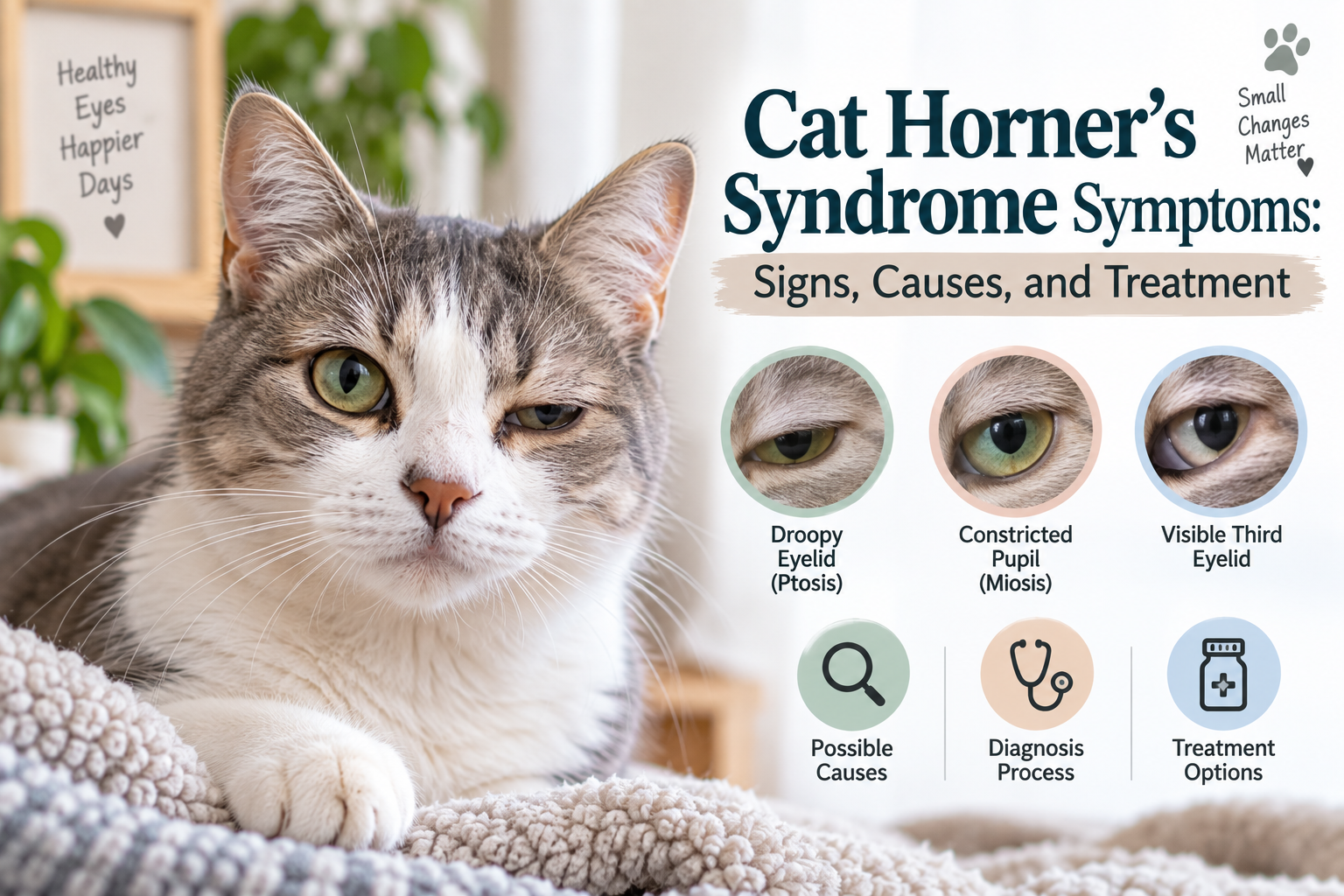
Cat Horner’s syndrome symptoms usually affect one side of the face and eyes. You may notice a drooping upper eyelid, a smaller-looking pupil, the third eyelid partly covering the eye, or the eye appearing slightly sunken. These signs can appear suddenly and may be caused by an injury, an ear problem, inflammation, or another condition affecting the nerves that control the eye and face.
Horner’s syndrome is not usually painful by itself, but it can point to an underlying problem that needs veterinary attention. If your cat suddenly develops eye changes, especially after a fight, fall, bite wound, or head injury, contact your veterinarian promptly.
What is Horner’s syndrome in cats?
Horner’s syndrome is a group of eye and facial changes caused by disruption of a nerve pathway called the sympathetic nerve supply. This pathway runs from the brain, through the neck and chest, and up to the eye and facial tissues.
When those nerves stop working normally, the affected eye loses some of the signals that help control the pupil, eyelids, and position of the eye. The result is usually a collection of signs on one side of the face.
Horner’s syndrome is a neurological condition, not a disease that spreads from one cat to another. It is also a syndrome rather than a single illness. In other words, the visible eye changes are clues, while the underlying cause may be something different in each cat.
Common cat Horner’s syndrome symptoms
The signs can vary, but the classic symptoms usually affect one eye. The most common include:
- A small pupil, called miosis, in the affected eye
- A drooping upper eyelid, which can make the eye look partly closed
- The third eyelid showing more than usual, often as a pale or pink membrane moving across the inner corner of the eye
- A sunken-looking eye, called enophthalmos
- A raised lower eyelid, which may make the eye look smaller
- Different pupil sizes, with the affected pupil noticeably smaller than the other one
- Reduced sweating on one side of the face, although this is difficult for owners to see in cats because of their fur
These changes may develop over a few hours or become noticeable over a day or two. Some cats have only mild eyelid or pupil changes, while others show several signs at once.
What the eye may look like
A cat with Horner’s syndrome may appear to have one smaller eye. The affected eye itself is not necessarily physically smaller. Instead, the upper eyelid droops, the third eyelid rises, the pupil becomes smaller, and the eyeball may sit slightly farther back in the socket.
The difference can be easier to see in a well-lit room. Comparing both eyes at the same time may help you notice the change, but avoid shining a bright light directly into your cat’s eyes.
Is Horner’s syndrome painful?
Horner’s syndrome itself is generally not considered painful. However, the condition causing it may be painful or serious. For example, an ear infection, eye injury, bite wound, inflammation, or trauma can cause discomfort even if the nerve-related signs do not.
A cat in pain may hide, stop eating, resist handling, squint, vocalize, or become less active. If your cat is squinting heavily, rubbing the eye, keeping it shut, or showing redness or discharge, veterinary care is especially important because a separate eye problem may be present.
Why do cats develop Horner’s syndrome?
Horner’s syndrome can occur when the sympathetic nerve pathway is damaged or interrupted anywhere along its route. In cats, the exact cause is not always found, but several possibilities are recognized.
Ear disease
Middle- or inner-ear disease is a common possible cause because part of the nerve pathway travels close to structures in the ear. A serious ear infection can affect nearby nerves and lead to Horner’s syndrome.
You may also notice:
- Head shaking
- Scratching at the ear
- Bad-smelling ear discharge
- A head tilt
- Poor balance
- Nausea or vomiting
- Trouble walking normally
An ear problem may not always be obvious from the outside. A cat can have deeper ear disease even when the ear flap looks fairly normal.
Trauma or injury
A fall, car accident, bite wound, blunt impact, or injury to the neck or chest can damage the nerve pathway. Outdoor cats and cats involved in fights may be at higher risk of hidden puncture wounds or trauma.
Check your cat gently for swelling, tenderness, limping, scabs, or small punctures, but do not press on painful areas. Cat bite wounds can close over quickly and trap infection beneath the skin.
Inflammation or infection
Inflammation near the eye, ear, brain, spinal cord, neck, or chest can affect the nerves involved. Some infections may cause neurological or eye signs along with fever, tiredness, poor appetite, or other changes.
The cause cannot be identified reliably from the eye appearance alone. A veterinarian may need to examine your cat’s ears, eyes, nervous system, and entire body.
Problems in the chest, neck, or brain
The nerve pathway passes through the neck and chest before reaching the eye. A mass, inflammation, or other disease in one of these areas can sometimes interrupt the pathway. Neurological disease affecting the brain or spinal cord is another possibility.
These causes are less obvious from home. Signs such as weakness, trouble walking, seizures, breathing changes, severe lethargy, or behavior changes make prompt veterinary evaluation more urgent.
No clear cause
Sometimes testing does not reveal a specific cause. This is sometimes called idiopathic Horner’s syndrome. In these cases, the signs may improve gradually over time, but your veterinarian should still assess your cat first. A diagnosis of idiopathic Horner’s syndrome is generally made after other likely problems have been considered.
Horner’s syndrome or another eye problem?
Several conditions can make a cat’s eye look abnormal. Horner’s syndrome is only one possibility. Similar-looking signs may occur with:
- Conjunctivitis
- A corneal scratch or ulcer
- Glaucoma
- Uveitis, or inflammation inside the eye
- A foreign object in the eye
- Dehydration or severe illness
- A neurological condition affecting pupil size
- An injury to the eye or surrounding tissues
The treatment for these problems can be very different. For example, glaucoma can threaten vision and needs urgent treatment, while an ear infection may require a different examination and medication plan.
Do not use leftover eye drops or human eye medicine unless a veterinarian specifically tells you to. Some products can worsen an eye injury or delay the right diagnosis.
When should you call the veterinarian?
Call your veterinarian as soon as you notice new Horner’s syndrome symptoms. A same-day appointment is a sensible choice when possible, especially if the signs appeared suddenly or your cat has any other symptoms.
Seek urgent veterinary care if the eye changes occur with:
- A known head, neck, chest, or eye injury
- Severe pain, constant squinting, or an eye kept shut
- Eye redness, cloudiness, bleeding, or heavy discharge
- A head tilt, loss of balance, or difficulty walking
- Repeated vomiting
- Weakness, collapse, seizures, or unusual confusion
- Trouble breathing
- Sudden loss of vision or bumping into objects
- A suspected bite wound
Even if your cat seems comfortable, do not ignore a new uneven pupil or drooping eyelid. Cats often hide discomfort, and the underlying cause may be easier to treat when addressed early.
How veterinarians diagnose Horner’s syndrome
Your veterinarian will usually begin with a physical and neurological examination. The goal is to confirm whether the pattern fits Horner’s syndrome and search for the location and cause of the nerve problem.
The appointment may include:
- A detailed history. Tell the veterinarian when you first noticed the signs, whether they appeared suddenly, and whether your cat has had recent fights, falls, illness, ear problems, or medication changes.
- An eye examination. The veterinarian may check pupil responses, eyelid position, the third eyelid, the cornea, eye pressure, and the inside of the eye.
- An ear examination. The ear canal and eardrum may be checked for inflammation, infection, blockage, or other abnormalities.
- A neurological examination. This helps look for balance problems, weakness, abnormal reflexes, or other signs that could point to a broader neurological issue.
- Additional testing when needed. Blood tests, ear testing, imaging, or referral to a veterinary ophthalmologist or neurologist may be recommended depending on the findings.
In some cases, a veterinarian may use special eye drops to help confirm that the nerve pathway is affected and to help estimate where the problem may be. These tests should only be done under veterinary guidance.
How is Horner’s syndrome treated in cats?
Treatment depends on the underlying cause. There is no single treatment that fixes every case.
Examples include:
- Ear disease: The veterinarian may prescribe medication for infection or inflammation and may recommend cleaning or further testing.
- Painful injuries or wounds: Treatment may include pain relief, wound care, antibiotics when appropriate, and monitoring for infection.
- Eye disease: Eye drops or other treatment may be needed if there is a corneal injury, inflammation, infection, or pressure problem.
- Inflammatory or neurological disease: More detailed testing and targeted medication may be necessary.
- No identifiable cause: The veterinarian may recommend monitoring and follow-up examinations while watching for improvement or new signs.
Do not give your cat human pain relievers. Many common human medications can be dangerous or fatal to cats. Use only medications prescribed or approved by your veterinarian for your cat.
How long does Horner’s syndrome last?
The outlook and recovery time depend on the cause. Some cats improve over several weeks, while others may have signs for longer or retain mild changes. Cats with an underlying ear problem, injury, or other disease may improve as that condition is treated.
If no cause is found, your veterinarian may recommend watching the eye and scheduling a recheck. Improvement is encouraging, but worsening signs or new neurological symptoms should be reported promptly.
Keep your cat’s environment calm while you wait for care. Prevent rough play and outdoor roaming, and take a clear photo of both eyes if the appearance changes. A photograph can help your veterinarian understand how quickly the signs developed.
What should you do at home before the appointment?
There are a few safe steps you can take:
- Keep your cat indoors and away from other pets if an injury or fight is possible.
- Do not force the eyelids open or press on the eye.
- Do not clean deep inside the ear unless your veterinarian instructs you to.
- Avoid human eye drops, ear drops, and pain medicines.
- Note changes in appetite, balance, activity, vision, and litter box use.
- Write down any recent falls, fights, illnesses, or possible exposure to medications or chemicals.
- Take photos or a short video in normal room light for comparison.
If your cat is rubbing the eye, ask the veterinary clinic whether an Elizabethan collar is appropriate. Preventing rubbing may help avoid additional damage, but the collar should fit correctly and your cat should be monitored.
Key takeaways
Cat Horner’s syndrome symptoms commonly include a small pupil, drooping upper eyelid, raised third eyelid, and a sunken-looking eye on one side of the face. These signs result from disruption of the nerves serving the eye, but they do not reveal the cause by themselves.
Ear disease, trauma, inflammation, and other problems can be involved. Because some look-alike eye conditions are urgent, arrange a veterinary examination when you notice sudden eye or facial changes. Keep your cat safe, avoid unapproved medications, and watch for pain, balance problems, vision changes, or other signs of illness.