
You drop a piece of food on the kitchen floor, and before you can bend down, your cat swoops in to inspect it. If you have ever panicked in this exact moment and quickly searched which fruit is poisonous to cats, you already know the stress of keeping a curious pet safe. Cats are usually picky eaters, but sometimes they decide to taste whatever you happen to be snacking on.
You want to give your feline friend a safe, healthy life, and understanding the real dangers sitting in your fruit bowl is a huge part of that. Here is everything you have likely tried to figure out about toxic fruits, the hidden hazards in your kitchen, and how to confidently handle an accidental bite.
The Direct Answer: Which Fruit is Poisonous to Cats?
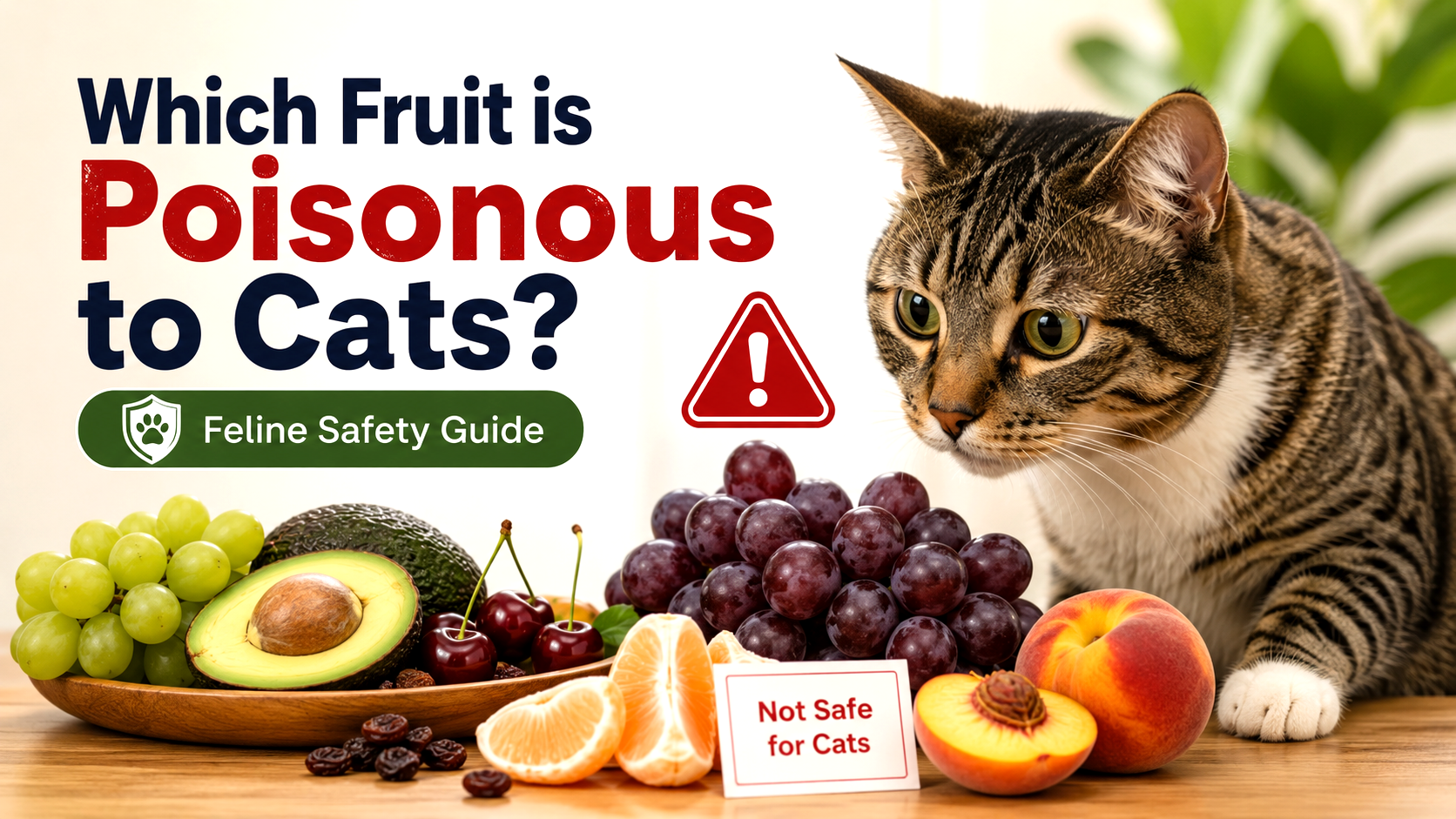
If you want the fastest answer to which fruit is poisonous to cats, grapes and raisins are the most toxic. Even a tiny amount causes sudden kidney failure. Other dangerous fruits include lemons, limes, oranges, grapefruits, cherries, and plums. Keep these far away from your cat.
You might think a small bite of human food is harmless. However, a cat’s body processes food very differently than yours. Their livers lack certain enzymes that humans use to break down compounds. What gives you energy can easily shut down their tiny internal organs.
| Toxic Fruit | Danger Level | Primary Health Threat |
| Grapes & Raisins | Extreme | Sudden kidney failure |
| Lemons & Limes | High | Essential oil toxicity |
| Cherries | High | Cyanide poisoning |
The Silent Danger of Grapes and Raisins
You have probably left a bowl of trail mix or a plate of fresh grapes on the coffee table at some point. It is a common habit, but it is also one of the biggest risks you can take as a cat owner. Grapes and raisins are incredibly toxic to cats. Researchers believe the high levels of tartaric acid found in grapes are the likely cause of the poisoning.
The result of eating a grape is rapid, severe kidney damage. You cannot wait around to see if your cat gets sick after eating a raisin. The damage happens fast, and you must act right away.
Hidden Fruit Dangers in Your Kitchen
Sometimes the fleshy part of the fruit is not the only problem. You also have to worry about stems, leaves, seeds, and tough rinds. When you look at which fruit is poisonous to cats, you must look at the entire plant.
| Fruit Part | Hidden Hazard |
| Apple Seeds | Contains small amounts of cyanide |
| Citrus Rinds | Packed with highly toxic essential oils |
| Cherry Pits | Choking hazard and major cyanide risk |
| Peach Stones | Can easily block the digestive tract |
Why Citrus Fruits Are a Problem
You might love the smell of fresh oranges or a slice of lemon in your water. Your cat, thankfully, probably hates that exact smell. Citrus fruits contain essential oils like d-limonene, as well as compounds called psoralens, which are highly toxic to felines.
If your cat somehow eats a piece of lemon or licks a cutting board covered in lime juice, they can suffer quickly. They may experience severe stomach upset, heavy drooling, muscle tremors, or a dangerous drop in blood pressure.
The Threat of Stone Fruits
Plums, peaches, and cherries fall into the stone fruit category. The juicy, fleshy part of a peach is not inherently toxic to your cat, but the stems, leaves, and pits contain cyanide.
If your cat chews on a crushed cherry pit, they are risking a very serious toxic reaction that stops their cells from absorbing oxygen. Plus, these hard pits are the perfect size to cause severe, life-threatening blockages in a small cat’s intestines.
Recognizing the Symptoms of Fruit Poisoning
If you are not entirely sure if your cat ate something toxic, you have to watch their behavior closely. Cats naturally hide their pain as a survival instinct. By the time they actually look sick to you, they are often already in serious trouble.
| Common Symptom | What It Often Means |
| Excessive Drooling | Extreme nausea or painful mouth irritation |
| Sudden Vomiting | The body is desperately trying to expel toxins |
| Severe Lethargy | The toxin is shutting down internal organs |
| Loss of Appetite | Heavy stomach pain or early kidney distress |
Early Warning Signs You Cannot Ignore
You know your cat’s normal routine better than anyone. If they suddenly stop playing, hide deep under the bed, or refuse to eat their absolute favorite treats, you need to pay attention.
When a cat eats a highly toxic fruit like a raisin, the first signs are usually vomiting and strange hyperactivity, followed very quickly by extreme tiredness and a lack of urination. Do not simply assume they just have an upset stomach from a random hairball.
How to Handle a Feline Poisoning Emergency
Knowing which fruit is poisonous to cats is only half of the battle. You also need to know exactly what to do when an accident actually happens. Panic is your absolute worst enemy in this situation.
| Common Mistake | A Much Better Approach |
| Waiting hours to see if symptoms pass | Call a pet poison hotline or your vet immediately |
| Trying to force the cat to vomit at home | Only induce vomiting if a vet explicitly instructs you to |
| Wasting time searching online for home remedies | Drive directly to an emergency animal clinic |
Steps to Take Right Away
First, calmly remove any remaining fruit from the floor or counter so your cat cannot eat more of it. Next, try to figure out exactly what kind of fruit they ate, how much they ate, and what time it happened.
Finally, call your veterinarian or an animal poison control center right away. They will give you clear, specific instructions based on your cat’s weight. You will very likely need to take your pet into the clinic for IV fluids, blood tests, and vital monitoring.
Safe Fruits You Might Mistake for Toxic Ones
With all these intense warnings, you might start to assume every single fruit is a hazard. That is a very common misunderstanding. There are actually a few fruits that are safe for your cat in very small amounts, provided you prepare them correctly.
| Fruit | Safe Preparation Method |
| Apples | Remove all seeds and the core, slice very thin |
| Blueberries | Wash thoroughly, serve raw in tiny amounts |
| Watermelon | Remove all seeds and the hard green rind entirely |
| Strawberries | Wash and cut into tiny, manageable pieces |
The Reality of Cats and Sugar
Even if a specific fruit is totally safe, you must remember that cats cannot taste sweetness at all. They lack the taste receptors for sugar. If they want to eat a piece of strawberry, they likely just enjoy the moisture or the strange texture.
Because all fruits are naturally high in sugar, feeding them too much can lead to obesity and feline diabetes over time. Cats are obligate carnivores, meaning they only truly need meat to survive. Stick to small, rare fruit treats only if you decide to share at all.
Common Mistakes When Feeding Cats Human Food
You develop daily habits over time, and sometimes those routines are not the safest for your pets. It is easy to accidentally put your cat at massive risk without even realizing it.
| Human Habit | Feline Risk |
| Leaving fruit bowls on low coffee tables | Cats can easily reach in and chew on toxic items |
| Tossing dropped food scraps on the floor | Cats eat the dropped food much faster than you can clean it up |
| Assuming dogs and cats share the same risks | Cats are far more sensitive to certain toxins than dogs are |
Setting Better Kitchen Rules
You can prevent almost all fruit toxicity issues by changing a few small things in your house. Store grapes securely in the fridge instead of leaving them out in a bowl on the counter. Throw toxic fruit pits directly into a secure, heavy-lidded trash can.
Most importantly, remind guests and young children not to share their snacks with the cat. These simple, daily steps give you incredible peace of mind.
Final Thoughts
Learning exactly which fruit is poisonous to cats fundamentally changes the way you look at your kitchen counter. You start to see an innocent bunch of grapes or a discarded lemon rind as a very real hazard. The biggest lesson you can take away is to always prioritize caution. Keep the known toxic items completely out of reach, and stick to proper, meat-based cat treats for rewards.
You have total control over what your cat eats inside your home. By staying aware, cleaning up dropped food quickly, and knowing exactly who to call in a sudden emergency, you ensure your feline friend stays safe, healthy, and happy. Do not leave things to chance—your cat relies entirely on you to make the right, safe choices for them every single day.