
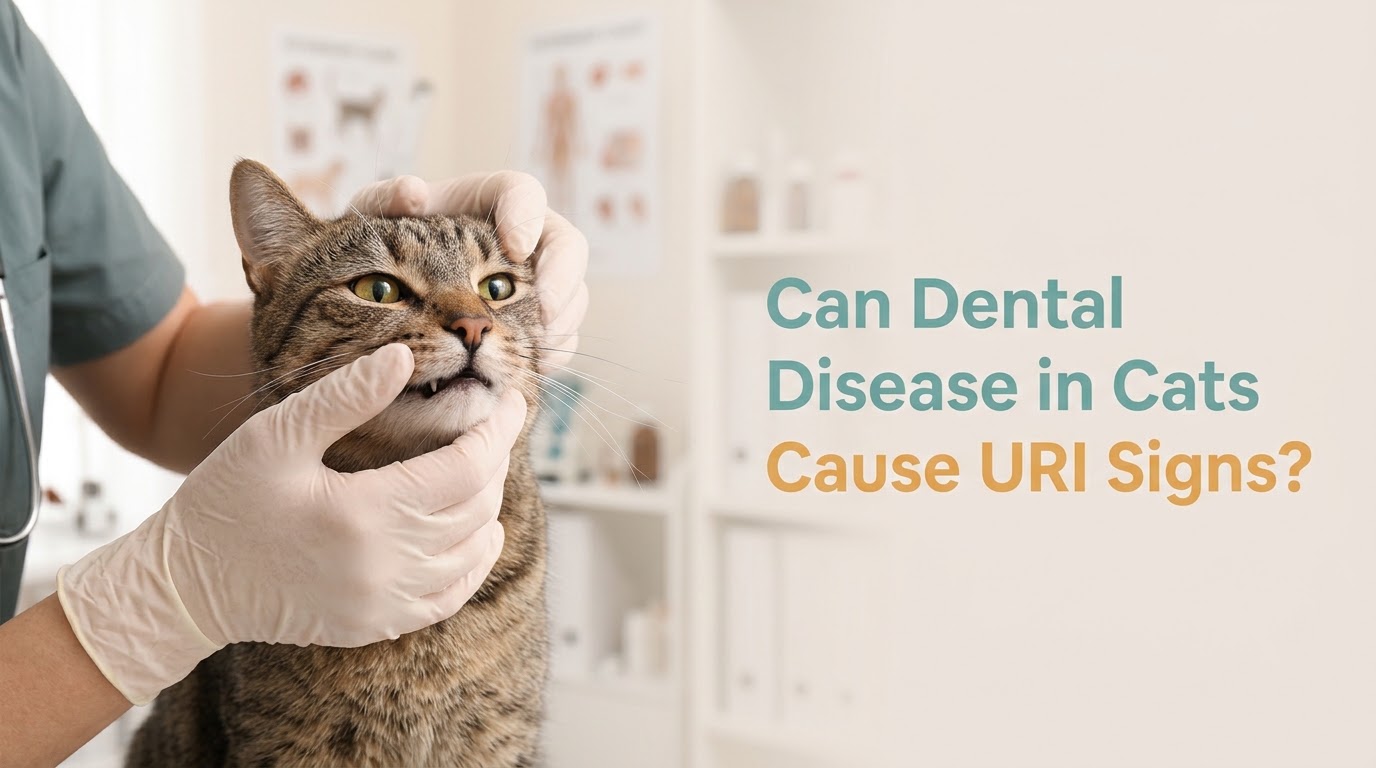
Short answer: Can dental disease cause upper respiratory infection signs in cats?
Yes, it can cause upper respiratory infection signs in cats, but that does not mean it causes the usual contagious feline URI. In most cats, a true upper respiratory infection is infectious and often viral. Dental disease is different. It can create signs that look like a URI, make an existing problem worse, or lead to secondary infection near the nose and mouth.[1][3][4]
What usually causes a true feline upper respiratory infection
A true feline upper respiratory infection is most often caused by infectious agents, especially feline herpesvirus and feline calicivirus. Other possible causes include Chlamydophila felis and Bordetella bronchiseptica.[1][8] These diseases spread differently from gingivitis, periodontal disease, or a tooth root infection. They mainly affect the nose, throat, eyes, and upper airways, although some can also affect the mouth.[1]
Where dental disease fits into the picture
Dental disease usually does not cause the common viral URI itself. Instead, it can mimic it. A painful mouth, inflamed gums, infection below the gumline, or damage between the mouth and nasal cavity can lead to sneezing, nasal discharge, drooling, and poor appetite.[3][4][6] That is why some cats that seem “congested” are actually dealing with oral pain or tooth disease.
How dental disease can create nose and breathing symptoms
The mouth-to-nose connection: tooth roots, gums, and nearby anatomy
In cats, the mouth and nose sit close together. When gingivitis progresses to periodontal disease, inflammation spreads deeper below the gumline. This can damage the tissues that support the teeth and sometimes involve the tooth roots and surrounding bone.[3][4][6] Infection in the upper jaw is especially important because those teeth are near the nasal cavity.
If a cat develops a tooth root infection, severe periodontal disease, or an oronasal fistula, material from the mouth can irritate or infect nearby nasal structures.[4][6][7] An oronasal fistula is an abnormal opening between the mouth and the nose. When it is present, food, saliva, and bacteria can move where they should not. That can trigger sneezing, discharge, foul odor, and chronic irritation.
Why dental disease can look like a respiratory problem
Dental disease can cause sneezing, nasal discharge, halitosis, drooling, reluctance to eat, and facial discomfort.[3][4][7] Some cats paw at the mouth, chew on one side, drop food, or seem quiet and withdrawn because eating hurts. Owners may notice “stuffy” breathing or reduced appetite and assume the problem is a cold, when the main issue is oral pain.
These signs are often chronic, recurrent, or worse on one side rather than a short, simple illness.[2][5] That pattern can be a clue that a dental problem is involved.
Dental disease vs a true URI: symptoms that overlap and symptoms that stand out
Symptoms that can happen with both
Dental disease and a true upper respiratory infection can look similar at first. Both can cause sneezing, nasal discharge, reduced appetite, drooling, and general discomfort.[1][3][4] Some cats also seem tired or less social.
The reason for poor appetite can differ. With a URI, congestion can dull a cat’s sense of smell, and cats may eat less because they cannot smell food well or feel sick.[1][8] With dental disease, the problem is often oral pain. The cat wants to eat but finds chewing painful.[3][4] A cat with stomatitis or tooth resorption may also drool or avoid crunchy food because the mouth is very sore.[3][6]
Red flags that point more toward dental disease
Some signs lean more strongly toward a dental cause. Halitosis is a big one. A strong foul odor from the mouth is much more typical of dental disease than of a simple viral URI.[3][4][6] Other dental clues include:
- Dropping food or chewing on one side
- Pawing at the mouth
- Jaw pain or pain when the face is touched
- Visible tartar or red, inflamed gums
- Bleeding from the gums
- Facial swelling
- Trouble opening the mouth
One-sided nasal discharge can also be important. A routine viral URI often causes signs in both nostrils, while a dental problem, nasal mass, polyp, fungal disease, or localized infection may cause discharge that is unilateral, persistent, or blood tinged.[2][5][7] Chronic symptoms that keep coming back, especially when “cold” treatment does not help, deserve a dental and nasal workup through a licensed veterinarian.
Differential diagnosis table: what else can cause chronic sneezing or nasal discharge in cats?
Compare common lookalikes in one table
| Condition | Typical clues | Are oral signs common? | Can discharge be unilateral? | Common next tests |
|---|---|---|---|---|
| Dental disease | Halitosis, oral pain, dropping food, facial swelling, sneezing | Yes | Yes | Veterinary oral exam, dental radiographs[3][4][6] |
| Viral URI | Acute sneezing, nasal discharge, eye discharge, congestion, reduced appetite | Sometimes | Usually not the main clue | Physical exam, history, infectious testing in some cases[1][2] |
| Chronic rhinitis | Long-term sneezing and discharge, may follow prior infection | No | Can be | Nasal imaging, rhinoscopy, sampling[2][5] |
| Oral ulcers or stomatitis | Severe mouth pain, drooling, bad breath, poor eating | Yes | Usually no | Oral exam, dental imaging, biopsy in select cases[3][6] |
| Calicivirus-associated oral disease | URI signs plus oral ulcers | Yes | Usually no | Exam, history, infectious testing when needed[1][8] |
| Nasal tumor | Chronic discharge, bleeding, facial change, poor response to treatment | No | Often yes | Imaging, rhinoscopy, biopsy[2][5] |
| Nasal polyp | Noisy breathing, discharge, possible ear signs | No | Can be | Imaging, endoscopy, exam under sedation[2][5] |
| Fungal disease such as Cryptococcus | Chronic discharge, swelling over nose, poor response to routine care | No | Can be | Fungal testing, imaging, sampling[2][5] |
Several of these conditions overlap. Only a veterinarian can confirm the cause, and some cats have more than one problem at the same time.[2][5]
When dental disease and respiratory disease happen together
Calicivirus oral ulcers are not the same as periodontal disease
Feline calicivirus can cause oral ulcers along with respiratory signs such as sneezing and nasal discharge.[1][8] That mouth pain is different from plaque, gingivitis, periodontal disease, or a tooth root infection. The signs may look similar to an owner, but the cause is not the same.
Why one problem can mask the other
A cat may have chronic dental disease and an infectious or inflammatory nasal problem at the same time.[2][3] If respiratory signs continue after URI treatment, or if mouth pain remains after congestion improves, the cat may need a dental recheck or a broader workup. Persistent overlap is one reason these cases can be tricky.
What a veterinarian will do to find the real cause
Oral exam, sedation, and dental radiographs
A quick look in the mouth is often not enough. Cats are good at hiding pain, and many important problems sit below the gumline.[3][4][6] A full veterinary oral exam may require sedation or anesthesia so the veterinarian can safely inspect all teeth and tissues. This is especially true when stomatitis, tooth resorption, jaw pain, or severe periodontal disease is suspected.
Dental radiographs are a key part of the workup because they can show tooth root infection, bone loss, retained roots, and resorptive lesions that may be missed on surface exam alone.[4][6] If dental disease is the driver of the nasal signs, finding the hidden root problem matters.
When the vet may add nasal testing or imaging
If the cat has one-sided discharge, facial swelling, chronic symptoms, bleeding, or poor response to initial treatment, the veterinarian may recommend more testing.[2][5] This may include nasal imaging, rhinoscopy, PCR or other infectious testing, or sampling for fungal disease, chronic rhinitis, masses, or other nasal conditions.[2][5] The goal is to separate a dental source from a primary nasal disease, or to identify both.
Treatment depends on the cause, not just the symptoms
Dental treatment versus URI treatment
Dental disease treatment may include professional cleaning, extractions, pain control, and treatment of infection when indicated by the veterinarian.[3][4][6] Cats with tooth resorption, advanced periodontal disease, or painful root problems usually need more than home care.
True URI care is different. It may focus on supportive care, hydration, nutrition support, clearing nasal secretions, and cause-specific treatment when appropriate.[1][2] Chronic rhinitis, fungal disease, and other non-dental causes each have their own plan. That is why treatment should follow diagnosis, not guesswork.
Common myths to correct
Antibiotics do not fix every sneeze, and they do not fix every bad tooth.[2][4] It is also risky to assume a cat has “just a cold” when foul breath, mouth pain, or facial swelling are present. Home dental products can help with prevention, but they do not replace treatment for advanced disease.[3][4]
When to call the vet urgently
Urgent red flags
Seek prompt veterinary care if your cat has trouble breathing, cannot eat or drink, has major facial swelling, bleeding from the nose or mouth, severe pain, dehydration, or rapid worsening of signs.[1][2][4] Persistent one-sided nasal discharge, a strong foul odor from the mouth, or symptoms that keep returning also deserve timely attention.[2][3][5] Because dental and respiratory signs overlap, waiting too long can delay the right diagnosis.
Frequently Asked Questions
Can dental disease in cats cause upper respiratory infection signs?
Yes. Dental disease can cause sneezing, nasal discharge, bad breath, and facial pain that resemble a URI, but it usually does not cause the common contagious viral URI itself.[1][3][4]
How can I tell if my cat’s sneezing is from dental disease or a URI?
Look for mouth-focused clues such as halitosis, drooling, chewing problems, pawing at the mouth, visible gum disease, facial swelling, or one-sided nasal discharge. A veterinary exam is needed to confirm the cause.[2][3][4]
What are the signs of chronic upper respiratory tract disease in cats?
Common signs include sneezing, nasal discharge, congestion, noisy breathing, reduced appetite, and watery eyes. If signs are chronic, recurrent, or one-sided, other causes such as dental disease should be ruled out.[2][5]
Can a bad tooth make a cat’s nose run?
Yes. Severe dental disease or a tooth root infection near the upper jaw can affect nearby nasal structures and lead to discharge or sneezing.[4][6][7]
When should a cat with inflamed gums or bad teeth see a veterinarian?
Sooner rather than later, especially if the cat has bad breath, mouth pain, trouble eating, facial swelling, nasal discharge, or symptoms that keep coming back.[3][4][6]
References
- Respiratory Infections | Cornell University College of Veterinary Medicine
- Chronic Upper Respiratory Tract Disease in Cats
- Feline Dental Disease | Cornell University College of Veterinary Medicine
- Dental Disease in Cats | VCA Animal Hospitals
- Snots and Snuffles: Rational Approach to Chronic Feline Upper Respiratory Syndromes – PMC
- Dental Disorders of Cats – Cat Owners – Merck Veterinary Manual
- Dental Disease and Upper Respiratory Infections in Cats
- What You Should Know About Feline Upper Airway Infections – Animal Medical Center of Chicago