
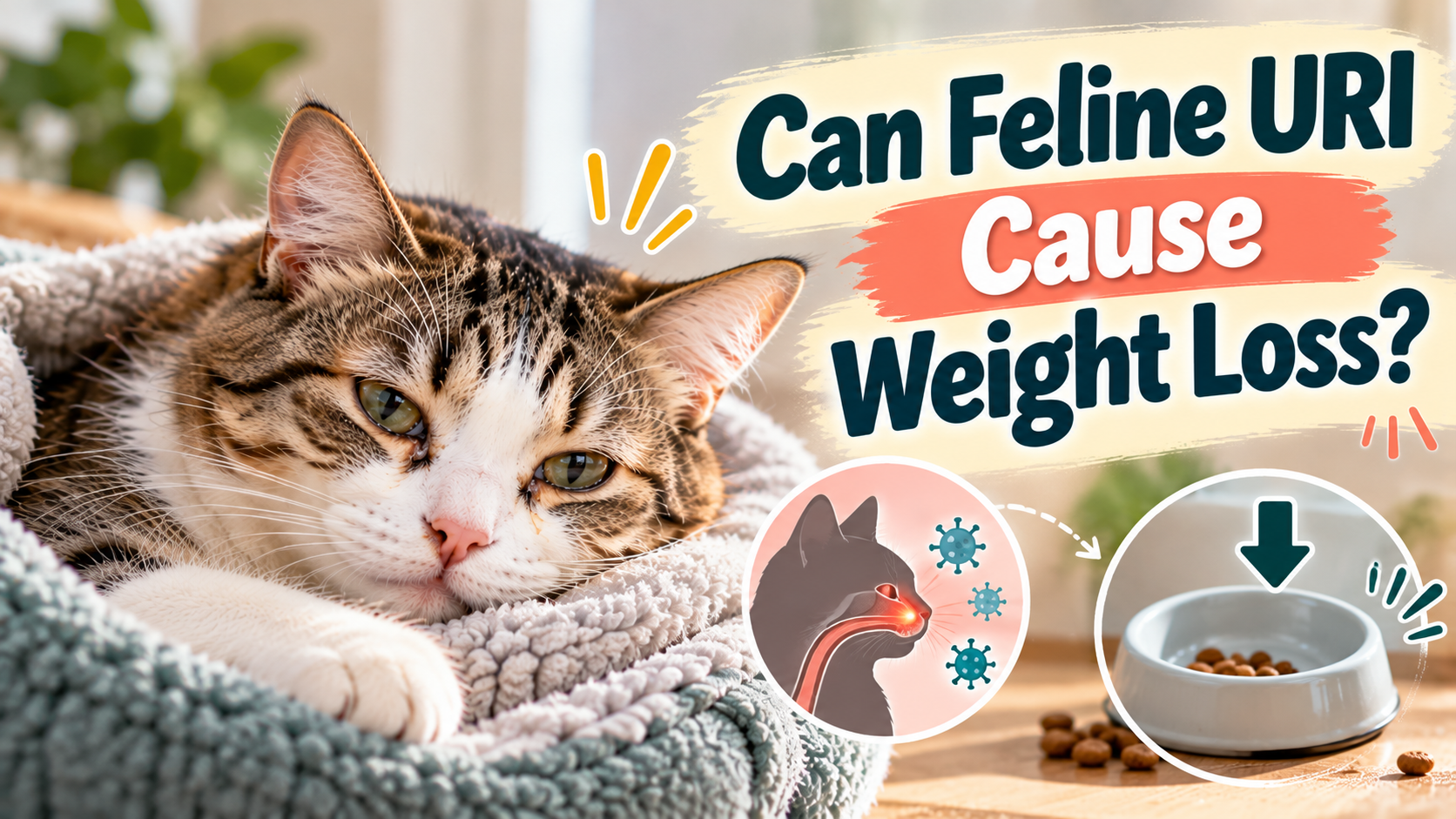
Direct answer: Can a feline upper respiratory tract infection cause weight loss?
Short answer for pet owners
Yes. A feline upper respiratory infection, also called a feline upper respiratory tract infection, can cause weight loss, but usually not because the infection directly burns calories. The usual reason is loss of appetite: the cat cannot smell food well, feels miserable from fever, drinks less, or has pain in the mouth while chewing.[1][2][5] A mild dip in appetite may happen for a short time in an uncomplicated case, but persistent weight loss, visible thinning, or complete food refusal should not be ignored.[1][3]
What a URI usually looks like
Feline URI is part of the feline respiratory disease complex and commonly causes sneezing, nasal discharge, eye discharge, congestion, fever, lethargy, and appetite loss.[2][5][6] Common infectious contributors include feline herpesvirus type 1, feline calicivirus, Bordetella bronchiseptica, Chlamydia felis, and Mycoplasma.[2][3][6] Those signs can easily lead to eating and drinking less, which is why weight loss may follow.
Why feline URI can lead to weight loss
Congestion can make food seem unappealing
Cats rely heavily on smell to recognize food and feel interested in eating.[1][5] When the nose is blocked by congestion or discharge, even a favorite meal may seem bland. A stuffed-up cat may walk to the bowl, sniff, and turn away. If that reduced intake lasts for several days, body weight can drop, especially in small or lean cats.[1][6]
Fever, lethargy, and dehydration reduce intake
URI does not just affect the nose and eyes. It can make a cat feel generally sick. Fever often brings lethargy, more sleeping, hiding, and less interest in food or water.[1][2] If the cat also becomes dehydrated, weakness and appetite loss can worsen, creating a cycle where the cat feels too unwell to eat and then feels even worse because it is not eating enough.[3][4]
Mouth ulcers and oral pain, especially with calicivirus
This is one of the most important reasons a cat with URI may lose weight. Feline calicivirus can be associated with mouth ulcers and oral pain.[2][5] A cat may seem hungry but stop after a few bites, drop food, chew awkwardly, or avoid dry food because chewing hurts. Swallowing may also be uncomfortable. When oral pain is part of the picture, appetite can fall sharply, and weight loss may appear faster than owners expect.[2][6]
When appetite loss is mild versus when weight loss becomes dangerous
What may be normal in a mild case
In a mild case, a cat may eat a little less for a short period while still drinking, grooming somewhat, and staying alert.[1][6] Signs should gradually improve rather than steadily worsen. Eating some food, taking in moisture, and using the litter box are reassuring signs that supportive care may be helping.
Warning signs that the problem is no longer mild
The situation is more concerning when a cat refuses food, drinks very little, becomes obviously thinner, or grows increasingly lethargic.[1][3] Watch what your cat actually consumes, not just what you offer. It also helps to note water intake, urine and stool output, and whether the nose or eyes are getting more heavily discharged. If your cat is not eating normally or is visibly losing condition, seek same-day veterinary advice.[1][4]
| More likely mild and short term | Needs prompt veterinary attention |
|---|---|
| Still eating some wet food | Refuses all food or almost all food |
| Drinking at least a little | Signs of dehydration or very poor drinking |
| Alert between naps | Marked lethargy, weakness, or hiding constantly |
| Congestion slowly improving | Breathing harder, open-mouth breathing, or worsening discharge |
| No visible weight change | Obvious weight loss or bones easier to feel and see |
How owners can monitor weight and body condition
If practical, weigh your cat daily or every other day on the same scale. For larger cats, weigh yourself alone and then while holding the cat. Use both pounds and kilograms if that helps. Also watch for ribs, spine, and hip bones becoming easier to feel or see. Continued change in that direction deserves a veterinary exam.
Red flags: When to call a vet urgently
Urgent signs that need prompt veterinary attention
Contact a local veterinarian or emergency animal hospital right away if your cat has breathing difficulty, open-mouth breathing, noisy or labored breathing, complete food refusal, repeated vomiting, trouble keeping water down, worsening dehydration, severe mouth pain, thick eye or nasal discharge, profound lethargy, or a rapid overall decline.[1][2][3][6] Any kitten, senior cat, or chronically ill cat that is deteriorating faster than expected should also be seen promptly because these cats have less reserve.[1][4]
Why fast action matters
Cats can worsen quickly when they stop eating and drinking, and the more severe or prolonged the illness, the more likely marked weight loss becomes.[1][3] Early treatment can improve comfort, help the cat breathe and eat better, and reduce the chance that dehydration or pain will keep the appetite shut down.[4][6]
Cats at higher risk from weight loss during a URI
Kittens, senior cats, and cats with chronic disease
Kittens are high risk because they are small and can decline quickly if they do not eat well.[1][5] Senior cats may dehydrate more easily, may be frail, and may have other medical problems that make recovery slower.[3][6] Cats with chronic illness, low body condition, dental disease, kidney disease, or other long-term problems often need earlier veterinary support when a URI causes loss of appetite or weight loss.
Stress, shelter environments, and recurrence
Stress can reduce appetite and may worsen URI signs, especially in crowded settings such as shelters.[2][7] One AVMA journal study found associations among weight loss, stress, and upper respiratory tract infection in shelter cats.[7] Some cats, especially those with feline herpesvirus type 1, can enter a carrier state and have recurrent flare-ups during times of stress.[2][6]
Safe home care to support appetite and hydration
Make food easier to smell and eat
Offer palatable wet food because it provides moisture and is often easier to eat than dry kibble.[4][6] Warming wet food slightly can increase aroma and help a congested cat notice it better.[1][5] You can also ask your veterinarian about a recovery diet if your cat is eating poorly. Offer small, frequent meals and pay attention to what is actually eaten, not just what stays in the bowl. If dry food seems painful to chew, a softer option may be easier until the mouth feels better.
Support hydration and comfort
Keep fresh water nearby and consider adding extra moisture through wet food if your cat tolerates it.[4][6] Gentle steam or humidification may help loosen congestion when done safely and when the cat remains calm, such as sitting in a steamy bathroom for a short time while supervised.[3][6] Provide a quiet, low-stress resting area and gently wipe away nasal or eye discharge with a soft damp cloth if needed.[3]
What not to do at home
Do not give human cold medicines, decongestants, or pain medicines unless a veterinarian specifically prescribes them for your cat.[1][3][6] Do not force-feed a struggling cat in a way that could cause choking, aspiration, or more stress. If home supportive care does not improve eating, move quickly to a veterinary exam rather than waiting for more weight loss.
If the weight loss does not fit a simple URI
Other problems that can look like or accompany a URI
Persistent weight loss does not always mean the URI is the only issue. A cat may also have dental disease, chronic rhinitis, lower respiratory disease, an eye or oral problem, or a broader systemic illness that is reducing appetite and body condition.[2][3][6] In some cases, serious disease, including cancer, can overlap with respiratory signs or become more noticeable during an infection. This is a reason for re-evaluation by a veterinarian, not self-diagnosis.
How long appetite and weight should take to recover
Mild cases often start improving within days, while severe infections can take longer.[1][2] Appetite should trend upward as congestion, fever, and mouth pain improve. Weight may recover more slowly than symptoms, but it should stop falling. If URI signs ease while weight loss continues, or if your cat never returns to normal eating, a follow-up veterinary exam is warranted.[3][6]
Brief prevention note
Vaccination, good hygiene, lower stress, and limiting exposure to sick cats can help reduce URI risk.[2][5][6] Some cats remain carriers and may have recurrent signs, especially after stress or illness.[2][6]
Frequently Asked Questions
Can a cat lose weight from an upper respiratory infection?
Yes. Weight loss can happen when a cat with URI eats and drinks less because of congestion, fever, lethargy, or mouth pain.
Why does a stuffed-up cat stop eating?
Cats rely strongly on smell, so nasal congestion can make food less appealing. Illness, dehydration, and oral pain can also reduce appetite.
Is weight loss normal with feline URI?
A mild short-term appetite drop can happen, but ongoing weight loss, visible thinning, or complete refusal to eat should not be considered normal.
When should I take my cat to the vet for URI and weight loss?
Seek prompt veterinary advice if your cat is not eating well, seems dehydrated, is breathing harder, becomes very lethargic, or is visibly losing weight.
Can calicivirus cause eating problems in cats?
Yes. Calicivirus can be associated with mouth ulcers and oral pain, which may make chewing and swallowing uncomfortable.
What can I do at home to help a cat with URI eat?
Offer warm, smelly wet food, encourage hydration, reduce stress, and use safe humidity or steam support. Avoid human medications unless prescribed by a veterinarian.
Are kittens and senior cats at higher risk if they stop eating during a URI?
Yes. Kittens, senior cats, and cats with chronic disease can decline faster and may need earlier veterinary care.
If the URI symptoms improve but the weight loss continues, what does that mean?
Persistent weight loss can suggest another issue such as dental disease, chronic rhinitis, or a systemic illness, so the cat should be rechecked by a veterinarian.
References
- Upper Respiratory Infection in a Cat: Is It Serious? | Hill’s Pet
- Feline Respiratory Disease Complex (Feline Viral Rhinotracheitis, Feline Calicivirus) – Cat Owners – Merck Veterinary Manual
- Feline Upper Respiratory Infection (URI) – The Animal Medical Center
- Understanding And Treating Feline Upper Respiratory Infections | STATVet Animal Urgent Care
- Respiratory Infections | Cornell University College of Veterinary Medicine
- Feline Upper Respiratory Infection | VCA Animal Hospitals
- Associations among weight loss, stress, and upper respiratory tract infection in shelter cats in: Journal of the American Veterinary Medical Association Volume 240: Issue 5 (2012) | AVMA Journals