
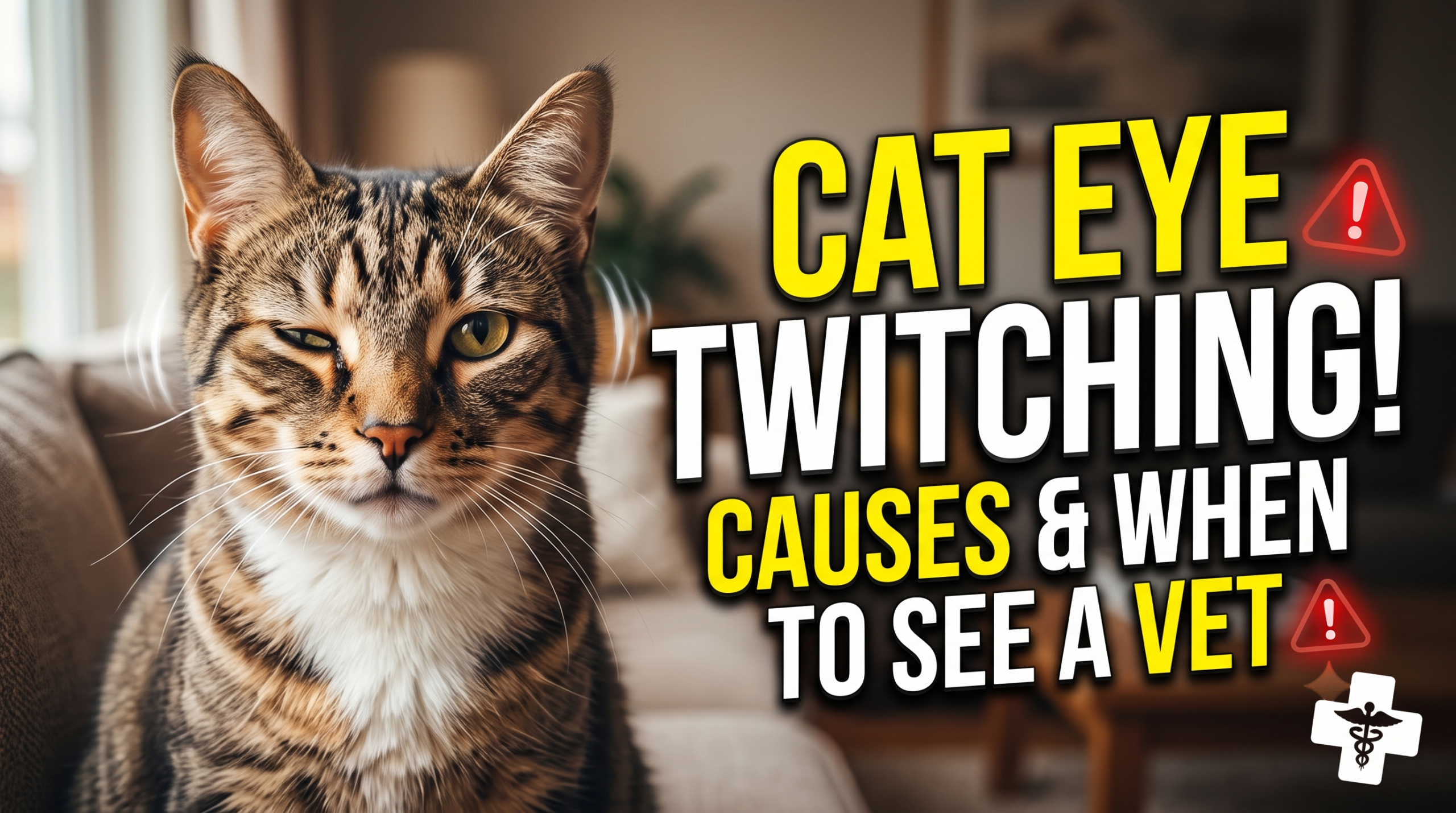
If your cat’s eye is twitching, blinking more than usual, or partly closing, something may be irritating or hurting the eye. Sometimes the cause is mild, such as dust, a loose hair, or a temporary eyelid spasm. But frequent twitching can also happen with conjunctivitis, a scratch on the cornea, an eye ulcer, inflammation, or another painful condition.
The most useful clue is how your cat’s eye looks and how your cat acts. A cat who briefly blinks after a puff of dust and then goes back to normal may only need monitoring. A cat who keeps squinting, rubs the eye, has discharge, or avoids bright light should be checked by a veterinarian.
This guide explains the most common cat eye twitching causes, what you can do at home, and which signs mean you shouldn’t wait.
What does eye twitching look like in cats?
“Eye twitching” can mean a few different things. The eyelid may rapidly flutter, the cat may blink repeatedly, or the whole eye may appear to spasm. Some cats simply keep one eye partly closed, which is usually called squinting.
In cats, repeated blinking or squinting often points to eye irritation or pain, rather than a harmless muscle twitch. Cats are good at hiding discomfort, so even a small change in the way an eye opens can matter.
You may notice:
- Rapid blinking in one eye
- One eyelid closing more than the other
- Squinting or holding the eye shut
- Watery tears or thick discharge
- Redness around the white or pink tissue of the eye
- Pawing at the face or rubbing against furniture
- Sensitivity to light
- A cloudy, blue, or hazy appearance on the eye
- The third eyelid showing at the inner corner
Try to observe whether the problem affects one eye or both. One-sided twitching is often linked to a local problem, such as a scratch or something trapped under the eyelid. Both eyes may be affected by allergies, infection, irritants, or a broader health problem.
Common cat eye twitching causes
1. Dust, fur, or another small irritant
A tiny piece of dust, litter, fur, or plant material can make a cat blink or twitch suddenly. Smoke, sprays, dusty litter, and strong cleaning products can also irritate the surface of the eye.
Your cat may have mild watering and blinking but otherwise seem comfortable. The eye may improve after the irritant is gone.
What you can do: Move your cat away from smoke, sprays, and dusty areas. Don’t try to dig around in the eye or pull out anything that appears stuck. If blinking continues, or the eye becomes red or painful, contact your veterinarian.
2. Conjunctivitis
Conjunctivitis is inflammation of the conjunctiva, the thin tissue around the eye. It is a common reason cats develop redness, discharge, blinking, and squinting.
Possible causes include viral or bacterial infections, allergies, and irritation. Affected cats may have watery tears or thicker yellow, green, or cloudy discharge. One or both eyes may be involved.
Some cats with conjunctivitis also sneeze or have nasal discharge, especially when a respiratory infection is involved. Kittens and cats living with other cats may spread certain infections more easily.
A veterinarian can examine the eye and decide whether your cat needs prescription treatment. Avoid using leftover eye medication, since the wrong product can make some eye problems worse.
3. A corneal scratch or eye ulcer
The cornea is the clear outer surface of the eye. A scratch, bite, claw injury, plant part, or other trauma can damage it. A deeper wound is called a corneal ulcer.
This is one of the more important cat eye twitching causes because corneal injuries can be painful and may worsen without treatment. Your cat may:
- Hold the eye closed
- Squint constantly
- Rub or paw at the face
- Avoid bright rooms
- Have watery discharge
- Develop a cloudy or bluish spot on the eye
A corneal ulcer may not be obvious just by looking. Veterinarians can use a special dye to check for damage. If your cat is persistently squinting or rubbing the eye, arrange veterinary care promptly.
4. Something trapped under the eyelid
A small piece of grit, a plant fragment, or a clump of fur can become trapped under an eyelid. This can cause ongoing blinking and tearing. Cats with long hair around the face may be more likely to get hair rubbing against the eye, although any cat can be affected.
Don’t force the eyelids open or use tweezers near the eye. You could scratch the cornea or push the material deeper. A veterinarian can safely inspect the eye and remove a foreign object when needed.
5. Eyelid problems or inward-growing hairs
Some cats have eyelids that roll inward, a condition called entropion. When this happens, eyelashes or facial hair may rub against the eye. The constant friction can lead to watering, squinting, irritation, and corneal damage.
This may be more noticeable in cats with short, broad faces, but it can occur in other cats too. The problem may keep returning unless the underlying eyelid shape is addressed.
A veterinarian may recommend lubrication, treatment for surface damage, or a corrective procedure depending on the severity. Regularly trimming hair around the eyes at home can be risky, so ask a professional groomer or veterinarian for guidance.
6. Dry eye
Some cats produce too few tears to keep the eye’s surface comfortable. This can lead to irritation, thick discharge, redness, and frequent blinking or squinting.
Dry eye is less common than simple irritation or conjunctivitis, but it can cause ongoing discomfort and damage to the cornea. It needs veterinary testing because the treatment depends on the cause.
Do not assume that a watery eye rules out dryness. An irritated eye may produce excessive reflex tears even when its normal tear film is not working properly.
7. Inflammation inside the eye
Inflammation inside the eye, often called uveitis, can cause pain, squinting, redness, light sensitivity, and changes in the appearance of the pupil. The eye may look cloudy, and your cat may become quiet or reluctant to eat.
Uveitis can be linked to injury, infection, immune problems, or other diseases. It is not something to treat with home remedies. Prompt veterinary examination is important because inflammation inside the eye can threaten vision.
8. Glaucoma and increased eye pressure
Glaucoma happens when pressure inside the eye becomes too high. It can cause significant pain and may lead to vision loss. Signs can include squinting, a cloudy eye, a larger-looking eye, a dilated pupil, redness, or a cat hiding and acting distressed.
Some signs develop quickly, while others are more subtle. A painful eye with a cloudy appearance or an unusually large pupil should be treated as urgent.
Only a veterinarian can measure eye pressure and determine whether glaucoma is present. If you suspect a serious eye problem, don’t wait to see if it clears on its own.
9. Allergies or environmental irritation
Some cats blink or twitch because their eyes react to pollen, dust, fragrances, smoke, or household products. Allergies may affect both eyes and can occur with sneezing or itchy skin.
Still, allergies are not the only explanation for red or watery eyes. Infection, a scratch, and other painful conditions can look similar. A vet may need to rule out more serious causes before calling it an allergy.
At home, reduce exposure to smoke, scented sprays, essential oil diffusers, and dusty products. Keep your cat away from freshly cleaned surfaces until they are dry and well ventilated.
10. Facial nerve or muscle problems
Occasionally, twitching is caused by a problem involving the nerves or muscles around the face. You may notice twitching in other facial muscles, drooping of the eyelid or lip, trouble blinking, changes in balance, or weakness.
These signs need veterinary evaluation. Neurologic problems are less common than eye irritation, but they should not be ignored, especially if the symptoms appeared suddenly or are getting worse.
Is cat eye twitching an emergency?
Eye twitching itself is not always an emergency, but persistent squinting, obvious pain, or changes to the eye can be urgent. Eye problems may worsen quickly, and cats can lose vision if serious conditions are left untreated.
Seek prompt veterinary care if your cat has:
- An eye that stays closed or nearly closed
- A cloudy, blue, white, or hazy appearance
- Severe redness or swelling
- Thick yellow, green, or bloody discharge
- A visible wound or foreign object
- A pupil that looks different from the other pupil
- A bulging or enlarged-looking eye
- Repeated pawing or rubbing
- Strong sensitivity to light
- Sudden vision problems, bumping into things, or unusual fearfulness
- Lethargy, poor appetite, vomiting, weakness, or balance problems along with eye changes
Contact a veterinarian the same day if the twitching continues, even if the eye does not look dramatically abnormal. A mild-looking problem can still be painful.
What should you do if your cat’s eye is twitching?
Use a calm, simple approach while you arrange care or monitor a very brief episode.
- Look without forcing the eye open. Check for redness, discharge, cloudiness, swelling, or a visible injury.
- Keep your cat indoors. This reduces exposure to dust and prevents outdoor fights or further injury.
- Remove possible irritants. Move away smoke, sprays, fragrance products, and dusty litter.
- Stop rubbing if possible. If your cat keeps pawing at the eye, ask your veterinarian whether a protective collar is appropriate.
- Take a clear photo or short video. Eye changes can come and go, and a photo may help your veterinarian understand what you saw.
- Call your veterinary clinic for advice. Explain how long the twitching has lasted and whether there is pain, discharge, or a change in vision.
If a small amount of discharge is on the fur, you can gently wipe the surrounding area with a clean, damp cloth. Use a fresh section of the cloth for each wipe and avoid touching the eyeball itself.
What not to put in a cat’s eye
Do not use human redness-relief drops, leftover prescription medication, contact lens solution, essential oils, salt mixtures, or home remedies unless your veterinarian specifically tells you to. Some products are unsafe for cats, and steroid eye medication can be dangerous if an ulcer is present.
Don’t try to remove a deeply stuck object. Don’t hold the eyelids open for a long time to inspect the eye. Handling a painful eye can increase stress and may cause your cat to scratch or struggle.
How a veterinarian may diagnose the problem
A vet will usually examine both eyes and compare them. Depending on the signs, the visit may include:
- Checking the eyelids, third eyelids, and area around the eye
- Looking for scratches or ulcers with a special dye
- Measuring tear production
- Measuring pressure inside the eye
- Checking pupil responses and vision-related reflexes
- Examining the mouth, nose, skin, and nervous system
- Taking a sample of discharge when infection is suspected
The treatment depends on the cause. It may include prescription eye medication, pain relief, treatment for infection, removal of a foreign object, or care for an underlying condition. Some cats need a follow-up visit to make sure the eye is healing.
How to prevent some eye problems
You can’t prevent every cause of cat eye twitching, but a few habits can lower the risk:
- Keep smoke, aerosols, and strong fragrances away from your cat.
- Keep claws trimmed if your cat tolerates it, and watch for rough play that could injure the face.
- Keep long facial hair from rubbing against the eyes, but ask a professional before trimming close to the eye.
- Clean dusty litter boxes and choose a low-dust litter if dust seems to trigger irritation.
- Keep cleaning products and plants that may irritate the eyes out of reach.
- Check outdoor cats for scratches after fights or roaming.
- Schedule routine veterinary exams, especially for older cats or cats with recurring eye problems.
Good prevention also means noticing changes early. A quick daily look at your cat’s eyes can help you spot redness, discharge, or unequal pupils before the problem becomes more severe.
Cat eye twitching: mild irritation or something more serious?
| What you notice | Possible explanation | What to do |
|---|---|---|
| A few extra blinks that quickly stop | Dust, fur, or brief irritation | Remove irritants and monitor closely |
| Repeated blinking with watery tears | Irritation, conjunctivitis, or a scratch | Contact your veterinarian if it continues |
| Squinting, pawing, and light sensitivity | Pain, corneal injury, or inflammation | Arrange prompt veterinary care |
| Cloudy eye or unequal pupils | Corneal disease, uveitis, glaucoma, or another serious problem | Seek urgent veterinary care |
| Twitching with facial drooping or balance changes | Possible nerve or neurologic problem | Seek prompt veterinary evaluation |
This table is only a guide. Eye problems can look alike, so a veterinary examination is the safest way to identify the cause.
At The End
The most common cat eye twitching causes include irritation, conjunctivitis, a corneal scratch, trapped debris, eyelid problems, and inflammation. Less common but serious causes include glaucoma and neurologic disease.
If the twitching lasts more than a short time, keeps returning, or comes with squinting, discharge, redness, cloudiness, or rubbing, call your veterinarian. Avoid human eye drops and home remedies. Protecting the eye early is usually much easier than treating a problem after it has become severe.