
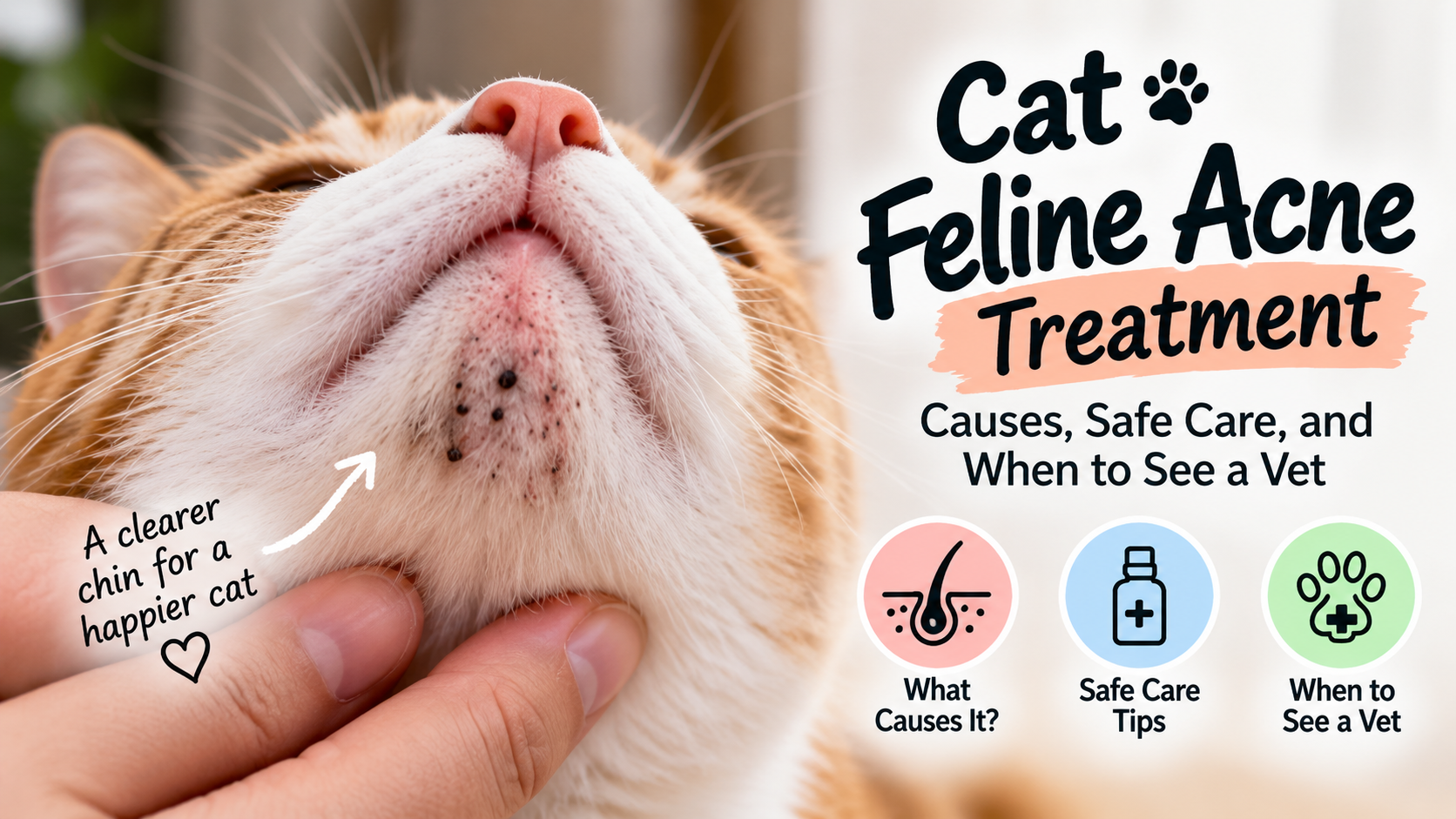
Small black dots, crusts, or red bumps on your cat’s chin can be a sign of feline acne. It may look like dirt that will not wipe away, but feline acne is a skin problem caused by blocked hair follicles. Some cases stay mild, while others become sore, infected, or swollen.
The best cat feline acne treatment depends on how your cat’s skin looks and how uncomfortable they seem. Mild cases may improve with gentle cleaning and better bowl hygiene. More serious or recurring cases need a veterinarian because several other skin problems can look similar.
Do not squeeze the bumps or scrub your cat’s chin with human acne products. Those steps can irritate the skin and make the problem worse.
What Is Feline Acne?
Feline acne is a common skin condition that usually affects a cat’s chin and sometimes the lips. It happens when hair follicles become clogged with oil, dead skin cells, and other debris. The clogged follicles can look like blackheads. If the skin becomes inflamed, you may see red bumps, pimples, crusts, or small areas of swelling.
Feline acne is not caused by poor general hygiene, and it is not the same as human teenage acne. Cats of any age, sex, or breed can develop it. Some cats have one short episode, while others have flare-ups throughout their lives.
What does cat acne look like?
You may notice:
- Black specks or spots on the chin
- A dirty-looking or rough chin that does not wipe clean
- Red bumps or small pimples
- Crusts, scabs, or flaky skin
- Hair loss around the chin or lips
- Swelling or tenderness
- Pus, bleeding, or an unpleasant smell in more advanced cases
A cat with mild acne may act completely normal. A cat with infected or painful lesions may rub their chin on furniture, avoid having their face touched, eat less comfortably, or become irritable.
What Causes Feline Acne?
The exact cause is not always clear. In many cats, feline acne seems to involve overactive oil glands and hair follicles that become blocked. Several factors may contribute to flare-ups:
- Plastic food or water bowls that hold oil, saliva, and bacteria
- Stress or changes in the home
- Skin irritation or allergies
- Poor grooming because of pain, illness, or excess weight
- A weakened skin barrier
- Other skin infections or parasites
- Individual tendency to develop recurring acne
Plastic bowls are often blamed for feline acne, but replacing them does not cure every case. Still, plastic can develop scratches that are difficult to clean, so switching to smooth stainless steel, glass, or ceramic bowls is a reasonable hygiene step.
Feline acne is not usually contagious between cats. However, if several pets develop similar skin problems, your veterinarian should check for a shared irritant, parasite, allergy, or infection.
How to Tell Whether Your Cat Needs a Vet
A veterinary exam is the safest way to confirm that the bumps are actually feline acne. Chin lesions can also be caused by allergies, mites, ringworm, bacterial or yeast infections, dental disease, or other skin conditions.
Make an appointment if your cat has:
- Pus, bleeding, open sores, or a strong odor
- Significant swelling or pain
- Spreading redness
- Severe itching or frequent rubbing
- Loss of appetite or trouble eating
- Repeated flare-ups
- Lesions on areas other than the chin and lips
- No improvement after about a week of gentle home care
- A weakened immune system or another ongoing health problem
Seek prompt veterinary advice if the skin is rapidly worsening, your cat seems unwell, or swelling affects the mouth or face.
A veterinarian may examine the skin closely, look for parasites, and collect a sample if an infection or another condition is suspected. This matters because the right treatment for bacterial infection, fungal disease, or an allergy is different from ordinary care for mild acne.
Cat Feline Acne Treatment for Mild Cases
If your cat has a few blackheads and no obvious pain, swelling, or discharge, your veterinarian may recommend simple supportive care. You can also use the following steps while arranging advice for a recurring problem.
1. Clean the chin gently
Use a soft cloth or cotton pad dampened with warm water. Hold it against the chin briefly to soften crusts, then wipe gently. Do not scrub, pick, or try to pull out blackheads.
Pat the area dry with a clean towel. Leaving the chin wet can add to irritation, especially if your cat repeatedly drips water or food onto the skin.
Do not use rubbing alcohol, hydrogen peroxide, essential oils, harsh soaps, or household disinfectants. These products can damage the skin and may be dangerous if your cat licks them.
Your veterinarian may recommend a pet-safe cleansing product, such as one containing an appropriate concentration of chlorhexidine. Use only a product your veterinarian considers suitable for cats, and follow the directions carefully. Cats lick their coats, so not every human or dog skin product is safe for them.
2. Wash food and water bowls often
Wash bowls with hot, soapy water at least once a day and rinse them well. Clean water bowls regularly, too. If your cat eats wet food, remove leftovers rather than letting food dry on the bowl or chin.
Replace scratched plastic bowls with smooth stainless steel, glass, or glazed ceramic. Choose bowls that are easy to wash and do not have cracks or rough edges.
3. Keep food off the chin
Some cats push their chin into food while eating. A shallow, wide bowl may help keep their face cleaner. You can also wipe away food residue with a damp cloth after meals if your cat tolerates it.
Do not change your cat’s diet solely because of acne unless your veterinarian recommends a food trial. Diet can affect some skin problems, but feline acne does not automatically mean your cat has a food allergy.
4. Avoid picking and squeezing
Squeezing a cat’s pimples can force material deeper into the skin, cause pain, and introduce bacteria. Picking at crusts can create open wounds and slow healing.
If your cat scratches the area, ask your veterinarian how to prevent further damage. Keeping claws trimmed may reduce accidental injury, but painful or itchy skin still needs proper diagnosis.
Veterinary Treatment for Feline Acne
If home care is not enough, your veterinarian may prescribe treatment based on the appearance of the skin and any test results. Options can include:
- A veterinary antiseptic or medicated cleanser
- Topical medication for inflammation or infection
- Antibiotics when a bacterial infection is present and a veterinarian considers them appropriate
- Medication to control severe inflammation
- Treatment for mites, ringworm, allergies, or another underlying problem
- A plan for long-term maintenance if acne keeps returning
Never use leftover antibiotics, steroid creams, acne medication, or prescription products from another pet. The wrong medication may irritate your cat’s skin, hide important signs, or be unsafe if licked.
Some cats need medication for several weeks, especially when the skin is infected. Follow the full treatment plan even if the chin starts to look better quickly. Stopping early can allow the problem to return, depending on the cause.
How to Care for Your Cat’s Chin During Treatment
Cats often dislike anything touching their face. Calm, short sessions usually work better than forcing a long cleaning routine.
Try this approach:
- Choose a quiet time when your cat is relaxed.
- Let your cat sniff the cloth or product before you begin.
- Touch the shoulder or cheek first, then move toward the chin.
- Clean only as much as your cat tolerates.
- Reward cooperation with praise, play, or a suitable treat.
- Stop if your cat becomes distressed or tries to bite.
If the area is very painful, do not keep handling it at home. A veterinarian can help control the discomfort and show you how to apply treatment safely.
How Long Does Feline Acne Take to Clear Up?
Mild feline acne may improve over several days to a few weeks after the skin is kept clean and the cause of irritation is reduced. More inflamed or infected cases can take longer and may require prescription treatment.
A cat may have a clear chin and still be prone to future flare-ups. For recurring acne, ongoing bowl cleaning, gentle maintenance, and periodic veterinary checks may be needed.
Track the changes with a quick note or a photo taken in similar lighting. Contact your veterinarian if the area is not gradually improving, becomes more painful, or develops discharge.
Common Mistakes to Avoid
Some well-meaning treatments can make feline acne worse. Avoid these common mistakes:
Using human acne products
Human acne washes may contain ingredients that are too harsh for cats or unsafe when swallowed. Products made with benzoyl peroxide, salicylic acid, retinoids, or other active ingredients should be used only if a veterinarian specifically recommends a cat-safe preparation and instructions.
Scrubbing until the blackheads disappear
The goal is to reduce irritation and keep the skin clean, not to strip away every spot immediately. Rough scrubbing can create tiny injuries and increase inflammation.
Shaving the chin without advice
Shaving is not usually necessary and may irritate already inflamed skin. If a veterinarian needs fur clipped for examination or treatment, they can do it safely.
Assuming every chin bump is acne
A lump, ulcer, rash, or spreading patch may not be acne. Waiting too long can delay treatment for infection, allergies, parasites, or dental problems.
Changing several things at once
If you replace the food, bowls, litter, cleaning products, and medications all at once, it becomes difficult to know what helped or caused irritation. Make sensible changes, but involve your veterinarian when the problem is persistent.
Can Feline Acne Be Prevented?
There is no guaranteed way to prevent every flare-up, but basic skin and bowl hygiene may reduce irritation. Helpful habits include:
- Wash food and water bowls daily
- Use smooth, nonporous bowls
- Keep bowls away from dusty litter areas
- Wipe food or water from the chin when needed
- Avoid fragranced products near your cat’s face
- Watch for stress, itching, or other skin changes
- Keep regular veterinary appointments
Do not over-clean the chin. Frequent rubbing or repeated use of medicated products can dry and irritate the skin. A simple routine is usually better than aggressive treatment.
Feline Acne Versus Other Chin Problems
Not every dark spot or bump has the same cause. These clues can help you decide how urgently to seek veterinary advice, but they cannot replace an examination.
| What you notice | Possible explanation | What to do |
|---|---|---|
| A few black specks with no redness | Mild feline acne or clogged follicles | Use gentle care and monitor |
| Red bumps, crusts, or tenderness | Inflamed acne or skin infection | Schedule a veterinary exam |
| Intense itching, hair loss, or widespread rash | Allergy, parasites, or another skin condition | Contact your veterinarian |
| Circular scaly patches or broken hair | Possible fungal skin disease | Arrange prompt veterinary care and limit contact with other pets until advised |
| Chin swelling with drooling or trouble eating | Painful infection, dental problem, or another condition | Seek veterinary attention promptly |
Final thoughts
The safest cat feline acne treatment starts with gentle care, clean bowls, and patience. For mild blackheads, wipe the chin with warm water, keep the area dry, and avoid picking or harsh products. Switching from scratched plastic to smooth stainless steel, glass, or ceramic may also help reduce trapped food and residue.
If your cat has pain, swelling, pus, bleeding, spreading lesions, or repeated flare-ups, contact a veterinarian. Feline acne can look like a simple cosmetic problem, but infected or unusual lesions need the right diagnosis and treatment.