
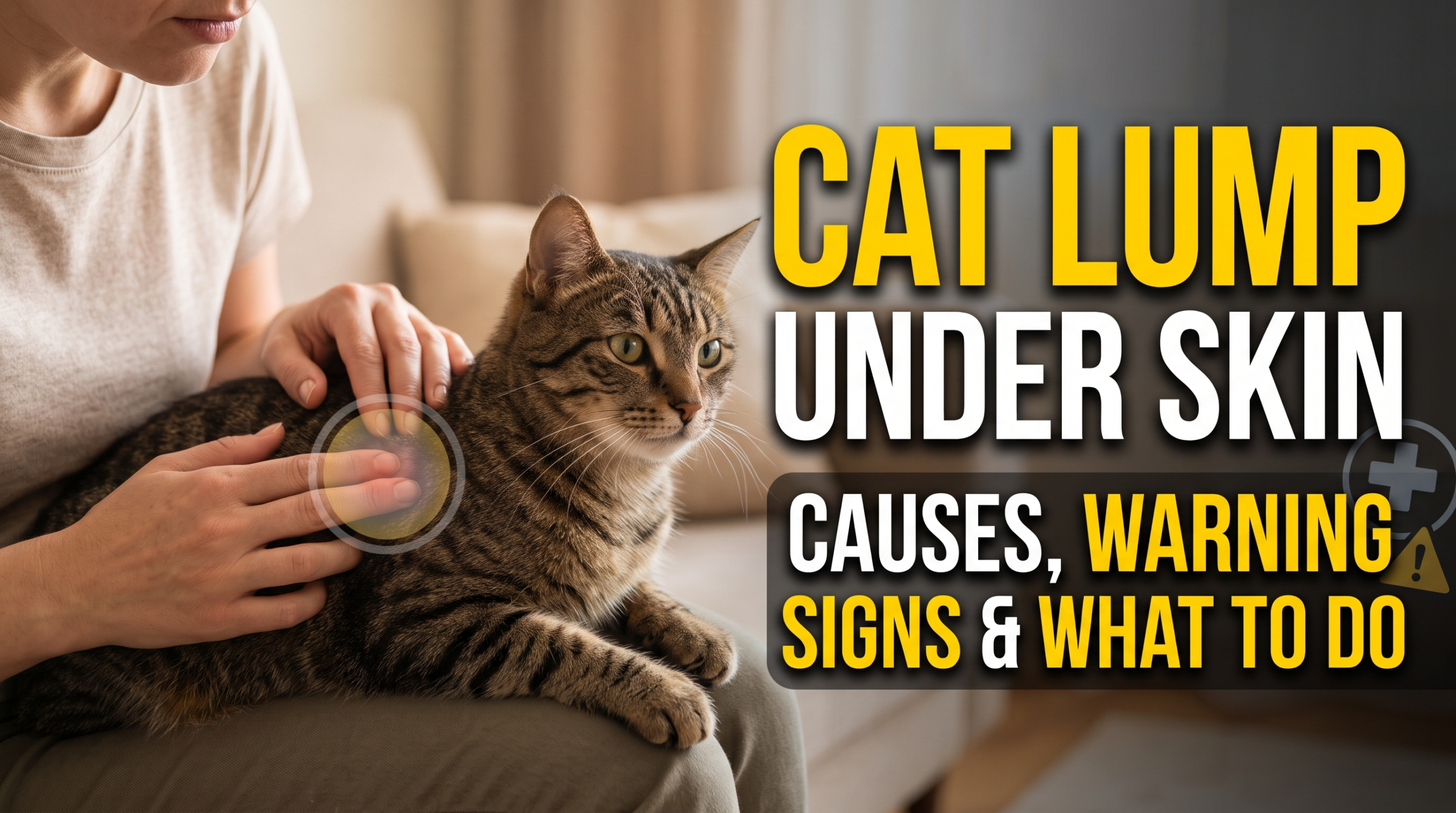
Finding a lump under your cat’s skin can be scary. Some lumps are harmless, such as a small cyst or fatty growth. Others can result from an abscess, an injection-site reaction, or a tumor that needs treatment. You usually can’t tell the cause by looking or feeling the lump alone.
The safest approach is to note when you found it, watch for changes, and arrange a veterinary examination. A lump that grows quickly, feels firm or fixed, becomes painful, leaks fluid, or appears with other signs of illness deserves prompt attention.
What can cause a lump under a cat’s skin?
Common causes of a cat lump under the skin include:
- Abscesses caused by bite wounds or other infections
- Cysts filled with fluid, keratin, or other material
- Fatty growths, sometimes called lipomas
- Bruises or areas of swelling after an injury
- Injection-site reactions after a vaccine or medication
- Insect bites or allergic reactions
- Benign skin or tissue growths
- Cancerous tumors affecting the skin or tissues beneath it
Some lumps are located in the skin itself, while others develop in the tissue, muscle, or fat below the skin. Their location, texture, growth rate, and effect on your cat can provide clues, but they do not provide a reliable diagnosis.
Common causes of a cat lump under the skin
1. An abscess from a bite or wound
An abscess is a pocket of infection, usually filled with pus. It can form after a bite, scratch, puncture wound, or small injury that closes over before it heals properly. Outdoor cats and cats that live with other cats may be more likely to develop abscesses, but any cat can get one.
An abscess may feel like a soft, warm, or painful lump. It can appear suddenly and may grow over a day or two. Your cat may lick the area, hide, act tired, eat less, or seem uncomfortable when touched. The lump may eventually rupture and release foul-smelling fluid.
A cat with a suspected abscess should be examined by a veterinarian. Treatment may involve draining and cleaning the infection, pain relief, and sometimes antibiotics. Do not squeeze or puncture the lump at home. This can push infection deeper into the tissue and may cause your cat additional pain.
2. A cyst
A cyst is a sac that may contain fluid, keratin, or other material. Cysts can develop around blocked hair follicles or glands. They may feel smooth and round, and some move slightly beneath the skin.
Many cysts are not dangerous, but they can become irritated or infected. A cyst that is growing, repeatedly opening, bleeding, or bothering your cat should be checked. Never try to pop it. Even a lump that looks like a simple pimple may not be a cyst, and opening it can introduce bacteria.
3. A fatty lump or lipoma
A lipoma is a growth made mostly of fat. It often feels soft and may move a little when you gently touch the skin over it. Lipomas are usually benign, but they are less common in cats than in dogs, and not every soft lump is a lipoma.
A veterinarian may recommend monitoring a small, stable lump or testing it to confirm what it contains. Removal may be considered if it becomes large, interferes with movement, or cannot be identified with reasonable confidence.
4. Swelling after an injury
A bump can form after your cat hits something, falls, or gets caught in a scuffle. A bruise or pocket of blood under the skin may feel firm or fluid-filled. You might also see discoloration, tenderness, or mild swelling.
Minor injuries can improve with rest, but cats often hide pain. Contact your veterinarian if the lump is painful, continues to enlarge, your cat is limping, or you suspect a significant injury. A lump after trauma can occasionally involve a deeper problem that needs examination.
5. An injection-site reaction
A small, temporary swelling can appear where your cat received a vaccine or other injection. Mild tenderness may also occur. These reactions often settle as the local irritation improves.
Keep an eye on the area and tell your veterinarian if it grows, remains painful, or does not start improving. A lump at an injection site should be evaluated if it persists or changes. Your veterinary clinic can tell you what follow-up is appropriate based on the injection, location, and size of the swelling.
Seek urgent care if your cat develops facial swelling, trouble breathing, repeated vomiting, weakness, or collapse after an injection. Those signs may indicate a serious allergic reaction.
6. An insect bite or allergic swelling
A bite or sting may cause a small, raised bump. The area may be itchy, red, or mildly swollen. Your cat may scratch or lick it, which can make the skin more irritated.
Small, isolated swelling may improve, but widespread hives, swelling around the face, breathing problems, vomiting, or sudden weakness require immediate veterinary help. Do not give human allergy medication unless a veterinarian has specifically told you which product and dose are safe for your cat.
7. Benign skin growths
Cats can develop several types of noncancerous growths in the skin or tissue beneath it. Some remain small and unchanged for a long time. Others may become irritated from rubbing against furniture or from your cat scratching them.
Even a growth that looks harmless should be identified if it is new. A benign appearance does not confirm that a lump is harmless, and some tumors can look similar to ordinary skin growths.
8. A cancerous tumor
Some lumps are caused by cancer, including tumors of the skin, connective tissue, or other structures beneath the skin. Cancerous lumps can be firm, irregular, attached to deeper tissue, or fast-growing. However, some may be small and slow-growing at first.
A lump’s appearance cannot reliably distinguish cancer from a benign growth. A veterinarian may recommend a fine-needle sample, biopsy, or removal for laboratory testing. Early evaluation can give you more treatment choices and a clearer understanding of what to expect.
What does a serious lump look or feel like?
There is no single appearance that proves a lump is dangerous. Still, the following features make a veterinary appointment more important:
- The lump is growing quickly.
- It feels hard, irregular, or attached beneath the skin.
- It is painful, hot, red, or swollen.
- It bleeds, crusts, opens, or releases fluid.
- Your cat keeps licking, scratching, or chewing it.
- Your cat is hiding, tired, eating less, losing weight, or acting unlike themselves.
- The lump affects walking, jumping, breathing, eating, or using the litter box.
- Several new lumps appear.
- The lump has not improved or has continued to change.
These signs do not automatically mean cancer. An abscess, for example, can become painful and grow quickly. But they do mean your cat should not simply be watched indefinitely.
When should you take your cat to the vet?
Arrange a veterinary appointment for any new lump that you cannot explain, especially if it is changing. A small lump that is not painful may not require an emergency visit, but it still deserves professional advice.
Contact a veterinarian promptly if the lump is:
- Growing over days or weeks
- Painful, warm, or red
- Draining pus, blood, or clear fluid
- Located near the eye, mouth, throat, or genitals
- Appearing after a bite or fight
- Associated with poor appetite, fever, weakness, or hiding
- Making it hard for your cat to move normally
Seek emergency care for trouble breathing, collapse, severe weakness, heavy bleeding, facial swelling, or a rapidly worsening reaction.
How a veterinarian diagnoses a lump
Your veterinarian will usually ask when you first noticed the lump and whether it has changed. They may check your cat’s overall health and examine the lump’s size, shape, firmness, temperature, and mobility.
Possible tests include:
Fine-needle aspiration
A fine-needle aspiration uses a small needle to collect cells or fluid from the lump. The sample may help identify pus, fat, inflammation, or abnormal cells. It is often a quick first test, although it does not always provide a definite answer.
Biopsy
A biopsy removes a small part of the lump, or sometimes the entire lump, for examination. This can provide more detailed information about the tissue and whether it is benign or cancerous.
Imaging
X-rays, ultrasound, or other imaging may be useful when a lump extends beneath the skin, is attached to deeper structures, or occurs near an important organ. Imaging can help the veterinarian plan treatment.
Laboratory testing
If infection is suspected, the sample may be tested to help identify the cause and select appropriate treatment. Your veterinarian may also recommend blood tests if your cat seems generally unwell or if surgery is being considered.
What should you do at home while waiting for an appointment?
You can safely monitor the lump without irritating it. Try these steps:
- Measure it. Use a ruler or compare it with a familiar object, then record the approximate length and width.
- Take a photo. A photo next to a ruler can help you notice changes over time.
- Write down details. Note the location, texture, color, and whether your cat reacts when you touch nearby skin.
- Stop licking or scratching if needed. Ask your veterinary clinic about a suitable protective collar or other safe option.
- Keep the area clean and dry. Do not apply creams, essential oils, alcohol, or peroxide unless your veterinarian directs you to.
- Avoid squeezing, cutting, or draining it. This can cause pain, bleeding, and infection.
Be gentle. If your cat becomes upset or painful when you examine the area, stop and leave the rest of the evaluation to the veterinary team.
Can you tell if a lump is cancer by touch?
No. A soft lump is not always harmless, and a firm lump is not always cancer. Size, movement, and texture can offer clues, but they cannot replace cell or tissue testing.
This is why it is risky to wait for a lump to become obviously serious. If it is new or changing, have a veterinarian assess it. Testing may show that the lump is harmless, or it may identify a problem while treatment is still more manageable.
How to track a lump at home
If your veterinarian recommends monitoring the lump, use a simple record. Include:
| What to record | What to look for |
|---|---|
| Date | When you first noticed it and each time you check it |
| Size | Length and width, measured in the same way each time |
| Location | A clear description or photo of the body area |
| Texture | Soft, firm, fluid-filled, or irregular |
| Movement | Whether it slides under the skin or feels fixed |
| Skin changes | Redness, hair loss, scabs, bleeding, or drainage |
| Cat’s behavior | Licking, scratching, pain, hiding, appetite, and activity |
Check it only as often as your veterinarian recommends. Repeatedly pressing the area can make it sore and may make your cat resist future examinations.
Can a cat lump under the skin go away on its own?
Some small swellings, mild injection-site reactions, and insect bites may improve without specific treatment. A bruise may also gradually settle. But you should not assume that every disappearing or shrinking lump is harmless, and a lump that remains or returns should be examined.
An abscess may rupture and look smaller while the infection remains underneath. A tumor may also change in size without being cured. If a lump opens, drains, or changes suddenly, contact your veterinarian for advice.
How to reduce the risk of some lumps
You cannot prevent every lump, but a few habits can help:
- Check your cat’s skin during regular grooming or gentle petting.
- Keep cats indoors or supervise outdoor time to reduce fights and bite wounds.
- Look for small punctures, scabs, or tenderness after your cat has been outside.
- Keep vaccinations and routine examinations up to date.
- Follow your veterinarian’s instructions after injections.
- Avoid using human creams or medications on your cat without professional guidance.
Early detection does not prevent every serious condition, but it gives you a better chance of finding problems before they become painful or more difficult to treat.
Final Thought
A cat lump under the skin can come from something minor, such as a cyst, bite, bruise, or injection-site reaction. It can also be an abscess or a growth that needs treatment. Because harmless and serious lumps can look alike, you should not try to diagnose one by touch alone.
Document the lump, prevent your cat from irritating it, and contact your veterinarian for an examination. Get urgent help for breathing trouble, collapse, severe weakness, facial swelling, heavy bleeding, or rapidly worsening symptoms.