
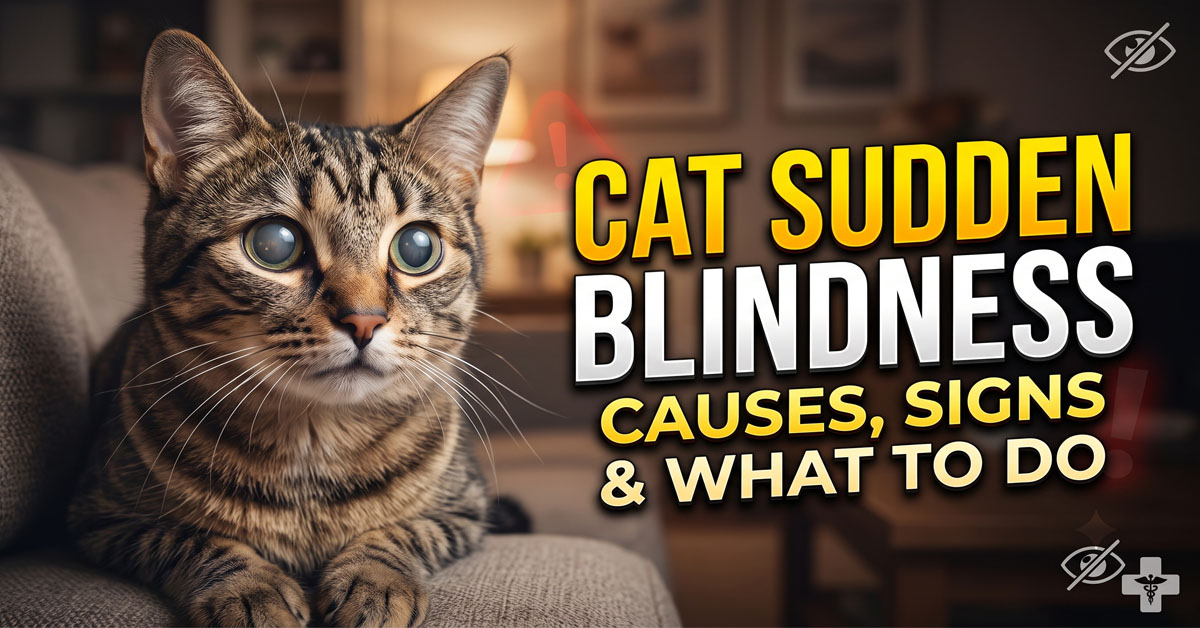
Sudden blindness in a cat is an emergency, even if your cat seems calm or is still eating. The most common cat sudden blindness causes include high blood pressure, retinal detachment, glaucoma, inflammation inside the eye, trauma, and certain diseases or toxins. Some causes can lead to permanent vision loss, but prompt treatment may restore at least some vision in certain cases.
A cat that cannot see may bump into furniture, hesitate on stairs, meow more than usual, or stay in one place. But cats often hide illness, and the first sign may simply be that something feels different about their behavior. If your cat suddenly seems unable to see, contact a veterinarian or emergency clinic right away. Do not wait several days to see whether the problem improves.
How can you tell if a cat has suddenly gone blind?
A cat with sudden vision loss may act confused, cautious, or unusually quiet. You may notice that your cat:
- Bumps into walls, furniture, or doorways
- Hesitates before jumping or using stairs
- Walks close to walls or keeps their body low
- Has trouble finding food, water, or the litter box
- Seems startled when you approach from the side
- Keeps their pupils very large, even in bright light
- Has red, cloudy, swollen, or painful-looking eyes
- Hides, vocalizes more, or becomes clingy
- Misses toys or does not track movement normally
Some cats with vision loss still move around fairly well because they remember the layout of the home and use their hearing, smell, and whiskers. That can make the problem easy to miss.
A cat may also appear blind because of extreme pain, weakness, sedation, a neurological problem, or a very dark environment. Only a veterinary examination can determine whether the problem is true blindness and where the problem is located.
What are the most common cat sudden blindness causes?
1. High blood pressure and retinal detachment
High blood pressure, also called hypertension, is one of the most important causes of sudden blindness in older cats. Increased pressure can damage the small blood vessels in the eyes and cause the retina to bleed, swell, or pull away from the back of the eye.
The retina is the light-sensitive tissue that sends visual signals to the brain. If it becomes detached, your cat may lose vision quickly. In some cases, early treatment of the underlying blood pressure problem allows the retina to settle and vision to improve. Delay can increase the chance of permanent damage.
Hypertension may develop along with:
- Chronic kidney disease
- Hyperthyroidism
- Heart disease
- Diabetes or other systemic illness
- Age-related changes
A cat with high blood pressure may not look sick before vision loss occurs. That is why sudden blindness in an older cat should be treated as an urgent medical problem, even if there are no other obvious symptoms.
2. Glaucoma
Glaucoma happens when pressure builds up inside the eye and damages the optic nerve. It can cause sudden vision loss and is often painful, although cats may hide that pain.
Possible signs include:
- A cloudy or bluish-looking eye
- A dilated pupil that responds poorly to light
- Redness around the eye
- Squinting or holding the eye closed
- An enlarged or firm-looking eyeball
- Rubbing at the face
- Hiding or acting irritable
Glaucoma needs urgent veterinary treatment. Lowering eye pressure quickly may reduce pain and protect remaining vision, depending on the cause and severity. Do not use human eye drops unless a veterinarian specifically tells you to do so. Some products are unsafe or can make certain eye problems worse.
3. Uveitis and other eye inflammation
Uveitis is inflammation inside the eye. It may affect one or both eyes and can cause blurred vision, pain, redness, light sensitivity, and a small or uneven pupil. Inflammation may be linked to infection, immune-related disease, cancer, trauma, or a problem elsewhere in the body.
You may see watery discharge, squinting, cloudiness, or a cat avoiding bright rooms. Sometimes the eye looks only mildly abnormal while the cat is quite uncomfortable.
Treatment depends on the reason for the inflammation. A veterinarian may need to perform eye tests and blood work before choosing medication. Steroid eye drops, for example, are not appropriate for every eye condition and can be harmful when certain infections or corneal injuries are present.
4. Eye or head trauma
A blow to the eye or head can damage the retina, optic nerve, or other parts of the visual system. Cats may be injured after a fall, road accident, fight, collision, or blunt impact at home. Penetrating injuries and scratches can also threaten vision.
Look for swelling, bleeding, facial wounds, unequal pupils, weakness, seizures, or unusual behavior. Head trauma can cause problems that are not visible from the outside, so a cat that suddenly cannot see after an accident should be examined immediately.
Keep your cat as still and calm as possible during transport. Use a carrier with a towel or blanket on the bottom, and avoid pressing on the head or eyes.
5. Problems affecting the optic nerve or brain
Vision depends on the eyes, optic nerves, and parts of the brain that process visual information. A problem in any of these areas can cause blindness even when the eyes look fairly normal.
Possible causes include inflammation, infection, bleeding, a tumor, a stroke-like event, or another neurological disorder. Affected cats may also show:
- Loss of balance
- Walking in circles
- Seizures
- Weakness on one side
- Head tilt
- Personality changes
- Trouble recognizing familiar surroundings
These signs require urgent veterinary assessment. Neurological blindness can be difficult to distinguish from an eye problem at home.
6. Toxins and medication exposure
Some toxins and medications can damage the retina, optic nerve, or brain. The risk depends on the substance, dose, and how quickly treatment begins. Cats may be exposed by chewing a pill, licking a spill, eating a toxic plant, or receiving medication meant for another animal.
If you suspect poisoning, do not make your cat vomit unless a veterinary professional directs you to. Keep the package, label, plant sample, or other information available for the clinic. Tell the veterinarian what your cat may have eaten, how much, and when.
7. Diabetes and other diseases that affect the body
Diabetes, kidney disease, thyroid disease, infections, immune problems, and cancer can affect vision directly or create conditions such as high blood pressure or inflammation. A cat may have more than one problem at the same time.
Other symptoms may include increased thirst, frequent urination, weight loss, vomiting, poor appetite, weakness, or changes in grooming. These signs can help the veterinarian identify the underlying cause, but they are not enough to diagnose the problem at home.
Can a cat go blind overnight from high blood pressure?
Yes. High blood pressure can damage the blood vessels in the eyes and cause retinal detachment, leading to sudden or rapidly worsening blindness. It is especially common in older cats and cats with kidney disease or an overactive thyroid.
A veterinarian will usually measure blood pressure and examine the back of the eyes. If hypertension is found, treatment may include medication to lower blood pressure and care for the underlying disease. The sooner this happens, the better the chance of protecting remaining vision.
What should you do if your cat suddenly cannot see?
Treat sudden vision loss as an emergency and call your veterinarian immediately. While arranging care:
- Keep your cat indoors and in a small, safe area. Block stairs and remove objects your cat could hit.
- Do not rearrange the home. Familiar furniture and scent cues can help your cat move safely.
- Place food, water, and a low-sided litter box nearby. Do not force your cat to walk far.
- Use a carrier for transport. Add a familiar towel and keep the carrier level.
- Avoid eye drops, pain medicine, and leftover prescriptions. Human medications can be dangerous, and the wrong eye treatment may hide important signs or worsen injury.
- Write down what you noticed. Include when the problem began, whether one or both eyes are affected, recent injuries, medications, possible toxin exposure, and other symptoms.
If your regular clinic is closed, use an emergency veterinary hospital. A cat that is blind, disoriented, having seizures, weak, vomiting repeatedly, or showing obvious eye pain should not wait for a routine appointment.
How will a veterinarian diagnose sudden blindness?
The veterinarian will first assess your cat’s general condition and look for signs of pain, trauma, high blood pressure, or neurological disease. The examination may include:
- Checking pupil responses and other reflexes
- Examining the front and back of each eye
- Measuring pressure inside the eyes
- Measuring blood pressure
- Checking for retinal detachment, bleeding, inflammation, or optic nerve changes
- Blood and urine tests
- Testing for infections or hormone-related disease when appropriate
- Imaging or referral to a veterinary eye or neurological specialist in selected cases
A normal-looking eye does not always rule out a serious problem. The optic nerve and brain may need further evaluation, especially when the pupils or vision responses are abnormal but the eye surface looks clear.
Is sudden blindness in cats treatable?
Treatment depends entirely on the cause. Examples may include:
- Medication to lower dangerously high blood pressure
- Treatment for kidney, thyroid, heart, or other underlying disease
- Eye medication to reduce inflammation or pain
- Urgent treatment to lower pressure in glaucoma
- Surgery or specialist care for selected injuries or structural problems
- Supportive and neurological treatment for brain or optic nerve disease
- Poisoning treatment when exposure is identified
Vision may return partially, fully, or not at all. The outcome depends on the damaged structure, how severe the injury is, and how quickly treatment starts. Do not assume that permanent blindness is certain just because the change happened quickly—but do not delay care while hoping it will resolve on its own.
How can you help a blind cat at home?
If vision loss becomes permanent, many cats adapt surprisingly well. They rely on memory, smell, hearing, and touch. You can make that adjustment easier by:
- Keeping furniture, food, water, and litter boxes in consistent places
- Using a sturdy, low-sided litter box that is easy to find
- Adding soft barriers near sharp corners and dangerous drop-offs
- Blocking access to balconies, open stairwells, pools, and busy roads
- Speaking softly before touching or picking up your cat
- Using rugs or mats to create scent and texture landmarks
- Introducing changes one at a time
- Providing a quiet hiding place and a predictable daily routine
Do not carry your cat from room to room without warning or move their belongings frequently. A blind cat can learn the layout of a safe home, but sudden changes may cause confusion and accidents.
How can sudden blindness be prevented?
Not every cause can be prevented, but regular care can help detect risks earlier. For older cats, routine veterinary visits may include blood pressure checks and screening for kidney or thyroid disease. Follow the treatment plan if your cat already has a condition linked to hypertension.
At home, keep medications, cleaners, chemicals, and toxic plants out of reach. Use a secure carrier for travel, supervise outdoor access, and seek care after eye or head injuries even when the damage seems minor.
Pay attention to early changes such as enlarged pupils, bumping into objects, reluctance to jump, squinting, or unusual hiding. A small change can be easier to treat than a complete loss of vision.
Wrapping Up
The most important cat sudden blindness causes include high blood pressure with retinal detachment, glaucoma, eye inflammation, trauma, neurological disease, toxins, and illnesses that affect the whole body. Because several of these conditions are painful or time-sensitive, sudden vision loss needs prompt veterinary attention.
Keep your cat safe, avoid home treatment, and seek professional care as soon as possible. If vision cannot be restored, a stable home layout and gentle, predictable handling can help a blind cat live a comfortable life.