
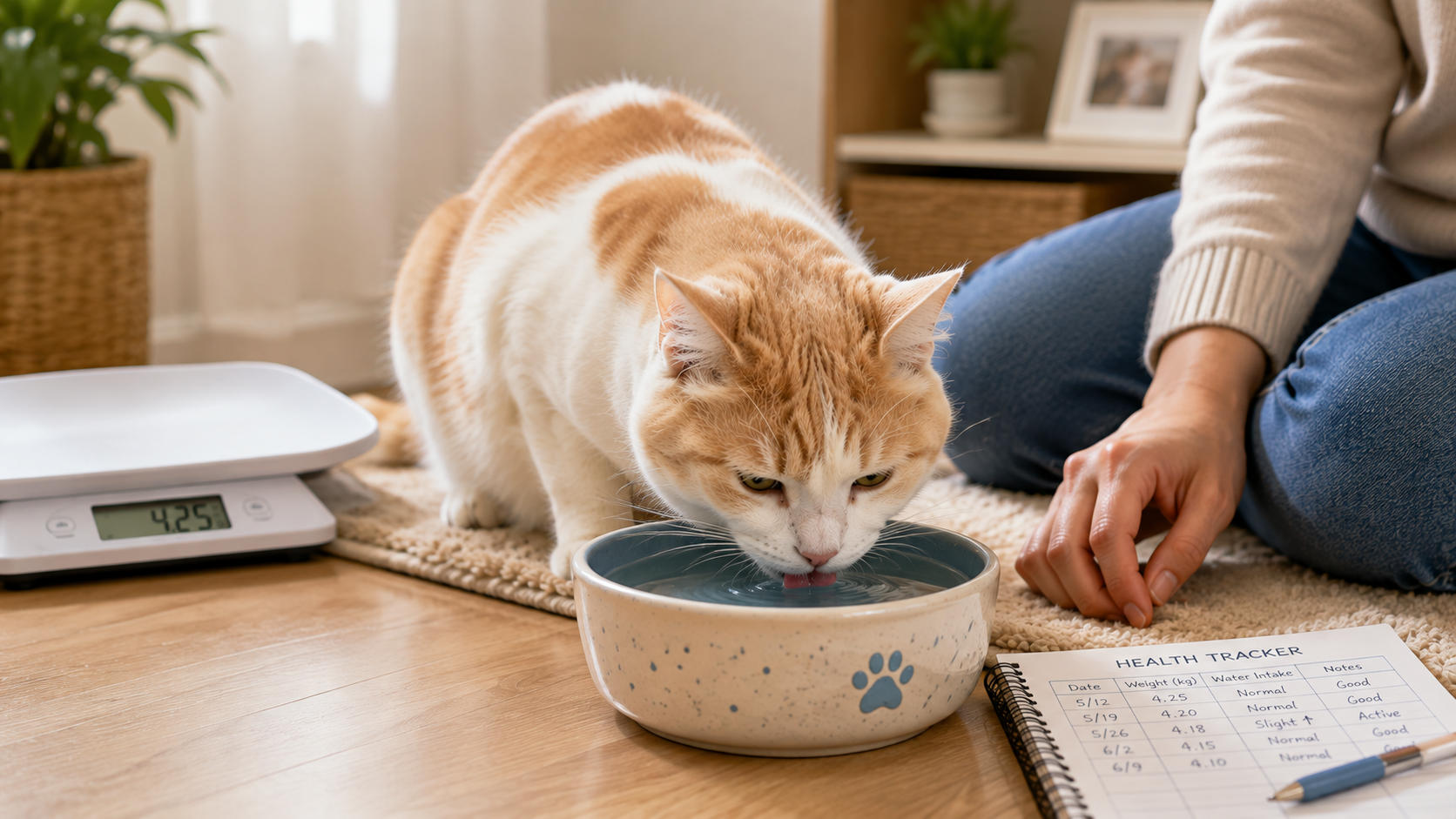
Early signs of diabetes in cats often include drinking more water, urinating more, eating more, and losing weight for no clear reason. Some cats may also slow down, have a dull coat, or get weaker in their back legs.
These changes can be subtle. You might notice the water bowl empties faster, litter clumps get bigger, or a cat that seems to eat well feels bonier along the spine and hips.
These symptoms alone do not mean a cat has diabetes. Other problems like kidney disease, hyperthyroidism, urinary issues, or medication side effects can look similar. A veterinarian needs to find ongoing high blood sugar and review urine and other test results to diagnose diabetes in cats.
If you notice ongoing changes in your cat’s thirst, urination, appetite, weight, or movement, make a veterinary appointment. Don’t wait for all the typical symptoms to show up.
Diabetes in cats often shows up as a pattern of four main changes.
Many illnesses can cause one or two of these signs, but seeing several together is what makes diabetes more likely.
A cat starting to develop diabetes may:
- Drink more water
- Produce more urine
- Act unusually hungry
- Lose weight despite eating.
Vets call the first three changes polydipsia (increased thirst), polyuria (increased urination), and polyphagia (increased hunger). These happen when a cat can’t control or use glucose properly.
Sometimes, one symptom shows up before the others. Increased thirst and bigger urine clumps are usually easiest to spot at home, while slow muscle loss can be hidden under a cat’s thick fur.
More time at the water bowl
A diabetic cat may drink more frequently, stay at the bowl longer, or begin seeking water from faucets, sinks, showers, glasses, or toilets.
This happens because there is too much glucose in the blood. When blood sugar gets high enough, some of it ends up in the urine. The extra glucose pulls more water into the urine, so the cat pees more and then drinks more to make up for the lost water.
If you have more than one cat, it can be hard to tell which one is drinking more. Try using separate water bowls, setting up a camera near the water, or watching the cats separately for a short time to figure it out.
Never restrict waNever limit your cat’s access to water to see if they are really thirsty.frequent urine clumps
You might notice the litter box gets wet faster, needs to be cleaned more often, or has bigger clumps than usual.
Some cats start peeing outside the litter box. This doesn’t always mean there’s a behavior problem. The cat might be making more urine than usual, getting to the box too late, or avoiding a box that gets dirty faster.
Peeing more is not only a sign of diabetes. Kidney disease and other problems can cause it too, so blood and urine tests are important.
Weight loss that does not match the appetite
Weight loLosing weight even though your cat is eating normally or more than usual is a key clue. enough effective insulin, glucose remains in the bloodstream instead of entering cells efficiently. The body begins using stored fat and protein for energy even though the cat is consuming food. Muscle along the spine, hips, and back legs may gradually shrink.
Long-haired cats can lose a lot of muscle before you notice. Gently feel along your cat’s shoulders, spine, ribs, hips, and thighs. Using a pet scale can help you spot weight loss before your cat looks much thinner.
Your cat may seem hungrier at first, but appetite can drop later on.
At first, a cat with diabetes might beg for food more, wake you up for meals, steal food from other pets, or seem unsatisfied after eating. The cat is eating but can’t use glucose properly, so it stays hungry even as it loses weight.
If your cat loses its appetite later on, it’s more serious. This could mean dehydration, pancreatitis, another illness, or diabetic ketoacidosis, not just early diabetes.
Smaller clues can also help you spot diabetes. Some changes are less specific but become meaningful when they occur alongside thirst, urination, hunger, or weight loss.
Possible accompanying signs include:
- reduced activity
- more sleeping or hiding
- less grooming
- a greasy, flaky, or unkempt coat
- dehydration
- reduced muscle condition
- difficulty jumping
- weakness in the rear legs
- walking with the rear ankles lowered toward the floor
When a cat walks with its back ankles closer to the floor, it’s called a plantigrade stance. This can happen if high blood sugar damages the nerves, causing diabetic neuropathy. While this may help diagnose diabetes, neuropathy usually shows up after the disease has been present for a while, not as an early sign.
Rear-leg weakness can also result from arthritis, injury, spinal disease, low potassium, heart disease, or other neurologic problems. A veterinarian should examine any cat whose walking or jumping ability changes. Look at the full set of changes to decide how soon you should act.
This guide can’t diagnose the cause, but it can help you decide what to do next.
| What you observe | Level of concern | What to do |
| Mild increase in thirst with no other change | Needs investigation if it persists | Track drinking, urination, appetite, and weight; arrange an appointment |
| Larger urine clumps plus weight loss | Stronger concern for metabolic or kidney disease | Schedule veterinary testing promptly |
| Increased hunger with continued weight loss | Classic diabetes pattern, but not diagnostic | Arrange a veterinary examination |
| New rear-leg weakness or lowered ankles | Possible diabetic neuropathy or another neurologic problem | Contact the veterinarian promptly |
| Poor appetite, vomiting, weakness, or dehydration | Possible complicated diabetes or another serious illness | Seek same-day veterinary care |
| Collapse, seizures, severe weakness, or abnormal responsiveness | Medical emergency | Go to an emergency veterinary facility |
A single high blood-glucose reading obtained during a stressful veterinary visit is not enough to diagnose diabetes in every cat. Symptoms and persistent laboratory abnormalities must be considered together.
Why some cats develop diabetes, and others do not.
Feline diabetes is not caused by one food, one ingredient, or one owner decision.
Most cases involve a combination of insulin resistance and declining function of the pancreatic beta cells that produce insulin. Many feline cases share features with type 2 diabetes in people, but individual cats vary, and some eventually require insulin because their own insulin production is inadequate.
Obesity is the most practical modifiable risk factor.
Excess body fat promotes insulin resistance. Cornell identifies obesity, increasing age, inactivity, male sex, and glucocorticoid use among the major recognized feline risk factors. Current AAHA guidance also emphasizes obesity, a sedentary lifestyle, middle or older age, and male sex.
A cat can be overweight and malnourished at the same time once uncontrolled diabetes causes muscle loss. Weight management after diagnosis must therefore be individualized. Immediate calorie restriction is not always appropriate for a cat that is actively losing weight.
Age, sex, and breed affect risk.
Most diabetic cats are adults, and risk rises with age. Male cats make up a larger proportion of diagnosed cases. Burmese cats have shown increased risk in several populations, although breed-related risk may differ by country and population.
Breed and sex cannot be changed, but they can influence how closely weight, thirst, urination, and blood-test trends are watched.
Medications and concurrent disease can increase insulin resistance.
Glucocorticoids, sometimes called steroids, and progestogen medications can contribute to insulin resistance in susceptible cats. Steroids may be medically necessary for asthma, inflammatory disease, or other conditions, so owners should never stop them without veterinary guidance.
Other conditions that can interfere with insulin response include:
- chronic pancreatitis
- dental inflammation
- urinary tract infection
- chronic intestinal disease
- hyperthyroidism
- hypersomatotropism, also called acromegaly
- hypercortisolism
- chronic inflammatory conditions
Identifying these problems matters after diagnosis because untreated insulin resistance can make diabetes harder to control.
Several illnesses can look like feline diabetes.
Increased thirst, frequent urination, weight loss, and appetite changes are not unique to diabetes.
A veterinarian may also consider:
- chronic kidney disease
- hyperthyroidism
- urinary tract disease
- liver disease
- pancreatitis
- gastrointestinal disease
- medication side effects
- cancer
- infection
- other hormonal disorders
Hyperthyroidism can be especially confusing because it may also cause weight loss despite a strong appetite. Kidney disease commonly causes increased thirst and urination. Some cats have more than one condition at the same time.
The goal of testing is not merely to obtain a glucose number. It is to identify the full explanation for the cat’s changes and detect conditions that could affect treatment.
Stress can raise a cat’s blood sugar.
Cats commonly experience temporary stress hyperglycemia during travel, restraint, or a veterinary examination. As a result, one elevated clinic reading does not always prove diabetes.
Current AAHA guidance states that diagnosis requires evidence of sustained hyperglycemia. Supporting evidence may include an elevated fructosamine concentration, repeated hyperglycemia or glucose in the urine under less stressful conditions, or home glucose information.
Fructosamine reflects average blood-glucose exposure over approximately the previous week rather than one moment. It is useful when stress may have influenced an individual’s reading, although other illnesses can affect its interpretation.
This distinction protects cats from being treated for a temporary stress response while also preventing persistent diabetes from being dismissed as nervousness.
What a complete diabetes evaluation may include
The veterinarian will first ask about the cat’s drinking, urination, appetite, weight, activity, diet, medications, and recent illnesses.
The physical examination may assess:
- body weight
- body-condition score
- muscle-condition score
- hydration
- coat quality
- rear-leg strength and walking posture
- mouth and teeth
- thyroid gland
- abdominal organs
- blood pressure
Recommended laboratory testing commonly includes a complete blood count, chemistry panel, urinalysis, electrolytes, cholesterol, triglycerides, and thyroid testing. Newly diagnosed cats may also need ketone measurement and evaluation for infections or other concurrent disease.
Blood glucose
Blood testing shows whether glucose is elevated at that moment. A very high result combined with classic symptoms and urine glucose raises strong concern, but the veterinarian must still account for stress and the cat’s complete health picture.
Urinalysis
When blood glucose exceeds the kidneys’ ability to reclaim it, glucose appears in the urine. Urinalysis can also reveal ketones, signs of infection, urine concentration, inflammation, and other abnormalities.
Glucose in the urine supports the diagnosis when it persists, but it should not be interpreted alone.
Fructosamine
Fructosamine helps show whether blood glucose has remained elevated rather than rising only during the clinic visit. Hyperthyroidism and conditions that affect blood proteins may make the result lower than expected, so it is one component of the diagnosis rather than a perfect test.
Ketone testing
Ketones form when the body relies heavily on fat for energy because insulin activity is insufficient. Blood beta-hydroxybutyrate testing can identify ketosis earlier than some urine methods.
Ketones in a sick diabetic cat raise concern for diabetic ketoacidosis, which requires urgent treatment.
Treatment now has more than one pathway.
Feline diabetes treatment is no longer limited to a single approach. In the United States, management may involve insulin or, for carefully selected newly diagnosed cats, an approved oral SGLT2 inhibitor.
The correct option depends on the cat’s overall health, ketone status, previous treatment, appetite, hydration, kidney and liver function, concurrent disease, and ability to produce enough insulin to prevent ketosis.
Insulin remains an important treatment.
Insulin replaces or supplements the insulin the cat cannot produce effectively. Several insulin formulations are used in feline medicine, and the veterinarian selects a product and schedule based on the individual cat and available monitoring.
The goals are to reduce excessive thirst, urination, hunger, and weight loss while avoiding dangerously low blood glucose. Perfect glucose readings are not the only measure of success; the cat’s weight, appetite, activity, hydration, and quality of life also matter.
Owners should never increase, decrease, skip, or double an insulin dose unless they are following instructions provided by their veterinary team.
Oral SGLT2 inhibitors are not suitable for every cat.
Bexagliflozin, sold as Bexacat, and velagliflozin, sold as Senvelgo, are FDA-approved oral treatments for certain newly diagnosed diabetic cats that have not previously received insulin.
These drugs lower blood glucose by causing more glucose to leave the body through the urine. They are not insulin and do not correct an inability to produce enough insulin. Careful screening is therefore essential.
They are generally not appropriate for cats that:
- have previously received insulin
- currently require insulin
- are not eating normally
- are dehydrated
- are lethargic or vomiting
- have diabetic ketoacidosis
- have certain kidney, liver, or pancreatic problems
- are otherwise metabolically unstable
SGLT2 inhibitors can be associated with diabetic ketoacidosis or euglycemic diabetic ketoacidosis, in which dangerous ketone production and acidosis occur even though blood glucose is not dramatically high. Cats receiving these medications require specific ketone and health monitoring.
Nutrition supports medical treatment.
Diet is usually a complement to medication rather than a replacement for it.
Current AAHA guidance notes that many diabetic cats may benefit from a high-protein, lower-carbohydrate diet. Overweight cats generally benefit from gradual, controlled fat loss once active diabetes-related weight loss has been stabilized. Reliable intake of a complete and balanced food remains the priority, especially when the cat has kidney disease, pancreatitis, intestinal disease, or another condition that affects dietary choice.
Do not abruptly switch foods or severely restrict calories immediately after diagnosis. Sudden refusal to eat can complicate treatment and place a cat at risk of additional illness.
The best diet is one that:
- meets the cat’s complete nutritional needs
- supports an appropriate body weight
- works with the chosen medication plan
- accounts for concurrent diseases
- is palatable enough for reliable intake
- can be fed consistently by the household
Monitoring connects the treatment to the cat’s response.
Monitoring may include body weight, water intake, appetite, urine output, home blood-glucose measurements, continuous glucose monitors, fructosamine testing, urine testing, or blood ketone testing.
No single number tells the whole story. Current guidelines emphasize evaluating clinical signs and well-being alongside glucose data. Monitoring is especially important after insulin is started or changed, when symptoms return, and whenever hypoglycemia is suspected.
Never change medication solely because of one unusual reading from a home device unless the veterinarian has provided a specific action plan.
Diabetic remission is possible, but it is not a cure.
Some cats regain enough beta-cell function to maintain normal blood glucose without diabetes medication for a period. This is called diabetic remission.
Remission becomes possible when glucose toxicity is reduced and factors that worsen insulin resistance, such as obesity, inflammation, or certain medications, are addressed. Current AAHA guidance uses a practical U.S. average remission rate of roughly 30%, while recognizing that reported rates vary according to the cats studied and how they were treated and monitored.
A cat in remission is not considered permanently cured. Insulin reserve remains limited, and relapse can occur. Continued weight management, veterinary follow-up, and observation for renewed thirst, urination, hunger, or weight loss remain important.
Owners should never test for remission by stopping insulin or oral medication independently. Unrecognized remission in an insulin-treated cat can cause dangerous hypoglycemia, while stopping needed treatment can allow severe hyperglycemia or ketoacidosis to develop.
Know the two major treatment emergencies.
A cat receiving diabetes treatment can develop complications from too little effective insulin or, when insulin is used, too much insulin.
Diabetic ketoacidosis
Diabetic ketoacidosis, or DKA, occurs when severe insulin deficiency causes excessive ketone production, dehydration, electrolyte disturbances, and metabolic acidosis.
Warning signs may include:
- poor or absent appetite
- vomiting
- marked lethargy
- weakness
- dehydration
- continued weight loss
- abnormal breathing
- collapse
DKA is life-threatening and requires veterinary treatment. Sick cats taking an SGLT2 inhibitor can develop euglycemic DKA, so a blood-glucose result that does not appear extremely high cannot safely rule out the emergency.
Hypoglycemia
Hypoglycemia means blood glucose has fallen too low. It is most commonly associated with insulin treatment, particularly when a cat receives more insulin than needed, eats much less than expected, or begins entering remission.
Possible signs include:
- unusual sleepiness
- weakness
- wobbling
- disorientation
- strange behavior
- tremors
- seizures
- poor responsiveness
Treat suspected hypoglycemia as an emergency. When the cat is conscious and able to swallow, offer food while contacting a veterinarian. If the cat cannot eat normally, follow any emergency instructions previously provided by the veterinary team and seek immediate care. Do not place fingers or pour fluid into the mouth of a seizuring or poorly responsive cat.
What to record before the veterinary appointment
A short home record can help the veterinarian understand changes that may not be visible during an examination.
Write down:
- when the change began
- how often the water bowl is refilled
- whether the cat seeks new water sources
- litter-clump size and frequency
- appetite changes
- current food and approximate daily amount
- recent body weights
- vomiting or diarrhea
- activity and jumping ability
- walking changes
- all medications and supplements
- recent steroid treatment
- other diagnosed conditions
Videos can document changes in walking posture. Photos of unusually large litter clumps may also be helpful.
Do not delay the appointment while trying to collect perfect measurements. Persistent thirst, urination, weight loss, or weakness is sufficient reason to seek veterinary advice.
Can diabetes in cats be prevented?
Not every case can be prevented. Genetics, pancreatic disease, aging, medications, and underlying hormonal disorders can contribute even when a cat receives attentive care.
The most useful risk-reduction steps focus on insulin sensitivity and early recognition:
- maintain a healthy body condition
- measure food portions rather than continually topping up the bowl
- encourage daily movement and play
- monitor weight and muscle condition
- discuss unexplained weight gain with a veterinarian
- use steroids and hormonal medications only as directed
- attend regular veterinary wellness visits
- investigate persistent thirst, urination, or weight loss promptly
Weight loss for an obese cat should be gradual and nutritionally complete. Severe calorie restriction can be dangerous, particularly if the cat stops eating.
A lean body condition lowers risk but cannot guarantee prevention. The goal is risk reduction, not blame.
Practical questions owners often ask.
Can a cat have diabetes without drinking noticeably more?
Yes. The increase may be modest, difficult to observe, or hidden in a multi-cat household. Weight loss, increased hunger, larger litter clumps, or reduced muscle condition may be noticed first.
Does sugar in cat food cause diabetes?
Feline diabetes is a multifactorial disease, not the direct result of one ingredient. Obesity, inactivity, age, genetics, insulin resistance, medication use, and concurrent disease all influence risk. Diet affects calorie intake, body condition, and post-meal glucose response, but it should not be reduced to a single “sugar causes diabetes” explanation.
Can a thin cat develop diabetes?
Yes. Obesity is an important risk factor, but not every diabetic cat is overweight. Cats may also become thin because uncontrolled diabetes causes fat and muscle loss.
Is feline diabetes always treated with injections?
No. Insulin remains a major treatment, but FDA-approved oral SGLT2 inhibitors are available for certain newly diagnosed, otherwise healthy cats that have never received insulin. These drugs require careful veterinary screening and monitoring and are unsafe for some diabetic cats.
Can I test my cat’s blood sugar with a human glucose meter?
Home glucose testing and continuous monitors can be useful, but human-calibrated devices may differ from veterinary-calibrated equipment. Results should be interpreted using a plan created with the veterinary team rather than treated as standalone instructions for changing medication.
How quickly should symptoms improve after treatment begins?
Thirst, urination, appetite, activity, and body weight should improve as diabetes becomes controlled, but regulation may take time. The veterinary team will judge progress using the cat’s clinical response and monitoring results rather than expecting immediate perfection.
How long can a cat live with diabetes?
There is no universal survival time. Outcome depends on concurrent disease, treatment response, complications, monitoring, and whether the cat enters remission. With appropriate care, many diabetic cats can remain comfortable and have a good quality of life.
What to do when you notice the pattern
Start with the changes you can observe: water intake, litter-box output, appetite, body weight, and mobility.
When two or more of those patterns change, especially increased thirst or urination combined with weight loss, schedule a veterinary examination. Do not attempt to confirm diabetes by restricting food or water, changing the diet abruptly, using another pet’s medication, or relying on a single home glucose reading.
Feline diabetes is serious, but it is manageable. Early recognition creates an opportunity to treat the disease before dehydration, severe muscle loss, neuropathy, or diabetic ketoacidosis develops. Some cats may also achieve remission when treatment and monitoring begin promptly and contributing causes of insulin resistance are addressed.
Refferences
- Bugbee A, Rucinsky R, Alvarez E, Cook A, Lathan P, Panning C. 2026 AAHA Diabetes Management Guidelines for Cats. Journal of the American Animal Hospital Association. 2026;62(3):65–93. DOI: 10.5326/JAAHA-MS-7572. These current guidelines cover recognition, diagnosis, insulin, oral SGLT2 inhibitors, nutrition, monitoring, remission, hypoglycemia, and diabetic ketoacidosis.
- Taylor S, Cannon M, Church D, et al. iCatCare 2025 Consensus Guidelines on the Diagnosis and Management of Diabetes Mellitus in Cats. Journal of Feline Medicine and Surgery. DOI: 10.1177/1098612X251399103. The consensus addresses current insulin options, oral medications, continuous glucose monitoring, and treatment complications.
- Cornell Feline Health Center — Feline Diabetes Owner-focused information on feline diabetes symptoms, risk factors, diagnosis, treatment, and home care.
- U.S. Food and Drug Administration — Two New Drugs to Treat Diabetes in Cats Current safety information about the approved feline SGLT2 inhibitors Bexacat and Senvelgo, including patient-selection requirements and ketoacidosis risks.
- Sparkes AH, Cannon M, Church D, et al. ISFM Consensus Guidelines on the Practical Management of Diabetes Mellitus in Cats. Journal of Feline Medicine and Surgery. 2015;17:235–250. The guidelines discuss treatment goals, nutrition, insulin use, home monitoring, and remission.