
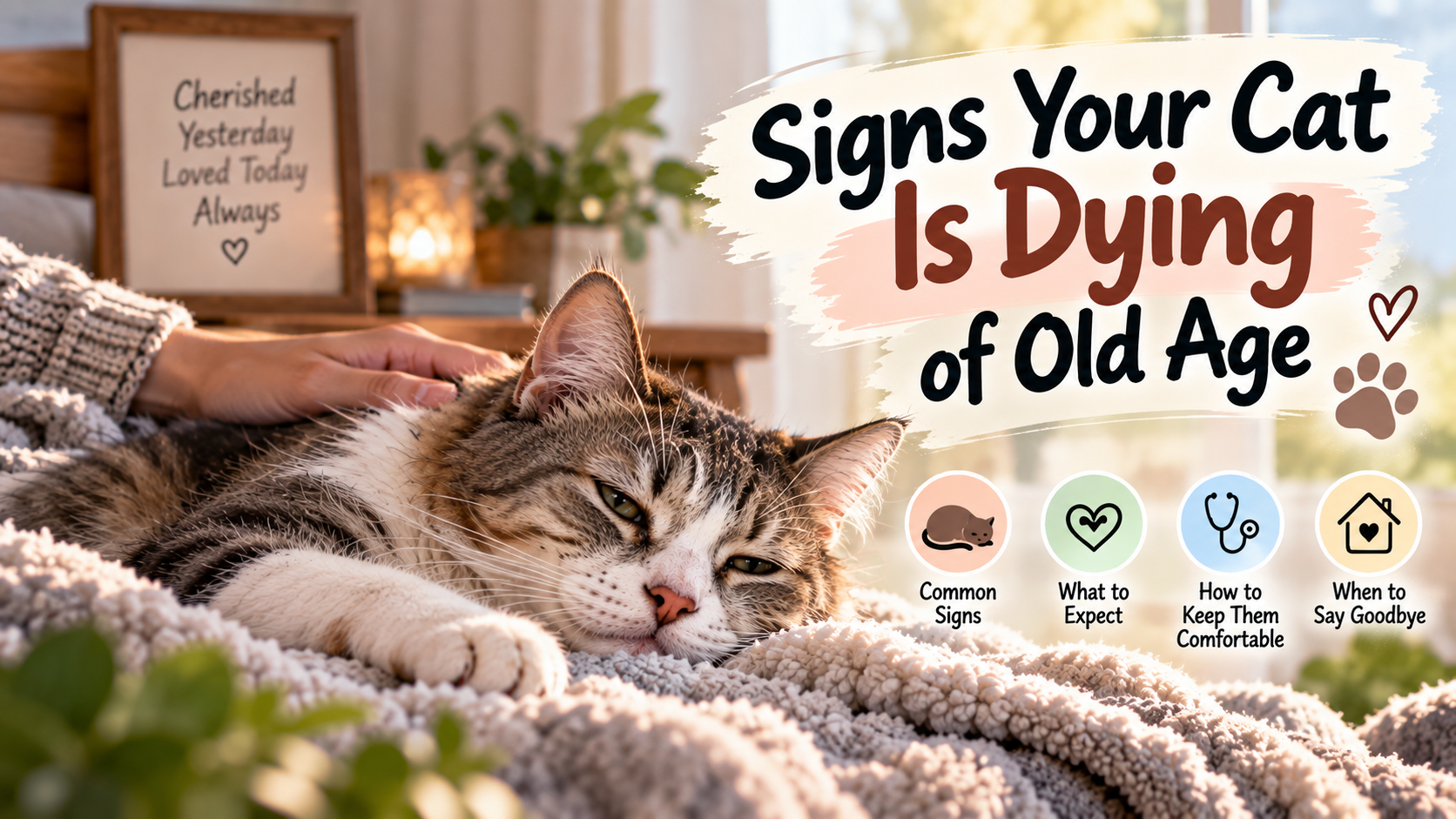
Seeing your cat slow down can be heartbreaking. If you’re searching for signs your cat is dying of old age, you may have noticed changes such as sleeping more, eating less, hiding, or struggling to move around.
Some of these changes can happen near the end of a cat’s life. But they can also be caused by pain or a treatable health problem. Cats are very good at hiding illness, so don’t assume a serious change is “just old age.” A veterinarian can help you find out what’s happening and decide how to keep your cat comfortable.
This guide explains common end-of-life signs, how they may look at home, what you can do to help, and when urgent veterinary care is needed.
What are the signs your cat is dying of old age?
Common signs that an elderly cat may be approaching the end of life include:
- Eating and drinking much less, or refusing food and water
- Severe weakness, trouble standing, or difficulty walking
- Sleeping almost all the time and showing little interest in familiar activities
- Hiding more often or withdrawing from people and other pets
- Losing weight and muscle
- Changes in breathing, including labored, shallow, or irregular breathing
- Trouble staying warm
- Loss of bladder or bowel control
- A dull, unkempt coat because grooming has become difficult
- Confusion, restlessness, vocalizing, or seeming unaware of surroundings
- More bad days than good days
These signs don’t prove that death is close. Several can also occur with kidney disease, cancer, heart disease, dental pain, arthritis, dehydration, or other conditions. That’s why a veterinary examination matters, even if your cat is very old.
The most common end-of-life changes in elderly cats
Every cat is different. Some decline slowly over weeks or months, while others change quickly after a serious illness. You may see several of the following signs at the same time.
1. Your cat stops eating or eats very little
A reduced appetite is one of the most noticeable changes near the end of life. Your cat may sniff food and walk away, take only a few bites, or lose interest in favorite treats. Some cats also stop drinking or become too weak to reach their water bowl.
A poor appetite can happen because the body is slowing down, but it can also point to nausea, mouth pain, kidney disease, infection, or another problem. Cats that go without food can become seriously ill, so call your veterinarian promptly if your cat refuses food for a day or is eating far less than usual.
You can make eating easier by:
- Offering small amounts of familiar, strongly scented wet food
- Warming food slightly to increase its smell
- Placing food and water close to your cat’s resting area
- Using a shallow dish that doesn’t press against sensitive whiskers
- Keeping other pets away during meals
Don’t force food or water into your cat’s mouth. This can cause stress and may lead to choking or aspiration.
2. Your cat loses weight and muscle
Older cats may gradually lose muscle over their back, shoulders, hips, and legs. Their spine or pelvic bones may become easier to see and feel. Rapid weight loss, however, should not be blamed on aging without a veterinary check.
Weight loss can be linked to dental disease, overactive thyroid disease, diabetes, kidney problems, cancer, or difficulty digesting food. Some of these conditions can be managed, even in an elderly cat.
If possible, keep track of your cat’s weight and appetite. A simple weekly weight check can help you notice a decline earlier. If your cat is too large to weigh directly, weigh yourself while holding your cat and subtract your own weight.
3. Your cat becomes extremely weak
A cat near the end of life may have little energy. They may stop jumping onto furniture, hesitate before walking, stumble, or lie down after taking only a few steps. Eventually, some cats can no longer stand or reach the litter box without help.
Weakness can also be caused by dehydration, anemia, low blood sugar, pain, or heart and kidney disease. Sudden weakness is especially concerning and should be treated as a veterinary problem rather than a normal part of aging.
Make your home easier to navigate by placing:
- A low-sided litter box near your cat’s bed
- Food and water within easy reach
- Soft bedding on a warm, non-slip surface
- Ramps or steps if your cat still wants access to a favorite spot
Never give human pain medicine. Many common products are poisonous to cats.
4. Your cat hides or withdraws
Some cats become more social when they feel unwell, while others retreat under a bed, into a closet, or behind furniture. Hiding may be a way to feel safe, conserve energy, or avoid interaction when your cat is in pain.
A cat that suddenly spends most of the day hidden deserves a veterinary evaluation. Don’t drag your cat out repeatedly unless you need to transport them safely. Instead, make the hiding area quiet, warm, and easy to access. Place water, food, and a litter box nearby without crowding the space.
You can sit quietly close to your cat and speak in a familiar voice. Let your cat decide whether they want petting or handling.
5. Grooming declines and the coat changes
Healthy cats usually spend a great deal of time grooming. An elderly or very sick cat may stop grooming because they are tired, painful, weak, or mentally confused. Their coat may look greasy, matted, flaky, or clumped.
Some cats groom excessively instead, especially when they are uncomfortable or anxious. Look for bald patches, irritated skin, or repeated licking of one area.
If your cat enjoys it, gently brush the coat with a soft brush. Keep sessions short and stop if your cat seems uncomfortable. Avoid cutting mats close to the skin unless you know how to do it safely; thin older skin can tear easily. A veterinarian or professional groomer can help with severe matting.
6. Breathing becomes abnormal
Breathing changes can occur during the final stage of life, but they can also signal an emergency. Watch for:
- Fast breathing while resting
- Open-mouth breathing
- Strong effort from the belly or chest
- Wheezing, gasping, or repeated coughing
- Long pauses or irregular breaths
- Blue, gray, or very pale gums
Open-mouth breathing or obvious difficulty breathing is an emergency. Keep your cat calm, limit handling, and contact an emergency veterinarian immediately. Do not wait to see whether the breathing improves on its own.
Near death, breathing may become slower, shallow, or irregular. This can be distressing to witness, but only a veterinarian can help determine whether your cat is actively dying or suffering from a treatable breathing problem.
7. Your cat has trouble using the litter box
A very weak cat may not be able to walk to the litter box, climb into a high-sided box, or squat comfortably. They may have accidents in their bed or on the floor. Loss of bladder or bowel control may happen late in life, but it can also result from arthritis, nerve problems, kidney disease, urinary disease, or severe weakness.
Use a low-entry litter box and place washable pads under and around the bedding. Clean urine or stool gently from the coat and skin to prevent irritation. If your cat strains to urinate, cries in the box, or produces little or no urine, seek urgent veterinary care. A urinary blockage can become life-threatening quickly, especially in male cats.
8. Your cat seems confused or restless
Some elderly cats become disoriented. You may notice them staring at walls, walking aimlessly, getting stuck in corners, vocalizing at night, or seeming unsure where they are. Cognitive decline can cause these behaviors, but pain, high blood pressure, thyroid disease, kidney problems, vision loss, and other medical conditions can look similar.
Keep the environment calm and predictable. Avoid moving furniture, make pathways clear, and use a night-light if your cat seems confused after dark. Report new confusion to your veterinarian, especially if it appears suddenly.
9. Your cat feels cold
A dying cat may have a lower body temperature because circulation and metabolism are slowing. Their ears, paws, or body may feel cooler than usual. Weak or elderly cats can also become cold simply because they cannot move to a warmer place.
Offer a soft blanket and a warm room. A pet-safe heated bed may help, but use low heat and make sure your cat can move away from it. Avoid hot water bottles, heating pads set too high, or direct contact with strong heat, since a weak cat may not be able to move away and could be burned.
How can you tell normal aging from a cat nearing the end of life?
Normal aging usually develops gradually and does not necessarily cause severe suffering. A senior cat may sleep more, jump less, or need more help with grooming but still enjoy food, affection, sunlight, and familiar routines.
A cat may be nearing the end of life when several body systems are failing and they no longer seem comfortable or able to enjoy daily life. The change may be gradual, or it may follow a sudden crisis.
| Change | May occur with normal aging | More concerning for serious illness or end of life |
|---|---|---|
| Sleeping | Sleeps more but wakes for food and interaction | Sleeps almost constantly and is difficult to rouse |
| Appetite | Eats well, perhaps with smaller meals | Refuses food or cannot keep food down |
| Mobility | Moves more slowly but can reach essentials | Cannot stand, walks with severe difficulty, or falls |
| Grooming | Needs occasional brushing | Coat becomes heavily matted or dirty |
| Social behavior | Less active but still responds to family | Withdraws, seems distressed, or no longer responds normally |
| Litter box | Occasional accidents or difficulty with a tall box | Cannot reach the box or loses control repeatedly |
| Comfort | Has many comfortable, enjoyable moments | Has persistent pain, breathing trouble, distress, or more bad days than good |
This table is only a guide. A cat can have a serious but treatable condition even when the signs look like aging.
How do you know if your cat is suffering?
Cats may be suffering if they show ongoing signs of pain, fear, nausea, or distress. Possible clues include:
- Crying, growling, or hissing when touched
- A hunched posture or tense body
- Restlessness and an inability to settle
- Avoiding touch they previously enjoyed
- Repeatedly changing positions
- Fast or difficult breathing
- Refusing food and water
- Severe weakness or collapse
- Hiding nearly all the time
- No longer responding to favorite people or activities
Some cats become very quiet instead of vocal. A lack of crying does not mean your cat is comfortable.
A helpful way to assess quality of life is to consider whether your cat can still do the things that matter to them: eat or enjoy treats, breathe comfortably, rest peacefully, use the litter box, move without severe distress, and interact in a familiar way. Write down good and bad days rather than relying only on memory. This can make changes easier to see and give you a clearer conversation starter with your veterinarian.
What should you do if you think your cat is dying of old age?
First, call your veterinarian. Explain the changes you’ve noticed, when they began, whether your cat is eating and drinking, and whether there are signs of pain or breathing trouble. Your veterinarian may recommend an examination, testing, medication, supportive care, hospice care, or an end-of-life discussion.
While arranging care:
- Keep your cat quiet and comfortable. Reduce loud noises, handling, and household activity.
- Provide easy access to essentials. Move food, water, bedding, and a low-sided litter box close together.
- Offer familiar food and water. Small amounts may be easier than a full meal.
- Support warmth without overheating. Use soft bedding and gentle, indirect warmth.
- Handle your cat carefully. Support the chest and hindquarters when lifting, and stop if they show pain.
- Track important changes. Note appetite, drinking, urination, breathing, mobility, comfort, and alertness.
- Ask about a comfort-care plan. Find out which symptoms require an urgent call and who to contact after hours.
Do not start leftover medications or human medicines without veterinary direction. A drug that helped another pet can be dangerous for your cat.
When is it an emergency?
Seek immediate veterinary care if your cat has any of the following:
- Difficulty breathing or open-mouth breathing
- Collapse, inability to stand, or unresponsiveness
- Seizures that continue or repeat
- Severe bleeding
- Blue, gray, or white gums
- Straining to urinate or no urine production
- Repeated vomiting with weakness
- Sudden severe pain or intense distress
- Suspected poisoning or serious injury
If you’re unsure whether the situation is an emergency, call a veterinary clinic and describe exactly what you see. It is safer to ask than to wait during a crisis.
Hospice care and euthanasia for an elderly cat
Hospice care focuses on comfort rather than curing an advanced condition. Depending on your cat’s needs, comfort care may include pain control, anti-nausea treatment, appetite support, fluids, mobility help, and changes to the home environment. Your veterinarian can explain what is appropriate and how to give each treatment safely.
Euthanasia may be discussed when suffering cannot be controlled, your cat cannot breathe comfortably, or there are very few comfortable moments left. Choosing euthanasia is not giving up. It can be a compassionate way to prevent ongoing distress when recovery is no longer possible.
Ask your veterinarian questions such as:
- Is my cat in pain or distress right now?
- Could treatment improve comfort or quality of life?
- What changes should prompt an emergency visit?
- How will I know when comfort care is no longer enough?
- Can euthanasia be performed at the clinic or at home?
- What should I expect during the appointment?
It’s normal to feel uncertain and emotional. You don’t have to make every decision alone. A veterinarian can help you balance your cat’s comfort, medical needs, and quality of life.
How can you make a dying cat comfortable at home?
Focus on simple care that reduces effort and stress:
- Keep your cat in a quiet room with a comfortable temperature.
- Use soft bedding that supports the body but doesn’t make movement difficult.
- Place food, water, and a low-sided litter box nearby.
- Keep the floor free of clutter so your cat doesn’t slip or get trapped.
- Offer gentle affection only if your cat welcomes it.
- Keep the coat and skin clean and dry.
- Dim bright lights and reduce loud sounds.
- Follow your veterinarian’s medication instructions exactly.
- Spend calm time together, even if your cat mostly sleeps.
Your cat may not want to eat, play, or be held. Respect those changes. Quiet companionship can be just as meaningful as active interaction.
Final thoughts
The signs your cat is dying of old age may include loss of appetite, severe weakness, weight loss, withdrawal, poor grooming, breathing changes, confusion, and loss of litter box control. But these signs can also point to painful or treatable medical problems.
The safest step is to contact a veterinarian instead of assuming your cat is simply getting old. Until your cat can be examined, keep them warm, quiet, clean, and close to their essential resources. Watch their breathing and comfort closely, and seek emergency care for collapse, severe distress, or trouble breathing.
Being there for your cat, noticing changes, and asking for help are some of the kindest things you can do at the end of their life.