
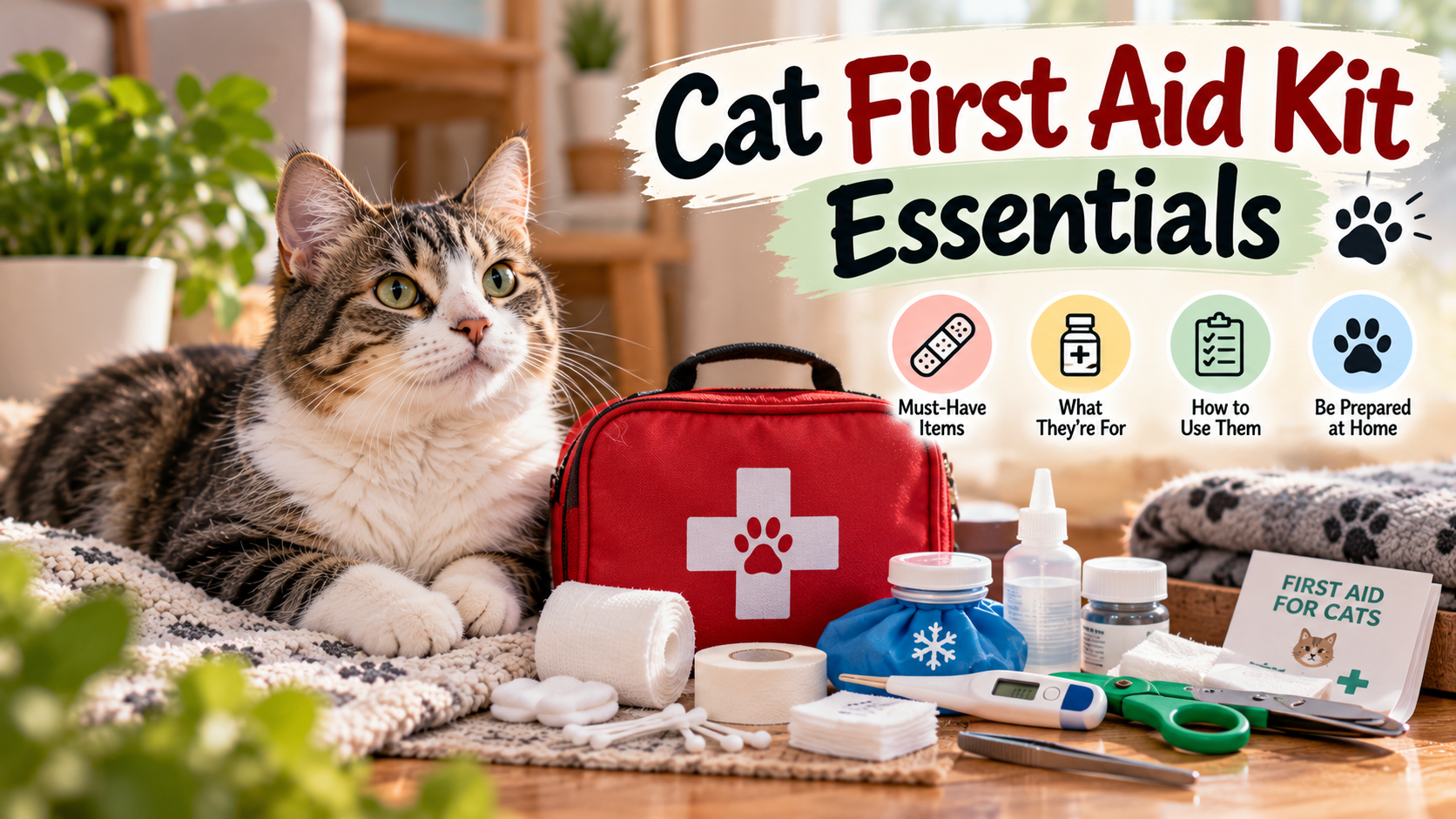
A cat first aid kit can help you respond calmly to a small cut, a broken nail, a paw injury, or another minor problem while you arrange veterinary care. It isn’t a substitute for a veterinarian, and it won’t treat serious illness. But having the right supplies ready can prevent a stressful search through drawers when your cat is hurt.
The best kit is simple, organized, and made for cats. Keep it somewhere easy to reach, check the contents every few months, and store your veterinarian’s phone number with it. You may also want a second, smaller kit for travel.
What belongs in a cat first aid kit?
The most useful cat first aid kit essentials are basic wound-care supplies, protective equipment, a way to safely handle your cat, and important contact information. You don’t need a large medical bag packed with complicated products.
Here’s a practical starter list:
- Disposable gloves
- Sterile gauze pads
- Rolled gauze or conforming bandage material
- Clean, soft towels
- Adhesive tape made for medical use
- Blunt-ended scissors
- Tweezers
- A digital thermometer designed for pets or suitable for rectal use, if you have been shown how to use it safely
- Saline eye-wash solution without added medication
- A clean syringe without a needle for rinsing or measuring liquid when directed by a veterinarian
- A soft cone or recovery collar
- An extra cat carrier or a carrier that is easy to access
- A flashlight
- Hand sanitizer for your own hands, used away from your cat
- A written list of emergency contacts
- Your cat’s medical information and medication list
Some items can be kept in a separate emergency supply box, such as spare towels, bottled water, puppy pads, and a familiar blanket. These are especially useful if you need to transport an injured or frightened cat.
Basic wound-care supplies
Sterile gauze pads
Sterile gauze is one of the most useful things in a cat first aid kit. You can place it over a small wound or use it to apply gentle pressure if a cut is bleeding.
Choose several sizes. Small pads work well for paws and face-area injuries, while larger pads are useful for the body. Gauze rolls can help hold a pad in place, but bandages must never be wrapped tightly around a leg, paw, or tail.
If bleeding is heavy, blood is spurting, or the gauze becomes soaked quickly, seek urgent veterinary care. Apply steady pressure with clean gauze while you travel or call the clinic for instructions.
Clean towels
Towels are surprisingly valuable. A towel can:
- Help you gently restrain a frightened cat
- Keep an injured cat warm during transport
- Protect you from scratches and bites
- Cover a carrier to reduce visual stress
- Absorb water or bodily fluids
A towel wrap should be gentle. Never wrap the neck tightly or restrict your cat’s breathing. If your cat is struggling hard, stop and ask a veterinary team how to handle the situation safely.
Medical tape and bandage material
Paper or medical tape can help secure gauze temporarily. Avoid putting adhesive directly on fur whenever possible. Many cats will chew or pull at a bandage, so monitor it closely.
Do not use elastic bandages or wrap a limb tightly unless a veterinarian has shown you how. A bandage that is too tight can reduce circulation and cause swelling, pain, or tissue damage. Toes that become cold, swollen, pale, blue, or very painful need prompt veterinary attention.
Blunt-ended scissors
Blunt-ended scissors are useful for cutting tape, gauze, or fur away from a wound. Keep the tips pointed away from your cat’s skin. If fur is tightly matted around an injury, don’t use scissors close to the skin. A frightened cat can move suddenly, causing a serious cut.
Cleaning and rinsing supplies
Sterile saline
Plain sterile saline eye-wash or wound-rinse solution can be useful for gently flushing dirt from a superficial wound or rinsing an eye when a veterinarian recommends it. Read the label carefully. The product should not contain medication, redness relievers, alcohol, or other added ingredients unless your veterinarian specifically tells you to use it.
Saline does not repair a deep wound, remove a lodged object, or treat an eye infection. If your cat is squinting, holding an eye shut, pawing at it, or has a cloudy-looking eye, contact a veterinarian promptly. Eye problems can worsen quickly.
A needle-free syringe
A clean syringe without a needle can help you measure liquid or gently rinse a surface. Use it only for a task your veterinarian has approved. Never force water, food, or medicine into a cat’s mouth. Liquid can enter the lungs if a cat cannot swallow normally.
It’s also wise to keep syringes clearly labeled and separate from any medication supplies. Dispose of a syringe if it becomes dirty, damaged, or difficult to clean.
Tools for safe handling
A carrier that is ready to use
A cat carrier is part of your first aid plan, even though it isn’t a medical supply. Keep it somewhere accessible instead of buried in a closet. If your cat only sees the carrier before a stressful vet visit, they may hide as soon as it appears.
You can make the carrier less frightening by leaving it open in a quiet room with a familiar blanket inside. Never chase your cat around the house with the carrier during an emergency if you can avoid it. Close doors to limit hiding places, move slowly, and use a towel only if you can do so safely.
If the carrier has a removable top, it may be easier to place an injured cat inside without pushing them through the small front opening. A sturdy box with air holes can be a temporary option in an urgent situation, but a proper carrier is safer for regular transport.
A soft cone or recovery collar
Cats often lick, chew, or scratch injured areas. That can open a wound, remove stitches, or delay healing. A properly sized cone or recovery collar can stop your cat from reaching the area until a veterinarian evaluates it.
A cone should allow your cat to breathe, swallow, and rest comfortably. Check that your cat can reach food and water. If they cannot, adjust the setup or contact your veterinary clinic for advice.
Gloves and a flashlight
Disposable gloves protect your hands while you clean a mess or handle a wound. They don’t make it safe to handle every injured cat, though. Pain and fear can make even a gentle cat bite or scratch.
A small flashlight helps you look at a paw, check for a splinter, or find blood on dark fur. Avoid shining it directly into your cat’s eyes.
Temperature and health-monitoring supplies
A thermometer may be useful, but taking a cat’s temperature can be difficult and stressful. If you haven’t been taught how to do it safely, don’t force the process. Your cat’s comfort and safety come first.
A thermometer reading can also be misleading if the technique is poor or your cat is struggling. If your cat feels unusually hot, is weak, is breathing abnormally, or seems seriously unwell, call a veterinarian rather than relying on a home temperature check.
You can still monitor important changes without handling your cat much. Write down:
- When the problem started
- What happened before the signs appeared
- Whether your cat is eating and drinking
- Urination and bowel movements
- Vomiting or diarrhea
- Changes in breathing
- Medications or substances your cat may have contacted
- Photos of swelling, wounds, vomit, or unusual skin changes
This information can help a veterinary team decide how urgently your cat needs to be seen.
Medications: what not to put in a cat first aid kit
The safest medication rule is simple: don’t give your cat human medicine unless a veterinarian specifically tells you to use that exact product and dose.
Common human pain relievers can be dangerous or fatal to cats. This includes products containing acetaminophen, ibuprofen, or naproxen. Cold medicines, some creams, essential oils, and other household products can also harm cats.
Do not add leftover prescription medicine to your kit for future use. A drug that helped during one illness may be unsafe for a different problem. It may also hide signs your veterinarian needs to see.
Avoid putting these products on wounds unless your veterinarian recommends them:
- Rubbing alcohol
- Hydrogen peroxide
- Essential oils
- Human antibiotic creams, especially products containing additional pain-relieving ingredients
- Powders or kitchen remedies
- Harsh soaps or disinfectants
For most minor surface injuries, the safest first step is to prevent licking and ask your veterinary clinic how to clean the area. A deep puncture, bite wound, burn, or large cut should be professionally examined even if it looks small from the outside.
What to do for common minor problems
Small cuts or scrapes
If your cat has a shallow scrape and is otherwise acting normally, put on gloves and gently assess the area. If it is bleeding, hold clean gauze against it with steady, light-to-moderate pressure. Don’t keep lifting the gauze to check every few seconds because that can disturb a forming clot.
Once bleeding has stopped, ask your veterinarian whether to rinse the area with plain saline. Keep your cat from licking it and watch for redness, swelling, discharge, increasing pain, or a bad smell.
A torn or bleeding nail
A broken nail can be painful and may bleed. Keep your cat as still as possible and apply gentle pressure with gauze. A veterinarian can tell you whether the damaged portion needs to be trimmed or treated.
Do not dig around in the paw or pull off a nail that is partly attached. If bleeding continues, the nail is badly damaged, or your cat won’t put weight on the foot, arrange veterinary care.
Something stuck in a paw
If a small object is loose and easy to grasp, you may be able to remove it with clean tweezers. Stop if it is deeply embedded, if your cat is very painful, or if the object is a splinter, piece of glass, or metal that may break.
Never pull on fishing line, thread, or string coming from your cat’s mouth or anus. Swallowed string can become caught inside the digestive tract. Treat this as an urgent veterinary problem.
Minor eye irritation
Don’t rub the eye or try to remove an object that appears embedded. You can call a veterinarian about using plain sterile saline to rinse away a loose irritant, but squinting, cloudiness, discharge, swelling, or visible trauma needs prompt professional advice.
Mild overheating concerns
Move your cat to a cool, quiet area and call a veterinarian if they are panting, weak, confused, drooling, vomiting, or collapsing. Don’t place an overheated cat in ice water. Transport instructions should come from a veterinary professional, especially if your cat has breathing trouble or seems weak.
When is a cat emergency?
A first aid kit is useful while you arrange help, but some signs should never be managed at home for long. Contact an emergency veterinarian immediately if your cat has:
- Trouble breathing, open-mouth breathing, or blue, gray, or very pale gums
- Collapse, severe weakness, loss of consciousness, or a seizure that does not stop
- Heavy bleeding that doesn’t slow with gentle pressure
- A serious fall, car injury, crushing injury, or suspected broken bone
- A deep wound, bite wound, burn, or object embedded in the body
- Repeated vomiting or severe diarrhea with weakness
- Inability to urinate, especially in a male cat
- Suspected poisoning or contact with a toxic substance
- A swollen, painful abdomen
- A sudden inability to use a leg or severe pain
- A serious eye injury
Keep your cat warm and as still as possible during transport unless they are overheated. Don’t offer food, water, or medication until a veterinary professional tells you to do so. Call ahead so the clinic can prepare and give you handling instructions.
How to organize and maintain your kit
Put all first aid supplies in a labeled, waterproof container. A clear box makes it easier to find gauze or gloves quickly. Store it away from children and pets, but not so far away that you can’t reach it during an emergency.
Check the kit every three to six months. Replace:
- Expired saline or other products
- Opened or dirty sterile supplies
- Damaged tape or packaging
- Used gloves and syringes
- Batteries in a flashlight
- Supplies your cat has outgrown, such as a small cone
Add a card with your cat’s name, age, medical conditions, allergies, current medications, microchip information, and veterinarian’s phone number. Include the closest emergency clinic and a backup contact who can authorize care if you’re away.
A simple travel first aid kit for cats
For car trips, boarding, or evacuation, pack a smaller version of your home kit:
- Gauze and medical tape
- Disposable gloves
- A clean towel
- Plain saline
- Blunt-ended scissors
- A carrier and spare bedding
- Your cat’s medications, if prescribed
- Food and water for the trip
- Waste bags and puppy pads
- Medical records and contact information
Keep medications in their original labeled containers. Don’t leave your cat unattended in a parked car, even on a mild day.
Final takeaways
The most important cat first aid kit essentials are simple: gauze, clean towels, gloves, safe rinsing supplies, basic tools, a carrier, and current veterinary contact information. Use them to provide limited first aid, not to delay treatment.
When in doubt, call your veterinarian. Cats often hide pain, and an injury that looks minor can be more serious underneath. Calm handling, quick advice, and safe transport are usually more valuable than a crowded kit full of products you may not know how to use.