
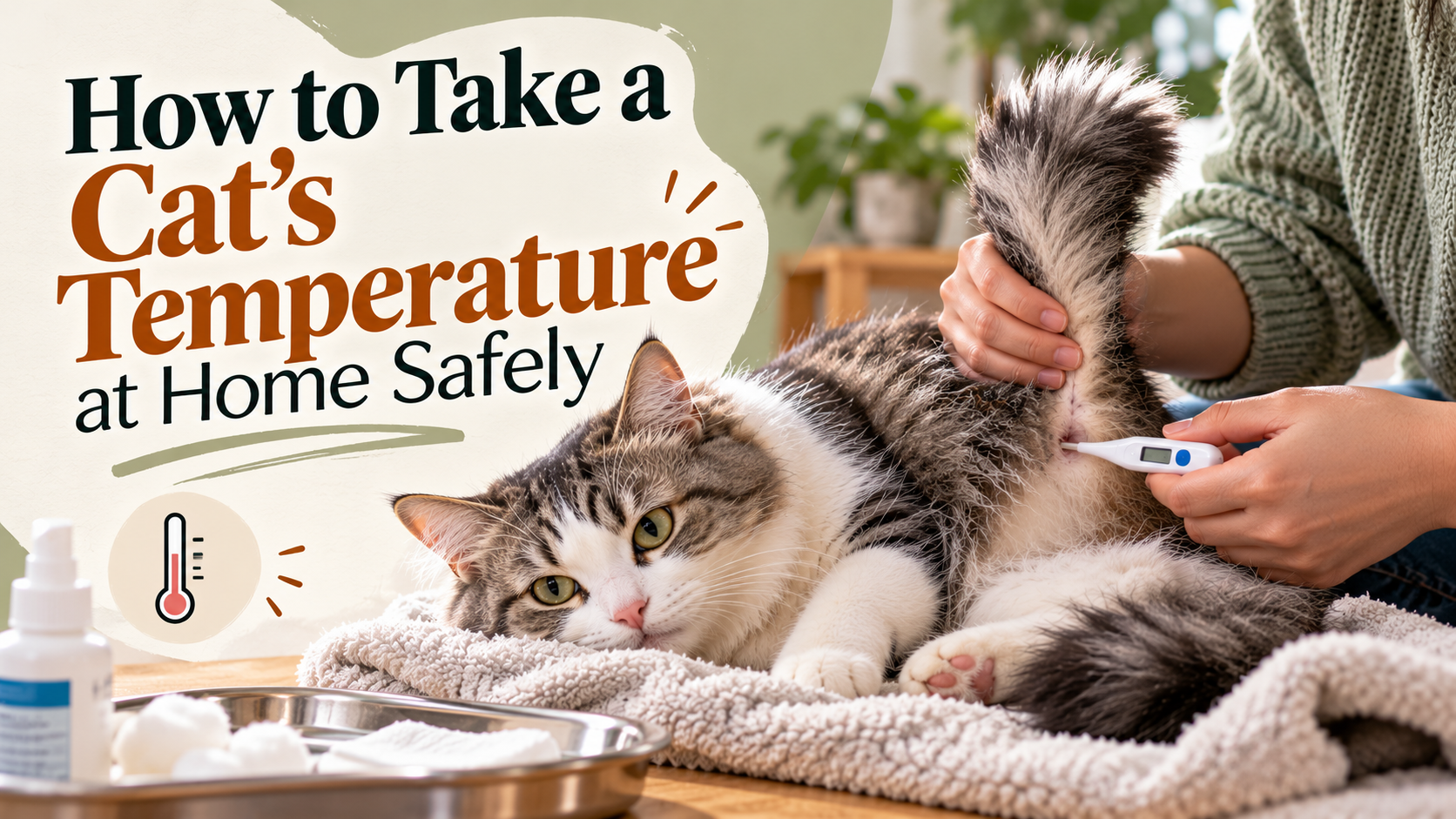
Knowing how to take a cat’s temperature at home can help you decide whether your cat needs urgent veterinary care. The most accurate home method is usually a digital rectal thermometer, but taking a temperature this way can be stressful and may be difficult with a fearful, painful, or struggling cat.
A normal cat temperature is generally about 100.5°F to 102.5°F (38.1°C to 39.2°C). A reading outside that range does not always tell the whole story. Stress, excitement, recent activity, illness, and the way you took the temperature can all affect the result.
If your cat is very weak, having trouble breathing, collapsed, severely dehydrated, bleeding, or acting seriously ill, don’t spend time trying to take a temperature. Contact a veterinarian or emergency clinic right away.
What You’ll Need
Gather everything before you approach your cat. This helps you work quickly and avoid repeated attempts.
- A digital thermometer reserved for your cat
- Water-based lubricant, such as a plain lubricating jelly
- Disposable gloves, if you prefer to wear them
- Paper towels or a clean cloth
- A second person to help, if available
- A quiet room with good lighting
- Treats for afterward, if your cat is willing to eat
A basic digital thermometer is usually enough. Avoid using a glass mercury thermometer because it can break and expose your cat to dangerous material. It can also cause injury if your cat moves suddenly.
Label the thermometer clearly and keep it separate from human thermometers. Clean it before and after use with soap and water or an appropriate disinfectant, then rinse and dry it as directed by the product manufacturer.
Which Type of Thermometer Is Best for Cats?
A rectal digital thermometer generally gives the most reliable home reading when used correctly. It measures internal body temperature rather than the temperature of the ear canal or skin.
Some cat owners use pet ear thermometers. These can be easier to use, but their accuracy may vary depending on the device, the cat’s ear shape, ear wax, inflammation, and how the thermometer is positioned. Follow the instructions for that specific product, and don’t assume an ear reading is interchangeable with a rectal reading.
Do not rely on a cat’s nose, ears, or paws to judge body temperature. A warm or dry nose does not prove that a cat has a fever, and cool ears do not rule one out.
How to Take a Cat’s Temperature Rectally
The following steps describe the usual home method. Stop if your cat becomes panicked, aggressive, or painful. A thermometer reading is not worth injuring you or your cat.
1. Keep your cat calm
Choose a quiet room away from children, other pets, loud sounds, and sudden movement. Let your cat settle for a few minutes if possible.
Some cats are calmer when wrapped loosely in a towel, with only the tail and rear end exposed. Others become more upset when restrained. Watch your cat’s body language and use the least restraint that allows you to work safely.
A second person can gently hold your cat against their body while you handle the thermometer. The helper should support the cat rather than pinning them down tightly.
2. Turn on the thermometer
Turn on the digital thermometer and make sure it is ready. If it has different settings, use the setting recommended by the manufacturer for rectal use.
Never insert the thermometer while it is still covered by a protective cap. Check the display before you begin so you know the thermometer is working.
3. Apply lubricant
Cover the tip with a small amount of water-based lubricant. Lubrication reduces friction and makes insertion more comfortable.
Don’t use a sharp object, a dry thermometer, or a large amount of lubricant. Avoid products containing irritating ingredients unless your veterinarian has specifically recommended them.
4. Position your cat carefully
Place your cat on a stable surface or have your helper hold them securely. Keep the cat’s body supported so they cannot suddenly jump and fall.
Raise the tail gently. Do not pull hard or twist it. You only need enough access to the rectum to insert the thermometer a short distance.
5. Insert the thermometer slowly
Gently insert the lubricated tip into the rectum. For most cats, only a small amount needs to enter—roughly about half an inch, depending on the cat and the thermometer. Never force it.
If you meet resistance, stop. Pulling back slightly and changing the angle gently may help, but do not push against resistance. A struggling cat can suffer a rectal tear if the thermometer is forced or inserted too deeply.
6. Wait for the reading
Hold the thermometer in place until it signals that the measurement is complete. Keep your cat as still as possible without squeezing or restraining them harshly.
Remove the thermometer slowly, then check and record the reading. Write down the time, temperature, and any symptoms you noticed. This information can help your veterinarian understand whether the temperature is changing.
7. Clean the thermometer
Wash the thermometer with soap and water, disinfect it according to the product directions, rinse it if needed, and dry it completely. Store it in a clean container where it won’t be confused with a human thermometer.
Offer calm praise or a favorite treat if your cat wants one. Don’t punish your cat if the process went badly. A frightening experience can make future handling harder.
How to Take a Cat’s Temperature Without a Rectal Thermometer
You may be able to use a pet ear thermometer, but the result may be less dependable than a properly taken rectal temperature. Ear readings can be affected by ear infections, wax, inflammation, and incorrect positioning.
If you use an ear thermometer:
- Read the device instructions carefully.
- Make sure the thermometer is designed for pets or is approved for the intended use.
- Keep your cat’s head still without forcing the ear into an uncomfortable position.
- Insert only as far as the instructions allow.
- Take more than one reading only if your cat remains calm and the device instructions support it.
- Tell your veterinarian that the reading came from an ear thermometer.
Do not put a regular human oral thermometer in your cat’s mouth. Cats may bite, swallow, or break the device, and oral temperature checks are not a safe routine method at home.
If you cannot safely get a reliable reading, contact your veterinarian. A professional team can often take the temperature while also checking hydration, heart rate, breathing, gums, and other signs of illness.
What Is a Normal Temperature for a Cat?
A healthy cat’s body temperature is usually around 100.5°F to 102.5°F (38.1°C to 39.2°C). Individual readings can vary slightly, and one borderline result should be interpreted along with your cat’s behavior and other symptoms.
Here is a simple guide:
| Temperature reading | What it may mean | What to do |
|---|---|---|
| About 100.5–102.5°F (38.1–39.2°C) | Common normal range | Continue watching your cat and consider other symptoms |
| Slightly above normal | Possible fever, stress, recent activity, or measurement issue | Let your cat rest and contact your veterinarian for advice |
| Around 104°F (40°C) or higher | Potentially dangerous high temperature | Seek urgent veterinary care |
| Below about 100°F (37.8°C) | Possible hypothermia, shock, serious illness, or inaccurate reading | Contact a veterinarian promptly |
These ranges are general guidance, not a diagnosis. A cat with a temperature that seems normal may still be very sick. Likewise, stress can sometimes raise a cat’s temperature temporarily.
If the reading seems unusual, allow your cat to rest quietly for several minutes and check the thermometer setup. Do not repeatedly take the temperature if your cat is distressed. Call your veterinarian and explain the reading, the method used, and your cat’s symptoms.
Signs That Your Cat May Be Sick
Fever is only one possible sign of illness. Many cats hide symptoms until they feel quite unwell, so look at the whole picture.
Contact your veterinarian if your cat has a temperature outside the normal range or shows signs such as:
- Not eating or drinking
- Marked tiredness, weakness, or hiding
- Shivering or unusual body tension
- Vomiting or diarrhea
- Coughing, sneezing, or nasal discharge
- Fast, difficult, or open-mouth breathing
- Pain, limping, or reluctance to move
- Pale, gray, blue, yellow, or very dark gums
- Signs of dehydration, such as sticky gums or severe weakness
- Trouble urinating or repeated trips to the litter box
- A wound, bite, abscess, or recent surgery
Kittens, older cats, pregnant cats, and cats with ongoing medical conditions may become seriously ill faster. Call your veterinarian sooner rather than waiting for symptoms to worsen.
When Is a Cat’s Fever an Emergency?
A very high or very low temperature can be an emergency, especially when paired with other symptoms. Seek urgent veterinary help if your cat has a temperature around 104°F (40°C) or higher, a markedly low temperature, or signs of collapse, confusion, severe weakness, or breathing trouble.
Heat exposure is also an emergency. A cat left in a hot room, car, porch, or other poorly ventilated area may develop heatstroke. Warning signs include heavy or open-mouth breathing, drooling, vomiting, weakness, stumbling, collapse, or a bright red or unusually pale tongue and gums.
Move the cat to a cooler area and call an emergency veterinarian immediately. Don’t place an overheated cat in ice water, and don’t delay care while trying repeated temperature checks.
What Not to Do if Your Cat Has a Fever
A fever can be caused by infection, inflammation, heat exposure, medication reactions, immune problems, and other conditions. Treating the temperature without finding the cause can be unsafe.
- Do not give human fever medicine. Acetaminophen, ibuprofen, naproxen, and some other human medications can be poisonous to cats. Even a small amount may cause serious harm.
- Do not give leftover antibiotics. The wrong drug or dose may fail to treat the problem and can delay proper care.
- Do not force food or water if your cat is vomiting, very weak, or having trouble swallowing.
- Do not use ice, alcohol, or very cold baths to lower a temperature unless a veterinarian specifically tells you to do so.
- Do not keep restraining a frightened cat just to obtain a perfect number.
You can provide access to fresh water, keep your cat in a quiet and comfortable room, and follow your veterinarian’s instructions. If your cat refuses water, is vomiting, or seems increasingly ill, seek professional advice.
How to Make Temperature Checks Easier
If your veterinarian has asked you to monitor your cat at home, a little preparation can make the process less stressful.
- Practice touching your cat’s tail and hindquarters briefly when they are relaxed, then reward them.
- Keep the thermometer and lubricant together in a clearly labeled kit.
- Have another person help instead of trying to hold the cat and thermometer alone.
- Take readings at similar times if your veterinarian wants a temperature log.
- Write down medications, appetite, drinking, litter box use, and other symptoms.
- Stop if your cat shows escalating fear, pain, or aggression.
Signs that your cat is becoming too stressed can include flattened ears, growling, hissing, frantic struggling, rapid breathing, biting, or trying to escape. Give them a break and call your veterinarian if you cannot safely continue.
Common Questions About Cat Temperatures
Can you tell if a cat has a fever by touching its ears?
No. A cat’s ears, nose, or paws are not reliable ways to diagnose a fever. Use a suitable thermometer or have a veterinarian check your cat.
Can stress raise a cat’s temperature?
Yes. Fear, struggling, and intense excitement may temporarily affect a cat’s temperature. That is one reason a single borderline reading should be considered with the cat’s behavior and other signs.
Should I take my cat’s temperature while they are sleeping?
It’s usually better not to surprise a sleeping cat with a rectal thermometer. Sudden movement can cause injury. Wait until your cat is awake and calm, and get help if needed.
How often should I take my cat’s temperature?
Only monitor it as often as your veterinarian recommends. Repeated checks can increase stress and may irritate the rectum. Keep a written record if your veterinarian wants to see temperature changes over time.
What if my cat won’t let me take their temperature?
Don’t force the attempt. A frightened or painful cat may bite or suffer an injury. Call your veterinarian, describe the symptoms, and ask whether the cat should be examined.
The Bottom Line
The safest answer to how to take a cat’s temperature at home is to use a lubricated digital thermometer rectally, insert it only a short distance, and stop immediately if your cat struggles or seems painful. A pet ear thermometer may be easier but can be less reliable.
A temperature is just one piece of the health picture. If your cat has an unusually high or low reading, is acting sick, or cannot be handled safely, contact a veterinarian rather than trying repeated home checks or giving human medication.