
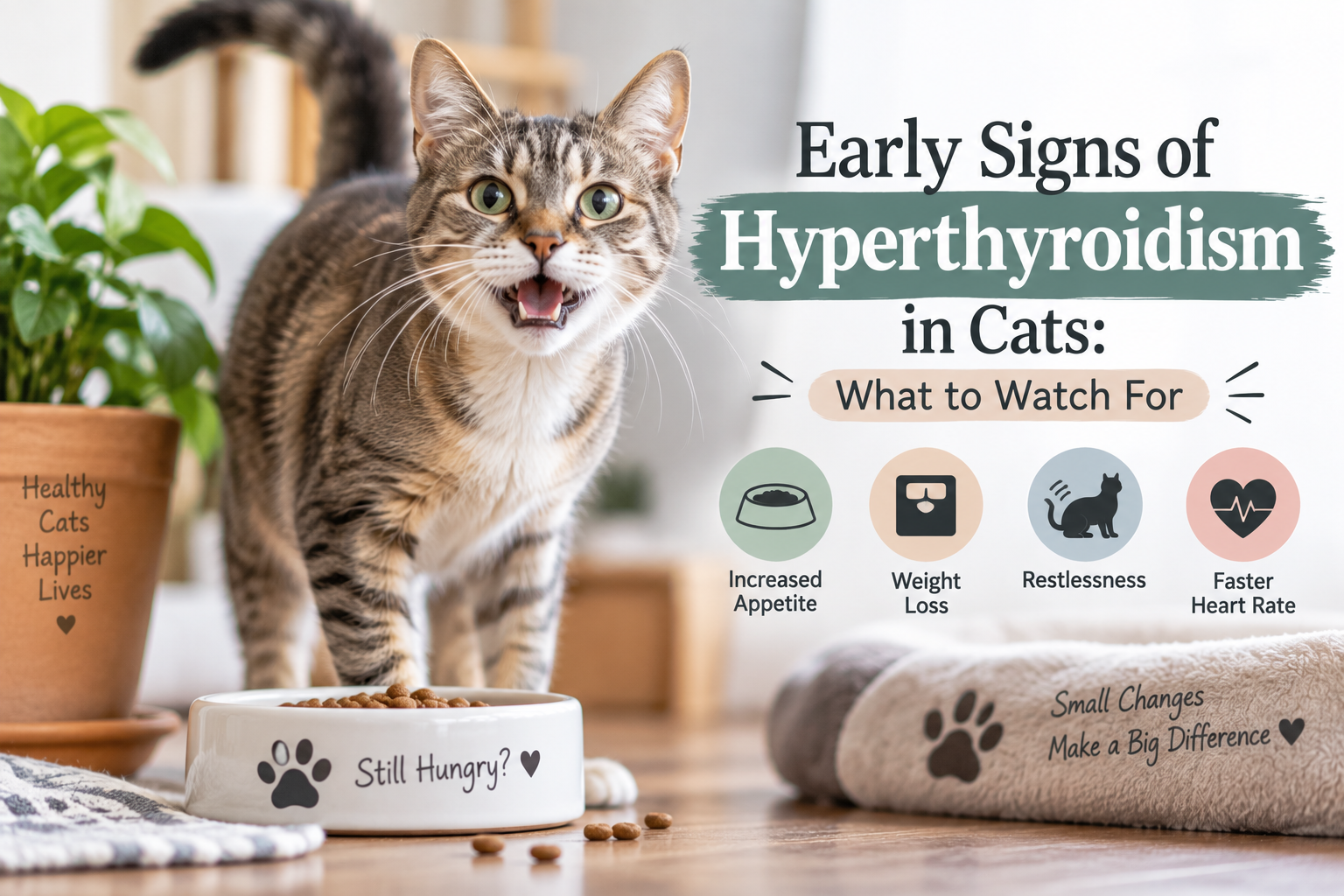
Hyperthyroidism is one of the most common hormone problems in older cats. It happens when the thyroid glands produce too much thyroid hormone, which speeds up many body processes. The condition is treatable, but early signs can be easy to overlook because they may seem like normal changes associated with aging.
The most common early signs of hyperthyroidism in cats include weight loss despite a good or increased appetite, increased thirst, more frequent urination, restlessness, vomiting, diarrhea, and a messy or greasy coat. A cat may show only one or two of these signs at first.
If you notice a pattern of changes, schedule a veterinary exam rather than waiting for symptoms to become severe. Other health problems can cause similar signs, and a blood test is usually needed to find out what is really happening.
What is hyperthyroidism in cats?
The thyroid glands are small glands in the neck that help control the body’s metabolism. In cats with hyperthyroidism, one or both glands become overactive and produce too much thyroid hormone. In most cases, this is caused by a noncancerous enlargement of thyroid tissue. Less commonly, a malignant tumor is involved.
Too much thyroid hormone makes the body work faster. The heart may beat more quickly, the digestive system may move faster, and the cat may burn calories at a higher rate. That is why a cat can seem hungry but still lose weight.
Hyperthyroidism is seen most often in middle-aged and senior cats, although any adult cat can develop it. It isn’t something you can diagnose by looking at your cat’s neck. Some cats have a small enlarged thyroid gland that only a veterinarian can feel, while others have no obvious lump at all.
What are the early signs of hyperthyroidism in cats?
The early signs can be mild and gradual. You may not notice them until you compare your cat’s current behavior, appetite, and body shape with how they were a few months earlier.
1. Weight loss despite a normal or increased appetite
This is one of the most important early warning signs. A hyperthyroid cat may eat the same amount as usual, beg for food more often, or act unusually hungry while losing weight.
The body is using energy faster than normal, so extra food may not make up for the increased calorie burn. Weight loss may be especially easy to miss in cats with long fur or in homes where nobody weighs the cat regularly.
Watch for:
- Ribs, hips, or the spine becoming easier to feel
- A thinner waist or less muscle over the back legs
- A collar becoming loose
- A cat looking smaller when picked up
- Increased begging or trying to steal food
Not every cat with hyperthyroidism loses weight immediately. Weight loss can also be caused by diabetes, kidney disease, intestinal disease, dental pain, cancer, or other conditions. That is why this sign deserves a veterinary check even if your cat seems to be eating well.
2. Increased hunger or food-seeking behavior
Some cats become noticeably more interested in food. They may wake you early for breakfast, cry between meals, search through trash, or try to eat another pet’s food.
A bigger appetite is not always a sign of hyperthyroidism. Cats may eat more because of a change in diet, medication, boredom, or another medical problem. But increased hunger paired with weight loss is more concerning than either sign alone.
Keep a simple record of how much your cat eats each day. If several people feed the cat, make sure everyone knows the planned amount so you can tell whether appetite has genuinely changed.
3. Drinking more water and urinating more often
As hyperthyroidism progresses, some cats drink and urinate more. You may notice a heavier litter box, larger urine clumps, or your cat visiting the water bowl more often.
This sign can be subtle, especially if your cat eats wet food or drinks from several places. It can also point to kidney disease, diabetes, urinary problems, or other conditions that are common in older cats.
Do not restrict your cat’s water to reduce litter box use. Fresh water should always be available. Instead, note the change and tell your veterinarian what you have observed.
4. Restlessness, nervousness, or unusual activity
A cat that used to nap peacefully may start pacing, wandering, vocalizing, or having trouble settling down. Some cats become more demanding or seem constantly “on the go.” Others may become irritable when handled.
This can happen because excess thyroid hormone affects the body and may make the cat feel restless or uncomfortable. Owners sometimes mistake this change for a personality shift or assume the cat is simply becoming more active with age.
Look for a clear difference from your cat’s usual behavior, such as:
- Pacing around the home
- Sleeping less
- Meowing more than usual
- Becoming more anxious or easily startled
- Changing favorite sleeping spots
- Acting unable to relax after meals or at night
Behavior changes alone do not confirm hyperthyroidism. Pain, stress, cognitive changes, high blood pressure, and other illnesses can look similar.
5. Vomiting or loose stools
Some cats with early hyperthyroidism vomit occasionally or develop softer, more frequent stools. The digestive tract may be moving faster, and increased appetite can lead a cat to eat too quickly.
An isolated hairball or one episode of vomiting usually does not point specifically to thyroid disease. Repeated vomiting, ongoing diarrhea, or a combination of digestive signs and weight loss should be evaluated.
Take a photo of unusual stool if you can do so without delaying care. It can help your veterinarian understand what you mean, especially when the change is intermittent.
6. A rough, greasy, or unkempt coat
Healthy cats usually spend a lot of time grooming. A cat with hyperthyroidism may develop a dull, greasy, tangled, or uneven coat. Some cats groom less because they are restless, weak, or dealing with another illness.
You might notice more dandruff, mats, shedding, or a coat that feels different when you pet your cat. Cats with long hair may show these changes first around the back and hindquarters.
A poor coat can also result from arthritis, obesity, dental disease, skin problems, or general illness. It is most useful as part of the overall picture rather than as a stand-alone sign.
7. Mild weakness or loss of muscle
Although a cat may appear active, excess thyroid hormone can contribute to muscle loss over time. You may notice that the back legs look thinner or that your cat has less strength when jumping onto furniture.
Some cats become less able to groom themselves or seem tired after normal activity. If weakness appears suddenly, is severe, or affects walking, contact a veterinarian promptly rather than assuming it is an early thyroid sign.
Signs that may appear as hyperthyroidism progresses
Untreated hyperthyroidism can place strain on the heart and other organs. Later signs may include:
- Marked weight loss
- A very fast heartbeat
- Rapid breathing or difficulty breathing
- Weakness or collapse
- High blood pressure
- Sudden vision problems
- Severe vomiting or diarrhea
- A large, easily felt thyroid enlargement
These signs do not always follow a predictable order. Some cats look only mildly affected even when their hormone levels are high, while others become seriously ill more quickly.
Breathing difficulty, collapse, sudden blindness, severe weakness, or repeated vomiting requires urgent veterinary attention.
How can you tell whether your cat’s changes are concerning?
A single sign may have a harmless explanation, but a group of changes is more meaningful. For example, an older cat that is losing weight, begging for food, drinking more, and vocalizing at night should be examined even if they still seem cheerful.
Use this quick observation checklist:
| Change you notice | What to record | Why it matters |
|---|---|---|
| Weight loss | Current weight and how quickly it changed | Shows whether the change is ongoing |
| Increased appetite | Daily food amount and begging | Helps compare calories with body condition |
| More drinking | Water bowl use and refill frequency | May occur with thyroid, kidney, or blood sugar problems |
| More urination | Litter box clump size and frequency | Helps identify changes in urine output |
| Vomiting or diarrhea | Frequency, appearance, and duration | Shows whether digestive signs are occasional or persistent |
| Behavior changes | Pacing, vocalizing, sleep, and activity | Gives the veterinarian a baseline for comparison |
| Coat changes | Greasiness, mats, shedding, and grooming | May reflect illness or difficulty grooming |
If possible, weigh your cat every few weeks using a pet scale or a household scale. One practical method is to weigh yourself, then weigh yourself while holding your cat, and subtract the first number from the second. This method is less precise than a pet scale, but it can reveal a trend.
When should you take your cat to the vet?
Make a routine appointment if your cat has unexplained weight loss, a sustained increase in appetite, increased thirst or urination, repeated digestive upset, or a noticeable behavior change. Older cats should not be assumed to be “just slowing down” or “just getting quirky.” Changes are often worth investigating.
Contact a veterinarian sooner if your cat:
- Stops eating
- Vomits repeatedly
- Has severe or ongoing diarrhea
- Seems weak, confused, or faint
- Breathes rapidly or with effort
- Suddenly cannot see
- Has a very fast or irregular heartbeat that you can see or feel
- Loses weight quickly
Cats can hide illness well. A cat that is still purring or asking for food may still need medical care.
How veterinarians diagnose hyperthyroidism
Your veterinarian will usually start with a physical exam and questions about appetite, weight, thirst, urination, vomiting, stool, activity, and behavior. The veterinarian may feel the neck for an enlarged thyroid gland and listen to the heart.
A blood test measuring total T4, a thyroid hormone, is commonly used. Many hyperthyroid cats have a high T4 level. However, a result in the normal range does not always rule out the disease, particularly when signs are mild or another illness affects the result.
Depending on the situation, the veterinarian may recommend:
- A repeat T4 test
- A free T4 test or another thyroid test
- A complete blood count
- Blood chemistry testing
- Urinalysis
- Blood pressure measurement
- Additional heart or imaging tests
These tests matter because thyroid disease can occur alongside kidney disease, heart disease, diabetes, or other problems. Treating the thyroid without checking the cat’s overall health may miss an important condition.
Why early testing matters
Early testing gives you more information about your cat’s baseline health and can help your veterinarian choose a safe treatment plan. Hyperthyroidism can affect the heart and blood pressure, and it may also change how the kidneys function.
Some cats with hidden kidney disease appear to have better kidney values before thyroid treatment because the overactive thyroid increases blood flow through the kidneys. Once thyroid levels return toward normal, kidney disease may become more apparent. This does not mean hyperthyroidism should go untreated. It means kidney function needs to be monitored as part of care.
The sooner a problem is identified, the sooner you can discuss options and monitor your cat’s response.
How is feline hyperthyroidism treated?
Treatment depends on your cat’s age, general health, kidney function, lifestyle, and what is available in your area. Common options include:
Medication
Daily medication can reduce thyroid hormone production. It may be given by mouth or, in some cases, as a topical preparation. Medication is often useful when a cat needs a trial treatment or when other options are not suitable.
Your veterinarian may recommend follow-up blood tests to adjust the dose and check overall health. Never change the dose or stop treatment without veterinary guidance.
Radioactive iodine treatment
Radioactive iodine, often called I-131, targets overactive thyroid tissue. It can provide a long-term solution and does not require daily medication, but it is available only through specially equipped facilities. Your veterinarian can explain whether your cat is a candidate and what temporary aftercare involves.
Surgery
Surgical removal of affected thyroid tissue may be an option for some cats. The veterinarian will consider the cat’s heart, kidneys, age, and the possibility of thyroid tissue in more than one location before recommending it.
Prescription diet
A carefully controlled iodine-restricted diet may help manage hyperthyroidism in some cats. It generally works only when the cat eats that food exclusively. Treats, table food, other pets’ food, and outdoor hunting can interfere with the diet’s purpose.
Do not switch to a prescription thyroid diet without discussing it with your veterinarian, especially if your cat has other nutritional or medical needs.
What can you do at home while waiting for the appointment?
You can make the veterinary visit more useful by collecting clear information:
- Measure meals. Write down how much food your cat receives and whether they finish it.
- Track weight. Record the date and weight instead of relying on memory.
- Watch the litter box. Note changes in urine volume, stool frequency, diarrhea, or straining.
- Record unusual behavior. A short video of pacing, coughing, vomiting, or breathing can help the veterinarian.
- Keep water available. Never limit drinking water.
- Avoid starting supplements or home remedies. Some products can affect testing or interact with treatment.
- Bring a medication list. Include flea products, supplements, and any nonprescription medicines.
Try to keep your cat’s routine calm and familiar. You do not need to make major diet or household changes before the appointment unless your veterinarian tells you to.
The early signs of hyperthyroidism in cats are often subtle: gradual weight loss, a stronger appetite, increased thirst, more urination, restlessness, digestive upset, and a coat that looks less cared for. These signs can have many causes, so they cannot confirm thyroid disease on their own.
If your older cat is losing weight while eating well, or if several changes appear together, arrange a veterinary exam. A physical examination, blood testing, and follow-up monitoring can identify the cause and help your cat receive the right treatment before the condition becomes more serious.