
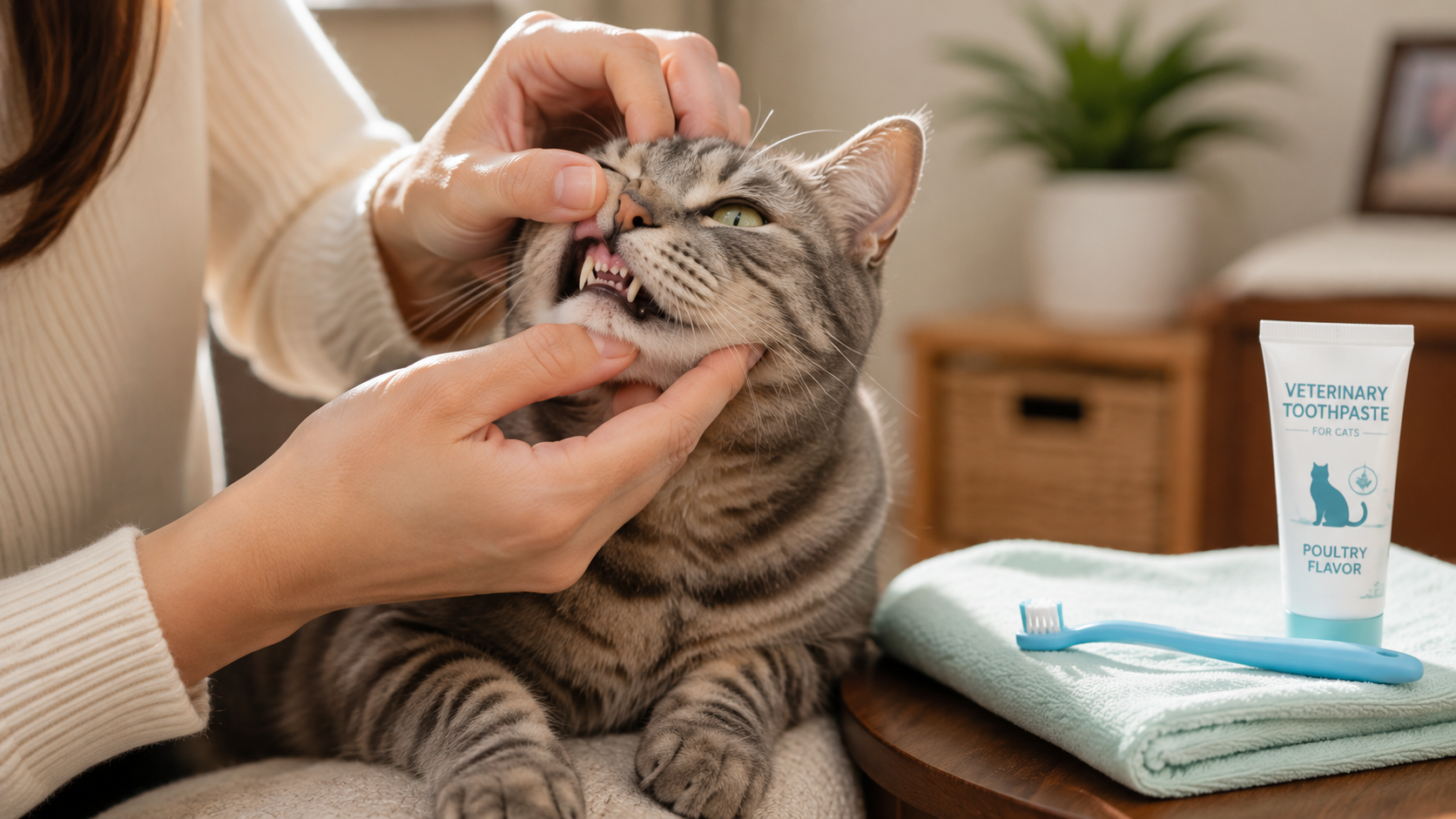
A cat with dental pain may still walk to the bowl, eat dinner, and behave almost normally.
That is what makes the early signs of dental disease in cats easy to overlook. Cats often adapt to gradual mouth pain by chewing differently, swallowing food with less chewing, favoring one side of the mouth, or avoiding activities that make the discomfort worse.
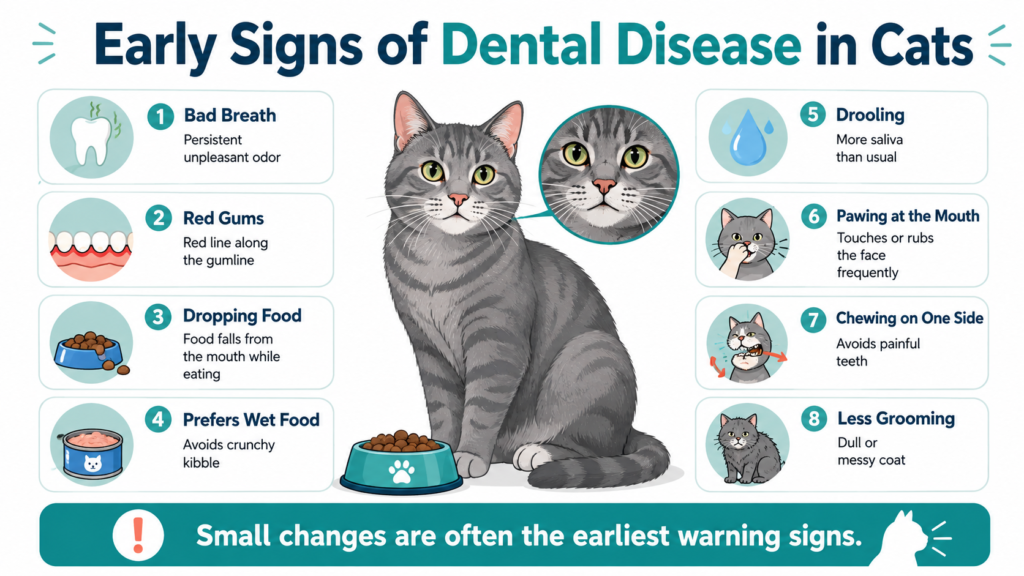
The first changes may include:
- stronger or unpleasant breath
- a red line where the gums meet the teeth
- yellow or brown material on the teeth
- chewing more slowly or on one side
- dropping pieces of food
- preferring soft food
- swallowing dry food with little chewing
- drooling or licking the lips more often
- reduced grooming
- resisting touch around the face
- acting quieter, irritable, or withdrawn
Some cats show no owner-visible signs even when painful disease is present. Cornell identifies gingivitis, periodontitis, and tooth resorption as three of the most common feline dental conditions, and each can vary from mild to severe.
Eating does not rule out dental pain. A persistent change in breath, gums, eating style, grooming, or behavior deserves a veterinary examination.
Start with the changes around the food bowl
Owners often expect a cat with a painful tooth to stop eating completely. That can happen, but it is usually a later or more severe sign.
A cat’s first response may be to change how it eats.
Watch for a cat that:
- approaches the bowl eagerly but hesitates before taking the first bite
- carries food away from the bowl
- tilts or turns its head while chewing
- chews only on one side
- drops kibble or wet-food pieces
- takes longer to finish a meal
- begins swallowing kibble whole
- licks gravy but leaves solid pieces
- prefers pâté or softened food
- walks away after a few bites, then returns
- cries out, chatters the jaw, or suddenly backs away from food
These behaviors can result from gingivitis, a loose or fractured tooth, tooth resorption, inflammation at the back of the mouth, or another painful oral condition. They can also occur with nausea, throat disease, neurologic problems, or difficulty swallowing, so observation alone cannot identify the cause.
A video of the cat eating can be useful because many cats behave differently once they reach the veterinary clinic.
Bad breath is common, but it is not normal “cat breath”
A mild food odor immediately after a meal is different from breath that remains sour, rotten, metallic, or unusually strong.
Persistent halitosis often accompanies plaque accumulation, inflamed gums, periodontal infection, tooth resorption, or severe oral inflammation. Bad breath can also arise from kidney disease, diabetes, gastrointestinal disease, oral tumors, or material trapped in the mouth.
The practical distinction is persistence.
Breath that smells noticeably worse for several days—especially when combined with red gums, drooling, tartar, appetite changes, or face sensitivity—should be investigated rather than covered with a dental treat or water additive.
A dental product may reduce plaque or tartar over time. It cannot repair a painful resorbing tooth, restore lost bone, or treat an abscess.
The gumline often reveals disease before the tooth looks damaged
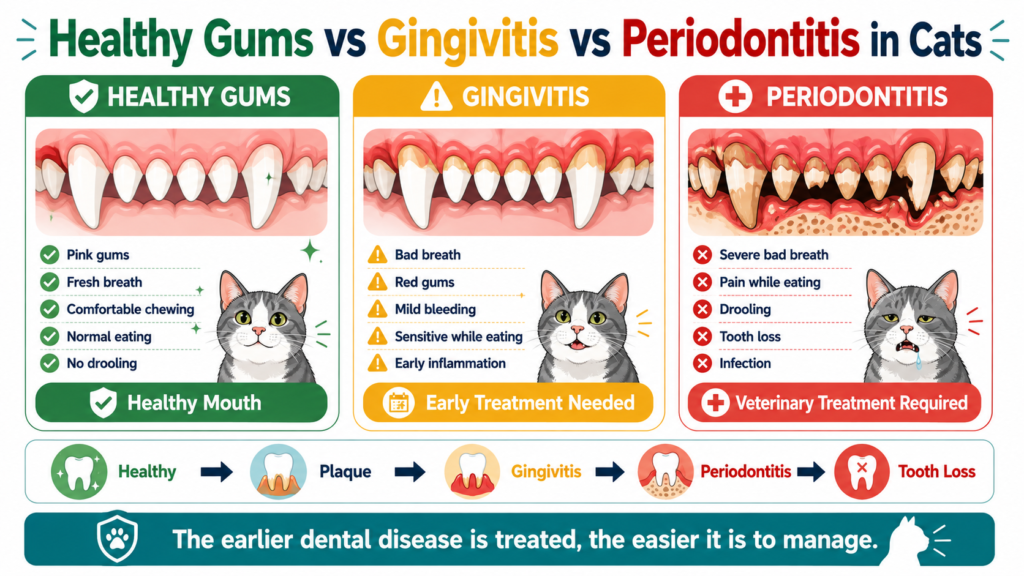
Healthy feline gums are generally pink and fit closely around the teeth. Pigmented areas can be normal in some cats, so compare both sides of the mouth and become familiar with your cat’s usual appearance.
Early gingivitis may appear as a thin red line where the gum meets the tooth. As inflammation progresses, the gums may become:
- darker red
- swollen or rounded
- tender
- prone to bleeding
- recessed from the tooth
- covered by excess tissue
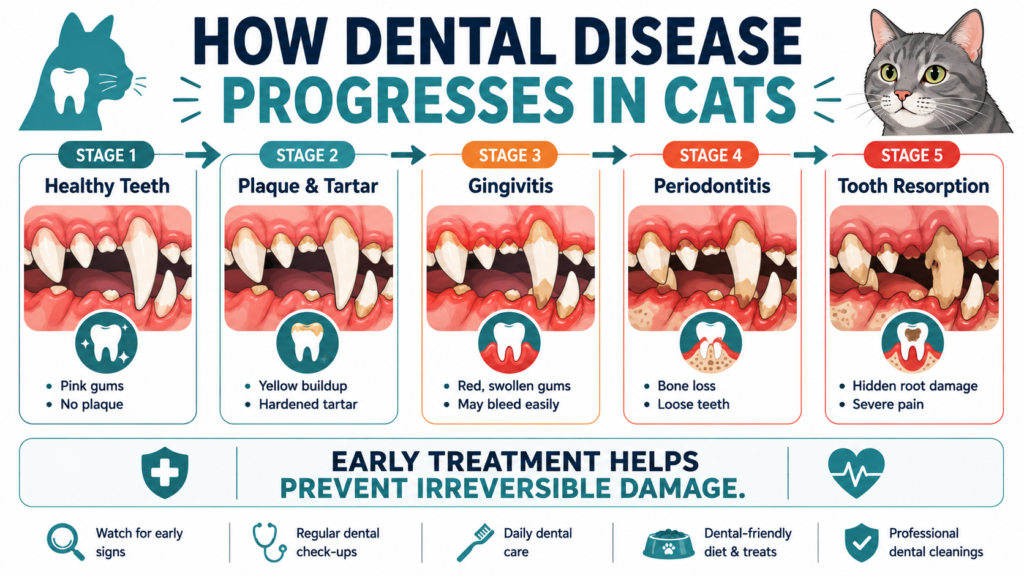
Gingivitis affects the gums without permanent destruction of the tooth-supporting ligament and bone. It may be reversible when plaque and underlying causes are addressed. Periodontitis is different: it involves irreversible loss of the structures that hold the tooth in place and can eventually produce loose teeth or tooth loss.
Visible tartar does not always match the severity of disease. A tooth may have relatively little buildup above the gumline while disease progresses around its root or beneath the gums.
Dental pain changes behavior outside mealtimes
Chronic mouth pain may alter activities that do not appear directly related to eating.
A cat may:
- groom the body less often
- stop grooming another household cat
- avoid carrying toys
- rub or paw at the face
- shake the head
- hide more often
- sleep in less social locations
- become irritable when touched near the cheeks
- stop rubbing the face against furniture or people
- appear less playful
- develop a dull, greasy, or matted coat
Reduced grooming is especially easy to misread as aging or laziness. Grooming requires repeated jaw and tongue movement. A painful mouth can make that routine uncomfortable.
Behavioral changes alone do not prove dental disease, but they add weight to visible gum changes, bad breath, drooling, or altered eating.
A quick clue map for cat owners
| What you notice | What it may suggest | Appropriate next step |
| Persistent bad breath | Plaque, gingivitis, periodontitis, tooth disease, or another illness | Arrange a routine veterinary oral examination |
| Thin red gumline | Early gingivitis or plaque irritation | Ask about professional evaluation and home care |
| Dropping food or chewing on one side | Localized oral pain, loose tooth, fracture, or resorption | Schedule an appointment promptly |
| Drooling or blood-tinged saliva | Significant inflammation, painful tooth, injury, or oral lesion | Seek prompt veterinary care |
| Pawing at the mouth or jaw chattering | Acute oral pain or irritation | Contact the veterinarian |
| Facial swelling | Tooth-root infection, trauma, mass, or another serious condition | Request same-day evaluation |
| Refusing food or water | Severe oral pain or systemic illness | Seek urgent veterinary care |
| Difficulty breathing or uncontrolled oral bleeding | Trauma, obstruction, severe swelling, or another emergency | Go to an emergency veterinary facility |
These observations indicate that a problem may exist. They do not identify which tooth or tissue is affected.
Dental disease means more than tartar
Owners often use “dental disease” to describe brown buildup on the teeth. In cats, the category is much broader.
Gingivitis begins at the edge of the gums
Plaque is a bacterial film that continually forms on the teeth. When it remains along the gumline, it triggers inflammation. Mineralized plaque becomes calculus, or tartar, which creates a rough surface that retains more plaque.
Gingivitis causes redness, swelling, tenderness, bleeding, and bad breath. At this stage, the tissues supporting the teeth have not yet been permanently destroyed. Professional cleaning and effective plaque control may allow the gums to return toward health.
Periodontitis destroys tooth support
When inflammation progresses beneath the gumline, it can damage the periodontal ligament and the bone surrounding the tooth.
Veterinarians may find:
- abnormal pockets beside the tooth
- gum recession
- exposed roots
- bone loss
- furcation exposure between tooth roots
- loose teeth
- missing teeth with retained roots
Periodontitis is irreversible because lost attachment and bone do not simply grow back after visible tartar is removed. Treatment aims to eliminate infection and pain, preserve teeth that can be maintained, and extract teeth that no longer have healthy support.
Tooth resorption can remain hidden until it is advanced
Tooth resorption is a destructive process in which the tooth’s mineralized structure is progressively broken down. It may begin around the root, where an owner cannot see it, and later extend into the crown.
A visible lesion may look like a pink or red area where the gum appears to grow into the tooth. By that stage, substantial damage may already be present.
Affected cats may drool, avoid hard food, turn their heads while chewing, chatter their jaws, or react sharply when a painful tooth is touched. Some continue eating and show no clear outward sign. Cornell reports that tooth resorption is common and that its underlying cause remains unknown.
A recent diagnostic study found that visual oral examination alone detected only a minority of tooth-resorption lesions compared with advanced imaging, illustrating why a normal-looking crown cannot reliably exclude disease below the gumline.
Gingivostomatitis causes inflammation beyond the gumline
Feline chronic gingivostomatitis is a severe inflammatory condition involving the gums and other oral tissues, often including the back of the mouth.
Possible signs include:
- intense oral pain
- swollen, ulcerated, or bleeding tissue
- drooling
- blood in the saliva
- strong bad breath
- pawing at the mouth
- approaching food but being unable to eat
- weight loss
- resistance to opening the mouth
The cause is not fully understood. Current veterinary understanding points toward an inappropriate immune response to plaque and other oral antigens, with infectious agents and individual immune factors potentially contributing.
Research on medical and surgical treatment is not perfectly consistent, and no single approach works for every cat. Extraction of premolars and molars—or, in some cases, all remaining teeth—is a major treatment strategy because it removes plaque-retaining surfaces that drive inflammation.
Fractured and infected teeth may look deceptively small
A broken tooth can expose sensitive inner tissue or allow infection to develop around the root.
Possible clues include:
- a chipped or shortened tooth
- a tooth that has turned gray, purple, brown, or pink
- pain when the face is touched
- swelling below an eye or along the jaw
- chewing on one side
- suddenly refusing hard food
- draining material near the gumline or skin
Dental X-rays help determine whether the tooth root and surrounding bone are affected. Treatment may involve extraction or a root-canal procedure, depending on the tooth, damage, available expertise, and the cat’s overall health.
Oral tumors and non-dental disease can resemble tooth problems
Not every painful or inflamed mouth is caused by plaque.
A persistent lump, one-sided swelling, nonhealing ulcer, unexplained bleeding, loose tooth without obvious periodontal disease, or unusual tissue growth may require biopsy. Veterinarians may also investigate kidney disease, immune-mediated disease, viral infection, trauma, foreign material, chemical injury, or other systemic conditions.
How to look at your cat’s mouth without causing pain
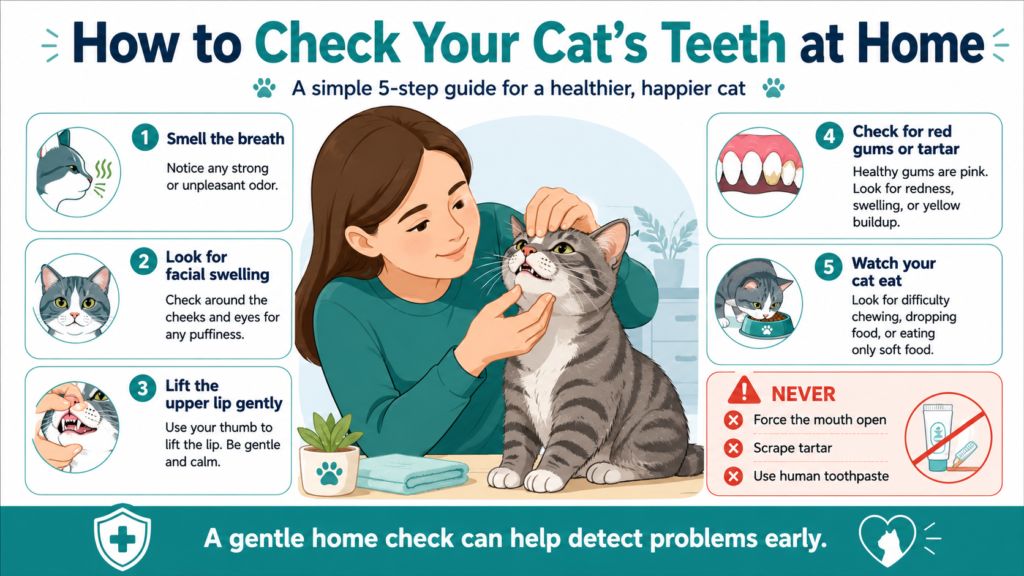
A home check should be gentle and brief. Its purpose is to notice changes—not to probe gums, scrape tartar, or force the mouth open.
Choose a calm time when the cat is relaxed.
- Smell the breath from a normal distance.
Note whether the odor is stronger or different from usual. - Look at the face from the front.
Check for uneven swelling, drool, discharge, or difficulty closing the mouth. - Lift one lip gently.
View the canine tooth and nearby gumline without pulling the jaw open. - Repeat on the other side.
Compare gum color, swelling, buildup, missing teeth, and symmetry. - Watch the next meal.
Look for hesitation, food dropping, head tilting, or one-sided chewing.
Stop immediately if the cat struggles, cries, snaps, chatters the jaw, or appears distressed.
Do not press on a suspected lesion. Tooth resorption, fractures, inflamed gums, and stomatitis can be extremely painful.
A home inspection cannot show periodontal pockets, bone loss, diseased roots, or many resorptive lesions. Those require professional examination and imaging.
Age raises risk, but dental disease is not limited to senior cats
Dental problems can develop early in life. AAHA reports that most dogs and cats have some level of periodontal disease by three years of age, while Cornell cites studies estimating that 50% to 90% of cats older than four have some form of dental disease. The exact percentage varies because studies examine different populations and use different diagnostic standards.
Risk tends to increase with age because plaque exposure, inflammation, tooth damage, and resorptive changes accumulate over time. Recent studies also report increasing tooth-resorption prevalence or severity in older cats.
Other factors that may increase risk or complicate oral health include:
- lack of effective plaque control
- tooth crowding or abnormal tooth position
- retained or fractured teeth
- previous periodontal disease
- immune suppression
- diabetes or poor nutritional status
- chronic oral inflammation
- brachycephalic facial structure with crowded teeth
- individual susceptibility to tooth resorption
- certain viral or immune-related conditions associated with stomatitis
Associations do not prove that one factor directly causes every case. Tooth resorption and gingivostomatitis remain incompletely understood, and cats with excellent care may still develop them.
Why an awake examination is only the first layer
A veterinarian can learn a great deal from an awake oral examination. Visible tartar, gingivitis, broken crowns, missing teeth, facial swelling, drooling, and abnormal tissue may all be identified.
Important disease still remains hidden.
A complete dental assessment commonly requires:
- general anesthesia
- endotracheal intubation to protect the airway
- inspection of every tooth surface
- periodontal probing
- dental charting
- full-mouth intraoral radiographs
- scaling above and below the gumline
- polishing
- treatment of diseased teeth
- appropriate pain control
AAHA recommends full-mouth intraoral radiography during the anesthetized procedure because teeth that appear normal can contain clinically important abnormalities below the gumline.
Dental radiographs can reveal:
- tooth resorption
- retained roots
- bone loss
- root infection
- fractures below the gumline
- impacted teeth
- abnormal root anatomy
- disease around apparently intact crowns
The treatment estimate may change after radiographs and probing because the true extent of disease is not always known before anesthesia. AAHA advises veterinary teams to explain this possibility and establish clear consent before the procedure.
General anesthesia is part of proper dental diagnosis
Owners are often concerned about anesthesia, especially for an older cat or one with kidney, heart, or endocrine disease.
Those concerns deserve an individualized discussion. They do not make awake scaling an equivalent alternative.
General anesthesia allows the veterinary team to protect the airway, control pain, obtain diagnostic radiographs, probe around the teeth, clean below the gums, and perform extractions or other treatment without causing uncontrolled fear or movement. Anesthetic plans should be adapted to the individual cat’s age, physical condition, laboratory findings, and medical history.
So-called anesthesia-free dentistry removes visible material from the crowns but cannot adequately examine or clean beneath the gumline. AAHA considers it inappropriate because it lacks essential diagnostic and treatment capabilities and can create a false impression that disease has been treated.
Treatment is chosen tooth by tooth
Dental treatment is not simply a standard cleaning performed identically for every cat.
Mild gingivitis
Management may include professional scaling and polishing, correction of plaque-retaining problems, and an individualized home-care plan.
Antibiotics alone do not remove plaque, calculus, diseased roots, or periodontal pockets. Cornell notes that there is little or no evidence that antibiotics by themselves effectively treat feline gingivitis.
Periodontitis
Treatment depends on how much attachment and bone have been lost. It may involve subgingival cleaning, root planing, periodontal procedures, or extraction of teeth that cannot remain healthy and comfortable.
A loose tooth is not “ready to fall out harmlessly.” It may remain attached to inflamed tissue while causing ongoing pain.
Tooth resorption
Dental radiographs are needed to determine the type and stage of resorption and whether the root structure is being replaced by bone or remains distinct and diseased.
Depending on those findings, treatment may involve complete surgical extraction or crown amputation in carefully selected cases. The objective is to eliminate pain, not merely cover the visible defect.
Fractured or infected teeth
A damaged tooth may need extraction or root-canal treatment. Pain medication and antibiotics may be used when clinically appropriate, but medication does not permanently resolve dead, exposed, or infected tooth tissue.
Gingivostomatitis
Treatment frequently includes extraction of teeth in affected regions or full-mouth extraction. Some cats require additional medical management after surgery.
The evidence base for many add-on treatments remains limited or inconsistent, so recommendations should be individualized and expectations should be realistic.
Cats usually adapt well after painful teeth are removed
Owners may worry that extraction will prevent a cat from eating or enjoying life.
Cats do not grind food in the same way people do. Once surgical sites heal, many cats eat wet food and may also return to eating dry food, even after multiple or full-mouth extractions. Removing painful teeth can make eating easier than it was before treatment.
Recovery still requires careful veterinary guidance. The cat may need:
- prescribed pain relief
- temporary soft food
- activity and feeding adjustments
- monitoring for bleeding or swelling
- a recheck appointment
- continued care for any remaining teeth
- additional management for stomatitis or other chronic inflammation
Never give human pain relievers. Common over-the-counter medications can be highly toxic to cats.
What home care can and cannot do
Home dental care is most effective before advanced disease develops and after professional treatment has created a comfortable mouth.
Toothbrushing provides the strongest mechanical plaque control
Daily brushing with a soft feline toothbrush and toothpaste made specifically for cats can reduce plaque accumulation. Human toothpaste should not be used because its ingredients are not intended to be swallowed by cats and some products may be unsafe.
Brushing removes soft plaque. It does not remove hardened calculus or treat disease beneath the gums.
AAHA advises that brushing should be performed daily to provide meaningful benefit and warns that brushing already inflamed gums can cause pain and create lasting aversion.
Do not begin brushing when your cat has:
- red or bleeding gums
- drooling
- suspected tooth resorption
- facial swelling
- difficulty eating
- visible oral ulcers
- severe bad breath with pain
- a recent dental surgery without veterinary clearance
Have the mouth evaluated and treated first.
Dental diets, treats, gels, powders, and water additives are supporting tools
Some products have evidence for reducing plaque, tartar, or both. The Veterinary Oral Health Council reviews submitted efficacy data and awards its seal to products that meet its standards. Its current feline list includes selected diets, treats, additives, gels, powders, brushes, and wipes.
The seal applies to the specific plaque or tartar claim shown for that product. It does not mean the product:
- treats tooth resorption
- cures gingivitis or periodontitis
- removes existing calculus
- replaces dental radiographs
- prevents every form of dental disease
- is appropriate for every cat’s medical or nutritional needs
Ask the veterinarian which option fits your cat’s diet, calorie needs, kidney function, allergies, chewing habits, and existing dental condition.
Four dental myths that can delay treatment
“My cat still eats, so the mouth cannot be painful.”
Cats often continue eating despite substantial dental disease. They may adapt their chewing, swallow food whole, or eat only enough to meet basic needs. Appetite should be assessed together with eating style, weight, grooming, breath, and behavior.
“Dry food automatically cleans a cat’s teeth.”
Ordinary kibble may shatter or be swallowed with limited contact against the tooth surface. Certain specifically formulated dental diets have evidence for plaque or tartar reduction, but standard dry food should not be assumed to provide the same effect.
“A visible cleaning without anesthesia solves the problem.”
Removing tartar from the crown may improve appearance while leaving disease below the gumline untreated. Proper diagnosis and subgingival treatment require anesthesia, probing, and dental imaging.
“Dental bacteria directly cause heart and kidney disease.”
The relationship between periodontal disease and systemic health is more complex than a simple claim that oral bacteria directly infect distant organs. AAHA notes associations between periodontal inflammation and systemic health, but also explains that proving direct causation is difficult. The established reasons to treat dental disease—oral pain, inflammation, infection, tooth-support loss, and reduced quality of life—are already compelling.
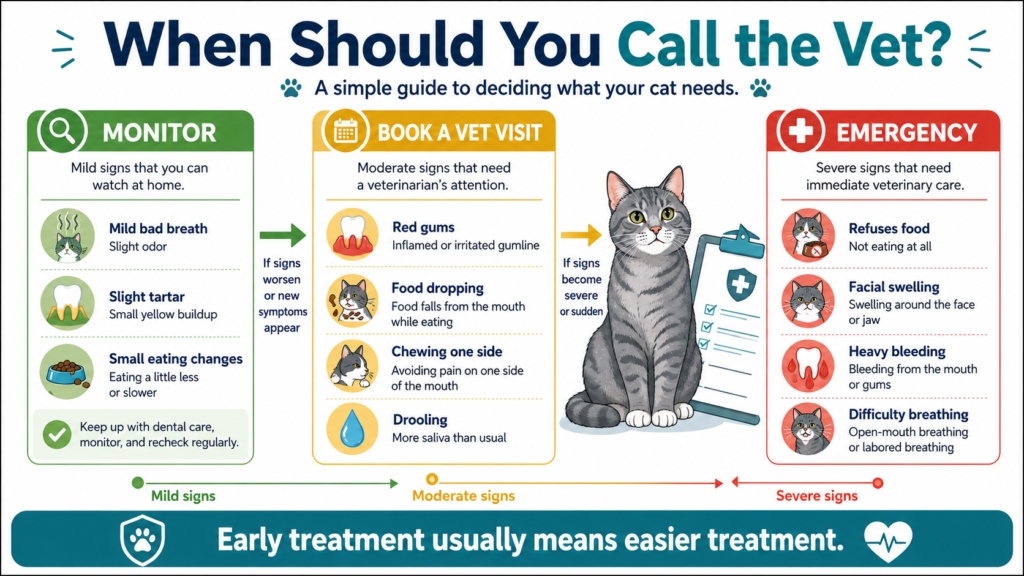
When dental symptoms need faster attention
Arrange a veterinary appointment promptly when your cat has:
- persistent bad breath
- red, swollen, or bleeding gums
- visible tartar with gum inflammation
- a broken or discolored tooth
- food dropping or one-sided chewing
- drooling
- face rubbing or pawing
- reduced appetite
- unexplained weight loss
- worsening grooming
- pain when the face is touched
- a new lump or oral sore
Request same-day care when the cat:
- cannot eat or drink normally
- has facial swelling
- has blood in the saliva
- appears severely painful
- has a suspected tooth or jaw injury
- suddenly cannot close the mouth
- becomes weak or markedly lethargic
Seek emergency veterinary care for:
- difficulty breathing
- uncontrolled oral bleeding
- major facial trauma
- suspected jaw fracture
- choking or a lodged foreign object
- electrical or caustic injury to the mouth
- collapse or poor responsiveness
Do not force the mouth open, attempt to pull a loose tooth, scrape tartar with a tool, or give human medication.
Questions cat owners ask about dental disease
What is usually the first sign of dental disease in a cat?
Persistent bad breath or a red gumline may be noticed first. Some owners instead see a small change in eating, such as slower chewing, food dropping, or a new preference for soft food. Other cats have no visible early signs.
Can a cat have dental disease without tartar?
Yes. Tooth resorption, root disease, fractures, and early periodontal changes may occur with limited visible buildup. Full-mouth dental radiographs can reveal abnormalities that are not apparent during an awake visual examination.
Why does my cat chatter its jaw while eating?
Jaw chattering can indicate acute oral discomfort, particularly when a painful tooth or resorptive lesion is stimulated. Neurologic and behavioral causes are also possible, so the symptom requires veterinary evaluation rather than a home diagnosis.
Does drooling always mean dental disease?
No. Drooling can occur with nausea, toxin exposure, foreign material, medication taste, heat stress, neurologic disease, or oral tumors. Dental pain and inflammation are common possibilities when drooling occurs with bad breath, blood, eating changes, or face sensitivity.
Can dental disease make a cat stop grooming?
Yes. Grooming requires repeated movement of the jaw and tongue. A painful mouth may lead to reduced grooming and a greasy or matted coat. Arthritis, obesity, skin disease, and other illnesses can cause the same change.
Can gingivitis be reversed?
Plaque-associated gingivitis can often improve when the teeth are professionally cleaned and plaque is controlled before permanent periodontal attachment loss occurs. Periodontitis is not fully reversible because supporting tissue and bone have already been destroyed.
Can tooth resorption be prevented?
No reliably proven prevention method exists because the cause remains uncertain. Regular examinations and dental radiographs help detect affected teeth and allow pain to be treated.
How often should a cat have a dental cleaning?
There is no responsible universal schedule. The interval depends on plaque accumulation, gum health, previous periodontal disease, tooth resorption, age, home care, anatomy, and other medical conditions. Oral health should be reviewed during routine veterinary examinations, with anesthetized assessment and treatment recommended according to the individual cat.
Is anesthesia too dangerous for an older cat?
Age alone does not determine anesthetic risk. The veterinary team should evaluate the cat’s physical condition, laboratory results, heart and kidney health, medications, and the expected benefit of treatment. Anesthesia can then be tailored and monitored for that individual patient.
A practical plan for the next seven days
Watch your cat eat at least one full meal without interrupting. Notice which side of the mouth is used, whether food falls, and whether the cat hesitates before biting.
When your cat is relaxed, gently lift each upper lip. Look for a red gumline, swelling, brown buildup, broken teeth, or a difference between the two sides. Stop if the cat shows discomfort.
Then decide based on what you find:
- No visible concerns and no behavior changes: Discuss preventive oral care at the next routine veterinary visit.
- Bad breath, red gums, tartar, or mild eating changes: Schedule a dental examination.
- Drooling, blood, food dropping, face sensitivity, or obvious pain: Arrange prompt veterinary care.
- Inability to eat, facial swelling, trauma, breathing trouble, or uncontrolled bleeding: Seek urgent or emergency care.
Early recognition does not depend on seeing a dramatic cavity or a loose tooth. It begins with noticing that your cat’s mouth, meals, grooming, or behavior no longer looks quite normal.
A comfortable cat should be able to eat, groom, play, and accept gentle facial contact without working around hidden oral pain.