
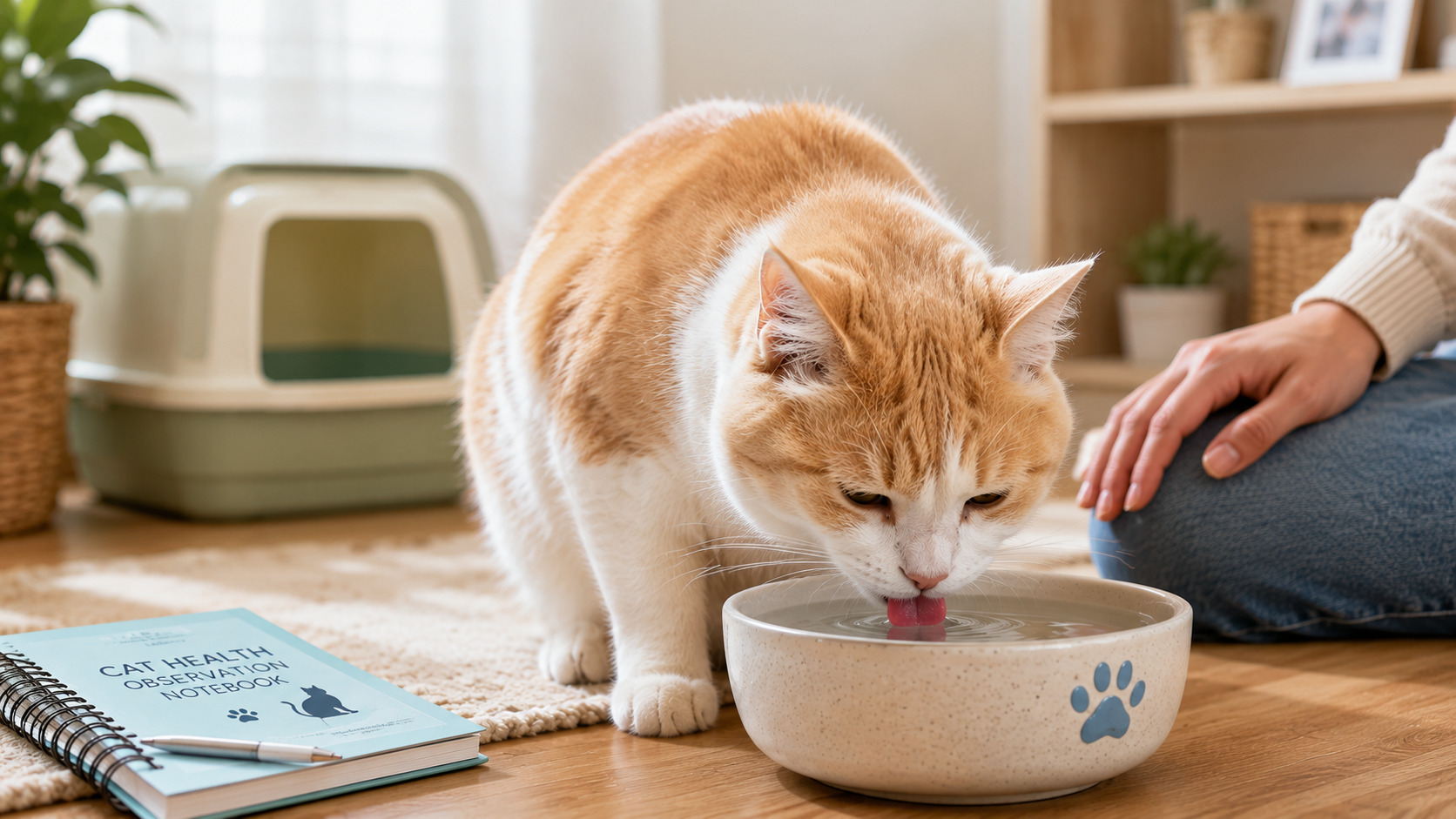
The early signs of kidney disease in cats can include drinking more water, producing more urine, losing weight or muscle, eating less, vomiting occasionally, becoming less active, and developing a dull or unkempt coat.
These changes are often gradual. An owner may notice a larger clump in the litter box or a water bowl that empties faster long before the cat appears seriously ill.
Some cats, however, show no obvious symptoms during the earliest stage. Kidney disease also shares symptoms with diabetes, hyperthyroidism, urinary problems, dental pain, gastrointestinal illness, and several other conditions. A veterinarian must use blood tests, urine testing, physical findings, blood-pressure measurements, and sometimes imaging to determine what is happening.
Do not wait for several symptoms to appear together. A persistent change in thirst, urination, appetite, weight, or behavior is enough reason to arrange a veterinary examination.
The first clues are often changes in everyday routines
A cat’s kidneys filter waste from the blood, regulate water and electrolytes, contribute to blood-pressure control, and support red-blood-cell production. When kidney function declines, the body initially compensates.
That compensation can make early disease difficult to recognize. A cat may still play, eat, and interact normally while quietly drinking and urinating more.
The most useful clues are often not dramatic symptoms. They are small departures from the cat’s usual pattern.
| Change you may notice | Why it deserves attention | Appropriate response |
| More frequent drinking | The kidneys may be losing some ability to conserve water | Track the change and arrange a veterinary visit |
| Larger or more numerous urine clumps | Increased urine production commonly accompanies increased thirst | Mention the pattern to your veterinarian |
| Slow weight or muscle loss | Kidney disease and other chronic conditions can cause gradual loss | Weigh the cat regularly and schedule an examination |
| Reduced interest in food | Nausea, dehydration, dental pain, or other illness may be involved | Contact the veterinarian if it persists or worsens |
| Occasional vomiting | Kidney-related waste accumulation is one possibility, but many conditions cause vomiting | Seek evaluation if vomiting recurs |
| Less grooming or lower activity | Cats may feel mildly nauseated, weak, dehydrated, or uncomfortable | Look for accompanying changes and obtain veterinary advice |
None of these observations confirms kidney disease. Their value lies in revealing that the cat’s normal routine has changed.
Increased thirst and urination may appear before a cat looks sick
One of the most recognizable patterns is increased thirst combined with increased urination, known medically as polydipsia and polyuria.
Healthy kidneys conserve water by producing concentrated urine. As kidney function becomes impaired, the urine may become more dilute. The cat loses more water through urination and drinks more to compensate.
An owner might notice that the cat:
- visits the water bowl more frequently
- drinks from faucets, glasses, tubs, or other unusual places
- waits near the water bowl
- empties the bowl sooner than expected
- produces larger litter clumps
- urinates more frequently
- occasionally urinates outside the box because the box becomes wet sooner
These changes can be difficult to measure in a multi-cat household. Separate water bowls, individual feeding areas, a camera near the drinking station, or short periods of supervised separation may make patterns easier to identify.
Increased thirst and urination also occur with diabetes, hyperthyroidism, liver disease, certain medications, and other health problems. The pattern should prompt testing rather than assumptions.
Weight loss may be easier to feel than to see
Gradual weight loss is another important warning sign. Long-haired cats can lose a surprising amount of body condition before the change becomes visible.
Run your hands gently over the cat’s spine, shoulders, hips, and thighs. Increased prominence of the bones or reduced muscle over the back legs may indicate muscle loss even when the number on the scale has changed only slightly.
Kidney disease can contribute to weight loss through:
- reduced appetite
- nausea
- altered metabolism
- dehydration
- loss of muscle tissue
- difficulty maintaining adequate calorie intake
Creatinine, one of the traditional blood markers used to evaluate kidney function, is affected by muscle mass. A thin or muscularly depleted cat may therefore have a creatinine result that appears less concerning than expected. Veterinarians interpret it alongside the cat’s body condition, urine concentration, other blood markers, and previous results.
A baby scale or pet scale can help owners monitor trends at home. Weigh the cat under similar conditions each time and record the result. A consistent downward trend matters more than a small one-time fluctuation.
Appetite changes can be mild at first
Kidney disease does not always cause complete refusal of food. Early appetite changes may be more subtle.
A cat may:
- approach food but walk away
- eat less at each meal
- prefer only one texture
- take longer to finish
- lick gravy but leave solid pieces
- seem interested in food and then stop
- become unusually selective
- eat normally on some days and poorly on others
These patterns may reflect nausea, changes in taste or smell, dehydration, constipation, dental pain, or another illness. They should not automatically be blamed on aging or pickiness.
Contact a veterinarian promptly when a cat’s food intake drops substantially. Cats can develop serious metabolic complications when they consume too few calories, particularly if they are overweight.
Do not force a new kidney diet on a cat that is already eating poorly without veterinary guidance. Restoring an adequate calorie intake may be more urgent than making an immediate dietary transition.
Vomiting, nausea, and digestive changes may come and go
Intermittent vomiting can occur in cats with kidney disease, although it is not specific to the kidneys. Owners may also observe signs of nausea without seeing actual vomit.
Possible nausea behaviors include:
- lip licking
- repeated swallowing
- drooling
- sniffing food and turning away
- crouching near the food bowl
- teeth grinding
- hiding after meals
Constipation may develop when a cat is dehydrated or eating less. Loose stool is less characteristic of kidney disease and may point toward another or additional problem.
Frequent vomiting, inability to keep water down, marked weakness, or rapidly worsening appetite requires prompt veterinary care. These signs may indicate advanced chronic disease, an acute kidney injury, an obstruction, toxin exposure, or an unrelated emergency.
Lower energy and poor grooming are easy to dismiss as aging
Cats often hide illness by resting more and limiting activities that require effort. Early changes may look like normal aging.
A cat may stop jumping to a favorite high surface, sleep in more accessible locations, interact less, or take longer to climb stairs. The coat may become greasy, matted, or less smooth because the cat is grooming less effectively.
These changes can result from arthritis, pain, anemia, dental disease, thyroid disease, heart disease, or many other conditions. They become more meaningful when accompanied by changes in thirst, urination, weight, or appetite.
Kidney disease may eventually contribute to anemia because the kidneys help regulate red-blood-cell production. Anemia is more commonly associated with established or advanced disease than with the earliest stage. Pale gums, marked weakness, rapid breathing, or collapse require urgent veterinary evaluation.
Not every “classic” kidney symptom is an early sign
Some symptoms commonly associated with kidney failure tend to appear after the disease has become more advanced or when complications develop.
These may include:
- strong or unusual breath odor
- sores or ulcers in the mouth
- severe dehydration
- persistent vomiting
- profound weakness
- pronounced loss of appetite
- very poor body condition
- confusion or abnormal behavior
- significant electrolyte disturbances
Waiting for these symptoms can delay diagnosis.
The absence of severe illness does not mean the kidneys are normal. Early screening is especially valuable because a cat may have measurable abnormalities before the owner notices a major change.
Which cats have a higher risk of kidney disease?
Chronic kidney disease can occur at any age, but it is diagnosed most often in senior and geriatric cats. Age is therefore one of the most practical reasons to discuss regular blood and urine screening with a veterinarian.
Other possible risk factors or underlying causes include:
- previous acute kidney injury
- urinary obstruction or ureteral stones
- kidney or urinary infections
- congenital or inherited kidney abnormalities
- polycystic kidney disease
- chronic inflammation within the kidneys
- exposure to kidney-damaging toxins
- certain medications
- systemic high blood pressure
- diseases that affect blood flow or kidney function
- previous severe dehydration or critical illness
In many cats, the original cause is never identified. Feline chronic kidney disease commonly ends in similar scarring and loss of functional kidney tissue even when the initiating problem is unclear.
Hyperthyroidism frequently occurs in the same older population. It can complicate kidney assessment because it affects muscle mass, circulation, and laboratory values. Kidney function may need to be reevaluated as thyroid disease is treated.
Kidney disease can be chronic or sudden
Owners often use “kidney disease” and “kidney failure” interchangeably, but not every kidney problem follows the same course.
Chronic kidney disease
Chronic kidney disease develops or persists over an extended period. It is usually progressive and irreversible, although the speed of progression differs greatly among cats.
A cat with chronic disease may show months of gradual changes in drinking, urination, weight, and appetite.
Acute kidney injury
Acute kidney injury occurs suddenly. Possible causes include toxin exposure, severe dehydration, infection, urinary obstruction, reduced blood flow, or an adverse medication effect.
A cat with acute injury may become ill over hours or days. Signs can include sudden vomiting, severe lethargy, loss of appetite, abnormal urine production, collapse, or pain.
Acute injury is an emergency. Some cats recover meaningful kidney function when treatment begins quickly, while others develop lasting damage or chronic kidney disease.
How veterinarians diagnose kidney disease in cats
There is no single test that can confirm every case. Veterinarians build the diagnosis from several pieces of information and often compare results over time.
The assessment usually begins with the cat’s history and physical examination. The veterinarian may evaluate:
- body weight and recent changes
- muscle condition
- hydration
- gum color
- mouth and teeth
- kidney size or shape on abdominal examination
- heart rate and thyroid gland
- blood pressure
- medication and toxin-exposure history
Laboratory and imaging tests help determine whether kidney abnormalities are present, whether they are persistent, and which complications require treatment.
| Test or assessment | What it can reveal | Important limitation |
| Serum creatinine | Reduced filtration when kidney function declines | Influenced by muscle mass, hydration, and other factors |
| Blood urea nitrogen | Waste-product accumulation | Can change because of diet, hydration, bleeding, or other illness |
| SDMA | An additional marker associated with filtration | Helpful but not a standalone diagnosis |
| Urine specific gravity | Whether the kidneys are concentrating urine appropriately | Must be interpreted with hydration and blood results |
| Urinalysis | Protein, blood, glucose, inflammation, crystals, and sediment findings | A single sample may not explain the cause |
| Urine protein-to-creatinine ratio | Measures and categorizes persistent protein loss | Infection or bleeding may affect the result |
| Urine culture | Detects bacterial growth when infection is suspected | Not required in every cat |
| Blood pressure | Identifies hypertension and risk of organ damage | Stress can temporarily raise readings |
| Ultrasound or X-rays | Kidney size, shape, stones, obstruction, cysts, or structural changes | Normal-looking kidneys do not exclude early dysfunction |
| Complete blood count | Anemia, inflammation, and other abnormalities | Changes are not unique to kidney disease |
| Electrolytes and phosphorus | Complications that may need treatment | Results vary according to disease stage and other conditions |
A mildly abnormal result does not always mean a cat has chronic kidney disease. Dehydration, temporary illness, diet, medication, muscle loss, and laboratory variation can affect results.
Chronic kidney disease is generally recognized through persistent functional or structural kidney abnormalities, commonly documented over time or supported by changes that are considered irreversible. A veterinarian may repeat blood and urine tests after correcting dehydration or treating another illness before assigning a stage.
Why urine testing matters as much as blood testing
Owners sometimes expect a blood test alone to provide the answer. Urine information is essential because kidney function involves more than the concentration of waste products in the bloodstream.
A cat may have blood values within the laboratory reference range while producing urine that is less concentrated than expected. Persistent protein in the urine or structural kidney changes may also reveal disease before obvious azotemia develops.
Blood and urine should therefore be interpreted together.
The urine sample can also help identify conditions that resemble or worsen kidney disease, including diabetes, urinary infection, inflammation, stones, and bleeding.
What IRIS staging tells the veterinarian
After chronic kidney disease has been diagnosed and the cat is stable and adequately hydrated, veterinarians may use the International Renal Interest Society system to stage it.
IRIS staging generally considers filtration markers such as creatinine and SDMA. The cat is then substaged according to:
- urine protein loss
- systemic blood pressure
Staging helps organize treatment, monitoring, prognosis, and communication. It is not a complete description of how a cat feels.
Two cats in the same stage may have different appetites, phosphorus levels, blood pressures, hydration needs, muscle condition, and concurrent diseases. Treatment must still be individualized.
Kidney disease treatment addresses several separate problems
Chronic kidney disease usually cannot be reversed, but that does not mean nothing can be done. Management aims to preserve quality of life, reduce complications, and slow progression where possible.
The treatment plan depends on the cat’s stage, symptoms, laboratory results, blood pressure, urine protein level, hydration, and other medical conditions.
Therapeutic kidney diets
Veterinary renal diets are among the better-supported interventions for cats with established chronic kidney disease. Clinical research has associated appropriate renal diets with fewer uremic episodes and improved survival in some groups of cats.
These diets are not simply “low-protein foods.” Formulation may include:
- controlled phosphorus
- adjusted amounts of high-quality protein
- appropriate calorie density
- modified sodium
- potassium support when needed
- omega-3 fatty acids
- altered acid-base balance
- B-vitamin supplementation
The ideal time to introduce a renal diet depends on the disease stage and the individual cat. The transition should usually be gradual.
Food acceptance is critical. A theoretically ideal diet provides little benefit when the cat refuses to eat it. Veterinarians may recommend warming the food, trying different textures, changing flavors, transitioning slowly, or temporarily prioritizing calorie intake while nausea and appetite problems are treated.
Hydration support
Cats with kidney disease may have difficulty conserving water. Helpful home measures can include:
- several fresh water stations
- wide, shallow bowls
- daily bowl cleaning
- water placed away from litter boxes
- wet food when medically appropriate
- a pet fountain for cats that prefer moving water
- adding water to food when the cat accepts it
Some cats eventually benefit from fluids administered under the skin, but subcutaneous fluids are not automatically necessary for every cat or every stage. Excessive fluids can also be harmful, particularly in cats with certain heart conditions. The veterinarian should determine the amount, frequency, and monitoring plan.
Never restrict access to water unless a veterinarian gives a specific medical instruction.
Phosphorus management
As kidney function declines, phosphorus can accumulate. Persistent elevations contribute to mineral and hormonal disturbances associated with disease progression.
A renal diet is often the first step in phosphorus control. If diet alone is insufficient, the veterinarian may prescribe a phosphorus-binding product to be mixed with food.
These products must be selected and monitored carefully. They should not be added simply because a cat has been diagnosed with kidney disease.
Blood-pressure control
High blood pressure can occur with chronic kidney disease and may damage the eyes, brain, heart, and kidneys.
It usually causes no visible warning signs until organ damage develops. Sudden blindness, widely dilated pupils, disorientation, seizures, or unusual neurologic behavior can indicate a hypertensive emergency.
Veterinarians may prescribe blood-pressure medication and repeat measurements to ensure the pressure is controlled without becoming too low.
Proteinuria management
Persistent abnormal protein loss through the kidneys is assessed using a urine protein-to-creatinine ratio after infection, inflammation, and bleeding have been considered.
Medication may be recommended when clinically significant renal proteinuria is present. Follow-up testing helps determine whether treatment is effective.
Nausea and appetite support
A cat that feels nauseated will not benefit fully from an appropriate diet. Treatment may include veterinary-prescribed medication for nausea, vomiting, appetite support, stomach irritation, or constipation.
Dental disease, arthritis, gastrointestinal illness, medication side effects, and stress should also be considered. Not every appetite problem in a cat with kidney disease is caused by the kidneys.
Electrolytes, anemia, and other complications
Depending on test results, an individual cat may need treatment for:
- low potassium
- acid-base abnormalities
- anemia
- urinary infection
- dehydration
- constipation
- excessive phosphorus
- high blood pressure
- protein loss
- concurrent hyperthyroidism
- stones or urinary obstruction
Do not give potassium, iron, vitamins, herbal products, antacids, or human medication without veterinary guidance. Supplements can interfere with treatment or create dangerous imbalances.
What owners can monitor at home?
Home observations can reveal changes between veterinary appointments. A simple weekly record is often more useful than relying on memory.
Track:
- body weight
- appetite and approximate food intake
- water-bowl use
- urine-clump size and frequency
- vomiting or nausea behaviors
- stool consistency and frequency
- activity level
- grooming
- medication administration
- unusual hiding or vocalization
Take photographs of litter-box changes or videos of unusual behavior when useful. Bring the record to follow-up visits.
The veterinarian may recommend periodic blood work, urinalysis, urine protein measurement, blood-pressure checks, and weight or muscle-condition assessments. Monitoring intervals should be based on the cat’s stability and stage rather than a one-size-fits-all schedule.
When to schedule a veterinary appointment
Arrange a veterinary examination when you notice a persistent increase in thirst or urination, unexplained weight loss, reduced appetite, repeated vomiting, declining activity, or poorer grooming.
The visit should happen sooner when:
- The cat is a senior
- Several changes occur together
- The cat has a history of urinary obstruction or kidney injury
- Food intake is clearly reduced
- Weight is declining
- Vomiting is becoming more frequent
- The cat appears dehydrated
- Symptoms are progressing over days rather than weeks
A cat does not need to appear critically ill before kidney testing is appropriate.
When kidney-related symptoms may be an emergency
Seek immediate veterinary care when a cat:
- strains but cannot produce urine
- produces little or no urine unexpectedly
- collapses or cannot stand
- has repeated vomiting and cannot keep water down
- becomes severely weak or unresponsive
- has a seizure
- develops sudden blindness or markedly dilated pupils
- shows severe breathing difficulty
- may have chewed or swallowed a lily
- may have contacted antifreeze
- may have received a human pain reliever or another unsafe medication
- deteriorates suddenly after being stable
Do not induce vomiting or give food, fluids, charcoal, salt, hydrogen peroxide, or medication unless a veterinary professional specifically instructs you to do so.
Can kidney disease in cats be prevented?
Not every case can be prevented, especially when the underlying cause is unknown, inherited, or related to aging. Prevention claims should therefore be viewed cautiously.
Practical risk-reduction steps include:
- keeping lilies and other known toxins out of the home
- storing antifreeze, cleaners, and medication securely
- never giving human medication without veterinary approval
- seeking prompt care for urinary difficulty
- treating infections or obstructions appropriately
- providing constant access to clean water
- feeding a complete and balanced diet appropriate for the cat
- maintaining a healthy body condition
- keeping regular veterinary appointments
- discussing routine blood, urine, and blood-pressure screening as the cat ages
Screening does not prevent kidney disease, but it may identify abnormalities before severe symptoms develop. Earlier recognition provides more opportunity to investigate causes, manage complications, and establish useful baseline results.
Frequently Asked Questions (FAQ)
Can a cat have kidney disease with normal blood-test results?
Yes. Early structural changes, reduced urine-concentrating ability, or proteinuria may sometimes be present before traditional blood markers become clearly abnormal. Muscle loss can also influence creatinine. Veterinarians interpret blood values alongside urine results, body condition, SDMA, imaging, blood pressure, and changes over time.
Is drinking a lot always a sign of kidney disease?
No. Increased thirst can also occur with diabetes, hyperthyroidism, medication use, dietary changes, liver disease, fever, and other conditions. A noticeable or persistent increase should be investigated.
What age do cats usually develop chronic kidney disease?
Risk increases with age, and the condition is commonly diagnosed in senior and geriatric cats. Younger cats can still develop kidney disease because of congenital abnormalities, infection, toxins, obstruction, stones, inflammation, or previous acute kidney injury.
Does dry food cause kidney disease?
Kidney disease has many possible causes, and it is not responsible to claim that dry food alone causes chronic kidney disease. Moisture intake can be relevant to hydration, but diet should be evaluated as a whole. Cats with diagnosed kidney disease may benefit from a veterinary therapeutic diet selected for their medical needs.
Can kidney disease be cured?
Chronic kidney disease is generally irreversible. Treatment focuses on managing symptoms and complications, supporting nutrition and hydration, and slowing progression where possible. Acute kidney injury may be partly or substantially reversible in some cats when the cause is addressed quickly.
How long can a cat live with kidney disease?
There is no single expected survival time. Outlook varies according to disease stage, rate of progression, appetite, body condition, phosphorus, proteinuria, anemia, blood pressure, concurrent illness, and response to treatment. Some cats remain comfortable for extended periods with appropriate monitoring and individualized care.
Should every older cat be tested for kidney disease?
Regular wellness testing becomes increasingly useful as cats age because early disease may not produce visible symptoms. Ask your veterinarian how frequently your cat should receive an examination, blood work, urinalysis, and blood-pressure measurement based on age and medical history.
The most useful next step is to look for a pattern
One extra drink from the bowl or one episode of vomiting does not establish kidney disease. A continuing pattern is more important.
Pay attention when thirst, urine output, appetite, weight, activity, or grooming changes and does not return to normal. Record what you observe and arrange a veterinary examination rather than waiting for the cat to appear seriously ill.
Early testing cannot guarantee a cure, but it can uncover treatable complications, identify other diseases with similar symptoms, and give a cat the best opportunity for thoughtful long-term care.
Medical Review References
- Sparkes AH, Caney S, Chalhoub S, et al. ISFM Consensus Guidelines on the Diagnosis and Management of Feline Chronic Kidney Disease. Journal of Feline Medicine and Surgery. 2016;18(3):219–239. DOI: 10.1177/1098612X16631234.
- Kongtasai T, Paepe D, Meyer E, et al. Renal biomarkers in cats: A review of the current status in chronic kidney disease. Journal of Veterinary Internal Medicine. 2022. DOI: 10.1111/jvim.16377.
- Reynolds BS, Lefebvre HP. Feline CKD: Pathophysiology and risk factors—what do we know? Journal of Feline Medicine and Surgery. 2013. DOI: 10.1177/1098612X13495234.
- Elliott J, Rawlings JM, Markwell PJ, Barber PJ. Survival of cats with naturally occurring chronic renal failure: effect of dietary management. Journal of Small Animal Practice. 2000;41(6):235–242.
- Polzin DJ, Churchill JA. Renal diets are indicated for cats with International Renal Interest Society chronic kidney disease stages 2 to 4: The pro view. Veterinary Clinics of North America: Small Animal Practice. 2016. DOI: 10.1016/j.cvsm.2016.06.005.