
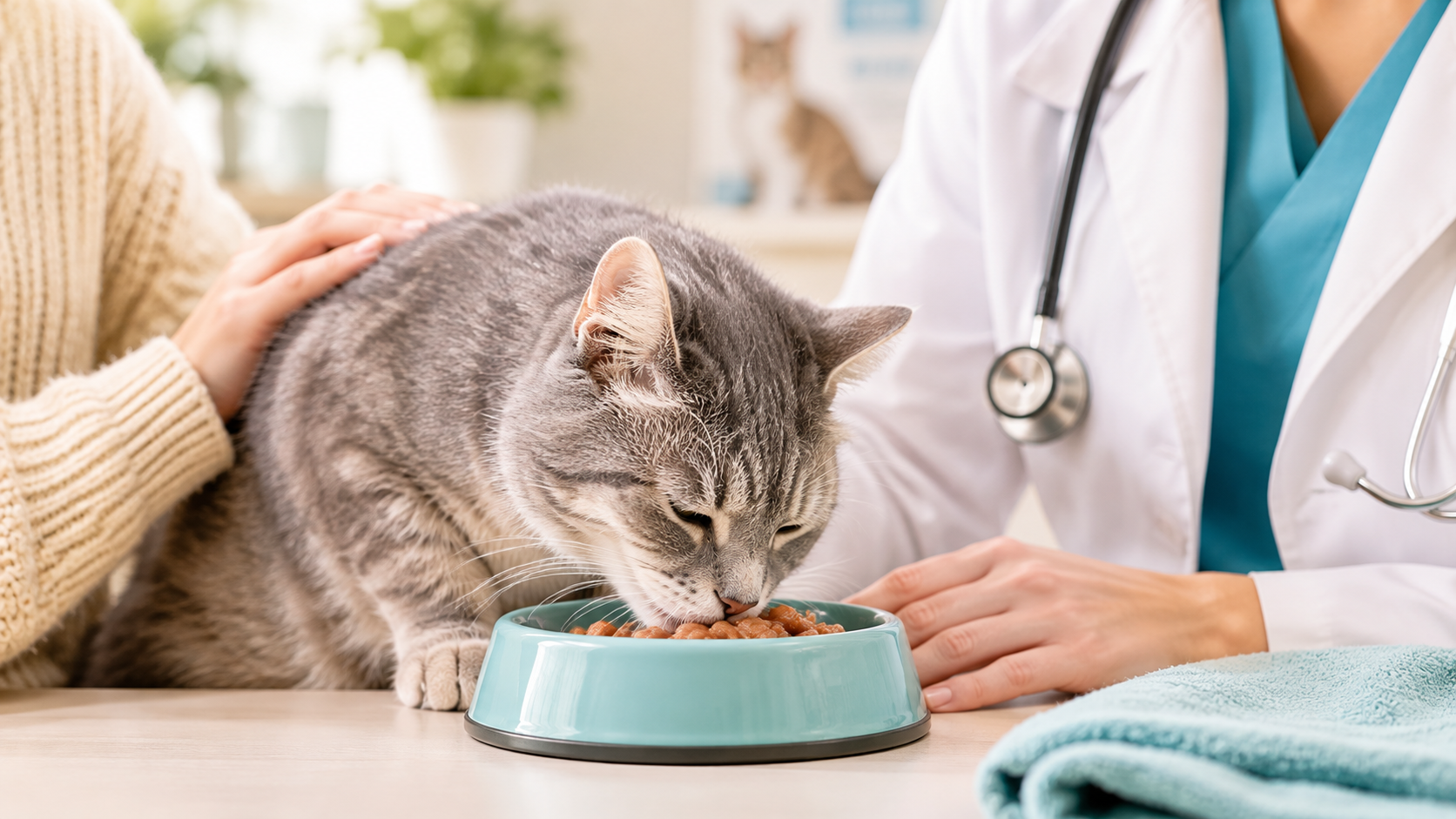
Only under veterinary advice. There’s no single “best” food you can buy off the shelf for a cat with chronic kidney disease (CKD). The right diet depends on your cat’s specific stage of disease, bloodwork, and overall health, and it’s typically a therapeutic prescription diet recommended and monitored by your veterinarian. This guide explains what these diets generally do differently, why they require professional guidance, and what to expect if your cat has just been diagnosed.
Chronic kidney disease is one of the most common conditions diagnosed in senior and geriatric cats, and diet plays a genuinely significant role in managing it. But because CKD varies so much in severity from one cat to the next, “best food” isn’t a single product; it’s a category of therapeutic diets, adjusted to your individual cat’s needs.
What Chronic Kidney Disease Means for Diet
CKD means the kidneys have lost some ability to filter waste products from the blood and to concentrate urine properly. As kidney function declines, certain dietary changes can help reduce the workload on the kidneys and manage some of the downstream effects of the disease, like elevated phosphorus levels.
This is why kidney-supportive (“renal”) diets are formulated differently from a typical adult or senior cat food, and why they’re usually only appropriate and only effective when matched to a cat’s actual diagnosis and stage of disease.
What Renal Diets Typically Change
| Phosphorus | Reduced | Helps slow progression of secondary complications tied to phosphorus buildup |
| Protein | Moderated (not eliminated) | Reduces certain waste byproducts, while still supporting muscle maintenance |
| Sodium | Controlled | May help support healthy blood pressure |
| Omega-3 fatty acids | Often increased | May help support kidney and cardiovascular health |
| B vitamins | Often increased | Water-soluble vitamins can be lost through increased urination |
| Moisture content | Often higher (wet food emphasized) | Supports hydration, which matters more with reduced kidney concentrating ability |
These are general patterns seen across most therapeutic renal diets, not a specification you should try to replicate on your own. The exact levels matter, and getting them wrong even with good intentions can do more harm than good.
Why This Isn’t a “Pick a Bag Off the Shelf” Situation
A few things make kidney disease different from most other senior cat nutrition topics:
- CKD is staged, typically using guidelines from the International Renal Interest System (IRIS), and the right dietary approach can differ meaningfully between an early-stage and advanced-stage cat.
- Bloodwork drives the plan. Phosphorus levels, blood pressure, and other values guide how aggressively a diet needs to be adjusted, and these are rechecked periodically to see if the plan is working.
- Renal diets are typically prescription-only, meaning they’re formulated and sold specifically for veterinary-diagnosed conditions rather than general purchase.
- Appetite matters enormously. Cats with CKD, especially in later stages, can become picky or nauseated, and a “perfect” renal diet a cat won’t eat is less useful than a slightly less ideal one she will.
This is why the honest answer to “what’s the best food” is: the one your veterinarian recommends and adjusts based on your specific cat’s bloodwork and response, not a specific product name that applies universally.
What a Veterinary Workup for CKD Typically Involves
If your cat has been diagnosed, or you suspect kidney disease based on symptoms, a typical evaluation includes bloodwork (kidney values, phosphorus, and other markers), a urinalysis to assess urine concentration, and often blood pressure measurement. Some cats are staged using the IRIS system, which considers bloodwork alongside other factors to help guide treatment and dietary decisions. This is a general description of a common approach, not a substitute for what your veterinarian recommends for your cat specifically.
Signs That May Point to Kidney Disease
Weight loss, increased thirst and urination, and a poor coat are among the more commonly recognized early signs, though they can overlap with several other conditions common in senior cats. This is why a proper veterinary workup, not symptom-matching at home, is the appropriate next step. See our guide on the signs of kidney disease in cats for a fuller breakdown of what to watch for.
Feeding Strategies That Often Help Alongside a Renal Diet
Once your veterinarian has recommended an appropriate diet, a few practical strategies can support a cat with CKD:
- Smaller, more frequent meals are often easier to manage than one or two large ones, especially if nausea is a factor.
- Warming wet food slightly can help make it more appealing to a cat with a reduced appetite.
- Multiple water sources, including a pet water fountain, can help encourage extra water intake, which supports hydration.
- Reducing mealtime stress by feeding in a quiet, low-traffic area can help cats who are more sensitive to their environment when unwell.
- Transitioning to a new diet gradually, especially since cats with CKD can be more prone to appetite aversions if a change happens too abruptly.
Common Mistakes Owners Make
- Choosing a “kidney support” labeled food without a diagnosis or vet guidance. These diets aren’t appropriate for cats without CKD and could withhold nutrients a healthy cat actually needs.
- Assuming any low-protein food is a renal diet. True therapeutic renal diets are formulated with a specific, tested nutrient profile, not just a lower protein number.
- Switching foods too abruptly, especially for cats already prone to appetite changes from CKD.
- Giving up on a prescribed diet after one refusal. Cats can take time to adjust; your vet may have suggestions for a smoother transition, including trying different textures or brands within the same nutrient profile.
- Not rechecking bloodwork after a diet change. Follow-up testing helps confirm whether the current plan is working or needs adjustment.
- Attempting a homemade renal diet without a veterinary nutritionist. The nutrient precision required for kidney support is even more demanding than for a standard homemade diet; see our guide on homemade food for senior cats for more on why this generally isn’t a DIY project.
Myth vs. Fact
| Any senior cat should eat a lower-protein food, just to be safe. | Restricting protein without a kidney disease diagnosis isn’t well-supported and may work against muscle maintenance in a healthy senior cat. |
| “Kidney disease diets are basically the same as regular senior food.” | Prescription renal diets have a specifically tested and adjusted nutrient profile — phosphorus, protein, and sodium in particular — that differs meaningfully from standard senior food. |
| If my cat won’t eat the prescribed food, any food is fine instead. | Appetite matters, but abandoning a renal diet entirely removes the dietary support that’s part of managing the disease — talk to your vet about alternatives within the appropriate nutrient profile rather than switching to an unrelated food. |
| “Diet alone can cure kidney disease.” | Diet is an important part of managing CKD, but it doesn’t reverse kidney damage that has already occurred. It’s typically one part of a broader management plan set by your veterinarian. |
What to Expect Going Forward
CKD is generally a progressive, lifelong condition rather than something that resolves. Diet, alongside other management strategies your vet may recommend, is aimed at slowing progression and supporting quality of life rather than reversing existing damage. Many cats live comfortably for a meaningful amount of time after diagnosis with appropriate management, and regular veterinary monitoring helps catch and adjust for changes in the disease over time.
Frequently Asked Questions
What is the best food for a senior cat with kidney disease?
There’s no single best product; the right diet depends on your cat’s specific stage of kidney disease and bloodwork, and it’s typically a prescription renal diet recommended by your veterinarian.
Can I buy kidney-friendly cat food without a prescription?
Most true therapeutic renal diets are sold as prescription products through veterinarians, since they’re formulated for a specific diagnosed condition rather than general purchase.
Why is protein restricted for cats with kidney disease?
Moderating (not eliminating) protein can help reduce certain waste byproducts the kidneys would otherwise need to filter, while still aiming to preserve muscle mass; your vet typically guides the exact balance.
Is wet food better than dry food for cats with kidney disease?
Wet food’s higher moisture content can help support hydration, which matters more for cats with reduced kidney concentrating ability, so many vets recommend incorporating more wet food when appropriate.
My cat won’t eat her prescribed renal diet. What should I do?
Talk to your veterinarian rather than switching to an unrelated food. They may suggest a different texture, flavor, or brand within an appropriate nutrient profile, or other strategies to improve palatability.
Can I make homemade food for a cat with kidney disease?
Only if a board-certified veterinary nutritionist formulates it, since the nutrient precision required, particularly around phosphorus and protein, is difficult to achieve reliably without professional guidance.
How often should bloodwork be rechecked after starting a renal diet?
This varies by cat and disease stage, and your veterinarian will recommend a monitoring schedule based on your cat’s specific situation.
Can kidney disease in cats be cured with diet?
No. Diet is an important management tool that can help slow progression and support quality of life, but it doesn’t reverse existing kidney damage.
At what stage of kidney disease should diet change?
Many veterinarians introduce dietary changes early, sometimes even before more advanced clinical signs appear, since earlier dietary management may help slow disease progression. Still, the right timing depends on your cat’s individual case.
Are grain-free diets better for cats with kidney disease?
Not specifically. The nutrients that matter most for kidney disease management phosphorus, protein quality, and sodium aren’t determined by whether a diet contains grain.
Final Takeaways
- There’s no single “best” food for kidney disease; the right diet depends on your cat’s stage of disease and bloodwork, and should come from your veterinarian.
- Renal diets typically moderate protein and phosphorus, control sodium, and often increase moisture, omega-3s, and B vitamins compared to standard food.
- These diets are usually prescription products, not something to select independently based on packaging claims.
- Appetite and palatability matter; if your cat won’t eat her prescribed diet, work with your vet on alternatives rather than abandoning dietary management altogether.
- Diet manages CKD; it doesn’t cure it. Ongoing veterinary monitoring is part of the full picture, not a one-time diet switch.
- If you haven’t already, see our guide on the signs of kidney disease in cats to understand the symptoms that typically prompt this diagnosis in the first place.
References
1. International Renal Interest System (IRIS)
- Feline CKD Staging Guidelines (PDF): IRIS Staging of CKD in Cats
2. Cornell Feline Health Center
- Chronic Kidney Disease Resource: Cornell – Chronic Kidney Disease in Cats
3. Merck Veterinary Manual
- Renal Disease & Management: Merck Vet Manual – Renal Dysfunction in Small Animals
4. AAFCO (Association of American Feed Control Officials)
- Nutrient Standards & Pet Food Labeling: AAFCO – Selecting the Right Pet Food
5. WSAVA Global Nutrition Committee
- Nutritional Assessment Toolkit: WSAVA Nutrition Toolkit
6. AVMA (American Veterinary Medical Association)
- Senior Pet Care & Wellness: AVMA – Senior Pet Care