
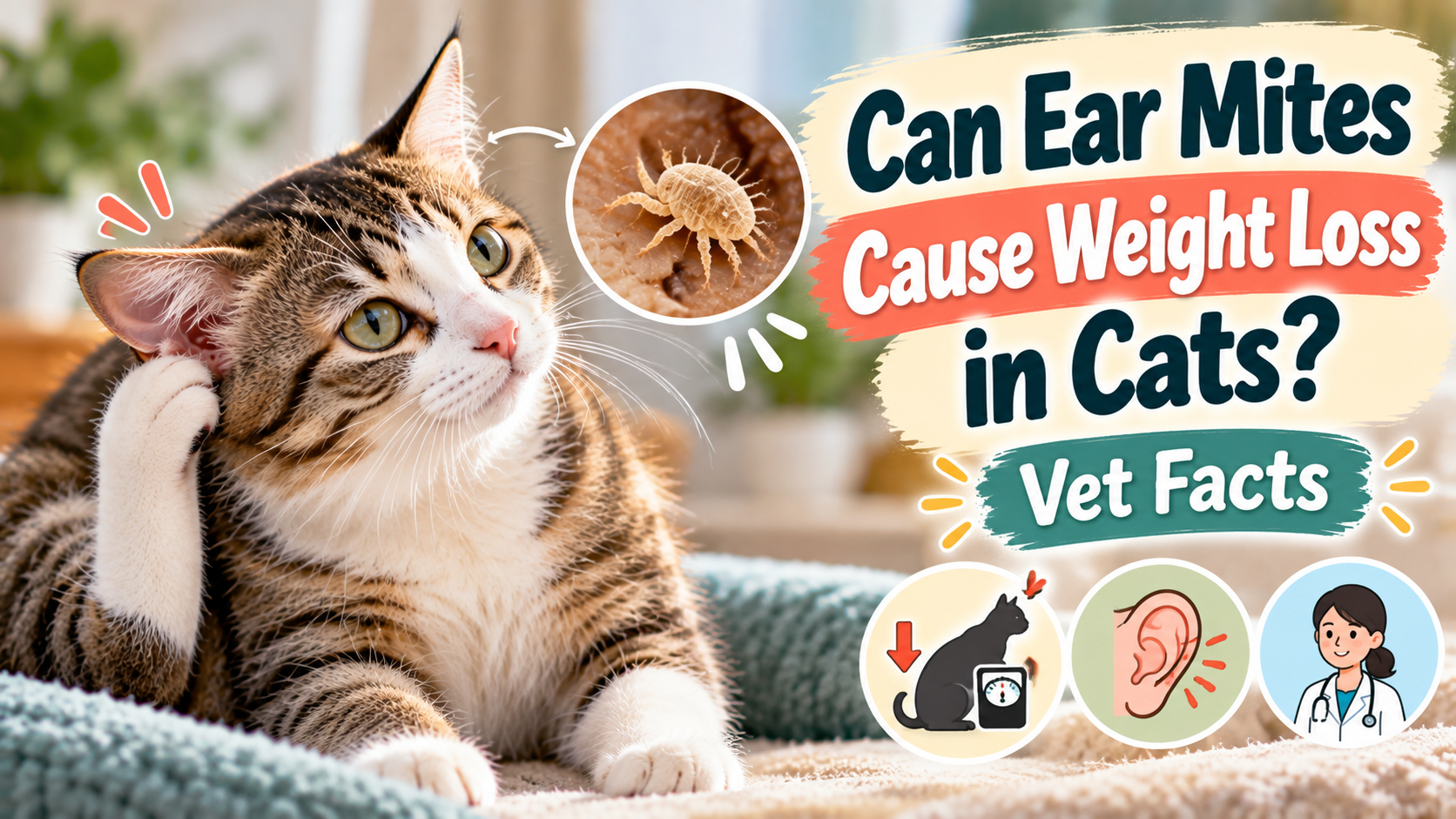
Answer First: Can ear mites cause weight loss in cats?
The short answer
Usually, no. If you are asking can ear mites cause weight loss in cats, the best answer is that they are a possible contributor, not the usual primary cause. Most cats with ear mites show ear symptoms first, such as scratching, head shaking, and dark coffee-ground ear debris.[2][3] Weight loss is more likely when the infestation is severe, chronic, painful, or complicated by a secondary bacterial infection or yeast infection that makes the cat eat less.[3][4]
Why this question matters
This question matters because ear mites are common, visible, and easy to blame for every symptom. But meaningful weight loss in cats deserves a wider medical workup, especially if it continues over days to weeks or comes with lethargy, poor appetite, vomiting, or diarrhea.[1][3] Treat the ears, but do not assume the ears explain everything. The goal is to catch both a parasite problem and any more serious disease early.
What ear mites are and what symptoms they usually cause
What ear mites are
Ear mites are tiny contagious parasites that live mainly in the ear canal. The most common species in cats is Otodectes cynotis.[2][4] They spread easily between pets, so outdoor cats have higher exposure risk, but indoor cats can still get them through contact with other animals, foster pets, or shared environments.[2][5]
Common signs of ear mites
Classic signs include scratching at the ears, head shaking, rubbing the head, ear sensitivity, and redness.[2][3] Many cats develop dark coffee-ground ear debris, and some have odor, scabs, or self-trauma around the ears and neck from repeated scratching.[2][4] Untreated cases can become very inflamed, and serious complications such as hearing loss or a ruptured eardrum may occur in severe cases.[3][4]
How symptoms can affect eating
Ear mites usually do not cause weight loss directly. The link is discomfort. A sore, inflamed ear can make a cat stressed, less active, and less interested in food. If a secondary bacterial infection or yeast infection develops, the pain and malaise may be worse, and decreased appetite becomes more likely.[3][6]
When ear mites might contribute to weight loss and when they probably are not the main cause
Indirect ways ear mites can lead to weight loss
Ear mites may contribute to weight loss through a chain of effects: ongoing irritation leads to pain, stress, poor sleep, and decreased appetite; then infection and inflammation can add lethargy.[3][4] A cat that normally eats well may start picking at meals or avoiding the bowl altogether because it feels unwell. This is more likely in untreated cases, in cats with very inflamed ears, and in kittens, who have less reserve.[1][4] Deeper ear disease and neurologic signs are uncommon, but if inflammation spreads, a cat may develop head tilt or balance changes that need faster care.[3][7]
Why ear mites alone usually do not explain major weight loss
Most cats with ear mites do not lose a large amount of body weight from the mites alone.[1][3] They usually present with itchy, dirty, painful ears rather than dramatic whole-body changes. If your cat is clearly getting thinner, especially with muscle loss along the spine or hips, think beyond the ears. Hyperthyroidism, kidney failure, and diabetes are important alternatives, especially in older cats.[3][6]
| Finding | More typical of ear mites | Possible sign of something more serious |
|---|---|---|
| Dark coffee-ground ear debris | Yes | Not by itself |
| Scratching and head shaking | Yes | Usually ear disease |
| Mild short-term appetite drop | Possible if ears are painful | Monitor closely |
| Ongoing weight loss | Uncommon as the main effect | Yes, needs workup |
| Vomiting or diarrhea | Not typical | Yes |
| Head tilt or loss of balance | Complication, less common | Urgent evaluation |
This is why the best way to think about the problem is: ear mites can play a role, but they usually are not the whole story.[1][3][7]
Weight loss red flags: when to suspect another illness or seek urgent care
Call a veterinarian soon if your cat is losing weight
If you can see that your cat is thinner, is eating less, or seems less active, schedule an exam soon.[1][3] This is especially important for kittens and senior cats, because they can decline faster. Tell the veterinarian about every symptom, not just the ears: appetite changes, thirst, litter box changes, vomiting, diarrhea, hiding, or new weakness. Also mention any recent ear drops, parasite treatments, or cleaners you used, since prescription choices and product availability vary by country and local regulations.[3][6]
Urgent signs that need faster care
Seek faster care for head tilt, loss of balance, circling, severe ear pain, marked swelling, or concern for a ruptured eardrum.[3][7] Other urgent signs include refusing food, marked lethargy, dehydration, or persistent vomiting or diarrhea, whether from illness or a reaction after treatment.[3][7] These signs go beyond a simple itchy-ear picture.
Other illnesses that may better explain weight loss
Important alternatives include hyperthyroidism, kidney disease or kidney failure, and diabetes.[3][6] Depending on the cat, a veterinarian may also consider gastrointestinal disease, dental pain, or cancer. The key point is simple: if the body weight is dropping, only testing can show whether ear mites are a small part of the problem or merely a coincidental finding.
How veterinarians diagnose ear mites and rule out other causes of weight loss
Ear exam and testing
Veterinarians do not diagnose ear mites by debris alone. They examine the ear canal with an otoscope and usually collect ear material to view under a microscope.[3][6] An ear cytology or ear swab helps confirm mites and also checks for yeast or bacteria, since those problems can look similar and often overlap.[3][6] This matters because wax, yeast infection, and secondary bacterial infection can all cause dark debris and discomfort.
If the cat is also losing weight
If weight loss is part of the story, the visit usually becomes broader than an ear exam. The veterinarian may assess body condition, hydration, temperature, and discuss appetite and stool or urine changes.[3][6] Bloodwork, urine testing, and other diagnostics may be recommended to look for systemic illness such as hyperthyroidism, diabetes, or kidney disease.[3] That wider approach is often what separates a simple parasite case from a more serious underlying problem.
Treatment: what helps ear mites, how fast it works, and what not to expect
Common veterinary treatments
Treatment often includes prescription ear medication, a parasite preventive, or both.[2][3] Veterinary references discuss products such as Revolution, Revolution Plus, Advantage Multi, MilbeMite, and Acarexx as examples, but the right choice depends on the cat, the condition of the ear, and local availability.[2][3][6] Some cats also need treatment for a secondary bacterial infection or yeast infection. Do not use over-the-counter products or home remedies unless a veterinarian approves them, because some can irritate the ear or be unsafe if the eardrum is damaged.[3][4]
Do anything kill ear mites instantly?
Not in the practical sense of a complete, same-day cure at home. Some prescription treatments start killing mites quickly, but full elimination, ear cleaning, and healing take time.[2][3] Even after mites begin dying, the cat may still have debris, redness, and itching for a while as the ear canal settles down.
Why treatment alone may not fix weight loss
If ear treatment works but the cat still has poor appetite, lethargy, or continued weight loss, more testing is needed.[1][3] Treating mites can solve the ear problem without solving the real reason the cat is getting thinner. That is why follow-up matters.
After treatment: medication side effects, home monitoring, and preventing reinfestation
Possible medication side effects versus ongoing illness
Some owners worry when a cat seems off after ear drops or parasite medication. Mild irritation can happen, but vomiting, diarrhea, reduced appetite, or unusual lethargy should be reported, especially if signs are significant, persistent, or begin soon after treatment.[3][7] A reaction can look different from ongoing ear discomfort, and your veterinarian may want to change the plan.
What to track at home
Track daily appetite, weekly body weight, scratching frequency, ear discharge, energy level, and bathroom changes. If possible, record weight in both pounds and kilograms, such as 9.5 lb and 4.3 kg, so trends are easy to compare over time. A kitchen or baby scale may help for kittens; for larger cats, weigh yourself with and without the cat and use the same scale each time. Note whether other pets in the home are scratching too.[2][6]
How to reduce recurrence
All in-contact pets may need evaluation or treatment to prevent reinfestation.[2][4] Follow your veterinarian’s guidance on cleaning ears, bedding, or shared items if recommended. Finish the full treatment plan, attend any recheck visit, and do not stop early just because the scratching improves. Indoor cats are not immune, so prevention still matters.[2][5]
Guidance by life stage: kittens, adult cats, and senior cats
Kittens
Weight loss is more serious in kittens because they can become weak or dehydrated quickly.[4] Ear mites are common in young cats, but poor intake should never be brushed off as just an ear problem.
Adult cats
In adult cats, ear mites are common and treatable, but ongoing weight loss still needs investigation.[2][3] Watch whether appetite and energy improve once the ears are treated.
Senior cats
Senior cats need a higher index of suspicion for hyperthyroidism, kidney disease, diabetes, and other chronic illness.[3][6] Even if ear mites are present, do not assume they explain body-weight changes in an older cat.
Conclusion: treat the ears, but do not ignore the weight loss
Bottom line
Ear mites can sometimes contribute indirectly to weight loss in cats by causing pain, stress, decreased appetite, or secondary infection, but they usually do not cause major weight loss on their own.[1][3][4] If your cat is getting thinner, seems lethargic, stops eating, vomits, has diarrhea, or develops head tilt or balance problems, a veterinary exam is the safest next step.[3][7]
Frequently Asked Questions
Can ear mites directly cause weight loss in cats?
Usually no. Ear mites are more likely to cause ear irritation, scratching, and dark debris. Weight loss is more often indirect through pain, stress, reduced appetite, or secondary infection, and it may also point to another disease.[1][3]
What are the symptoms of ear mites in cats?
Common signs include scratching at the ears, head shaking, rubbing the head, ear sensitivity, redness, odor, and dark coffee-ground-like debris in the ears.[2][3][4]
Do indoor cats get ear mites?
Yes. Indoor cats can still get ear mites through contact with other pets or contaminated environments, though outdoor exposure can raise risk.[2][5]
What kills ear mites in cats instantly?
There is not a true instant fix at home. Some prescription products start killing mites quickly, but full elimination, ear cleaning, and relief of inflammation still take time.[2][3]
Should I worry if my cat stops eating after ear mite treatment?
Yes. Mild reactions can happen, but a cat that refuses food, vomits repeatedly, has diarrhea, or seems very lethargic should be checked by a veterinarian promptly.[3][7]
When should a cat with ear mites and weight loss see a vet urgently?
Urgent care is warranted if the cat has marked lethargy, refuses food, is rapidly losing weight, has a head tilt or balance problems, or develops persistent vomiting or diarrhea.[3][7]
References
- Ear mites and cat weight loss. What to do? – Questions & Answers | VetInfo/QA
- Ear Mites in Cats: Causes, Symptoms & Treatment – Cats.com
- Ear Mites in Cats | PetMD
- Ear Mites: Tiny Critters that can Pose a Major Threat | Cornell University College of Veterinary Medicine
- Ear Mites in Cats: Signs, Causes and Next Steps | Hill’s Pet US
- Ear Mites in Cats | Small Door Veterinary
- Ear Mites in Cats: Symptoms, Causes, Treatment & More | UrgentVet