
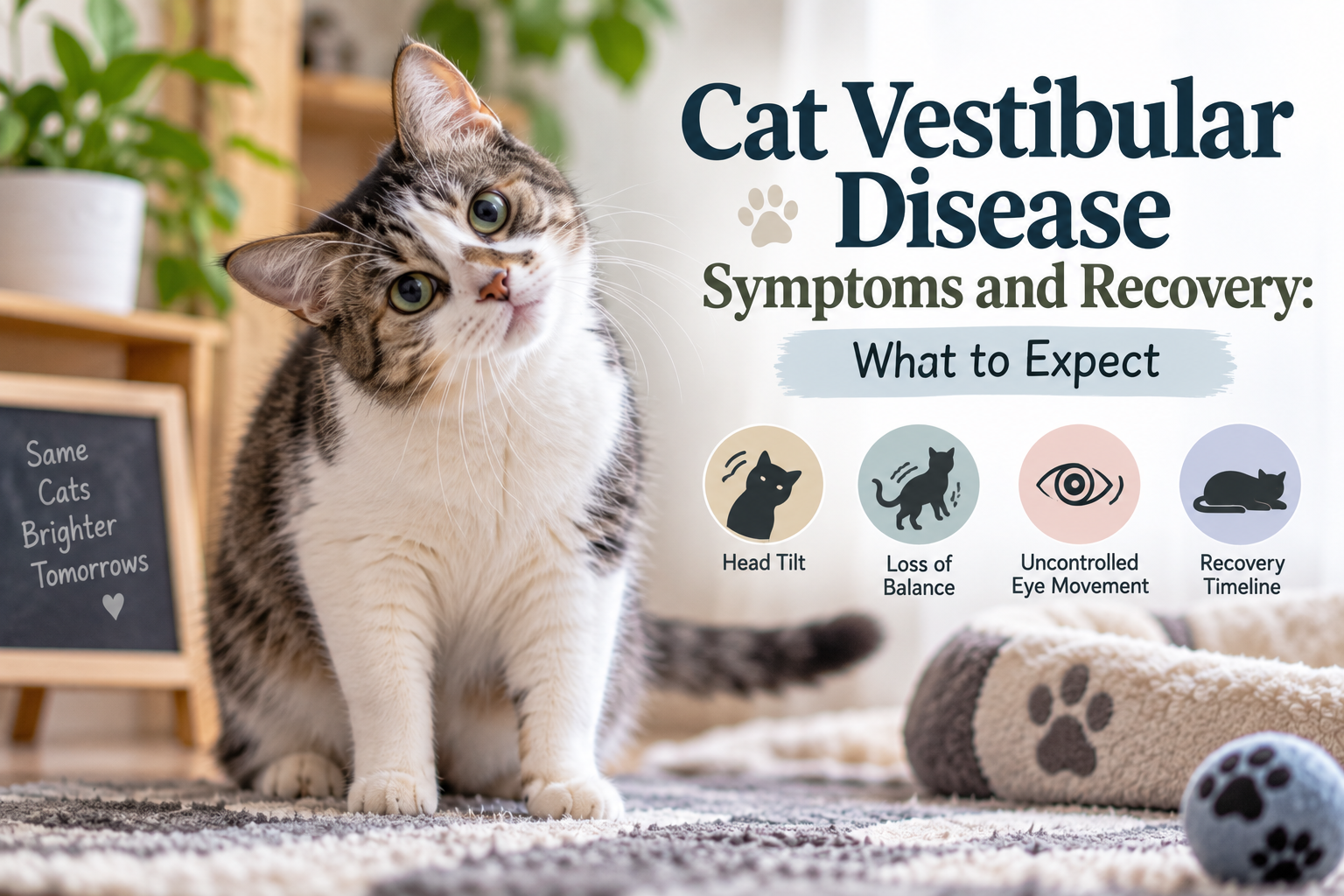
If your cat suddenly seems dizzy, falls over, walks in circles, or holds their head at an angle, a balance problem may be involved. Vestibular disease can look frightening, but some cats improve greatly with the right care.
The vestibular system helps a cat know where their body is in relation to the ground. It includes parts of the inner ear and brain. When this system is disrupted, a cat can lose their balance and feel as if the room is spinning.
This guide explains common cat vestibular disease symptoms and recovery, what may cause them, how veterinarians diagnose the problem, and how you can keep your cat safe at home. Sudden balance problems should always be assessed by a veterinarian because vestibular signs can also occur with serious conditions.
What is vestibular disease in cats?
Vestibular disease is a problem affecting the system that controls balance and spatial awareness. It can involve the peripheral vestibular system, which is linked mainly to the inner ear, or the central vestibular system, which involves the brain.
A cat with vestibular disease may feel dizzy even when lying still. Their eyes may move back and forth, and normal activities such as walking to the food bowl can become difficult. The condition itself is not one single disease. It is a group of signs caused by different possible problems.
Possible causes include:
- Inner or middle ear infection
- Inflammation in or around the inner ear
- A reaction to certain medications or ear products
- Head trauma
- Polyps, tumors, or other growths
- Inflammation affecting the brain
- Stroke-like events or reduced blood flow
- A condition with no clear cause, sometimes called idiopathic vestibular disease
Older cats may be more likely to have an underlying medical cause, but cats of any age can develop balance problems.
Cat vestibular disease symptoms to watch for
The most noticeable symptoms often appear suddenly. Signs can range from mild unsteadiness to severe difficulty standing.
1. Loss of balance and falling
Your cat may stumble, lean to one side, fall when trying to walk, or have trouble jumping onto familiar surfaces. Some cats roll repeatedly toward the affected side.
A cat that is dizzy may also avoid walking because movement makes the sensation worse. They may stay in one spot, crouch low, or press their body against a wall or piece of furniture for support.
2. Head tilt
A persistent head tilt is one of the classic vestibular signs. Your cat may hold one ear closer to the floor than the other. The tilt can be mild or very obvious.
The side of the tilt can sometimes help a veterinarian understand whether the problem is more likely to involve the inner ear, but it does not identify the cause by itself. Do not try to diagnose the affected side at home.
3. Rapid, unusual eye movements
You may see your cat’s eyes move from side to side, up and down, or in a rotating pattern. This involuntary movement is called nystagmus.
Nystagmus is especially useful information for a veterinarian. If possible, take a short video of the eye movements and your cat walking. A video can help if the signs change before the appointment.
4. Nausea, vomiting, or drooling
Because vestibular disease can make a cat feel motion sick, nausea is common. Your cat may drool, vomit, refuse food, or seem upset when they try to move.
A cat that does not eat or drink properly can become dehydrated. Vomiting that continues, repeated refusal of food, or marked weakness needs prompt veterinary attention.
5. Walking in circles
Some cats circle toward one side, especially when they first try to walk. Others may appear confused or repeatedly turn in the same direction.
Circling can happen with vestibular disease, but it can also occur with neurological problems. That is one reason a veterinary examination matters.
6. Trouble eating, drinking, or using the litter box
A dizzy cat may struggle to find the bowl, lower their head without losing balance, or reach the litter box safely. They may need help with basic tasks for several days.
Place food, water, and a low-sided litter box nearby. Do not force food or water into your cat’s mouth unless a veterinarian has specifically instructed you to do so.
7. Facial changes or one-sided ear and eye problems
When an ear-related problem affects nearby nerves, a cat may develop facial drooping, an uneven blink, a smaller-looking eyelid opening, or a third eyelid that is more visible. Horner’s syndrome can also cause changes in the pupil and eyelids.
These signs do not prove that vestibular disease is the cause, but they are important details to report.
When is vestibular disease an emergency?
Sudden loss of balance, repeated falling, severe vomiting, seizures, collapse, or major changes in awareness should be treated as urgent. Call a veterinarian or emergency clinic for guidance rather than waiting to see whether the signs disappear.
Seek prompt care if your cat:
- Cannot stand or keeps falling
- Is difficult to wake or seems unaware of their surroundings
- Has seizures, weakness, or paralysis
- Has trouble breathing
- Has repeated vomiting or cannot keep water down
- Has suffered a fall, blow to the head, or other injury
- Has unequal pupils or sudden vision changes
- May have been exposed to a medication, chemical, or inappropriate ear product
- Has not eaten and is becoming increasingly weak
Vestibular disease can be benign in some cases, but similar symptoms may come from a brain problem, poisoning, severe ear disease, or another condition that needs immediate treatment.
What causes vestibular disease in cats?
The cause affects both treatment and recovery. A veterinarian will consider your cat’s age, medical history, medications, ear health, and the exact pattern of symptoms.
Idiopathic vestibular disease
Sometimes no clear cause is found. This is often called idiopathic vestibular disease. It usually begins suddenly, and the signs may look severe at first.
In many cats with this form, the worst dizziness improves within the first few days. A head tilt or mild unsteadiness may last longer. Even when the pattern seems typical, the diagnosis should be made by a veterinarian after other problems have been considered.
Ear disease
Middle and inner ear infections can interfere with balance. A cat may have ear pain, discharge, odor, hearing changes, facial nerve problems, or a head tilt, although not every sign appears in every cat.
Ear disease can require prescription medication and sometimes additional treatment. Never put human ear drops or leftover pet medication into an ear unless your veterinarian tells you to. Some products can be harmful if the eardrum is damaged or if they reach the inner ear.
Medication or toxin exposure
Some drugs and chemicals can damage the balance system or cause neurological signs. Tell the veterinarian about every medication, supplement, flea product, ear cleaner, and household chemical your cat may have encountered.
If poisoning is possible, do not wait for symptoms to worsen and do not induce vomiting unless a veterinary professional specifically directs you to do so.
Brain or neurological disease
Central vestibular disease can be associated with inflammation, infection, a tumor, trauma, or a vascular event. Cats with a central problem may also have seizures, marked weakness, abnormal behavior, vision changes, or difficulty controlling their limbs.
These cases may need advanced testing, such as imaging or laboratory tests. Your veterinarian will explain which tests are appropriate based on the examination.
How veterinarians diagnose vestibular disease
There is no single home test for vestibular disease. Diagnosis usually starts with a physical and neurological examination.
Your veterinarian may check:
- How your cat stands and walks
- The direction of the head tilt and eye movements
- Ear canals and eardrums
- Facial movement, pupil responses, and reflexes
- Muscle strength and coordination
- Hydration, temperature, and general health
Depending on the findings, testing may include blood work, ear testing, blood pressure measurement, imaging, or other neurological tests. Not every cat needs every test.
Bring a list of medications and a timeline of what happened. Note whether the signs began suddenly or gradually, whether your cat has been eating and drinking, and whether there has been vomiting, ear discharge, trauma, or possible toxin exposure.
Cat vestibular disease treatment
Treatment depends on the cause and how severely your cat is affected. There is no single medication that cures every case.
A veterinarian may recommend:
- Medication for nausea or vomiting
- Fluids if your cat is dehydrated
- Prescription treatment for an ear infection or inflammation
- Pain relief when ear disease or injury is painful
- Nutritional support if your cat cannot eat enough
- Treatment for a confirmed underlying neurological or systemic condition
Supportive care is often a major part of recovery. A dizzy cat may need help eating, drinking, walking, and staying clean until the worst symptoms settle.
Do not give your cat human motion-sickness medication, pain medicine, or anti-inflammatory drugs unless a veterinarian has prescribed or approved a specific product and dose. Some common human medicines are dangerous for cats.
Cat vestibular disease recovery: what to expect
Recovery varies widely because it depends on the cause, the location of the problem, your cat’s overall health, and how well they can eat and drink.
For cats with idiopathic vestibular disease, the most severe signs often begin to improve within a few days. Many cats show clearer progress over the first week or two, although a head tilt or mild wobbliness can remain for longer. Some cats are left with a small permanent head tilt but still return to a comfortable, normal life.
Recovery may take longer when the cause is an ear infection, inflammation, injury, tumor, or central neurological disease. Your veterinarian is the best person to discuss the likely timeline for your individual cat.
Signs that recovery is moving in the right direction can include:
- Fewer falls
- More interest in food and water
- Less vomiting or drooling
- Better ability to walk to the litter box
- Reduced eye movements
- More normal interaction with family
- Gradual improvement in head position
Improvement does not always happen in a straight line. A cat may seem better one day and more tired the next. Still, worsening signs, new neurological symptoms, ongoing vomiting, or failure to eat should be reported.
How to care for a cat recovering from vestibular disease
The safest recovery space is quiet, contained, and easy to navigate. For the first few days, keep your cat away from stairs, balconies, tall furniture, and slippery floors.
Set up a safe recovery area
Use a small room or large pen where your cat cannot fall far. Add non-slip rugs or towels, but make sure fabric cannot bunch up and trip them. Keep bedding low to the ground and easy to wash.
Place food, water, and a low-sided litter box within a few steps of the resting area. A wide, shallow bowl may be easier for a dizzy cat to use than a deep bowl.
Help with meals and hydration
Offer small, frequent meals rather than expecting your cat to eat a large portion at once. Strong-smelling wet food may be easier to notice, but follow your veterinarian’s advice if nausea is present.
Watch for signs of dehydration, such as very low energy, dry or sticky gums, or a clear drop in drinking and urination. These signs are not reliable enough for home diagnosis, so contact your veterinarian if you are concerned.
Do not force-feed a cat that is nauseated or unable to swallow normally. Food can enter the airway if it is given improperly.
Reduce movement and stress
Carry your cat carefully when necessary, supporting the chest and hindquarters. Keep the room calm and avoid picking them up repeatedly. Bright lights and sudden movement may make dizziness feel worse for some cats.
Speak softly before touching your cat so they are not startled. Let them rest, but check regularly that they are breathing comfortably and can access water and the litter box.
Give medication exactly as directed
Finish prescribed treatment unless your veterinarian changes the plan. If your cat vomits after a dose, spits it out, or is impossible to medicate safely, call the clinic for advice rather than automatically repeating the dose.
Can vestibular disease come back?
Recurrence depends on the underlying cause. Idiopathic episodes may not return, but some cats can have another episode. Ear disease, medication exposure, inflammatory conditions, or other neurological problems may continue or recur unless the underlying issue is treated.
Keep follow-up appointments even if your cat looks much better. A remaining head tilt is not always a sign that treatment has failed, but persistent or returning symptoms deserve a professional review.
What not to do at home
Avoid these common mistakes:
- Do not assume a sudden head tilt is harmless without veterinary advice.
- Do not clean deep inside the ear with cotton swabs.
- Do not use human medications or unapproved ear drops.
- Do not let a dizzy cat roam near stairs or high surfaces.
- Do not force food or water into the mouth.
- Do not stop prescribed medication early without asking the veterinarian.
The outlook for cats with vestibular disease
The outlook can be good, especially when the signs are caused by a temporary or treatable problem and the cat can stay hydrated and nourished. However, vestibular signs are not a diagnosis by themselves. Some causes are more serious and require long-term care or additional testing.
The most useful thing you can do is arrange veterinary assessment quickly, record the symptoms, and make the home environment safe while your cat recovers. With patience and support, many cats regain steady movement and return to their usual routines.
Key takeaways
- Common signs include a head tilt, falling, circling, nystagmus, nausea, and trouble walking.
- Sudden balance problems need veterinary evaluation because several serious conditions can look similar.
- Recovery may begin within days in some idiopathic cases, but the timeline depends on the cause.
- Keep your cat on the floor in a quiet, non-slip area with nearby food, water, and a low-sided litter box.
- Do not give human medication or use ear products without veterinary guidance.
- Ongoing vomiting, inability to eat or drink, seizures, collapse, or worsening neurological signs are urgent concerns.