
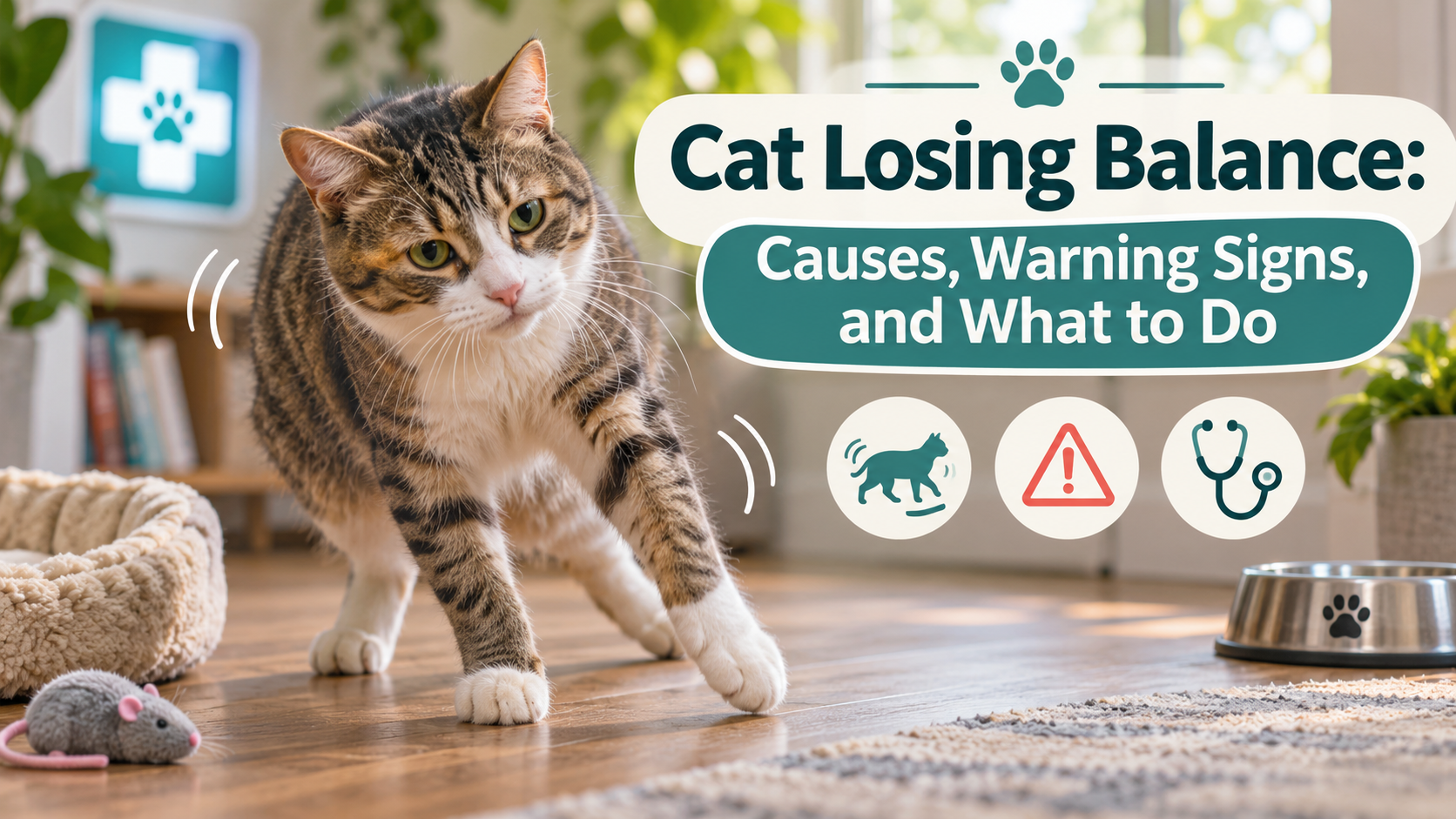
A cat losing balance is not something to ignore, especially if the problem started suddenly. You may see your cat wobble, walk in circles, fall over, tilt their head, miss a jump, or seem unable to stand normally. Sometimes the cause is a temporary ear problem or a medication side effect. In other cases, loss of balance can point to a serious neurological condition, poisoning, injury, or another illness that needs prompt veterinary care.
The safest approach is to treat new or severe balance problems as a medical concern. Keep your cat in a safe, quiet area, prevent falls, and contact your veterinarian. If your cat cannot stand, has trouble breathing, is having seizures, seems severely confused, or may have eaten something toxic, seek emergency veterinary care right away.
What does loss of balance look like in cats?
Balance problems, sometimes called ataxia, happen when a cat has trouble coordinating movement. The signs can be subtle at first or very obvious.
You may notice your cat:
- Staggering or swaying while walking
- Falling to one side
- Walking with the legs spread wide
- Holding the head at an unusual angle
- Circling in one direction
- Rolling or repeatedly tipping over
- Struggling to jump onto familiar furniture
- Standing still because movement seems difficult
- Moving the eyes rapidly from side to side
- Vomiting, drooling, or appearing nauseated
- Acting confused, weak, or unusually sleepy
A cat can lose balance because of a problem in the inner ear, brain, spinal cord, nerves, muscles, or general body chemistry. The appearance of the problem can offer clues, but it usually cannot identify the cause on its own.
When is a cat losing balance an emergency?
Sudden or severe loss of balance deserves prompt veterinary advice. Go to an emergency clinic or contact an emergency veterinarian if your cat has any of these signs:
- They cannot stand or walk
- They repeatedly fall or roll
- They have a seizure, collapse, or lose consciousness
- They are struggling to breathe
- Their gums look pale, blue, gray, or unusually yellow
- They are vomiting repeatedly or cannot keep water down
- They seem very confused, unresponsive, or extremely weak
- Their pupils look different sizes or they suddenly cannot see
- They have severe head tilt with rapid eye movements
- They may have been exposed to medication, chemicals, toxic plants, or another poison
- The balance problem followed a fall, collision, bite, or other injury
Do not wait to see if a severe problem “sleeps off.” Cats often hide illness, so a noticeable change in walking can mean the condition is already affecting their ability to function.
If the signs are mild but new, call your regular veterinarian as soon as possible. Your veterinarian may want to examine your cat the same day, particularly if the balance problem is getting worse or is accompanied by poor appetite, vomiting, pain, fever, or behavior changes.
Common causes of a cat losing balance
1. Inner ear disease or vestibular problems
The vestibular system helps cats know where their body is in relation to gravity. Much of this system is in the inner ear, although part of it is located in the brain. If it is disrupted, a cat may suddenly become dizzy or unsteady.
Possible signs include:
- Head tilt
- Falling toward one side
- Circling
- Nausea or vomiting
- Rapid, jerking eye movements called nystagmus
An ear infection, inflammation, injury, growth, or other inner-ear problem can affect balance. Middle- and inner-ear disease may not always be obvious from the outside. A cat can have a serious deeper ear problem even if the ear flap looks fairly normal.
Some cats develop idiopathic vestibular disease, which means a clear cause is not found. This can begin suddenly and may look frightening. Some cats start improving over a few days, but a veterinarian still needs to rule out other causes before assuming it is a temporary vestibular episode.
2. Ear mites and severe ear inflammation
Ear mites are more common in kittens and cats that have contact with other animals, but any cat can develop an ear problem. Severe inflammation, infection, or buildup in the ear canal can cause discomfort and may affect balance if deeper structures are involved.
You might see head shaking, scratching, dark ear debris, a bad odor, redness, or sensitivity around the ears. Avoid putting human ear drops, oils, or leftover medication into the ear unless your veterinarian specifically recommends it. The wrong product can irritate the ear or cause harm if the eardrum is damaged.
3. Neurological disease
The brain, spinal cord, and nerves control coordination. A problem in these areas can cause balance changes, weakness, tremors, abnormal behavior, seizures, or trouble using one or more limbs.
Potential neurological causes include inflammation, infection, a stroke-like event, a tumor, developmental conditions, or other disorders. A cat with a neurological problem may also press their head against a wall, walk in circles, seem unable to recognize familiar people, or have changes in vision.
A neurological cause cannot be confirmed by watching your cat at home. Your veterinarian may perform a detailed neurological examination and recommend blood tests or imaging, depending on the signs.
4. Injury or trauma
A fall from a window, a vehicle accident, a fight, or a hard collision can affect the head, spine, inner ear, muscles, or joints. Some injuries are not obvious immediately. A cat may seem quiet rather than visibly painful.
Keep your cat as still as possible after a suspected injury. Do not encourage walking to “test” the problem, and do not give human pain medicine. Products such as acetaminophen and ibuprofen can be dangerous or fatal to cats.
5. Poisoning or medication exposure
Toxins can cause wobbling, weakness, tremors, vomiting, drooling, seizures, unusual sleepiness, or sudden behavior changes. Possible sources include human medicines, some insecticides, cleaning products, recreational drugs, toxic plants, and chemicals used around the home or yard.
Never induce vomiting unless a veterinarian or animal poison professional tells you to do so. If you know what your cat may have contacted, keep the package, label, plant sample, or a photo available. The product name, amount, and time of exposure can help guide treatment.
Even a product labeled for pets can be dangerous when the wrong species or dose is used. For example, some dog flea products contain ingredients that are unsafe for cats.
6. Low blood sugar and other body chemistry problems
A cat may become weak, shaky, confused, or unsteady when blood sugar drops too low. This can occur in cats receiving insulin, but it can also happen with certain illnesses, poor food intake, or other metabolic problems.
Kidney disease, liver disease, severe dehydration, electrolyte changes, anemia, and other conditions can also affect coordination. These problems may cause more general weakness rather than a classic head tilt, but owners may still describe the cat as wobbly or off balance.
Do not give sugar, food, or medication by mouth if your cat is unconscious, having a seizure, or unable to swallow safely. Call a veterinarian immediately for instructions.
7. Medication side effects
Some medications can make cats sleepy, weak, dizzy, or uncoordinated. The risk may be higher if the dose is incorrect, if two medicines interact, or if a cat has kidney or liver disease.
If your cat became unsteady after starting or changing a medication, call the prescribing veterinarian. Do not stop a long-term medicine suddenly unless a veterinary professional tells you to. Have the medication name, strength, dose, and time it was given ready when you call.
8. Pain, weakness, or mobility problems
Not every cat that appears off balance has a disorder of the inner ear or brain. Pain in the legs, back, hips, or paws can make a cat walk carefully, limp, or avoid placing weight on a limb. Severe weakness can also look like stumbling.
Older cats may have arthritis, muscle loss, vision problems, or several health conditions at once. A cat that misses a jump once may simply misjudge the distance, but repeated falls, difficulty climbing stairs, or a sudden change in movement should be checked.
How the pattern of signs may help
The pattern can give a veterinarian useful information, but it should not be used to diagnose your cat at home.
| What you may notice | Possible area involved | Why veterinary care matters |
|---|---|---|
| Head tilt, falling to one side, nausea, rapid eye movements | Vestibular system or inner ear | Ear and neurological problems can look similar |
| Wobbling with tremors, drooling, or seizures | Toxin exposure, low blood sugar, or neurological disease | Some causes worsen quickly |
| Staggering after a new medicine | Medication effect or dosing problem | The dose may need urgent adjustment |
| Unsteady walking after a fall or collision | Head, spine, ear, or limb injury | Internal injuries may be hidden |
| Gradual weakness, poor appetite, weight loss, or increased thirst | Metabolic or organ disease | Blood and urine tests may be needed |
| Circling, confusion, vision change, or abnormal behavior | Brain or vision problem | Sudden neurological changes need prompt evaluation |
What to do if your cat is losing balance
1. Move them to a safe, quiet space
Place your cat on the floor in a small room away from stairs, balconies, furniture edges, and other pets. Use folded blankets or towels to create a stable resting area. Keep food, water, and a low-sided litter box close by, but do not force your cat to walk.
2. Prevent falls and further injury
Close doors and block access to high surfaces. If you need to transport your cat, use a secure carrier lined with a towel. Support the body gently and avoid bending the neck or spine if an injury is possible.
3. Call a veterinarian
Explain when the problem began, whether it appeared suddenly, and what you are seeing. Tell the clinic about vomiting, head tilt, eye movements, seizures, pain, appetite changes, recent injuries, illnesses, and all medications or supplements.
A short video of your cat walking can be helpful if it is safe to record one. Do not delay emergency care just to obtain a video.
4. Check for possible exposures
Look around for chewed pills, spilled chemicals, opened flea products, toxic plants, or food that may be unsafe for cats. Do not give home remedies or human medicine unless a veterinarian directs you to.
5. Monitor without disturbing your cat
Note whether your cat can stand, eat, drink, urinate, and respond normally. Write down any changes and the times they occur. This information can help the veterinarian understand whether the problem is stable, improving, or worsening.
How veterinarians diagnose balance problems
The veterinarian will usually begin with a physical and neurological examination. They may check the ears, eye movements, reflexes, muscle strength, coordination, hydration, temperature, heart rate, and blood pressure.
Depending on the findings, recommended tests may include:
- Blood glucose testing
- Complete blood count and blood chemistry tests
- Urine testing
- Ear examination and testing of ear material
- Blood pressure measurement
- X-rays or other imaging
- Advanced imaging, such as CT or MRI, when a deeper neurological problem is suspected
Treatment depends entirely on the cause. It may include medication for infection, nausea, inflammation, pain, seizures, or another diagnosed problem. A cat that is dehydrated or cannot eat may need fluids and supportive care. Some cats need hospitalization for monitoring and treatment.
Can a cat recover from losing balance?
Many cats improve when the underlying cause is treatable, but the outlook varies. A temporary vestibular problem may improve with supportive care, while poisoning, trauma, or brain disease can be more serious. Recovery may take days to weeks, and some cats are left with a mild head tilt or other lasting change.
The best predictor of recovery is not the balance problem alone. It is the cause, how quickly treatment begins, the cat’s overall health, and whether other neurological signs are present. Follow-up visits matter even if your cat seems better, because some illnesses can return or leave an untreated problem behind.
How to care for a recovering cat at home
Only follow home-care instructions provided by your veterinarian. General measures may include:
- Keeping your cat in a quiet, restricted area
- Using a low-entry litter box
- Placing food and water where they are easy to reach
- Offering small meals if nausea has improved and your veterinarian approves
- Helping with grooming if your cat cannot clean themselves
- Keeping bedding dry and changing it often
- Preventing access to stairs and high furniture
- Giving prescribed medications exactly as directed
Do not force food or water into a cat that is very drowsy, nauseated, or unable to swallow normally. This can lead to aspiration, where material enters the lungs.
Can balance problems in cats be prevented?
Not every cause can be prevented, but a few habits lower risk:
- Keep human medicines, chemicals, and unsafe plants out of reach.
- Use only flea and tick products labeled for cats, and follow the dose carefully.
- Keep cats indoors or use secure outdoor enclosures to reduce falls, traffic injuries, and fights.
- Schedule routine veterinary examinations, especially for senior cats.
- Do not use ear cleaners or medicines without veterinary guidance when an ear problem is suspected.
- Keep your cat’s medication list current and ask about side effects.
- Use window screens and secure balconies.
The bottom line
A cat losing balance can have a minor, treatable cause, but it can also signal poisoning, injury, inner-ear disease, low blood sugar, or a neurological emergency. Sudden, severe, or worsening wobbliness should be treated as urgent. Keep your cat safe on the floor, avoid human medication and home remedies, and contact a veterinarian for guidance. Fast evaluation gives your cat the best chance of receiving the right treatment.