
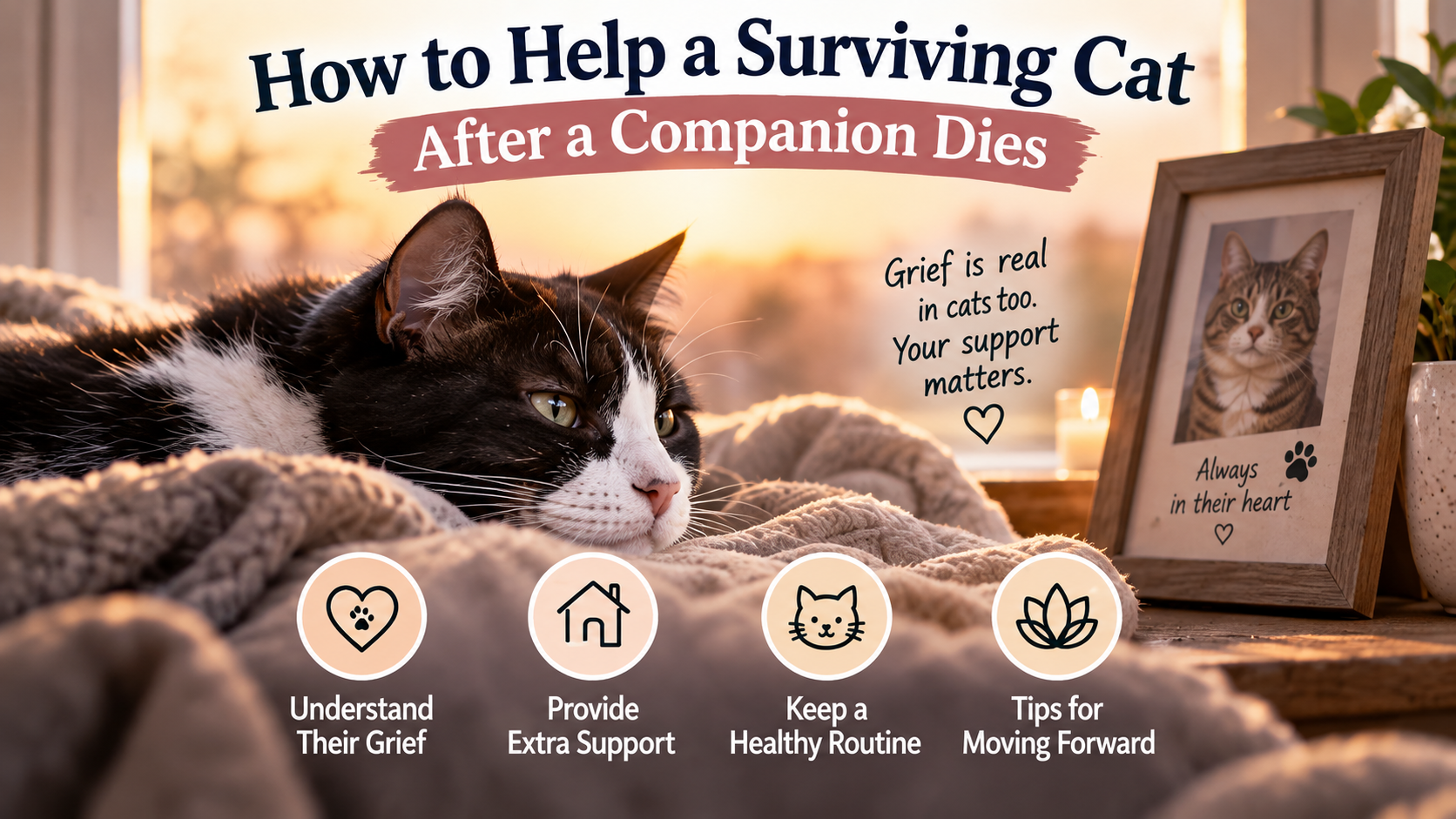
Losing a cat is painful for the whole household, and a surviving cat may also react to the sudden change. Some cats search the house, call more often, sleep differently, eat less, or become unusually clingy. Others seem completely normal at first. Cats show stress and loss in different ways, so there isn’t one “correct” grieving process.
The best way to help a surviving cat after a companion dies is to keep life predictable, watch closely for changes in health, and offer comfort without forcing attention. Most cats benefit from familiar routines, quiet companionship, and time to adjust. If your cat stops eating, seems ill, or has a major behavior change, contact your veterinarian rather than assuming grief is the only cause.
Do cats grieve when another cat dies?
Cats can react to the loss of a companion, especially when they shared a close bond or lived together for a long time. We can’t know exactly what a cat understands about death, but many cats clearly notice that a familiar animal, smell, sound, and routine are gone.
A surviving cat may respond to:
- The absence of their companion
- Changes in feeding, sleeping, or play routines
- The emotions and schedule changes of people in the home
- A different smell in the house after veterinary care or burial
- Less social contact or stimulation
Some cats appear to grieve for days or weeks. Others show little visible reaction. A quiet response does not mean your cat didn’t care, and a dramatic response does not necessarily mean something is medically wrong. Still, illness can look like grief, so physical changes deserve attention.
Signs that a surviving cat may be grieving or stressed
A cat coping with loss may show changes in behavior, appetite, sleep, or social habits. You might notice that your cat:
- Searches rooms, closets, or favorite sleeping spots
- Meows or calls more than usual
- Hides or spends more time alone
- Follows you around the house
- Wants more petting or becomes less interested in interaction
- Sleeps more or seems restless
- Plays less
- Eats less or becomes selective about food
- Grooms less or grooms excessively
- Has changes in litter box use
- Becomes more vocal, irritable, or startled
These signs can happen with grief, stress, pain, or illness. For example, reduced appetite can be emotionally related, but it can also signal a serious health problem. A cat that is not eating needs prompt veterinary advice, particularly if the change lasts more than a day or the cat is overweight, elderly, or already unwell.
What to do after a companion cat dies
1. Keep your cat’s routine as steady as possible
Predictability helps cats feel safe. Try to feed meals at the usual times, clean the litter box on the normal schedule, and keep familiar sleeping areas available. Avoid changing food, moving furniture, or starting a major home project at the same time unless you have to.
A steady routine might include:
- Feeding at familiar times
- Keeping food and water in their usual places
- Maintaining regular play sessions
- Opening and closing doors in the same general pattern
- Providing access to favorite beds, perches, and hiding places
You don’t need to make every moment exactly the same. The goal is to preserve the parts of daily life your cat already understands.
2. Give comfort, but let your cat choose the amount
Some cats want to sit beside you, sleep on your bed, or receive extra gentle attention. Others hide or prefer to be near you without being touched. Follow your cat’s lead.
Sit quietly in the same room, speak in a calm voice, and offer a hand for your cat to sniff. If they lean into you, pet them in areas they normally enjoy. If they turn away, flick their tail, flatten their ears, or leave, give them space.
Trying to pull a hiding cat out or constantly carrying them can add stress. Comfort works best when your cat can approach and retreat freely.
3. Make sure your cat has safe places to retreat
A grieving or stressed cat may need more alone time. Set up quiet hiding options such as:
- A covered cat bed
- A cardboard box with a soft blanket
- A carrier left open in a calm room
- A cat tree or elevated shelf
- A quiet corner away from visitors and loud appliances
Keep essential resources easy to reach. Your cat should not have to cross a noisy or crowded area to get to food, water, or the litter box. If you have more than one litter box, keep them clean and in low-traffic locations.
4. Encourage eating and drinking without pressure
Appetite changes are common after a stressful event, but a cat should not go without food for long. Offer the food your cat normally likes rather than making several sudden diet changes. You can try warming wet food slightly to make its smell stronger, but let it cool to a safe temperature before serving.
Other gentle approaches include:
- Offering small, fresh portions more often
- Feeding in a quiet room
- Keeping other pets away during meals
- Using a clean, familiar bowl
- Placing water in more than one calm location
Don’t force food into your cat’s mouth unless a veterinarian has specifically shown you how to do so. Forced feeding can increase fear and may cause complications. If your cat refuses food, vomits, becomes weak, or is drinking much more or less than usual, call your veterinarian.
5. Use gentle play and enrichment
Play can relieve tension and give your cat a familiar activity, but not every cat will want to play right away. Offer short, low-pressure sessions with a wand toy, soft toy, treat puzzle, or favorite game.
Start with a few minutes. Let your cat watch, approach, or stop whenever they want. Food puzzles and simple scent games can provide mental stimulation, while a window perch can give a cat something interesting to observe.
The purpose isn’t to distract your cat from the loss or force them to act cheerful. It is to keep their body and mind engaged while they adjust.
6. Spend calm, regular time together
Your presence may help, especially if your cat was used to having another animal nearby. You can read, watch television quietly, work at a desk, or sit on the floor near your cat. This gives companionship without demanding interaction.
Try to keep departures and arrivals calm. A cat may become more anxious if the household schedule changes dramatically or if people leave them alone for long periods. If you need to be away, ask a trusted person to maintain the usual feeding and care routine.
7. Be careful with your cat’s scent and belongings
You may want to wash every bed, remove toys, or rearrange the room after a companion dies. There is no universal rule about what to do with the deceased cat’s belongings. Some surviving cats seem interested in familiar scents, while others ignore them.
In general, avoid making many changes all at once. Leave familiar beds or blankets in place for a while if your cat uses them. When you eventually remove items, do it gradually rather than changing the entire environment in one day.
If the companion died from a contagious disease, follow your veterinarian’s cleaning and safety instructions instead. In that situation, infection control matters more than preserving scent.
Should a surviving cat see the body?
There is no reliable evidence that every cat needs to see or smell a deceased companion, and there is no guarantee that doing so will prevent grief. Some veterinary professionals and cat owners believe allowing a cat brief access to the body may help them notice that the companion is gone. Other cats may simply sniff, walk away, or show no obvious response.
If you are considering it, ask your veterinarian whether it is safe, especially if the cause of death might have been infectious or unknown. Never force a cat to approach the body. Let them investigate voluntarily in a quiet, supervised setting, and remove the body if they become frightened or distressed.
If your cat did not see the companion after death, don’t assume you caused a problem. Many cats adjust with steady care and time.
How long does cat grief last?
There is no fixed timeline. Some cats seem closer to normal within several days, while others need weeks or longer. Progress is often uneven. Your cat may eat normally one day, then hide or vocalize more the next.
Look for gradual improvement rather than a specific deadline. Helpful signs include:
- Appetite returning to normal
- More regular sleep
- Increased interest in play or surroundings
- Normal grooming
- Comfortable use of the litter box
- More relaxed body language
- Returning to familiar social habits
If your cat is getting worse, not improving, or developing physical symptoms, contact a veterinarian. Grief should not be used to explain away ongoing problems.
When should you call the veterinarian?
Call your veterinarian if your cat stops eating, has repeated vomiting or diarrhea, seems painful, has trouble breathing, becomes very weak, or has any other urgent symptom. Seek prompt advice for significant appetite loss even if you think sadness is the cause.
Arrange a veterinary appointment if you notice:
- Ongoing weight loss
- Persistent hiding or low energy
- Changes in urination or defecation
- Accidents outside the litter box
- Excessive grooming or bald patches
- Aggression that is unusual for your cat
- Continued vocalizing or restlessness
- A major change that does not begin to improve
Cats often hide illness, and stress can make an existing health problem more noticeable. A checkup can rule out pain, dental disease, digestive problems, urinary issues, or other conditions that may look like grief.
Get urgent help for these signs
Seek urgent veterinary care if your cat has difficulty breathing, collapses, cannot urinate, has repeated vomiting, appears severely weak, or may have eaten something toxic. A cat that is straining in the litter box, especially a male cat, may have a urinary blockage, which is an emergency.
Should you get another cat for the surviving cat?
Usually, don’t rush to adopt another cat simply to replace the companion. A new animal may provide company for some cats, but it can also create extra stress while your cat is already adjusting. Cats are individuals, and a cat that lived peacefully with one companion may not welcome a new one immediately.
Wait until your household and surviving cat have had time to settle. Then consider:
- Your cat’s age, health, and personality
- Whether they generally enjoy other cats
- Your ability to introduce cats slowly
- Whether you can support separate food, litter, resting, and hiding areas
- The new cat’s energy level and temperament
If you adopt, use a gradual introduction. Start with separate rooms, exchange scents safely, allow visual contact through a barrier, and move forward only when both cats are relaxed. Never place two unfamiliar cats together and expect them to work it out.
Common mistakes to avoid
Assuming every behavior is grief
A cat that hides or stops eating may be grieving, but those signs can also point to illness. Monitor physical health and speak with a veterinarian when changes are significant or persistent.
Overhandling your cat
Extra affection is helpful only when your cat wants it. Respect signals that mean “not right now.” Quiet company often works better than constant touching.
Changing everything at once
Removing all of the companion’s belongings, moving furniture, changing food, and inviting many visitors can overwhelm a stressed cat. Make necessary changes gradually.
Punishing accidents or vocalizing
Scolding can increase fear and does not teach a cat how to cope with loss. Clean accidents with an appropriate odor-removing cleaner, check for medical causes, and focus on reducing stress.
Expecting a fast recovery
Your cat may not return to their old behavior on a neat schedule. Improvement can come in small steps, and some changes may become part of their new routine.
A simple daily plan for a grieving cat
A basic plan can make care easier when you’re also dealing with your own loss:
- Morning: Offer fresh food and water, clean the litter box, and check appetite and bathroom habits.
- During the day: Keep a quiet hiding place available and spend a few calm minutes nearby.
- Afternoon or evening: Offer gentle play or a food puzzle if your cat seems interested.
- Bedtime: Keep the usual sleep routine and check that your cat can reach water and the litter box.
- Each day: Note eating, drinking, litter box use, energy, and behavior so you can spot a pattern.
This routine isn’t meant to force your cat to move on. It provides stability while they and the rest of the household adjust.
Helping yourself helps your surviving cat
Cats can respond to changes in a household. If you’re grieving, your schedule, energy, and interactions may naturally be different. You don’t have to hide your sadness, but try to keep basic care consistent. Ask a friend or family member for help with meals, litter boxes, transportation, or veterinary appointments if you need it.
Give yourself permission to grieve too. Supporting your cat does not require you to act as if everything is normal. It simply means providing food, safety, routine, and medical attention when needed.
Final thoughts
The kindest way to help a surviving cat after a companion dies is to offer patience and stability. Keep familiar routines, provide quiet companionship, respect your cat’s need for space, and encourage food, water, play, and normal litter box habits without pressure.
Most importantly, watch for signs that could indicate illness rather than grief. If your cat stops eating, seems physically unwell, or has a major behavior change, contact your veterinarian. With time and gentle support, many cats find a new sense of comfort in their changed home.