
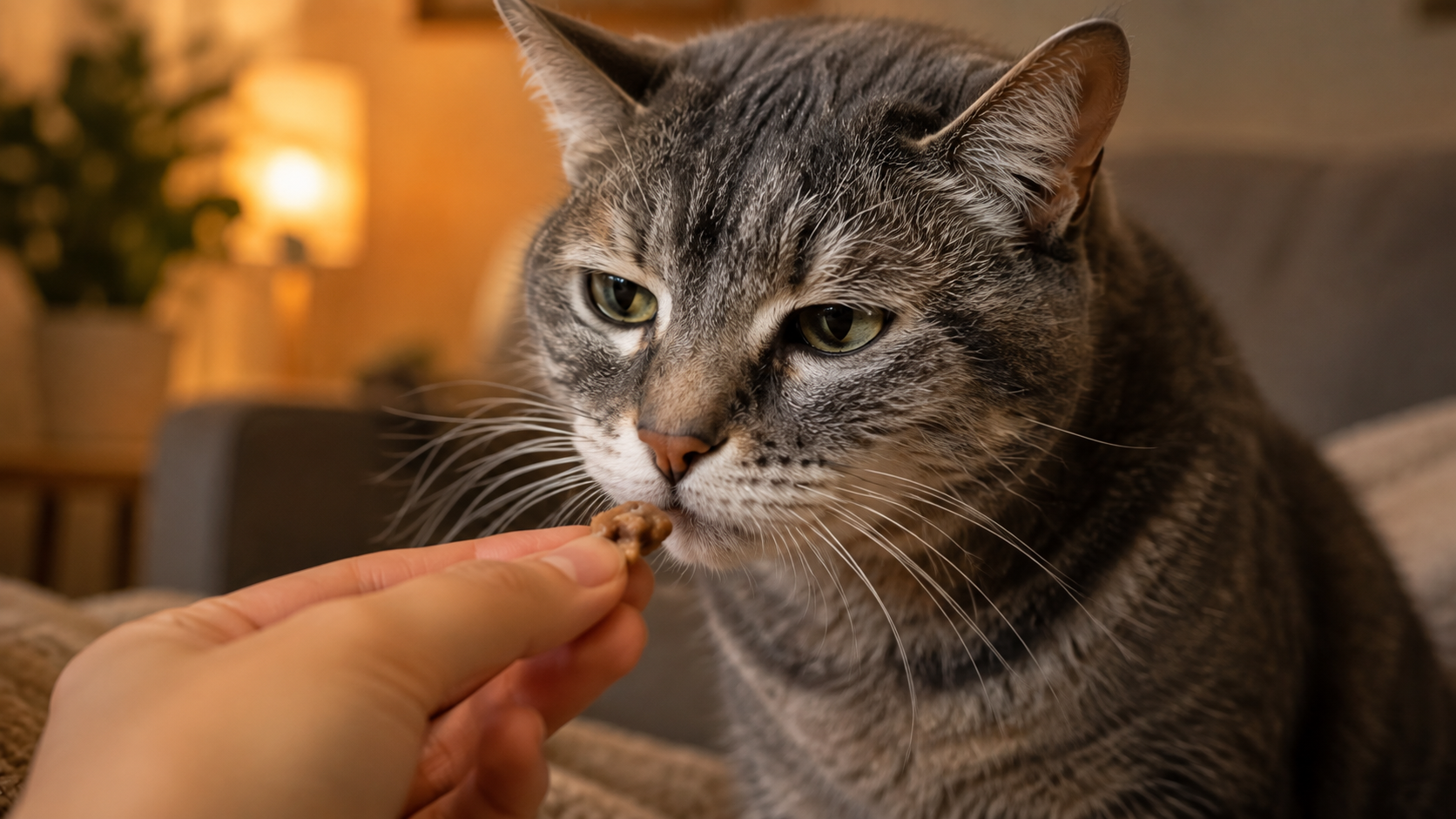
Choosing the best treats for a senior cat isn’t about buying a product labeled “senior.” The healthiest option depends on your cat’s age-related needs, including dental health, body weight, digestive health, and any medical conditions.
Here’s a quick overview.
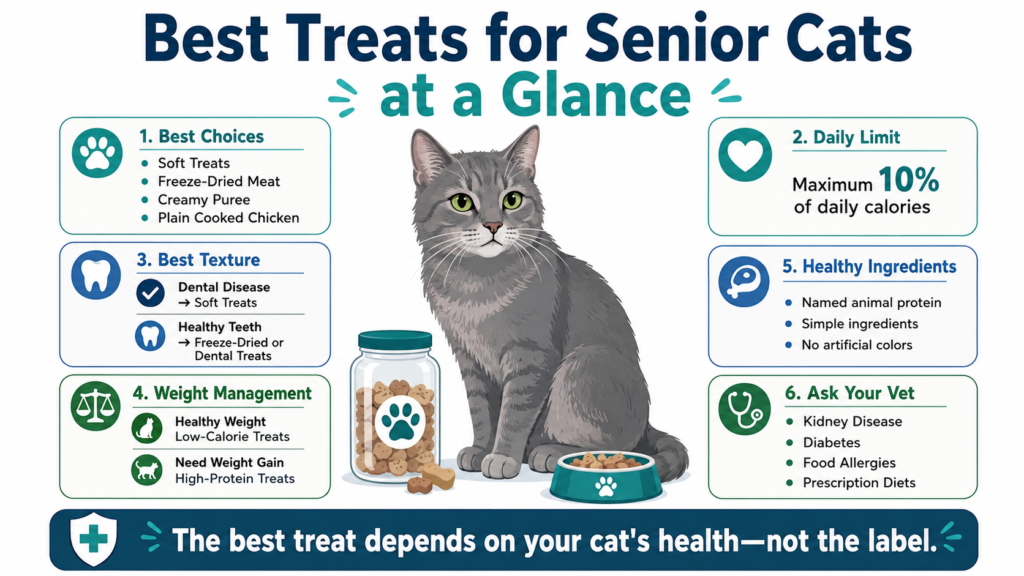
| Dental disease or missing teeth | Soft or creamy treats that are easy to chew |
| Weight management | Low-calorie treats with controlled portions |
| Weight gain | Protein-rich, calorie-dense treats recommended by your veterinarian |
| Sensitive stomach | Single-ingredient freeze-dried treats or plain cooked meat |
| Kidney disease | Veterinarian-approved treats lower in phosphorus and sodium |
| Diabetes | High-protein, low-carbohydrate treats |
At a Glance
- Choose treats made with simple, high-quality ingredients.
- Keep treats to about 10% or less of your cat’s daily calories.
- Adjust treat choices if your cat develops kidney disease, diabetes, dental disease, or obesity.
- Soft treats are usually easier for older cats to eat than hard, crunchy treats.
- When in doubt, ask your veterinarian before introducing a new treat.
Vet Tip
Treats should never replace a complete and balanced diet. For senior cats, treats are best used for bonding, training, medication, or occasional enrichment, not as a major source of daily nutrition.
Why Treat Choice Matters More as Cats Age
Most cats love treats.
But once your cat reaches her senior years, treat selection becomes more than just choosing something she’ll enjoy.
As cats age, they become more likely to develop:
- Dental disease
- Arthritis
- Kidney disease
- Diabetes
- Sensitive digestion
- Reduced activity
- Weight gain or unexplained weight loss
A treat that’s perfectly suitable for a healthy three-year-old cat may no longer be the best option for a thirteen-year-old cat managing kidney disease or painful teeth.
That’s why choosing treats based on your cat’s individual health needs is far more important than simply buying a package with the word Senior printed on the front.
What Makes a Good Treat for a Senior Cat?
Before comparing different treat types, it’s helpful to understand what veterinarians generally look for in a healthy treat for older cats.
The best treats typically have these characteristics:
- Low enough in calories to avoid unnecessary weight gain
- Easy to chew for cats with dental disease or missing teeth
- Made with a named animal protein as the primary ingredient
- Minimal artificial colors, flavors, or unnecessary fillers
- Appropriate for your cat’s medical conditions
- Given in moderation alongside a complete and balanced diet
A healthy senior cat doesn’t automatically need a special “senior treat.
Instead, the right choice depends on the individual cat.
For example:
- A healthy senior cat may do perfectly well with the same high-quality treats she enjoyed as an adult.
- A cat with dental disease may need soft or creamy treats instead of crunchy ones.
- A diabetic cat often benefits from treats that are high in protein and lower in carbohydrates.
- A cat with kidney disease may require veterinarian-approved treats formulated with appropriate phosphorus and sodium levels.
The label on the package is much less important than what’s inside it.
Types of Treats for Senior Cats
Senior cat treats come in several different forms, each with advantages and disadvantages depending on your cat’s health.
| Soft or chewy treats | Cats with dental disease, missing teeth, or chewing discomfort | Check the ingredient list for excess sodium, sugar, or artificial additives. |
| Freeze-dried meat treats | Healthy cats that prefer simple, high-protein snacks | Usually made with a single ingredient but can be surprisingly calorie-dense. |
| Dental treats | Cats without advanced dental disease who need additional plaque control | Helpful for some cats but not a replacement for professional dental care. |
| Low-calorie treats | Overweight or less active senior cats | Portion control still matters. |
| Creamy puree treats | Picky eaters, medication administration, or cats needing extra moisture | Often higher in calories than expected, so feed in moderation. |
| Pill-pocket treats | Cats taking medication | Best used when needed rather than as an everyday snack. |
| Plain cooked chicken or fish | Most healthy senior cats | Must be fully cooked, boneless, and free from seasoning, onion, or garlic. |
No single treat is ideal for every cat.
The healthiest option always depends on your cat’s overall health, lifestyle, and veterinary recommendations.
Which Treat Texture Is Best?
Texture can be just as important as ingredients.
Many senior cats gradually develop dental disease, making certain treats uncomfortable to chew.
| Soft Chews | Cats with mild dental disease or older cats that chew more slowly |
| Creamy Treats | Picky eaters, hydration support, medication, and cats with missing teeth |
| Freeze-Dried Meat | Healthy cats that enjoy chewing and need high-protein snacks |
| Crunchy Treats | Healthy cats with good dental health only |
| Cooked Meat Pieces | Most healthy senior cats when served plain and in moderation |
If your cat hesitates to chew, drops treats from her mouth, or suddenly avoids crunchy foods, schedule a veterinary dental examination instead of simply switching treats.
Those changes often indicate oral pain rather than pickiness.
How Many Treats Can a Senior Cat Have Each Day?
Treats should be exactly what their name suggests:
A treat—not a meal.
A good rule of thumb is:
Treats should provide no more than about 10% of your cat’s total daily calorie intake.
For example:
If your senior cat needs around 200 calories per day, treats should generally contribute no more than about 20 calories, with the remaining calories coming from a complete and balanced cat food.
Overfeeding treats can:
- Reduce appetite for balanced meals.
- Contribute to obesity
- Make weight management more difficult.
- Increase begging behavior
- Unbalance the overall diet.
Even healthy treats should be fed in moderation.
Choosing Treats Based on Your Senior Cat’s Health
The healthiest treat for one senior cat may not be the right choice for another.
Age alone doesn’t determine which treats are best. Your cat’s body condition, medical history, dental health, and activity level all play an important role.
Instead of asking,
“What’s the best senior cat treat?”
a better question is,
“What’s the best treat for my senior cat’s specific needs?”
Treats for Cats Managing Their Weight
As cats age, they often become less active, making weight gain much more common than it was during adulthood.
Treats may seem insignificant, but those extra calories can add up surprisingly fast.
As a general guideline:
Treats should make up no more than about 10% of your cat’s daily calorie intake.
Better Treat Choices for Different Weight Goals
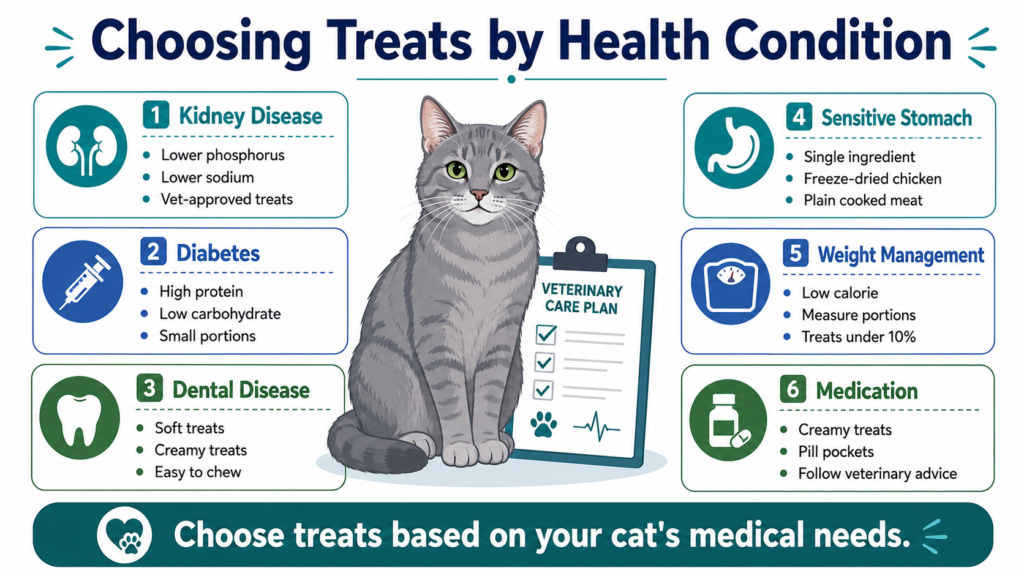
| Healthy weight | Standard treats in moderation |
| Overweight | Low-calorie treats or small pieces of freeze-dried chicken |
| Needs to gain weight | Higher-protein treats recommended by your veterinarian |
| Obesity management | Reduce treat frequency and measure portions carefully |
If your cat is already overweight, it’s usually better to reduce the number of treats rather than eliminating them.
Small rewards can still strengthen your bond while supporting a healthy weight.
Treats for Cats with Sensitive Stomachs
Some senior cats become more sensitive to dietary changes as they age.
Introducing rich or heavily flavored treats too quickly can cause:
- Vomiting
- Loose stools
- Excessive gas
- Reduced appetite
For cats with sensitive digestion, simpler is usually better.
Good Choices
- Freeze-dried chicken
- Freeze-dried turkey
- Freeze-dried salmon
- Plain cooked chicken
- Plain cooked turkey
Choose treats made with a single protein source whenever possible.
Whenever you introduce a new treat, offer only a small amount first and monitor your cat for the next 24 to 48 hours.
Treats for Cats with Kidney Disease, Diabetes, or Other Medical Conditions
Many senior cats eventually develop chronic medical conditions.
When that happens, treat selection becomes more important than ever.
| Chronic Kidney Disease (CKD) | Choose veterinarian-approved treats that are lower in phosphorus and sodium whenever possible. |
| Diabetes Mellitus | High-protein, low-carbohydrate treats are generally preferred over sugary or starchy snacks. |
| Urinary Tract Disease | Follow your veterinarian’s advice if your cat eats a prescription urinary diet. |
| Food Allergies | Choose single-ingredient or limited-ingredient treats to reduce the chance of triggering a reaction. |
| Dental Disease | Soft treats are usually more comfortable than crunchy treats. |
| Arthritis | Texture matters more than ingredients. Easy-to-eat treats encourage regular eating. |
Important
Never assume a treat labeled “natural” or “healthy” is automatically appropriate for a cat with a medical condition.
Always follow your veterinarian’s recommendations if your cat is eating a prescription diet.
Can Homemade Treats Be a Good Choice?
Yes.
Homemade treats can be an excellent option because you know exactly what’s in them.
Simple homemade treats often contain fewer unnecessary additives than many commercial products.
Some good examples include:
- Plain boiled chicken
- Plain baked turkey
- Plain cooked salmon
- Plain cooked white fish
Always remember:
- No onion
- No garlic
- No salt
- No butter
- No seasoning
- No sauces
- No cooked bones
Treats don’t need to be nutritionally complete because they should make up only a small portion of your cat’s overall diet.
However, homemade meals are different and require careful nutritional balancing.
Treats Senior Cats Should Avoid
Not every treat that’s safe for people is safe for cats.
Some foods can be toxic, while others provide unnecessary calories or unhealthy ingredients.
Avoid giving your senior cat:
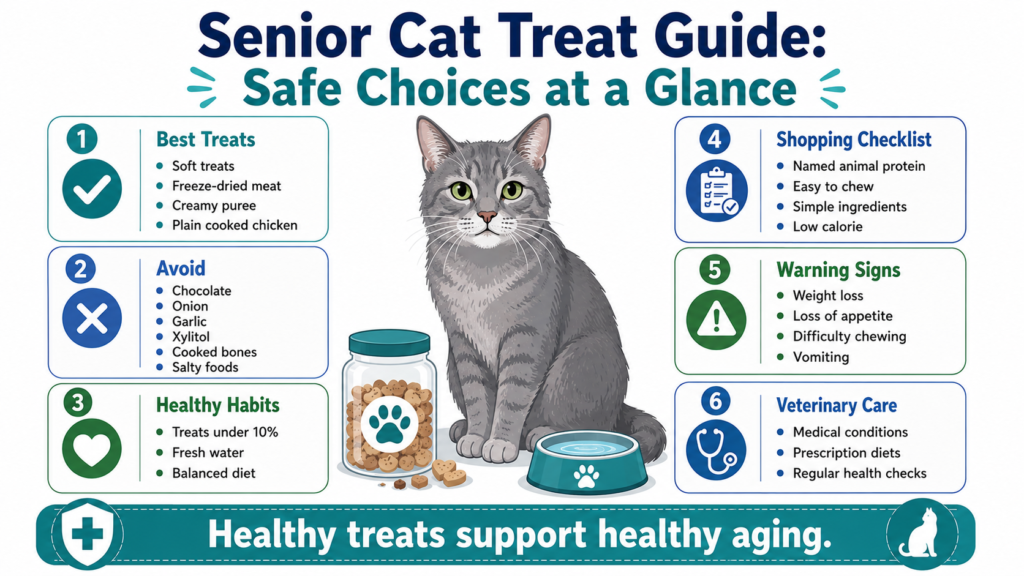
| Chocolate | Toxic to cats |
| Onion and garlic | Damage red blood cells |
| Grapes and raisins | May cause kidney injury |
| Xylitol | Dangerous sweetener |
| Cooked bones | Splintering and choking risk |
| Fat trimmings | Can trigger digestive upset or pancreatitis |
| Highly salted foods | Excess sodium isn’t ideal for older cats |
| Raw fish regularly | May contribute to nutritional imbalances if fed frequently |
| Seasoned meats | Often contain garlic, onion, or excess salt |
When in doubt, choose plain, cat-safe ingredients instead of sharing human snacks.
Can Treats Help Increase Water Intake?
Yes.
Some treats support hydration, especially in cats that don’t drink enough water.
Good hydration-friendly options include:
- Creamy puree treats
- Meat broth made specifically for cats
- Plain wet food served as a small reward.
- Treats mixed with a teaspoon of warm water
These options may be especially helpful for picky senior cats or those eating less than usual.
Recommended Treat Types
Rather than focusing on one specific brand, choose treats based on ingredient quality and your cat’s individual needs.
Examples include:
Soft Treats
Ideal for:
- Dental disease
- Missing teeth
- Older cats with chewing discomfort
Freeze-Dried Meat Treats
Ideal for:
- High-protein rewards
- Simple ingredients
- Sensitive stomachs
Creamy Puree Treats
Ideal for:
- Medication
- Hydration
- Picky eaters
Dental Treats
Ideal for:
- Healthy cats needing extra plaque control
Remember:
Dental treats support oral hygiene but do not replace professional dental care.
How Many Calories Are in Common Cat Treats?
Treat calories vary more than many owners realize.
Here’s a general comparison.
| Freeze-dried chicken cube | 2–3 kcal |
| Soft chewy treat | 2–4 kcal |
| Creamy puree tube | 6–12 kcal |
| Dental treat | 2–5 kcal |
| Small piece of cooked chicken | 3–5 kcal |
Checking the feeding guidelines on the package helps prevent accidental overfeeding.
Common Mistakes When Giving Treats to Senior Cats
Even healthy treats can become unhealthy if they’re given too often or without considering your cat’s age and medical needs.
Here are some of the most common mistakes cat owners make.
- Giving treats throughout the day instead of using them intentionally.
- Choosing treats based on attractive packaging rather than the ingredient list.
- Feeding hard, crunchy treats to cats with dental pain.
- Forgetting to count treat calories as part of the daily calorie intake.
- Assuming all treats labeled “natural” or “senior” are automatically healthier.
- Continuing the same treats after a diagnosis of kidney disease, diabetes, or food allergies.
- Introducing several new treats at once making it difficult to identify digestive reactions.
- Using treats to replace balanced meals when a cat becomes a picky eater.
Small adjustments in treat choices often have a greater impact on long-term health than switching brands frequently.
Myth vs. Fact
There are plenty of misconceptions about giving treats to senior cats. Understanding the facts helps you make safer choices.
| “Healthy treats don’t count as calories.” | Every treat contributes to your cat’s daily calorie intake, even if it’s marketed as healthy or natural. |
| “Dental treats replace brushing and professional dental care.” | Dental treats may help reduce plaque, but they can’t treat existing dental disease or replace veterinary dental cleanings. |
| “All senior cats need special senior treats.” | Many healthy senior cats can safely enjoy regular high-quality treats. The right choice depends on the cat’s health, not the label. |
| “Homemade treats are always safer than store-bought treats.” | Homemade treats can be excellent, but only if they’re prepared with cat-safe ingredients and without seasoning, onion, or garlic. |
| “If my cat begs for treats, she’s still hungry.” | Cats often ask for treats out of habit, curiosity, or attention, not because they need more calories. |
Practical Tips for Giving Treats Safely
Treats should support your cat’s health, not interfere with it.
Follow these simple habits to make treat time both enjoyable and safe.
- Keep treats to 10% or less of your cat’s daily calorie intake.
- Read the ingredient list instead of relying on marketing claims.
- Choose the texture that matches your cat’s dental health.
- Introduce one new treat at a time and monitor for digestive upset.
- Store treats in a cool, dry place and reseal the package after opening.
- Discard treats that are expired or show signs of spoilage.
- Use treats for training, bonding, medication, or occasional enrichment rather than constant snacking.
- Always provide fresh drinking water alongside treats.
Senior Cat Treat Shopping Checklist
Before buying a new treat, ask yourself these questions.
✅ Is the first ingredient a named animal protein?
✅ Is it easy for my cat to chew?
✅ Does it fit my cat’s medical needs?
✅ Is it reasonably low in calories?
✅ Does it avoid unnecessary artificial colors and fillers?
✅ Is the portion size clearly listed?
✅ Would my veterinarian recommend it for my cat’s condition?
If you answer “yes” to most of these questions, you’ve probably found a good option.
Frequently Asked Questions
What are the healthiest treats for senior cats?
Treats made with simple, high-quality ingredients and a named animal protein are generally the healthiest choice. The best option also depends on your cat’s dental health, body weight, and any medical conditions.
How many treats can a senior cat have each day?
As a general guideline, treats should provide no more than about 10% of your cat’s total daily calories.
Are soft treats better than crunchy treats?
Often, yes.
Soft treats are usually easier for older cats with dental disease, missing teeth, or chewing discomfort.
Are freeze-dried treats healthy?
Many freeze-dried treats contain only one ingredient, making them a good option for healthy cats and those with sensitive stomachs.
Because they’re protein-rich, remember to count their calories as part of your cat’s daily intake.
Can I give my senior cat human food as a treat?
Sometimes.
Plain cooked chicken, turkey, or fish without seasoning can be suitable for many healthy cats.
Avoid foods containing onion, garlic, salt, butter, sauces, or cooked bones.
Can cats with kidney disease still have treats?
Yes, but treat selection becomes more important.
Choose treats that fit your veterinarian’s recommendations and avoid assuming every commercial treat is appropriate.
Can diabetic cats have treats?
Yes.
High-protein, low-carbohydrate treats are generally preferred, but your veterinarian should guide treat selection based on your cat’s treatment plan.
Are creamy treats healthy?
Creamy treats can be useful for hydration, picky eaters, and medication, but they often contain more calories than owners expect.
Offer them in moderation.
Should I stop giving treats after my cat is diagnosed with a medical condition?
Not necessarily.
Many cats with kidney disease, diabetes, or food allergies can still enjoy treats, but the type of treat may need to change.
How should I store cat treats?
Most dry treats should be kept in a cool, dry place with the package tightly sealed after opening.
Some creamy treats require refrigeration after opening, so always follow the manufacturer’s instructions.
Final Takeaways
Choosing treats for a senior cat isn’t about finding the most expensive product or the one with the word “Senior” on the package.
Instead, focus on your cat’s individual needs.
Remember these key points:
- Choose treats that are easy to chew, made with high-quality ingredients, and appropriate for your cat’s overall health.
- Keep treats to 10% or less of daily calorie intake.
- Select treat textures that match your cat’s dental comfort.
- Cats with kidney disease, diabetes, or food allergies often need more carefully selected treats.
- Homemade treats can be a safe option when prepared with plain, fully cooked, unseasoned ingredients.
- Always read the ingredient list rather than relying on marketing claims.
- Monitor your cat’s weight regularly and adjust treat portions if needed.
- When introducing a new treat, start with a small amount and watch for digestive changes.
Treats should add enjoyment to your senior cat’s life, not unnecessary calories or health risks. By choosing wisely and feeding them in moderation, you can reward your cat while still supporting healthy aging.