
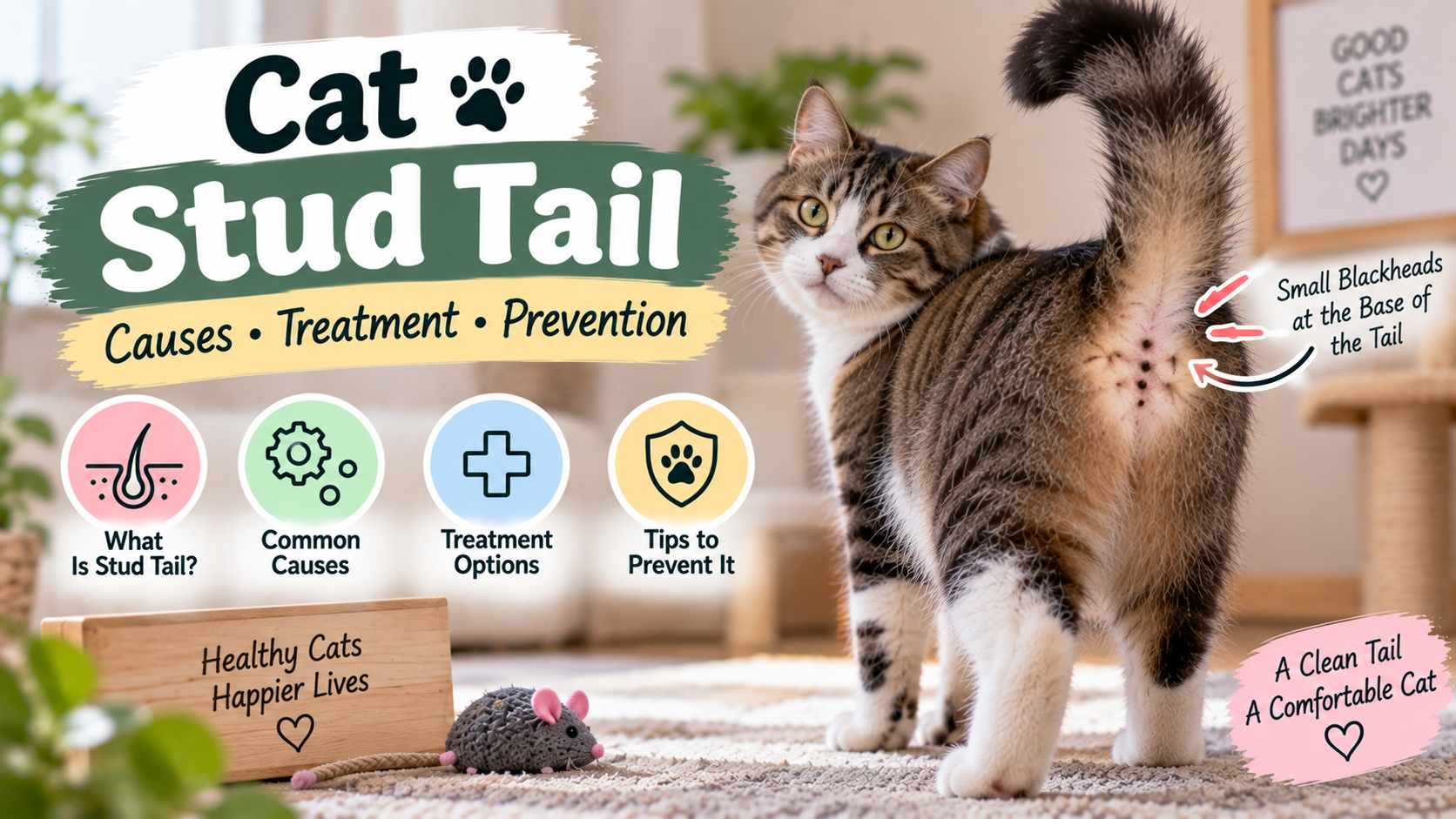
If your cat has greasy fur, blackheads, crusts, or hair loss near the base of the tail, stud tail may be the reason. Cat stud tail is a skin problem caused by overactive oil glands around the tail base. It is more common in unneutered male cats, but females and neutered cats can develop it too.
Mild cases may improve with gentle cleaning and a cat-safe degreasing product. However, irritated skin can become infected, and similar signs may be caused by fleas, allergies, mites, or another skin condition. A veterinarian can confirm the cause and recommend the right treatment.
What Is Cat Stud Tail?
Stud tail, also called supracaudal gland hyperplasia, happens when the sebaceous glands near the top of the tail produce too much oil. These glands are sometimes called the tail glands. The extra oil builds up on the skin and fur, making the area look greasy or dirty.
The problem usually appears on the upper surface of the tail, close to the base. It can spread onto the lower back in some cats. You may see:
- Oily, clumped, or yellowish fur
- Blackheads or small dark spots
- Greasy flakes or crusts
- Red, irritated skin
- Small bumps or pimples
- Thinning fur or bald patches
- An unpleasant smell if bacteria or yeast are present
- More scratching, licking, or chewing around the tail
The word “stud” comes from the condition’s connection with intact male cats. Hormones can stimulate the oil glands, especially in male cats that have not been neutered. Still, stud tail is not limited to male cats, and hormonal status is not the only possible factor.
Cat Stud Tail Causes
Hormonal activity
The most recognized cause is increased activity in the tail glands. In intact male cats, sex hormones may encourage these glands to produce more oil. That is why stud tail is often first noticed in young or adult male cats that have not been neutered.
Neutering may reduce oil production in some cats, but it is not a guaranteed cure. A cat can continue to have oily skin after surgery, particularly if the condition has been present for a long time or another skin issue is involved.
Overactive sebaceous glands
Some cats simply produce more skin oil than others. Their tail glands may stay overactive even when hormone levels are not the main cause. Individual skin type, genetics, age, and overall health may all play a part.
Poor grooming or difficulty reaching the tail
Cats usually keep their coats clean, but an oily patch can be hard to remove through normal grooming. Overweight cats, older cats, and cats with arthritis may also struggle to groom the base of the tail.
This does not mean your cat is dirty or that you have failed to care for them. Once excess oil collects, it can stick to the hair and create a cycle of buildup, irritation, and more debris.
Secondary bacterial or yeast infection
Oil, dead skin, and trapped debris can create a favorable environment for microorganisms. If the skin becomes infected, you may notice redness, swelling, pimples, discharge, crusting, odor, or tenderness.
An infection can make the area itchier and may cause your cat to lick or chew the tail. At that point, cleaning alone may not be enough.
Fleas, allergies, or other skin conditions
Not every greasy tail is stud tail. Flea allergy, food allergy, environmental allergy, mites, ringworm, and other forms of dermatitis can cause itching, hair loss, scabs, or inflamed skin around the tail and back.
Flea allergy is especially worth considering because some cats react strongly to only a few bites. You may not see live fleas, even when fleas are causing the problem. A veterinarian may need to examine the skin, check for parasites, and perform tests if the diagnosis is unclear.
What Does Stud Tail Look Like?
Stud tail usually appears as an oily, dirty-looking patch at the top of the tail near its base. On cats with dark fur, the greasy texture may be easier to notice than the color change. On light-colored cats, the fur may look yellow, brown, or gray.
The appearance can change as the condition progresses:
| Stage or severity | What you may notice | What it may mean |
|---|---|---|
| Mild | Greasy fur, small blackheads, little or no redness | Excess oil without obvious infection |
| Moderate | Crusting, flakes, bumps, hair thinning, more scratching | Ongoing irritation or inflammation |
| Severe | Pain, marked redness, pus, odor, open sores, spreading hair loss | Possible infection or another skin disease |
Stud tail can resemble feline acne because both conditions may involve oily skin and blackheads. Feline acne more often affects the chin and lips, while stud tail is concentrated near the tail base. A cat can have both problems at the same time.
Is Stud Tail Painful or Dangerous?
Mild stud tail is often more uncomfortable or irritating than painful. Some cats show no obvious signs that it bothers them. Others scratch, lick, or chew the area.
Untreated inflammation can lead to painful infection, open sores, or deeper skin damage. The condition itself is not usually an emergency, but your cat should be examined promptly if the skin is very red, swollen, bleeding, oozing, or painful.
Seek veterinary advice soon if your cat:
- Stops eating or seems unusually tired
- Has a fever or appears generally unwell
- Develops pus, bleeding, or a strong odor
- Has rapidly spreading hair loss or sores
- Cries, hides, or reacts painfully when the tail is touched
- Keeps chewing the area and damages the skin
- Has a weakened immune system or another serious illness
How a Veterinarian Diagnoses Stud Tail
A veterinarian will usually examine the tail, skin, and coat and ask when the changes started. They may also ask about grooming, itching, parasite prevention, diet, household changes, and whether your cat is neutered.
If the skin looks infected or the diagnosis is uncertain, testing may be recommended. Depending on the signs, this can include:
- A skin scraping to look for mites
- A tape or swab sample to check for bacteria or yeast
- A fungal test if ringworm is a concern
- Flea combing and a review of parasite control
- Additional testing for allergies or other skin conditions
A proper diagnosis matters because the treatment for a bacterial infection is different from the treatment for mites, ringworm, or an allergy. Avoid assuming every dirty-looking tail is stud tail.
Cat Stud Tail Treatment Options
Treatment depends on how oily and irritated the skin is, whether an infection is present, and what caused the problem.
1. Medicated or degreasing shampoo
For mild cases, a veterinarian may recommend a cat-safe shampoo that removes excess oil. Some products are designed to degrease the coat, while others contain ingredients that help control bacteria or yeast.
Use only products labeled for cats or specifically recommended by your veterinarian. Cats lick their coats, so human acne products, household degreasers, essential oils, and harsh soaps can be unsafe or irritating.
When bathing the area:
- Follow the product directions and dilute it if instructed.
- Use lukewarm water, not hot water.
- Keep shampoo away from the eyes, nose, mouth, and inside of the ears.
- Massage gently rather than scrubbing the skin.
- Rinse very well so no residue remains.
- Dry your cat thoroughly and keep them warm until the coat is dry.
Many cats dislike baths. If your cat becomes highly distressed or aggressive, stop and ask a veterinarian or professional groomer for help. A stressful bath can also lead to scratches or bites.
2. Wipes or spot cleaning
For a small, mildly oily patch, your veterinarian may suggest cat-safe cleansing wipes or a damp cloth followed by careful drying. This can be easier than bathing the whole cat.
Do not pick at blackheads or crusts. Squeezing the area can cause pain, bleeding, and infection. If crusts are stuck to the hair, soften them gently rather than pulling them off.
3. Antibiotics or antifungal treatment
If testing shows a bacterial or yeast infection, your veterinarian may prescribe topical or oral medication. The choice depends on the organism, the severity of the infection, and whether your cat can safely use the medication.
Give prescribed medicine exactly as directed. Do not use leftover antibiotics, human creams, or another pet’s medication. Some human topical products are dangerous if a cat licks them.
4. Flea and parasite control
If fleas or mites are contributing to the skin problem, your cat needs an appropriate parasite treatment. In a home with more than one pet, the veterinarian may recommend treating other animals as well.
Never apply a dog flea product to a cat unless the label clearly says it is safe for cats. Products containing certain insecticides can cause serious poisoning in cats.
5. Neutering when appropriate
For an intact male cat, neutering may reduce hormone-driven oil production and can lower the chance of recurring stud tail. It may not clear the condition by itself, especially if infection, allergies, or another skin problem is also present.
Your veterinarian can discuss the benefits, timing, and expected results for your cat.
6. Managing repeat episodes
Some cats need ongoing care even after the skin improves. A maintenance plan may include periodic cleansing, regular flea prevention, coat brushing, and checks of the tail base.
If the problem keeps returning, ask whether your cat needs further testing. Recurring symptoms may point to allergies, chronic infection, grooming difficulty, or another condition rather than simple oil buildup.
Can You Treat Stud Tail at Home?
You can sometimes manage a mild, uncomplicated case at home, but it is best to confirm the diagnosis first. Home care is most reasonable when the skin is only mildly greasy and your cat has no pain, swelling, open sores, discharge, or significant hair loss.
Safe steps include:
- Arrange a veterinary check if you are not sure it is stud tail.
- Keep the coat clean with a cat-safe product recommended by a professional.
- Use gentle wiping instead of forceful scrubbing.
- Wash bedding and keep the resting area clean.
- Check regularly for redness, scabs, bumps, odor, or worsening hair loss.
- Prevent your cat from repeatedly chewing the area.
Contact your veterinarian if the skin does not improve, gets worse, or comes back often. A product that removes oil may make the fur look better without treating an underlying infection or allergy.
What Not to Use on a Cat’s Stud Tail
Several common home remedies can irritate the skin or harm a cat if swallowed. Avoid using:
- Human acne medication
- Rubbing alcohol
- Hydrogen peroxide
- Bleach or household cleaners
- Essential oils
- Strong degreasers
- Human shampoo unless a veterinarian specifically approves it
- Dog-only flea products
- Corticosteroid or antibiotic creams without veterinary guidance
Cats groom by licking their fur, so anything placed on the skin may be swallowed. If you have already used a potentially toxic product and your cat is drooling, vomiting, shaking, weak, unsteady, or acting strangely, contact a veterinarian or animal poison service immediately.
How to Help Prevent Stud Tail From Coming Back
Prevention depends on the cause, but these habits may help:
Keep the tail base clean
If your veterinarian recommends routine cleaning, follow a regular schedule rather than waiting for heavy buildup. Over-cleaning can dry and irritate the skin, so more is not always better.
Maintain parasite prevention
Use a reliable flea and parasite plan recommended for your cat. Check with your veterinarian about the safest product and schedule.
Support healthy grooming
Brush your cat gently if they tolerate it, especially if they have long or thick fur. If your cat is overweight, painful, or having trouble grooming, address the underlying problem with veterinary guidance.
Watch for early changes
Once a week, look briefly at the tail base during normal grooming or petting. Early signs such as a greasy patch or a few blackheads are easier to manage than crusted, infected skin.
Keep stress low during care
Use short sessions, treats, and calm handling. If your cat becomes upset, take a break. Forcing repeated baths can make future treatment harder.
Stud Tail vs. Other Tail and Skin Problems
Several conditions can look similar. A greasy patch with blackheads supports stud tail, but it does not prove it.
- Fleas or flea allergy: often cause intense itching, scabs, and hair loss around the tail base and lower back.
- Ringworm: may cause circular areas of hair loss and scaling and can spread to people or other pets.
- Mites: may cause itching, crusts, and inflammation.
- Allergies: can cause itching in several body areas, not only the tail.
- Feline acne: more commonly affects the chin but can occur with other oily skin problems.
- Skin infection: may cause redness, swelling, pus, odor, and pain.
- Trauma: a bite, scratch, or tail injury can cause swelling or a sore that needs different care.
If your cat’s skin problem is spreading or does not respond to basic care, a veterinary examination is the safest next step.
The Bottom Line
Cat stud tail is an oily skin condition that usually affects the tail base. Hormones, overactive oil glands, grooming difficulty, infection, fleas, allergies, and other skin problems can all be involved. Mild cases may improve with a cat-safe cleaning plan, but infected, painful, recurring, or severe cases need veterinary care.
Do not squeeze blackheads or use human skin products. Watch for redness, sores, discharge, odor, pain, and spreading hair loss. With the right diagnosis and treatment, most cats can be kept comfortable and their coat can return to a healthier condition.