
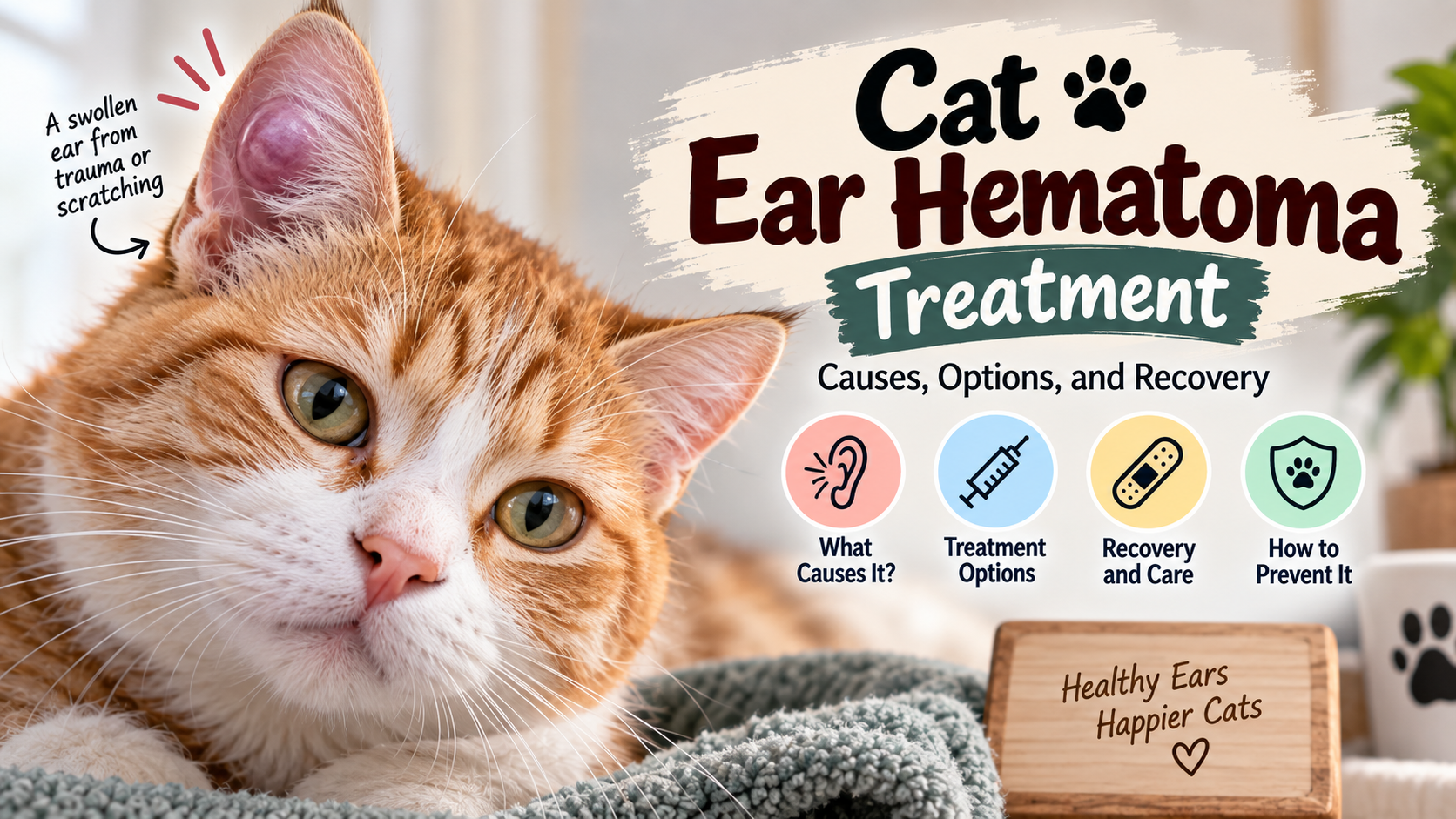
A cat ear hematoma is a pocket of blood that forms inside the ear flap, usually after small blood vessels break. It can make the ear look swollen, thick, puffy, or folded over. The swelling may be soft and fluid-filled or firm and warm.
The safest cat ear hematoma treatment is veterinary treatment. Ear hematomas are painful, and draining the swelling without treating the reason it formed can lead to infection, scarring, or a quick return of the swelling. A veterinarian will usually look for an underlying ear problem, such as mites, infection, allergies, or an injury, before recommending the best treatment.
Some small hematomas may improve with medication and close monitoring. Larger, painful, or recurring hematomas often need a procedure to drain the blood and keep the ear flap from filling again.
What Is a Cat Ear Hematoma?
An ear hematoma is bleeding between the layers of a cat’s ear flap. The ear flap, also called the pinna, contains skin, cartilage, and small blood vessels. When those vessels break, blood collects in the space between the skin and cartilage.
The swelling may affect part or most of the ear. You may notice that your cat’s ear suddenly looks thicker than usual or hangs differently. Some cats shake their head, scratch at the ear, or pull away when the ear is touched.
An ear hematoma is different from a simple cut on the outside of the ear. There may be no obvious wound because the bleeding is happening under the skin.
What does a cat ear hematoma look like?
Common signs include:
- A soft, swollen, or balloon-like ear flap
- An ear that feels warmer than the other ear
- A thickened or wrinkled ear
- Head shaking or repeated scratching
- Sensitivity when the ear is handled
- A drooping or changed ear position
- A foul smell, discharge, redness, or dark debris inside the ear
- Increased hiding, irritability, or reduced appetite because of discomfort
A swollen ear is not always a hematoma. An abscess, bite wound, tumor, or other ear problem can look similar. That is why a veterinary examination matters.
What Causes Ear Hematomas in Cats?
Most cat ear hematomas develop after a cat shakes their head or scratches forcefully. The movement can rupture tiny blood vessels in the ear flap. The scratching and head shaking usually happen because the ear is already itchy, painful, or irritated.
Common underlying causes include:
- Ear mites: These tiny parasites can cause intense itching and dark, crumbly ear debris.
- Ear infections: Bacteria or yeast can cause redness, odor, pain, and discharge.
- Allergies: Food or environmental allergies may make the ears itchy and inflamed.
- Foreign material: A small plant fragment or other material can irritate the ear canal.
- Injury: A bite, scratch, blunt impact, or rough play can damage blood vessels.
- Polyps or other growths: Less commonly, a mass inside or near the ear can trigger irritation.
- Blood-clotting problems: Rarely, an underlying health problem or medication can make bleeding more likely.
Treating only the swelling is often not enough. If the ear remains itchy, your cat may keep scratching or shaking their head, and the hematoma may come back.
Should a Cat Ear Hematoma Be Treated by a Veterinarian?
Yes. Contact your veterinarian when you notice a swollen ear flap, especially if the swelling appeared suddenly or your cat seems painful. An ear hematoma may not be a life-threatening emergency in every case, but it should not be ignored.
Prompt care can help your cat stay more comfortable and may reduce the risk of permanent ear deformity. Waiting can allow the blood to clot and the ear tissue to thicken, which may make treatment more difficult.
Seek urgent veterinary advice if your cat has any of these signs:
- Severe pain or distress
- Heavy bleeding or an open wound
- A very swollen, hot, or rapidly enlarging ear
- Pus, strong odor, or extensive redness
- Trouble walking, falling, a head tilt, or unusual eye movements
- Marked weakness, pale gums, collapse, or difficulty breathing
- Little or no eating along with worsening discomfort
Do not squeeze, pierce, or cut the ear at home. A needle or unclean instrument can introduce bacteria, cause more bleeding, and injure the ear. Human pain relievers are also unsafe for cats unless a veterinarian specifically prescribes a medication and dose.
How Is a Cat Ear Hematoma Diagnosed?
The veterinarian will examine the swollen ear and look inside the ear canal. They may use an otoscope, a tool that helps them see deeper into the canal, although a very painful ear may need to be handled gently or examined after medication.
The veterinarian may also:
- Ask when the swelling began and whether your cat has been scratching or shaking their head.
- Check the ear for mites, discharge, infection, injury, or a foreign object.
- Take a sample of ear debris for examination under a microscope.
- Feel the swelling to determine whether it contains fluid, blood, or another type of tissue.
- Look for skin disease or other signs of allergies.
- Recommend blood tests if the bleeding seems unusual or your cat has other concerning signs.
Diagnosis is important because the proper treatment depends on both the hematoma and the trigger behind it.
Cat Ear Hematoma Treatment Options
The right treatment depends on the size and age of the hematoma, your cat’s pain level, whether the blood has clotted, and the underlying ear problem. Your veterinarian may recommend one option or combine several approaches.
1. Monitoring and medication
A very small hematoma may sometimes be monitored while the underlying irritation is treated. The veterinarian may prescribe medication for an ear infection, mites, inflammation, or allergies. Pain relief may also be needed.
This approach does not mean the swelling should be ignored. You may need to check the ear regularly and return for follow-up examinations. A small hematoma can enlarge, become more painful, or leave a thickened ear if it does not improve.
Never use leftover ear drops. Some products can be harmful if the eardrum is damaged, and medication for dogs or people may not be safe for cats.
2. Needle drainage or aspiration
The veterinarian may use a needle to remove liquid blood from the ear. This can temporarily reduce pressure and discomfort, but the space may fill again because the damaged vessels are still healing.
Aspiration alone is more likely to be used for selected cases or as part of a broader treatment plan. Your cat may need medication, a bandage, or another procedure if the fluid returns.
Do not try to drain the hematoma yourself. Even if the ear appears easy to puncture, home drainage can cause infection and severe pain.
3. Surgical drainage and sutures
For a large, painful, clotted, or recurring hematoma, surgery is often the most reliable treatment. Under anesthesia or appropriate sedation, the veterinarian opens the swollen area, removes the accumulated blood and clots, and cleans the space.
Small sutures may then be placed through the ear flap. These sutures press the skin back against the cartilage so a new pocket is less likely to form. The ear may be protected with a bandage, and your cat will usually need an Elizabethan collar, often called an e-collar, to prevent scratching.
Surgery is more invasive than simple drainage, but it can reduce repeated refilling and help the ear heal in a more normal shape. Your veterinarian will discuss anesthesia risks, particularly if your cat is older or has other health conditions.
4. Drains or other pressure-relieving methods
In some cases, a veterinarian may place a drain or use another method to let fluid escape as the ear heals. The method depends on the location of the swelling, the amount of blood, and your veterinarian’s experience and assessment.
These treatments still require careful follow-up. A drain can become blocked, displaced, or contaminated if your cat scratches at it.
5. Treatment for the underlying cause
Treating the original trigger is a major part of cat ear hematoma treatment. Depending on the diagnosis, your cat may need:
- Prescription medication for ear mites
- Veterinary ear medication for a bacterial or yeast infection
- Allergy management
- Removal of a foreign object
- Treatment for an injury or wound
- Further testing for a growth or bleeding problem
Ask your veterinarian how long treatment should continue and whether both ears need to be checked. Some ear problems affect both ears even when only one ear is swollen.
Can a Cat Ear Hematoma Heal on Its Own?
A small ear hematoma may shrink on its own, but that does not always mean it has healed well. The blood can organize and form scar tissue, leaving the ear thick, wrinkled, or permanently folded. This change is sometimes called a “cauliflower ear.”
An untreated hematoma can also stay painful, become infected, or return after it appears to improve. Because the ear may be itchy for another reason, your cat may continue to scratch and cause more damage.
The best decision depends on the individual cat. A veterinarian can explain whether monitoring is reasonable or whether active treatment is safer and more comfortable.
What to Expect During Recovery
Recovery depends on the treatment used and the condition of the ear. After drainage or surgery, your cat may be sleepy for a short time because of anesthesia or sedation. Mild swelling or bruising may occur, but worsening redness, heat, discharge, or pain should be reported.
Your veterinarian may recommend the following:
- Keep the e-collar on as directed.
- Give every prescribed medication exactly as instructed.
- Keep your cat indoors and limit rough play while the ear heals.
- Check the incision, bandage, or drain daily without squeezing the ear.
- Keep the ear and surrounding area dry unless your veterinarian says otherwise.
- Prevent other pets from licking or batting at the treated ear.
- Attend all follow-up visits and suture-removal appointments.
Call the clinic if the ear rapidly refills, the bandage slips, your cat cannot keep medication down, or your cat becomes increasingly quiet or painful.
How long does recovery take?
Some cats improve quickly after pressure is relieved, but the ear may take several weeks to heal fully. The exact timeline depends on the size of the hematoma, whether it was clotted, the treatment used, and how well the underlying cause is controlled.
The ear may not return to its original shape, even with proper treatment. Early care can improve the chance of a better cosmetic result, but no treatment can guarantee that the ear will look exactly as it did before.
Home Care: What You Can and Cannot Do
Home care supports veterinary treatment; it should not replace an examination.
Safe steps at home
- Keep your cat calm and indoors.
- Prevent scratching with an e-collar if recommended.
- Give prescribed pain relief and other medication on schedule.
- Watch for changes in swelling, odor, discharge, appetite, and behavior.
- Take a daily photo from a similar angle if your veterinarian wants you to monitor changes.
- Keep follow-up appointments even if the ear looks better.
Avoid these common mistakes
- Do not puncture or squeeze the swollen ear.
- Do not massage the hematoma.
- Do not put peroxide, alcohol, oils, or non-prescribed drops into the ear.
- Do not give acetaminophen, ibuprofen, aspirin, or other human medication unless your veterinarian gives specific instructions.
- Do not stop antibiotics or other prescribed medicine early unless the veterinary clinic tells you to.
A warm or cold compress may sound helpful, but using one on a painful or recently treated ear can cause harm if it is too hot, too cold, or applied with pressure. Ask your veterinarian before trying any compress.
How Much Does Cat Ear Hematoma Treatment Cost?
The cost varies widely based on your location, the examination, diagnostic testing, anesthesia, the treatment chosen, medications, and follow-up care. Simple monitoring may cost less at first, while surgery and repeated visits cost more.
Before treatment, ask the clinic for an estimate that includes:
- The physical examination
- Ear testing or cleaning
- Sedation or anesthesia
- Drainage or surgery
- Prescription medications
- Bandages, drains, or an e-collar
- Follow-up examinations and suture removal
A lower-cost option is not always the best choice if the hematoma is likely to refill. Ask what the veterinarian expects from each option and what may happen if the ear is only drained or monitored.
How to Help Prevent Another Ear Hematoma
You cannot prevent every hematoma, but you can reduce the chance of recurrence by treating the cause of itching or irritation.
- Have persistent ear scratching or head shaking checked.
- Use parasite prevention recommended for your cat.
- Give prescribed ear medication for the full instructed period.
- Do not clean deeply inside the ear unless your veterinarian tells you to.
- Ask about allergy management if ear problems keep returning.
- Check both ears occasionally for odor, redness, discharge, or dark debris.
- Handle your cat’s ears gently and stop if they show pain.
If ear hematomas keep recurring, ask whether your cat needs additional testing for allergies, chronic infection, polyps, or a problem that affects blood clotting.
Finally
A cat ear hematoma is a blood-filled swelling in the ear flap, usually caused by scratching, head shaking, or injury. The swelling itself needs attention, but finding and treating the underlying ear problem is just as important.
The main treatment options are monitoring, medication, aspiration, drains, and surgery. Larger or recurring hematomas often need a procedure that drains the blood and holds the ear layers together while they heal. Never puncture the ear or give human pain medication at home.
If your cat has a new swollen ear, contact a veterinarian for advice. Early care can reduce pain, limit complications, and give your cat the best chance of healing comfortably.