
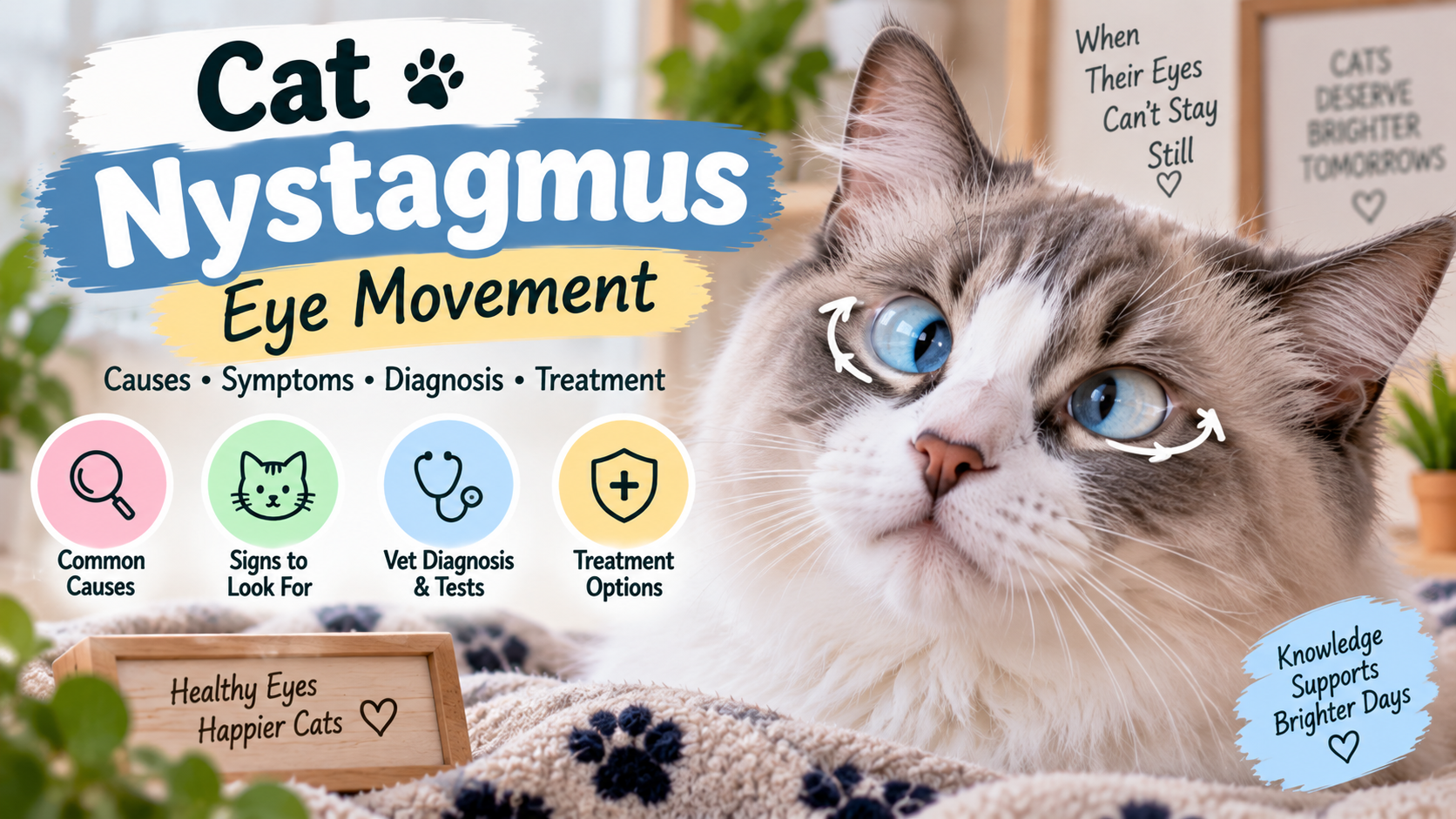
If your cat’s eyes are moving rapidly from side to side, up and down, or in a circular pattern, the movement may be called nystagmus. Cat nystagmus eye movement causes range from a normal lifelong condition in some cats to a problem affecting the inner ear, brain, eyes, or nervous system.
Nystagmus isn’t a disease by itself. It’s a sign that something is affecting the systems that help your cat maintain balance and control eye position. A cat with new or sudden nystagmus should be examined by a veterinarian, especially if they also seem dizzy, unsteady, weak, confused, nauseated, or unable to walk normally.
The movement may be subtle, or it may be easy to see across the room. Knowing what to look for can help you describe the problem clearly and get your cat the right care.
What does nystagmus look like in cats?
Nystagmus is an involuntary, repetitive movement of the eyes. The eyes may move:
- From side to side, which is the most common pattern
- Up and down
- In a circular or rotary motion
- Slowly in one direction and then quickly back in the other direction
You may notice the movement when your cat is awake and looking straight ahead. In some cases, it becomes more obvious when your cat turns their head, tries to walk, or is feeling stressed.
A cat’s eyes can also move briefly when they are tracking an object or when the head changes position. That normal reflex is usually short-lived and coordinated. Nystagmus continues without your cat choosing to do it.
What is the difference between normal and abnormal eye movement?
Some cats, especially cats with certain inherited coat patterns, can have congenital nystagmus. This means the eye movement has been present since birth or early kittenhood. It may not cause pain or seriously affect the cat’s daily life.
New nystagmus in an adult cat is more concerning. A sudden change is more likely to point to a problem that needs medical attention. Even if your cat seems comfortable, contact your veterinarian for advice rather than trying to diagnose the cause at home.
Common cat nystagmus eye movement causes
Nystagmus can develop when the inner ear, balance system, brain, or vision pathways are not working normally. The most likely cause depends on your cat’s age, medical history, other symptoms, and the direction of the eye movement.
1. Vestibular disease
The vestibular system helps your cat know where their body and head are in space. It includes structures in the inner ear and parts of the brain. When this system is disrupted, the eyes may move abnormally while the cat feels dizzy or unbalanced.
Vestibular disease is one of the more common reasons a cat suddenly develops nystagmus. You may also notice:
- A tilted head
- Stumbling, falling, or walking in circles
- Reluctance to jump or climb
- Nausea, drooling, or vomiting
- Trouble standing
- One side of the face looking different from the other
Some cases are called idiopathic vestibular disease, meaning a specific cause cannot be found. These cats may improve with supportive care over days to weeks. But similar signs can also result from an infection, medication reaction, inflammation, or a problem in the brain, so a veterinary examination is still needed.
2. Inner or middle ear infection
An infection deeper in the ear can affect the balance organs and cause nystagmus. A cat may have a history of ear irritation, but deep ear infections are not always obvious from the outside.
Possible signs include head shaking, scratching at the ear, sensitivity around the ear, discharge, a head tilt, facial weakness, and loss of balance. Some cats show only a few of these signs.
Ear infections usually need prescription treatment. Do not put human ear drops, oils, or leftover medication into your cat’s ear unless your veterinarian specifically tells you to. Some products can worsen irritation or damage the ear if the eardrum is not intact.
3. Brain or nervous system disease
Nystagmus can sometimes come from a problem in the central nervous system, including the brain or the parts of the nervous system that control balance and movement. Potential causes include inflammation, infection, bleeding, a tumor, trauma, or a blood-flow problem.
This possibility becomes more concerning when nystagmus occurs with:
- Seizures
- Severe weakness
- Trouble using one or more legs
- Marked confusion or unusual behavior
- Problems swallowing
- Walking in tight circles
- Loss of consciousness
- Sudden changes in vision
These signs require prompt veterinary assessment. A cat with severe balance problems may also be at risk of falling, being unable to reach food and water, or breathing in vomit.
4. Medication or toxin exposure
Some drugs can affect balance, hearing, or the nervous system. Toxic substances may do the same. A cat that develops nystagmus after starting a medication, receiving an incorrect dose, or getting into a household product needs immediate professional advice.
Do not stop a prescribed medication on your own unless a veterinarian tells you to. Instead, call the prescribing clinic and explain exactly what happened. If poisoning is possible, seek emergency veterinary guidance and keep the product container or label available.
Never give your cat human motion-sickness medicine, pain relievers, or sedatives unless a veterinarian has instructed you to use a specific product and dose. Many human medications are unsafe for cats.
5. Eye disease or vision problems
Problems inside the eye or along the visual pathways may cause unusual eye movements, although nystagmus more often points to a balance or neurological issue. Eye disease may cause squinting, redness, cloudiness, different-sized pupils, rubbing at the face, or changes in how your cat moves around.
A painful eye is a medical problem, particularly if your cat keeps it closed, the eye looks cloudy, or the pupil appears different. Eye conditions can worsen quickly, and early treatment may protect vision.
6. Injury or head trauma
A fall, car accident, bite, or other injury can damage the inner ear, skull, eye, or brain. Nystagmus after an accident should be treated as urgent, even if there are no obvious wounds.
Keep an injured cat as still and calm as possible. Move them in a carrier or sturdy box lined with a towel, and avoid repeatedly turning the head to test the eye movement.
7. Congenital nystagmus
Some cats have nystagmus from birth. It can occur with inherited differences in the visual system and is seen more often in certain cats with particular coat-color patterns. The eye movement may remain fairly stable throughout life.
Congenital nystagmus is not automatically dangerous. However, a cat with a lifelong eye movement can still develop a new illness later. If the movement becomes stronger or is joined by dizziness, pain, weakness, or behavior changes, arrange a veterinary examination.
8. Nutritional or systemic illness
Less commonly, problems elsewhere in the body can affect the nervous system and balance. Severe illness, metabolic disturbances, or poor nutrition may contribute to abnormal neurological signs. This is one reason a veterinarian may recommend blood tests instead of focusing only on the eyes.
A complete history matters. Tell the veterinarian about changes in appetite, weight, thirst, urination, vomiting, diarrhea, recent illness, diet, medications, and possible toxin exposure.
When is cat nystagmus an emergency?
Sudden nystagmus deserves prompt veterinary attention. Seek emergency care right away if your cat has any of the following:
- Cannot stand or keeps falling
- Has a severe head tilt or is rolling repeatedly
- Vomits repeatedly or cannot keep water down
- Has a seizure, collapse, or loss of consciousness
- Seems confused, extremely sleepy, or difficult to wake
- Has trouble breathing or swallowing
- Shows sudden blindness or severe eye pain
- Has unequal pupils or a visibly injured eye
- Developed symptoms after a fall, accident, medication error, or possible poisoning
If the eye movement is mild and your cat is otherwise acting normally, call your regular veterinarian as soon as possible for guidance. A stable, long-standing movement may be less urgent than a sudden change, but it still deserves a proper diagnosis.
How veterinarians diagnose the cause
A veterinarian will usually start by asking when the eye movement began and whether it has changed. If possible, take a short video at home. Video can be helpful because some cats look different once they arrive at the clinic.
The examination may include:
- A general physical examination to check temperature, hydration, heart rate, pain, and overall condition.
- An ear examination to look for inflammation, infection, foreign material, or damage.
- A neurological examination to assess balance, walking, reflexes, facial movement, and coordination.
- An eye examination to check the pupils, vision, eye pressure, and structures inside the eye.
- Blood or urine testing when infection, organ disease, metabolic problems, or medication effects are possible.
- Imaging or specialist testing if the signs suggest a deeper ear or brain problem.
The direction and type of nystagmus may give the veterinarian clues, but it cannot identify the cause by itself. A diagnosis should be based on the whole picture rather than the eye movement alone.
What treatment might involve
Treatment depends on the underlying problem. There is no single medicine that treats every case of nystagmus.
Possible care may include:
- Prescription medication for an ear infection
- Anti-nausea treatment if dizziness is causing vomiting
- Fluids and nutritional support if the cat is dehydrated or not eating
- Medication for inflammation, infection, or another diagnosed condition
- Careful monitoring for a vestibular problem that is expected to improve
- Surgery or referral to a specialist in selected ear, eye, or neurological cases
Your cat may need help eating, drinking, and moving around while dizzy. Follow your veterinarian’s instructions closely, and do not force food or water into a cat that is vomiting, very weak, or having trouble swallowing.
How to keep a dizzy cat safe at home
While you are waiting for veterinary care or helping your cat recover, make the environment simple and safe:
- Keep your cat in a small, quiet room away from stairs and furniture they may try to climb.
- Put food, water, and a low-sided litter box within easy reach.
- Use nonslip rugs or towels on slippery floors.
- Keep other pets and children from crowding the cat.
- Dim bright lights if your cat seems uncomfortable.
- Avoid picking up or turning your cat unnecessarily.
- Check often that your cat can reach water and is not repeatedly vomiting.
Do not try to correct the head tilt, massage the ear, or make your cat walk to “test” their balance. These actions can increase stress and may lead to a fall.
Questions to prepare for the veterinary visit
A few details can help your veterinarian narrow down the cause of nystagmus. Write down:
- When you first noticed the movement
- Whether it is constant or comes and goes
- The direction of the movement
- Whether your cat’s head is tilted
- Any vomiting, falling, weakness, or appetite change
- Recent medications, flea products, supplements, or anesthesia
- Possible contact with cleaners, plants, chemicals, or human medicine
- Any recent injury or ear problem
- Whether the movement has been present since kittenhood
If you can safely record the eye movement, take a video without delaying emergency care.
Can cat nystagmus go away?
Sometimes. Nystagmus related to a temporary vestibular problem may improve as the underlying condition settles. A lifelong form may remain without causing major daily problems. Nystagmus linked to an ear infection, toxin, injury, eye disease, or brain condition may continue until that cause is treated, and the outlook varies.
The eye movement itself is not enough to predict recovery. Your cat’s age, overall health, neurological findings, ability to eat and drink, and the underlying diagnosis all matter. Ask your veterinarian what changes to watch for and how quickly they expect improvement.
The bottom line
Cat nystagmus eye movement causes can include vestibular disease, inner-ear infection, medication or toxin exposure, injury, eye disease, nervous system problems, and congenital conditions. A new or sudden movement should never be dismissed, particularly when it occurs with a head tilt, falling, vomiting, weakness, confusion, pain, or vision changes.
Keep your cat safe from stairs and falls, record what you see, and contact a veterinarian. Prompt evaluation is the best way to separate a temporary balance problem from a condition that needs urgent treatment.