
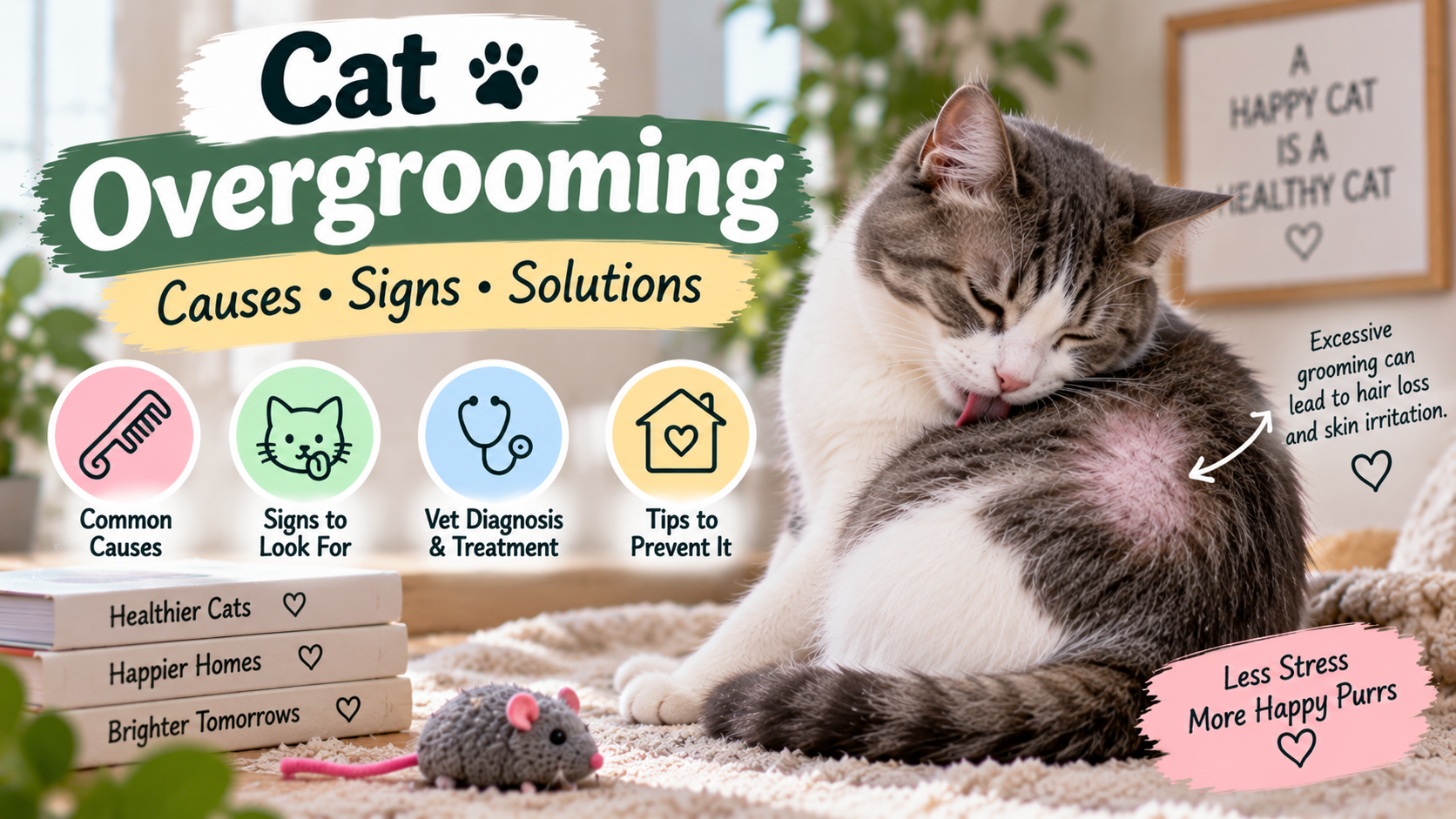
Cats spend a lot of time grooming, so it can be hard to tell when normal cleaning has turned into a problem. Cat overgrooming may be caused by stress, skin irritation, parasites, allergies, pain, or another medical condition. The tricky part is that stress and physical discomfort can look very similar at home.
A few extra licks do not always mean something is wrong. But bald patches, broken hairs, red skin, scabs, sores, or grooming that interrupts eating and sleep deserve attention. The safest approach is to look for patterns and arrange a veterinary examination when overgrooming is persistent, intense, or causing skin damage.
What does cat overgrooming look like?
Overgrooming means a cat is licking, chewing, biting, or pulling at their fur so often that it damages the coat or skin. You may notice:
- Thin fur or bald spots, especially on the belly, inner legs, sides, or back
- Short, broken hairs that look like stubble
- Redness, bumps, scabs, scratches, or open sores
- Wet or matted fur from repeated licking
- Hairballs that occur more often than usual
- Your cat suddenly spending much more time grooming
- Grooming that seems frantic or difficult to interrupt
- Avoiding touch around a certain area
Some cats groom in private, so you may notice the result before you see the behavior. A bald patch alone does not tell you whether the cause is emotional or medical. Cats can lick an itchy or painful area, and they can also lick as a coping behavior when they feel tense.
Cat overgrooming: stress vs. medical causes
Medical causes should be considered first, because itching and pain are common triggers and cannot be diagnosed reliably from appearance alone. Stress-related overgrooming is possible, but it is often a diagnosis made after a veterinarian has ruled out physical problems.
| Clue | More suggestive of a medical cause | More suggestive of stress-related grooming |
|---|---|---|
| Skin appearance | Redness, scabs, bumps, scaling, sores, or signs of infection | Skin may look fairly normal at first, with smooth or symmetrical thinning |
| Location | One area that is itchy or painful, such as the tail base, ears, neck, or a limb | Belly, inner thighs, or several easy-to-reach areas may be affected |
| Other signs | Fleas, ear debris, dandruff, vomiting, appetite changes, limping, or pain | Hiding, startling, changes in sleep, spraying, reduced play, or conflict with another pet |
| Timing | May continue regardless of household events | May begin or worsen after a move, visitors, construction, schedule change, or pet conflict |
| Pattern | Can spread or worsen as skin damage develops | Often comes and goes with the stressful situation, though not always |
This comparison can offer useful clues, but it is not a home diagnosis. A cat with allergies may have normal-looking skin early on. A stressed cat may create serious sores. Both problems can happen at the same time.
Medical causes of cat overgrooming
Fleas and other parasites
Fleas are one of the most common causes of itching in cats. Some cats react strongly to a single flea bite, and you may never see a live flea. Flea dirt can also be hard to spot, especially on a dark coat or a cat that grooms frequently.
Overgrooming caused by fleas often affects the lower back, tail base, thighs, or belly. However, fleas can make a cat itchy in many places. Ear mites and other parasites may cause scratching, head shaking, ear irritation, or grooming around the head and neck.
Do not apply a dog flea product to a cat unless a veterinarian specifically confirms it is safe. Some dog products contain ingredients that can poison cats. Use parasite control recommended for your cat’s species, age, weight, and health status.
Allergies
Cats can develop allergies to flea bites, food ingredients, or environmental triggers such as dust and pollen. Allergies may cause itching, skin inflammation, small crusts, or repeated licking and chewing.
Food allergies are not always linked to a recent diet change. A cat can become sensitive to an ingredient after eating it for a long time. If your veterinarian suspects food allergy, they may recommend a carefully planned elimination diet. Randomly changing foods or adding treats can make the results difficult to interpret.
Skin infections and inflammation
Bacterial or yeast infections can develop after a cat scratches or licks damaged skin. Ringworm, which is a fungal infection, can cause hair loss and scaly or crusty patches. It can spread to people and other animals, so suspicious skin lesions should be checked by a veterinarian.
Skin problems do not always look dramatic at first. A small irritated patch can become moist, raw, and infected within a short time because the cat keeps licking it.
Pain
A cat may groom one area because it hurts rather than because it itches. For example, a cat with joint pain may lick a leg or an area over a sore joint. A cat with abdominal discomfort may focus on the belly.
Look for other subtle pain signs, including reluctance to jump, hiding, a hunched posture, less interest in play, irritability, or changes in litter box habits. Cats often hide pain, so a change in behavior matters even when they are still eating.
Internal or neurologic problems
Less commonly, excessive grooming can be linked with nerve irritation, unusual skin sensations, or another internal illness. These causes are not possible to confirm by watching the coat alone. Your veterinarian may need to examine the skin, check for pain, and consider the cat’s overall health.
How stress can lead to overgrooming
Grooming is normal self-care, but it can also help a cat settle after a mildly stressful event. The behavior becomes concerning when a cat uses grooming repeatedly to cope with ongoing fear, frustration, conflict, or boredom.
Common stress triggers include:
- Moving to a new home
- New people, pets, or babies
- Conflict between cats in the household
- Loud construction, fireworks, or frequent visitors
- Changes in feeding times or the owner’s schedule
- Rearranged furniture or unfamiliar smells
- Too little access to hiding places or high resting spots
- A litter box that is dirty, difficult to reach, or being guarded by another pet
- Frustration from seeing outdoor cats through a window
A stressed cat may groom the belly, inner legs, or sides because those areas are easy to reach. You may also see hiding, less play, startled behavior, excessive vocalizing, urine marking, changes in appetite, or increased sensitivity to touch.
Still, stress-related overgrooming does not mean the behavior is imaginary. The licking can damage the skin, and the damaged skin can become itchy. That creates a cycle: stress leads to grooming, grooming irritates the skin, and skin irritation leads to more grooming.
Signs that point more strongly to a medical problem
Arrange a veterinary appointment if your cat has any of the following:
- Bald spots that are growing or appearing in several places
- Red, swollen, moist, bleeding, or painful skin
- Scabs, pus, a bad odor, or open wounds
- Persistent scratching, chewing, or head shaking
- Fleas, flea dirt, ear debris, or visible skin changes
- Vomiting, diarrhea, weight loss, reduced appetite, or unusual thirst
- Limping, stiffness, reluctance to jump, or sensitivity in one area
- Sudden behavior changes in an adult or senior cat
- Grooming that interferes with rest, eating, or normal activity
Seek prompt veterinary care for deep wounds, facial swelling, severe pain, marked lethargy, breathing trouble, or a cat that stops eating. Cats that eat very little for a prolonged period can become seriously ill, so appetite changes should not be ignored.
How a veterinarian finds the cause
There is no single test for all cases of overgrooming. The veterinarian will usually start with a history and physical examination. Be ready to describe when the grooming started, where it happens, and whether anything changed at home.
The examination may include:
- Looking closely at the coat and skin
- Checking for fleas, flea dirt, mites, and signs of infection
- Examining the ears, mouth, joints, and painful areas
- Asking about food, parasite prevention, medications, and household changes
- Taking skin samples or performing other tests when needed
- Recommending a diet trial if food allergy is suspected
Take clear photos of the affected areas and keep a short record of grooming episodes. Note the time, location, what happened beforehand, and any other changes. This can help if the behavior is less obvious during the appointment.
Avoid putting human creams, essential oils, or leftover medication on the skin unless your veterinarian tells you to. Cats may lick these products, and some can irritate the skin or be toxic when swallowed.
What you can do at home while waiting for an appointment
You can make your cat more comfortable without trying to guess the diagnosis.
Reduce access to the trigger
If your cat is chewing one area, ask the veterinary clinic whether a soft recovery collar or another protective option is appropriate. Do not use a tight covering or anything that could restrict breathing, movement, eating, or drinking.
If you suspect fleas, contact your veterinarian about safe treatment for every pet and the home environment. Treating only the itchy cat may not solve the problem if fleas are still present elsewhere.
Keep the routine predictable
Feed meals at roughly familiar times, keep litter boxes clean, and provide a quiet resting area. Predictability can lower stress while you work out what is causing the grooming.
Improve the environment
Give your cat choices rather than forcing interaction. Helpful changes may include:
- A quiet hiding place that other pets cannot enter
- A high perch or secure window spot
- Separate food, water, litter, sleeping, and scratching areas
- Daily interactive play suited to your cat’s age and health
- Puzzle feeders or small food hunts if your veterinarian says they are appropriate
- Gradual introductions between cats instead of making them share everything
Do not punish licking, hiding, or scratching. Punishment can increase fear and may make the behavior worse or harder to observe.
How to tell if stress is part of the problem
Once medical causes have been checked, look for a connection between grooming and the environment. Keep a simple daily log for one or two weeks:
- How often your cat grooms and which areas they target
- Whether the skin looks different
- Who was home and what noises or events occurred
- Interactions with other pets
- Appetite, play, sleep, litter box use, and hiding
- Any changes in food, medication, or parasite prevention
A pattern may appear. For example, grooming might increase after a particular cat enters the room or when the house becomes noisy. That information can help you remove triggers and give each cat more space.
If household conflict is involved, provide separate resources in different areas. Cats may need separate food stations, water bowls, litter boxes, beds, and escape routes. Simply placing two bowls side by side does not always prevent competition.
Some cats benefit from a gradual behavior plan, environmental changes, or medication prescribed by a veterinarian. Do not give calming medication or supplements without professional advice.
Can stress and a medical problem happen together?
Yes. A cat may have an itchy skin condition and become stressed by the discomfort. Another cat may begin overgrooming during a stressful period and then develop irritated skin. Once the skin is inflamed, the original trigger may no longer be the only problem.
This is why it is risky to assume that bald patches are “just stress.” Treating only the emotional trigger may not help if fleas, infection, allergy, or pain is still present. On the other hand, treating the skin without improving an ongoing stressful environment may allow the grooming to continue.
The most effective plan often addresses both sides: identify and treat the physical problem, then make the home feel safer and more predictable.
How long does cat overgrooming take to improve?
The answer depends on the cause and how long the skin has been damaged. Itching may improve after the underlying problem is treated, but fur can take longer to grow back. If the behavior has become a habit or coping pattern, it may continue for a while even after the original trigger is gone.
Contact your veterinarian again if the skin is worsening, new bald patches appear, your cat keeps damaging the area, or there is no improvement after the recommended treatment period. Do not stop a prescribed treatment early just because the coat looks slightly better.
The bottom line
When comparing cat overgrooming caused by stress versus medical causes, remember that medical problems should be ruled out first. Fleas, allergies, infections, and pain can all cause intense licking, while stress can trigger repetitive grooming or make a physical problem worse.
Watch for the location of the hair loss, changes in the skin, other symptoms, and recent household changes. Keep your cat’s routine calm, avoid home remedies that may be unsafe, and arrange veterinary care for persistent grooming or any damaged skin. Finding the real cause gives your cat the best chance of healing and returning to a comfortable grooming routine.