
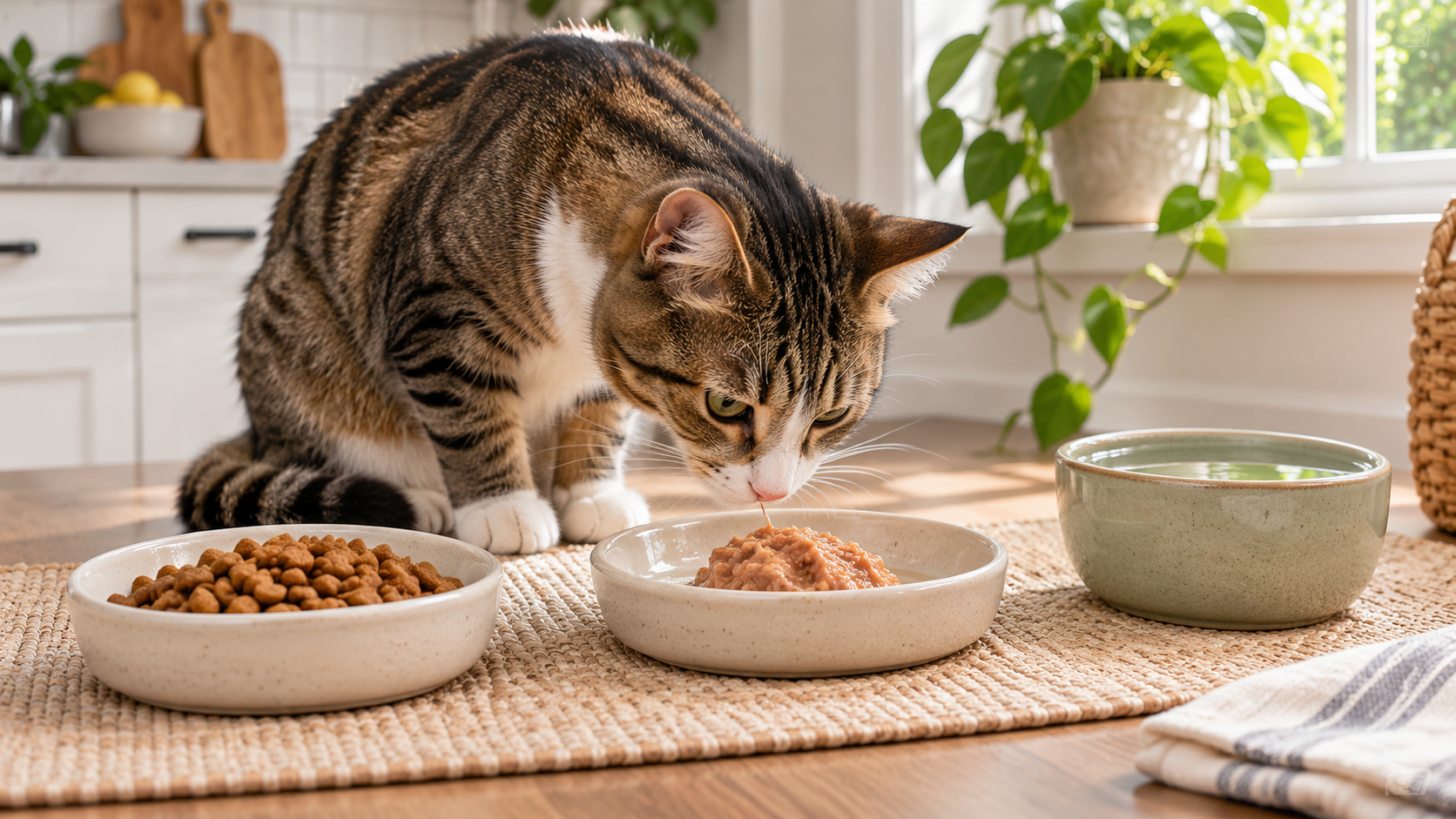
You’ve bought three different cans, opened two flavors, and watched your cat sniff each one before walking away. Meanwhile, the familiar dry food disappears without a problem. If you’re trying to figure out how to get a picky cat to eat wet food, buying another brand isn’t necessarily the answer. The problem might be texture, temperature, the feeding setup, or how quickly you’re introducing something unfamiliar.
Quick Answer: Start with a teaspoon or less of wet food in a separate, shallow dish beside your cat’s usual meal. Try one texture at a time, serve it at a comfortable temperature, and let your cat investigate without pressure. Keep feeding their familiar complete diet while you work on acceptance. If your cat has suddenly become picky, is eating less overall, or seems unwell, call your veterinarian.
Why Your Cat Refuses Wet Food but Eats Dry Food
A cat that happily eats kibble but won’t touch canned food may simply prefer the familiar crunch. Wet food smells different, feels different in the mouth, and sometimes has chunks or gravy that your cat doesn’t recognize as food.
Veterinarians at VCA Animal Hospitals explain that cats can have strong preferences for particular flavors and textures. A sudden change in appetite, though, shouldn’t automatically be labeled picky behavior. Dental pain, nausea, illness, and stress can also change how a cat eats.
Pay attention to the pattern. Has your cat always rejected wet food while maintaining a healthy appetite and weight? That’s different from a cat that used to eat canned food and abruptly refuses it. The second situation deserves a veterinary call, even if your cat still nibbles some dry food.
What’s the Best Wet Food Texture for Picky Cats?
There isn’t one texture that works for every cat. Before spending money on more brands, compare a few different textures, ideally in small portions. The shape and mouthfeel may matter as much as the flavor.
| Wet food texture | What it feels like | Worth trying when your cat… |
|---|---|---|
| Smooth pâté or mousse | Soft, uniform, with no noticeable chunks | Licks gravy but leaves solid pieces, or dislikes chewing chunks |
| Minced or finely shredded | Small pieces with some moisture | Rejects smooth pâté but seems interested in meat-like pieces |
| Flaked or shredded in broth | Distinct flakes in liquid | Likes licking liquid and will investigate small flakes |
| Chunks in gravy | Larger pieces with sauce | Already enjoys chewing soft pieces rather than licking food |
| Stew or extra-moist pâté | Soft pieces or a looser consistency | Prefers a wetter meal, but isn’t interested in dry pâté |
These are trial ideas, not proven matches for particular cats. A cat that only licks gravy may like the flavor of the sauce, dislike the chunks, or be uncomfortable chewing. Persistent chewing difficulty needs a dental check, not just a texture change. VCA’s guide to canned food options describes the range of pâtés, stews, and foods in gravy.
Buy a single can or a small variety pack where possible. Keep the protein flavor similar while comparing textures, so you’re not changing several things at once. Make a quick note of whether your cat sniffed, licked, chewed, or walked away.
How to Get a Picky Cat to Try Wet Food Step by Step
The first goal isn’t to replace dinner. It’s to help your cat become comfortable with the smell and feel of wet food while still getting enough to eat.
Step 1: Offer a tiny taste beside the regular meal
Start with roughly a quarter to one teaspoon of wet food on a separate plate. Place it near, but not mixed into, your cat’s usual food. A cat that dislikes a mixture may refuse the entire bowl, including the food it normally eats.
Let your cat approach in its own time. Sniffing is progress, even if nothing gets eaten on the first attempt. Pick up the unused wet food afterward, following its storage instructions.
Step 2: Change one sensory detail at a time
If your cat shows no interest, try a different texture before buying another flavor in the same texture. You can also test room-temperature food against a gently warmed portion. Some cats prefer less aroma, so warmer isn’t automatically better.
Try a wide, shallow plate rather than a deep bowl. Keep the feeding area quiet and away from the litter box, household traffic, and pets that might crowd your cat. NC State’s veterinary nutrition team recommends paying attention to food texture, temperature, feeding routines, and the environment.
Step 3: Reward curiosity without forcing a bite
You can place a little wet food on a spoon or dish for your cat to investigate. Don’t smear it on their nose, open their mouth, or withhold the familiar meal to make them hungry enough to eat it. Pressure can create an even stronger aversion.
If your cat accepts a small amount of a suitable cat treat or complete wet food as a topper, use it sparingly and account for the calories. Skip unapproved toppers when your cat is on a prescription or elimination diet.
Step 4: Increase wet food only after it’s being eaten
Once your cat willingly eats the sample, offer a slightly larger amount at the next meal. After several comfortable meals, start replacing a small share of the familiar diet’s daily calories, not an equal volume of kibble. Many cats can follow a gradual transition; very resistant cats may need several weeks.
For the full old-to-new percentage schedule, see our step-by-step guide to switching cat food safely. If you already know your cat rejects mixed textures, continue offering the foods in separate dishes instead of combining them immediately.
Step 5: Track what your cat actually eats
Measure what’s offered and what’s left. Keep your cat’s regular food available in an appropriate amount until the new diet is reliably accepted. A few licks of gravy aren’t the same as eating a meal. If you’re replacing kibble, check the kcal per cup and kcal per can on the labels so the daily calorie intake stays appropriate.
What if you need to switch from wet back to dry food?
Work in the opposite direction, but keep the same slow approach. For example, offer a small measured portion of kibble alongside the regular wet meal. Once your cat eats it willingly, increase the kibble’s share of the daily calories while reducing wet food. Don’t swap equal bowl volumes, since dry food usually provides more calories per ounce. Continue providing fresh water and ask your veterinarian whether reducing wet food is appropriate if your cat has urinary or other health concerns.
A Gentle Seven-Day Practice Plan
This plan is for a healthy cat that still eats its regular diet normally. It is an introduction routine, not a requirement to finish switching in seven days.
| Days | Low-pressure goal | What to do if your cat refuses |
|---|---|---|
| 1-2 | Become familiar with the smell | Offer a tiny sample on a separate dish, then remove it |
| 3-4 | Explore the texture | Try a small sample in a different texture or at room temperature |
| 5-6 | Lick or eat a little voluntarily | Repeat whatever presentation worked without increasing the amount yet |
| 7 and beyond | Gradually build a small regular serving | Keep the familiar food; proceed only when the new food is being eaten |
A cat may spend two weeks at the first stage. That’s not a failed plan. The important measures are adequate nutrition and voluntary interest, not the calendar.
Make Wet Food More Appealing Without Buying Another Brand
Try these low-cost adjustments one at a time:
- Adjust the temperature. Let refrigerated food approach room temperature, or warm a small serving gently and stir to prevent hot spots. Never serve it hot.
- Change the consistency. Mash pâté with a fork or add a little warm water to make a softer texture. Don’t assume watery food appeals to every cat.
- Use a clean, shallow dish. Some cats eat better when their face isn’t pressed into a narrow bowl. Wash dishes after every wet-food serving.
- Offer fresh, small portions. A large mound of food may dry out before your cat has tried it. Start with enough for a taste.
- Keep mealtimes predictable. Offer food when the house is calm. Some cats do well with a play session before a scheduled meal.
The Cornell Feline Health Center notes that noise, other animals, dirty bowls, and litter boxes near feeding areas can discourage eating. If you want to test smaller, more frequent meals without adding calories, see our guide to feeding cats multiple times a day.
How long can wet cat food sit out?
Don’t leave a wet-food sample out all day hoping your cat will eventually try it. Refrigerate or discard unused food promptly. The FDA’s pet food storage guidance recommends keeping refrigerated pet food at 40°F or below and washing food bowls after use. Follow the food maker’s instructions for handling open cans and pouches.
Troubleshooting: Match the Problem to the Next Step
| What your cat does | What it might mean | Next step |
|---|---|---|
| Sniffs wet food and walks away | Unfamiliar smell, stress, or low appetite | Try a tiny sample in a calm space; monitor overall eating |
| Licks gravy but leaves chunks | Texture preference or possible chewing discomfort | Try smooth pâté; contact a vet if chewing seems painful |
| Eats one flavor once, then refuses it | Novelty wore off or the serving isn’t appealing | Keep notes, change one variable, and avoid constant brand hopping |
| Eats kibble but won’t try canned food | Familiarity with crunchy food | Offer the wet food separately and build acceptance slowly |
| Suddenly refuses a wet food it once loved | Illness, dental pain, food quality, or a change in preference | Check the product and contact a vet, especially if appetite is reduced |
| Approaches the bowl but backs away | Odor, temperature, bowl, nausea, or stress | Change the setup; seek veterinary advice if behavior persists |
| Won’t eat wet or dry food | Medical problem or substantial appetite loss | Contact a veterinarian promptly; don’t keep trying new brands |
These clues help you decide what to try next, but they aren’t diagnoses.
When Picky Eating Is a Medical Warning Sign
If your cat suddenly stops eating a familiar food, don’t assume they’re being stubborn. Dental problems can make chewing painful. Nausea, kidney disease, nasal congestion, and other illnesses may also reduce interest in food. PetMD’s veterinarian-reviewed guide explains why a sudden appetite change deserves veterinary attention.
Call your veterinarian promptly if your cat has a noticeable drop in overall food intake, weight loss, drooling, difficulty chewing or swallowing, repeated vomiting, diarrhea, lethargy, or increased thirst. If an adult cat has eaten nothing for about 24 hours, seek veterinary care immediately. Young kittens and medically fragile cats need help sooner. Cornell warns that even a short period of complete food refusal can seriously affect a cat’s health.
A cat eating an adequate amount of its usual dry food while declining a new wet food isn’t in the same situation as a cat refusing all food. Still, a sudden change from its normal eating pattern is worth discussing with your veterinarian.
Do You Have to Feed a Cat Wet Food?
Wet food can contribute to hydration because it contains much more moisture than kibble. But a healthy cat doesn’t automatically need canned food if it’s eating a complete and balanced dry diet, drinking adequately, and has no medical reason for a diet change. Your veterinarian may recommend a higher-moisture feeding plan for individual health needs.
When shopping, check the nutritional adequacy statement, not just whether the pouch says “gravy,” “broth,” or “natural.” AAFCO’s label guide explains how to identify foods formulated to be complete and balanced for the correct life stage. Some broths and lickable products are treats or supplemental foods, not suitable meal replacements.
If wet food continues to be a battle after patient attempts, talk with your veterinarian about whether a mixed diet, another complete food, or a specific feeding strategy is appropriate. Getting enough suitable nutrition matters more than winning an argument with a can of pâté.
Frequently Asked Questions
Why does my cat only lick the gravy off wet food?
Your cat may like the liquid’s flavor or texture but dislike the chunks. Try a smooth pâté or mousse, or mash a complete wet food to change its consistency. If your cat drops pieces of food, drools, or seems uncomfortable chewing, arrange a dental examination.
How can I transition my cat from dry to wet food if they won’t eat a mixture?
Offer a tiny portion of wet food in a separate dish alongside the regular kibble. Build acceptance first. Then gradually replace some of the kibble’s calories once your cat voluntarily eats the wet food. You don’t have to mix the two textures together.
Should I warm up canned food for a picky cat?
It’s worth trying. Mild warming can increase aroma, but some cats prefer room-temperature or cooler food. Stir and check the temperature carefully, and stop if stronger smells make your cat turn away.
Is pâté or shredded wet food better for picky cats?
Neither is universally better. Pâté works for some cats that dislike chunks; others prefer shredded meat or gravy. Try small portions and compare textures before switching brands repeatedly.
Can I add tuna, broth, or treats to make my cat eat wet food?
A small amount of a cat-safe topper may help, but avoid seasoned broth, onions, garlic, and excessive treats. Check with your veterinarian before using toppers for cats with medical conditions or prescribed diets. Don’t let toppings displace a complete and balanced meal.
What if my cat eats dry food but refuses every canned food I’ve tried?
If the cat is otherwise healthy and eating enough, keep the regular balanced diet while you experiment slowly with small samples, texture, temperature, and bowl placement. If wet food has been prescribed or refusal is new, ask your veterinarian for a plan instead of repeatedly buying more cans.
A Better Next Step Than Buying Another Case of Cans
At your cat’s next meal, offer a tiny sample of one wet-food texture in a separate, clean dish. Leave the familiar food unchanged. Watch what your cat actually does: sniff, lick, chew, or walk away. That observation gives you a better starting point than guessing at another flavor.
If your cat likes the sample, repeat it and increase slowly. If they don’t, try changing one thing at a time. And if your cat’s appetite has changed suddenly, get veterinary advice rather than treating a possible health problem as fussiness.