
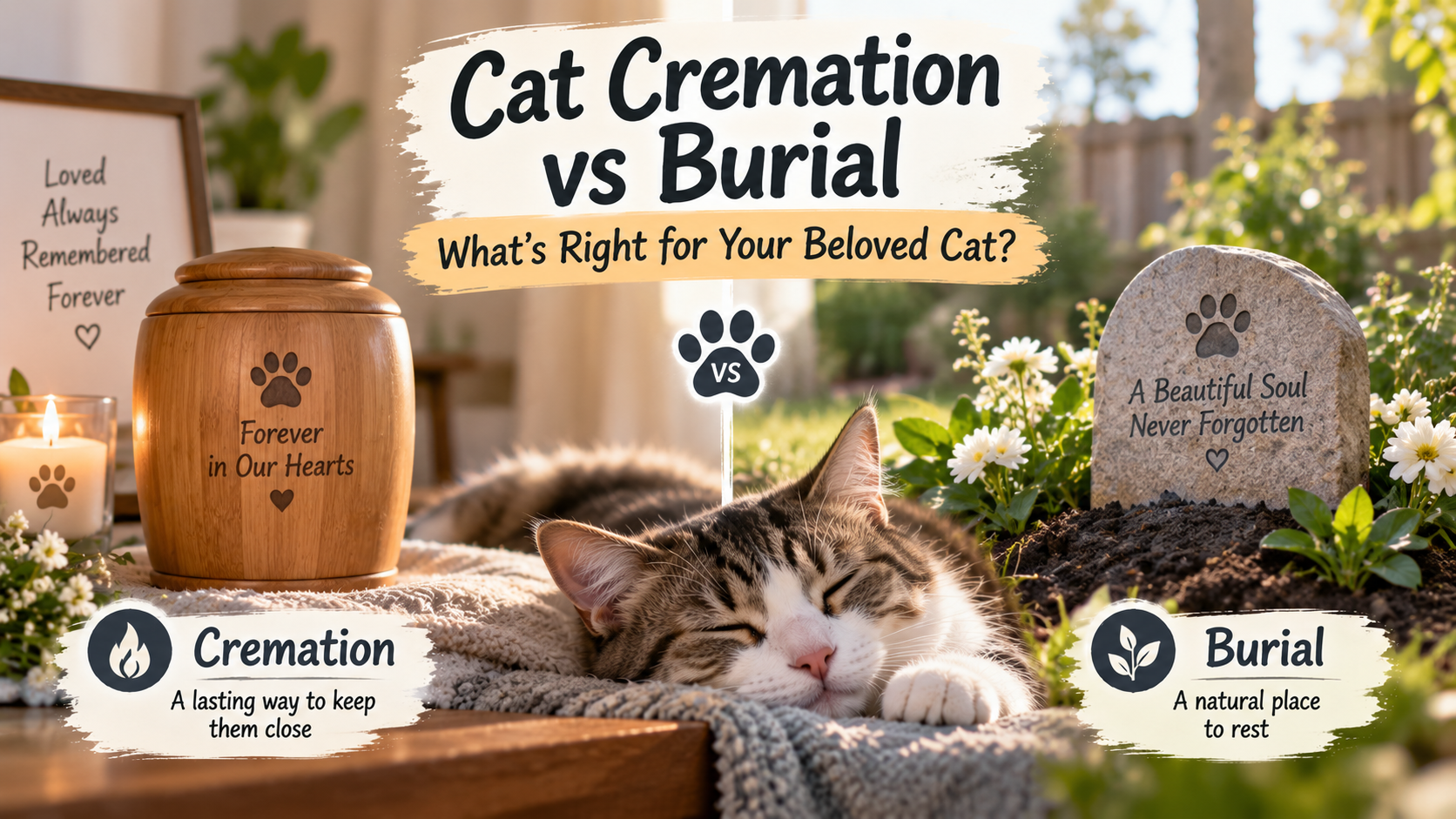
Choosing what to do after your cat dies can feel overwhelming, especially when you’re grieving. There’s no single “right” answer. The best choice depends on your wishes, local rules, your budget, your living situation, and whether you want to keep your cat’s remains or visit a permanent resting place.
The main options are cremation, burial at home where legal, and burial in a pet cemetery or another approved location. Cremation is often the most flexible choice, while burial may feel more familiar and personal for families who want a physical place to visit.
This guide explains the differences between cat cremation and burial, what each option involves, how costs and regulations can affect your decision, and what questions to ask a veterinarian or aftercare provider.
Cat cremation vs. burial: A quick comparison
Both options can provide a respectful way to say goodbye. The biggest difference is what happens to your cat’s remains and how you can memorialize them afterward.
| Option | What happens | Can you keep the remains? | Main benefit | Main consideration |
|---|---|---|---|---|
| Private or individual cremation | Your cat is cremated separately from other animals | Usually yes | You can keep the ashes or scatter them later | It may cost more than communal cremation |
| Communal cremation | Several animals are cremated together | Usually no | Often a lower-cost option | Ashes generally aren’t returned individually |
| Home burial | Your cat is buried on private property, where permitted | No | You have a nearby place to visit | Local laws, property changes, and soil conditions matter |
| Pet cemetery burial | Your cat is buried in a designated cemetery | No, in most cases | A maintained, permanent memorial location | Cemetery fees and visitation rules vary |
What does cat cremation involve?
After a veterinarian, crematory, or pet aftercare provider receives your cat, the body is prepared for cremation. Depending on the service you choose, your cat may be cremated alone or with other animals.
Private or individual cremation
With private cremation, your cat is cremated separately. The crematory then returns the cremated remains, often called ashes, in an urn, box, or another container.
Ask the provider how they define “private,” because terminology can vary. Some companies use “individual cremation” for a process in which animals are placed in separate compartments within the same chamber, while others use the term only when one animal is cremated in the chamber at a time. A trustworthy provider should explain its process clearly.
You may be able to choose:
- A basic container or a decorative urn
- A personalized nameplate
- A paw print or nose print
- A fur clipping
- A memorial box or jewelry designed to hold a small amount of ashes
- An urn that can be buried, displayed, or placed in a columbarium
If you want your cat’s ashes returned, confirm the expected timeline and ask whether transportation, the urn, and keepsakes are included in the quoted price.
Communal cremation
During communal cremation, several animals are cremated together. Because the remains are not kept separately, ashes usually aren’t returned to each family.
This can be a suitable choice if you want a respectful aftercare option but don’t need ashes or a private memorial container. It may also be less expensive than private cremation. Ask what happens to the communal cremated remains. Some providers scatter or bury them in an appropriate location, while policies differ between businesses.
How to check whether a cremation provider is trustworthy
It’s reasonable to ask direct questions before making a decision. Consider asking:
- Will my cat be cremated alone or with other animals?
- What exactly does “private” or “individual” mean in your process?
- How will you identify my cat throughout transportation and cremation?
- Where does the cremation take place?
- What container will be used for the ashes?
- Are paw prints, fur clippings, or other memorial items available?
- How long will the process take?
- What happens if I decide not to purchase an urn?
- Are pickup, delivery, or handling fees included?
A clear provider should answer these questions without making you feel rushed or embarrassed for asking.
What does cat burial involve?
Burial gives your cat a physical resting place. It can happen at home, in a pet cemetery, or sometimes through a veterinary or aftercare service that arranges burial on your behalf.
Home burial
A home burial can feel comforting because your cat remains close to you. You may be able to visit the spot, plant flowers nearby, or create a small memorial.
However, home burial is not legal everywhere. Rules may depend on your city, county, state, province, or country. They can also depend on the reason for death, the type of property, and whether you rent your home.
Before choosing home burial, check with your local animal control office, public health department, municipal authority, or veterinarian. A landlord, homeowners’ association, or property agreement may also limit what you can do.
If local rules allow it, a veterinarian or local authority can explain requirements such as:
- How deep the grave must be
- How far it must be from wells, waterways, property lines, and buildings
- Whether the body must be wrapped or placed in a particular container
- Whether certain materials are prohibited
- Whether burial is allowed after a contagious disease
- Whether you need permission on rented or shared property
If you move later, you may not be able to take the grave with you. This is one reason some families choose cremation, especially if they rent, may relocate, or want a portable memorial.
Pet cemetery burial
A pet cemetery provides a designated place for burial and remembrance. Some cemeteries offer individual plots, grave markers, visitation areas, landscaping, and maintenance.
Ask about:
- Plot ownership or long-term use rights
- Opening and closing fees
- Grave markers and personalization
- Cemetery maintenance
- Visiting hours
- Whether the cemetery could ever be relocated
- Rules about decorations
- Options if you want more than one pet buried together
Pet cemetery arrangements may provide a sense of permanence, but services and policies vary. Read the agreement carefully so you understand what you are purchasing.
Burial containers and biodegradable materials
If burial is permitted, the provider or local authority may have rules about containers. Some families choose a biodegradable shroud or casket, while others use a simple approved container. Avoid placing items in the grave unless they are safe and allowed. Batteries, plastics, treated wood, and other materials may create environmental problems or violate local rules.
Your veterinarian can tell you whether any medical or infectious concern affects burial. If your cat died from a disease that could pose a risk to animals or people, don’t bury the body without professional guidance.
How much does cat cremation or burial cost?
The price of cat aftercare can vary widely by location and provider. The size of your cat, transportation, the type of cremation, the urn or casket, cemetery fees, and memorial products can all affect the total.
In general, communal cremation tends to cost less than private cremation because individual ashes and personalized handling are not included. Private cremation costs more but gives you ashes to keep. Home burial may appear less expensive, but you could still pay for transportation, a burial container, a marker, and any required services. Pet cemetery burial often includes a plot and ongoing maintenance fees.
Before agreeing to a service, request an itemized estimate. Ask whether the price includes:
- Transportation from the veterinary clinic or your home
- Refrigerated holding before aftercare
- Identification and handling
- Cremation or burial itself
- An urn, box, or casket
- Ashes returned to you
- A paw print or other keepsake
- Delivery of the ashes or memorial items
- Cemetery opening, closing, and maintenance fees
You don’t have to choose the most expensive option for your cat’s life to have been meaningful. A simple communal cremation, a home memorial, or a basic urn can be just as personal as a more elaborate service.
Which is more environmentally friendly: cremation or burial?
Neither option is automatically best for every situation. The environmental impact depends on the cremation equipment, transportation, burial materials, land use, and local conditions.
A traditional burial uses land and may involve a casket, marker, and maintenance. Home burial may require fewer materials, but it must be legal and placed safely away from water sources. Cremation uses energy, and transporting a cat to a crematory adds to the overall impact.
If environmental concerns are important to you, ask about:
- Simple or biodegradable burial materials
- Locally operated cremation services
- Reusable or minimal packaging
- A small urn made from an appropriate material
- Planting a memorial tree or garden only where it is safe and allowed
The most responsible choice is one that follows local rules and avoids creating risks for people, wildlife, groundwater, or other pets.
How to decide between cremation and burial
There’s no need to make the decision based on what another pet owner chose. Think about what will help you feel at peace and what is practical for your household.
Choose cremation if you want portability or ashes
Cremation may fit your situation if:
- You want to keep your cat’s ashes
- You may move in the future
- You rent your home
- Home burial isn’t legal where you live
- You want several family members to share a small portion of the ashes
- You prefer a memorial urn, jewelry, or keepsake
- You don’t want to maintain a gravesite
Some people keep an urn at home, while others scatter the ashes in a meaningful place. Check local rules before scattering ashes on public or private land.
Choose burial if a physical resting place matters most
Burial may be right for you if:
- You want a place to visit
- You have suitable private property and local rules allow it
- You prefer a traditional gravesite
- Your family finds comfort in tending a memorial area
- You want your cat to remain in one location
If you may move, consider how you would feel about leaving the grave behind. A pet cemetery may offer more structure, but it still isn’t always possible or affordable to move the remains later.
Consider a memorial without choosing burial
You can honor your cat in many ways, regardless of aftercare choice. For example, you could create a photo book, frame a favorite picture, save a collar or tag, make a paw print, write down favorite memories, or place a small plant in a special spot.
A memorial doesn’t have to be expensive. What matters is that it reflects your relationship with your cat.
What should you do immediately after your cat dies?
If your cat dies at home, place the body on a towel or blanket and keep it in a cool, private area while you contact your veterinarian or an aftercare provider. If you’re unsure whether your cat has died, seek veterinary help immediately rather than assuming.
If death occurs at a veterinary clinic, the staff can usually explain available aftercare choices and arrange transportation. You can ask for time alone with your cat if you want to say goodbye before the body is taken.
If you suspect poisoning, an infectious disease, or another risk to people or animals, tell the veterinarian before making burial or handling arrangements. Wear disposable gloves if you must handle the body, wash your hands afterward, and keep other pets away until a professional advises you.
Refrigeration is often used when there will be a delay before cremation or burial. Do not freeze the body unless a veterinarian or aftercare provider tells you to, since freezing may affect some memorial options. Your veterinarian can give you specific instructions based on the circumstances.
Questions to ask your veterinarian
Your veterinarian can often help with both practical arrangements and emotional support. Ask:
- Which local cremation or burial providers do you work with?
- Is private cremation available?
- How will my cat be identified?
- How long can my cat remain at the clinic?
- Can I take my cat home for burial if local rules permit it?
- Are there medical or legal concerns related to the cause of death?
- What memorial items can be made before aftercare?
You can also ask for a written estimate. Grief can make it hard to remember details, so it’s okay to take notes or have someone with you make the call.
What if you can’t afford private cremation or burial?
Tell the veterinary clinic or provider what you can afford. They may offer communal cremation, a simple container, a lower-cost local service, or a payment option. Some communities and animal welfare groups may know about assistance programs, but availability varies.
You don’t need an elaborate service to give your cat a respectful goodbye. The kindest choice may be a simple option that doesn’t create financial stress while you’re grieving.
The bottom line
Cat cremation and burial can both be respectful choices. Cremation offers flexibility and lets you keep your cat’s ashes, especially with a private cremation. Burial provides a physical resting place, but home burial must follow local rules and may not be practical for renters or people who might move.
Start by checking what is legal in your area, then compare the type of service, total cost, handling process, and memorial options. Choose the arrangement that feels meaningful and manageable for you. There is no wrong way to say goodbye when the decision is made with care.