
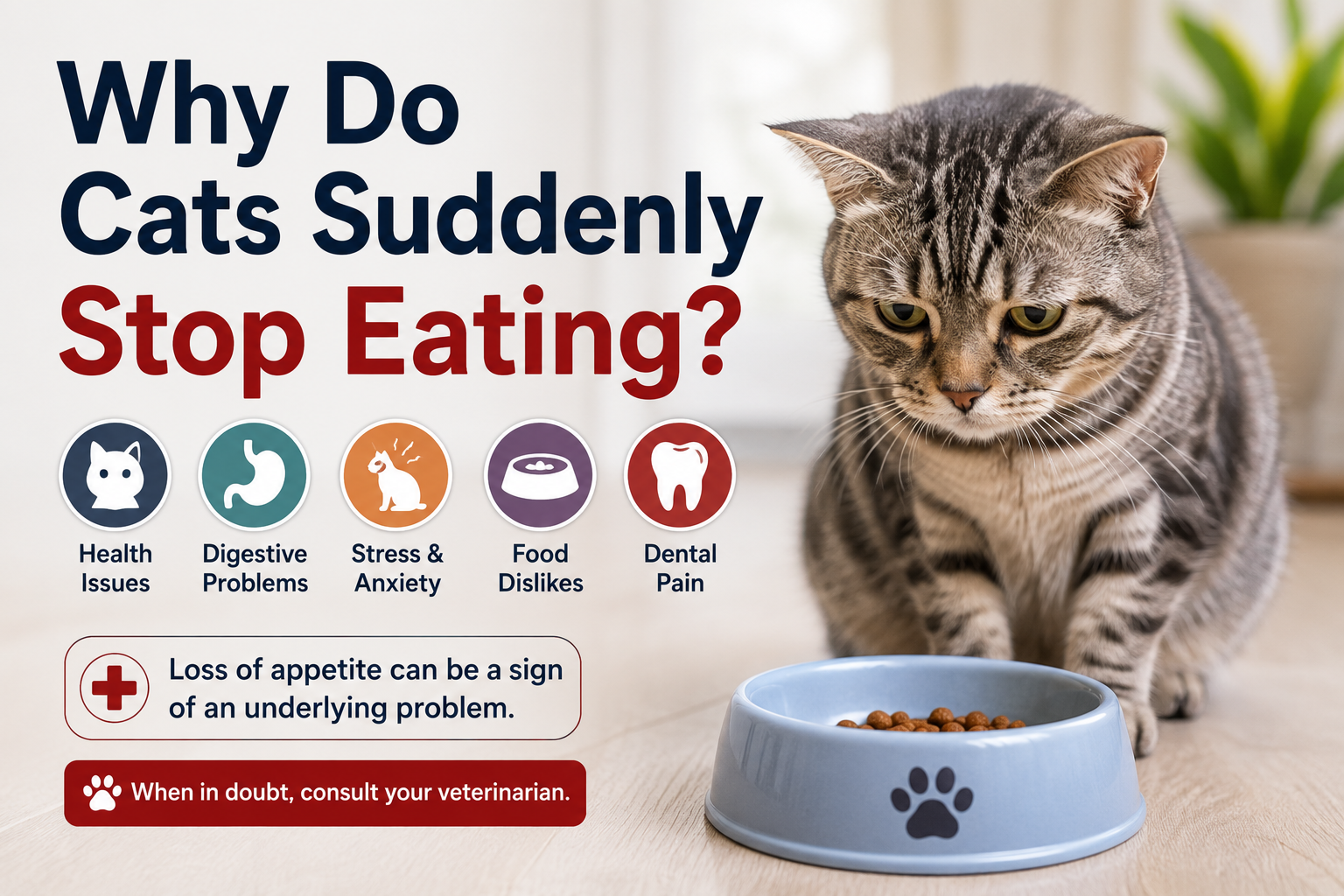
You hear the familiar sound of kibble hitting the bowl, but this time, your cat does not come running. Or maybe they walk up, sniff the food, and simply walk away. If you are frantically searching for why do cats suddenly stop eating, you are likely feeling a mix of confusion and pure panic right now.
You want to make sure your feline friend is safe, and a sudden hunger strike is scary. Unlike dogs, who might just be holding out for a piece of steak, cats do not skip meals for no reason. Here is everything you need to know about feline appetite loss, the hidden dangers of waiting too long, and how to help your cat feel better.
Why Do Cats Suddenly Stop Eating?
Cats suddenly stop eating due to underlying medical issues, intense dental pain, or extreme stress. Common causes include kidney disease, gastrointestinal blockages, or changes in their home environment. Even a quiet change in their food’s recipe can trigger a hunger strike. Any food refusal lasting over 24 hours requires veterinary care.
You might assume your cat is just being picky today. However, skipping meals is actually one of the very first signs a cat gives when they feel sick or vulnerable.
The Hidden Danger of Feline Fatty Liver
You might think missing a day of food is not a big deal. However, cats process fasting very differently than humans do. When a cat stops eating, their body instantly sends stored fat to the liver to be converted into energy.
Unfortunately, a cat’s liver cannot process fat quickly. The organ becomes swollen and overwhelmed. This leads to a deadly condition called hepatic lipidosis, or “fatty liver disease.” It can develop in just 48 to 72 hours of not eating.
| Common Myth | Feline Reality |
| “They will eat when they get hungry enough.” | A sick cat will literally starve themselves to death. |
| “Fasting for a day cleans out their system.” | Fasting longer than 24 hours causes severe liver damage. |
Common Medical Reasons for Feline Appetite Loss
When you want to know why do cats suddenly stop eating, sickness is usually the primary culprit. Cats hide their pain as a natural survival instinct. By the time they stop eating, they have likely been feeling poorly for a while.
Stomach bugs, intestinal parasites, or even swallowed foreign objects can stop up their digestive tract. If they feel nauseous, the very smell of food will make them turn away.
| Observed Symptom | Possible Medical Issue |
| Drooling or dropping food | Severe dental disease or mouth ulcers |
| Drinking excessive water | Kidney disease or feline diabetes |
| Hiding under furniture | General pain or high fever |
How Dental Pain Ruins Mealtime
Have you ever tried eating a hard cracker with a severe toothache? Your cat faces the same struggle. Feline dental disease is incredibly common, especially in older cats.
They might walk over to the bowl because they are genuinely hungry. But when they remember how much it hurts to crunch their kibble, they walk away. Tooth resorption, inflamed gums, or a cracked tooth will shut down their appetite instantly.
Environmental and Stress-Related Causes
Cats are ultimate creatures of habit. They love routine, and they hate surprises. A sudden change in their daily environment can easily cause intense anxiety, which kills their desire to eat.
You might not think moving the sofa is a big deal, but to your cat, their entire territory just shifted.
| Household Change | How Your Cat Reacts |
| Adding a new pet | Feels threatened and refuses to eat in the open |
| Moving to a new house | Hides constantly until the territory feels safe |
| Loud construction outside | Too terrified by noise to focus on a meal |
Did You Change Their Food or Bowl Location?
Pet food companies often change their recipes without warning you. The bag might look exactly the same, but your cat’s sensitive nose can smell the new ingredients. If they hate the new formula, they simply will not touch it.
Additionally, cats hate eating near their litter boxes. If you recently moved their food bowl near their bathroom area, they will likely refuse to eat there. They also suffer from “whisker fatigue.” If their bowl is too deep and narrow, it hurts their sensitive whiskers to reach the food.
What to Do When Your Cat Won’t Eat
Now that you understand why do cats suddenly stop eating, you need a plan to get them interested in food again. You can try a few gentle tricks at home to jumpstart their appetite before heading to the vet.
Always start by offering something incredibly smelly. Cats decide what to eat based on scent, not taste. If they are congested from an upper respiratory infection, they cannot smell their kibble.
| Action to Take | Why It Helps |
| Warm up their wet food | Heating food releases strong, appealing aromas |
| Add a spoonful of tuna water | The strong fish scent cuts through nasal congestion |
| Offer meat-based baby food | Smooth texture is easy to eat without chewing |
Mistakes to Avoid When Encouraging Your Cat
When you are stressed about your cat’s health, it is very easy to make mistakes that actually make the situation much worse. You must stay calm and avoid pressuring them.
Never shove food into your cat’s mouth. This breaks their trust and makes them associate mealtime with fear and choking.
| Common Mistake | Why It Fails Completely |
| Syringe-feeding without vet training | You can easily force food into their lungs, causing pneumonia |
| Leaving wet food out all day | The food spoils, smells awful, and creates a food aversion |
| Constantly staring at them | Makes the cat feel hunted and too anxious to eat |
When Is It Time to Visit the Vet?
You should never wait out a hunger strike. If your healthy adult cat has not eaten a single bite of food in 24 hours, you need to call your veterinarian.
If you have a young kitten or a senior cat with known health problems, do not even wait 24 hours. Their bodies are much more fragile, and a sudden drop in blood sugar can become an emergency in just a few hours.
| Age or Condition | Maximum Time Without Food |
| Young kitten (under 6 months) | 12 hours |
| Healthy adult cat | 24 hours |
| Senior cat or diabetic cat | 12 hours |
What to Tell Your Veterinarian
When you arrive at the clinic, your vet will need specific details to figure out why do cats suddenly stop eating. Be ready to tell them exactly when the cat ate last.
Mention any other weird behaviors you have noticed. Did they throw up? Are they using the litter box normally? Did they recently chew on a houseplant? Every single clue helps your vet run the right blood tests and get your cat on the road to recovery faster.
Final Thoughts
Watching your cat refuse their favorite meal is a stressful experience, but learning exactly why do cats suddenly stop eating gives you the power to help them. The most important lesson you can take away is that feline appetite loss is never just stubbornness. It is always a clear signal that something in their body or their environment needs your immediate attention.
You know your cat’s normal habits better than anyone else. Trust your gut. If you feel like something is wrong, bypass the home remedies and contact your vet. Fast action prevents serious liver complications and gets your furry friend back to their happy, hungry self much sooner.