
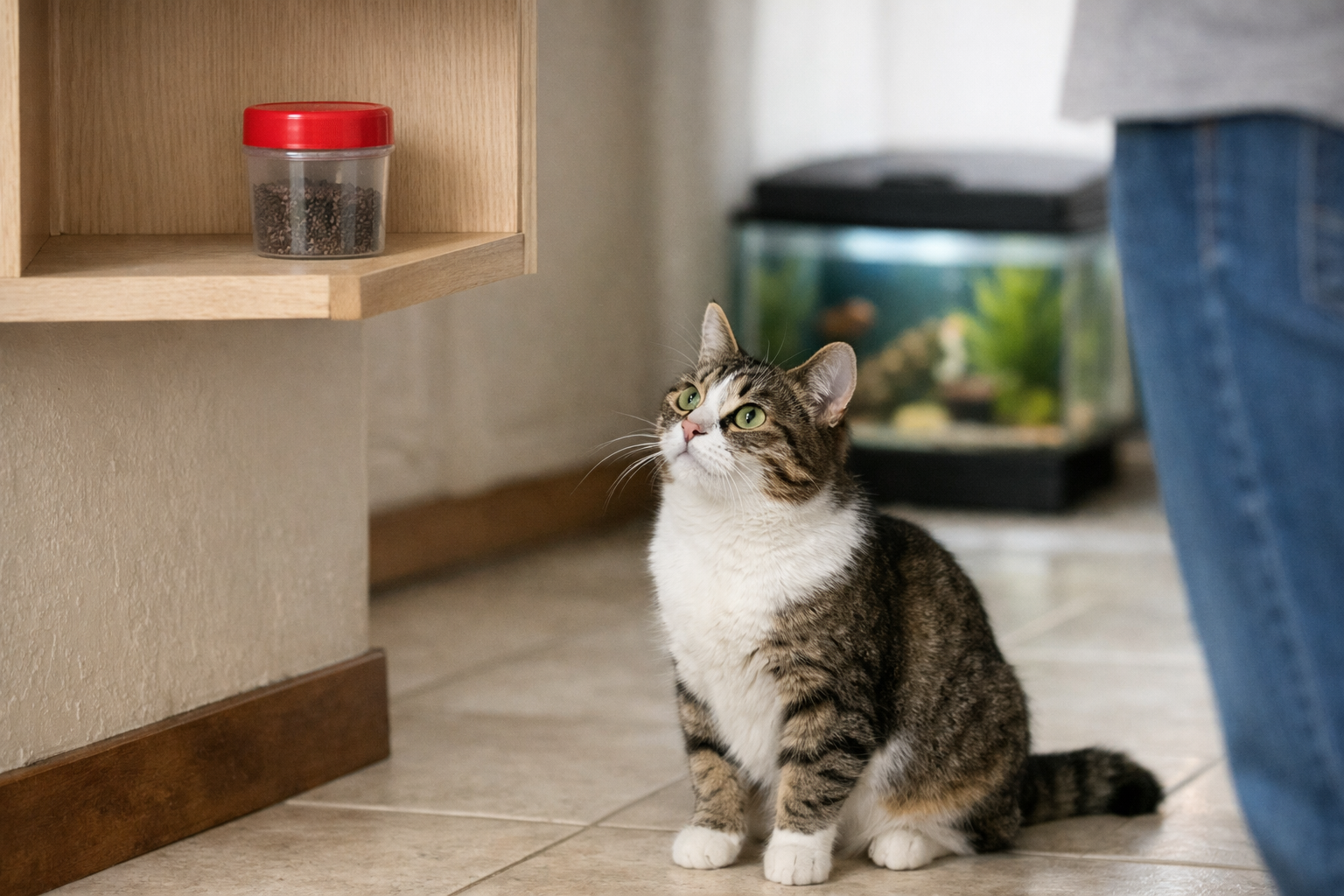
A few ordinary, unmedicated betta fish food pellets are unlikely to poison an otherwise healthy cat. However, betta fish food isn’t suitable as a cat food or regular treat. Eating more can cause digestive upset, and medicated, moldy, or contaminated products need a different assessment.
If your cat just grabbed some, take the container away and check the label. The most useful details are the exact product, how much may be missing, when it happened, and whether your cat has symptoms. There’s no single safe amount that applies to every fish food and every cat.
What makes betta fish food a concern for cats?
Betta food is formulated for fish, not feline nutrition. Depending on the product, it may contain fish meal, shrimp or other aquatic ingredients, insect ingredients, grains, oils, vitamins, and minerals. Some betta foods are pellets or flakes; others are freeze-dried foods such as bloodworms or brine shrimp.
Fish-based ingredients help explain why a cat might investigate the container. Their smell doesn’t mean the food is appropriate for cats—but the words “fish food” don’t automatically mean poison, either.
The main concerns are:
- Digestive upset: An unfamiliar food or a larger amount may cause vomiting, diarrhea, or reduced appetite.
- An unsuitable nutritional balance: Fish food isn’t formulated to meet a cat’s dietary requirements.
- Special ingredients or contamination: Medication, spoilage, or contact with aquarium chemicals can change the risk.
- Packaging: A missing lid, foil seal, or piece of plastic creates a separate choking or intestinal-obstruction concern.
A cat that eats a couple of plain pellets has a different exposure from one that chews through a container of medicated feed. Start with the product rather than assuming all betta foods are equally risky.
What to do if your cat ate betta fish food
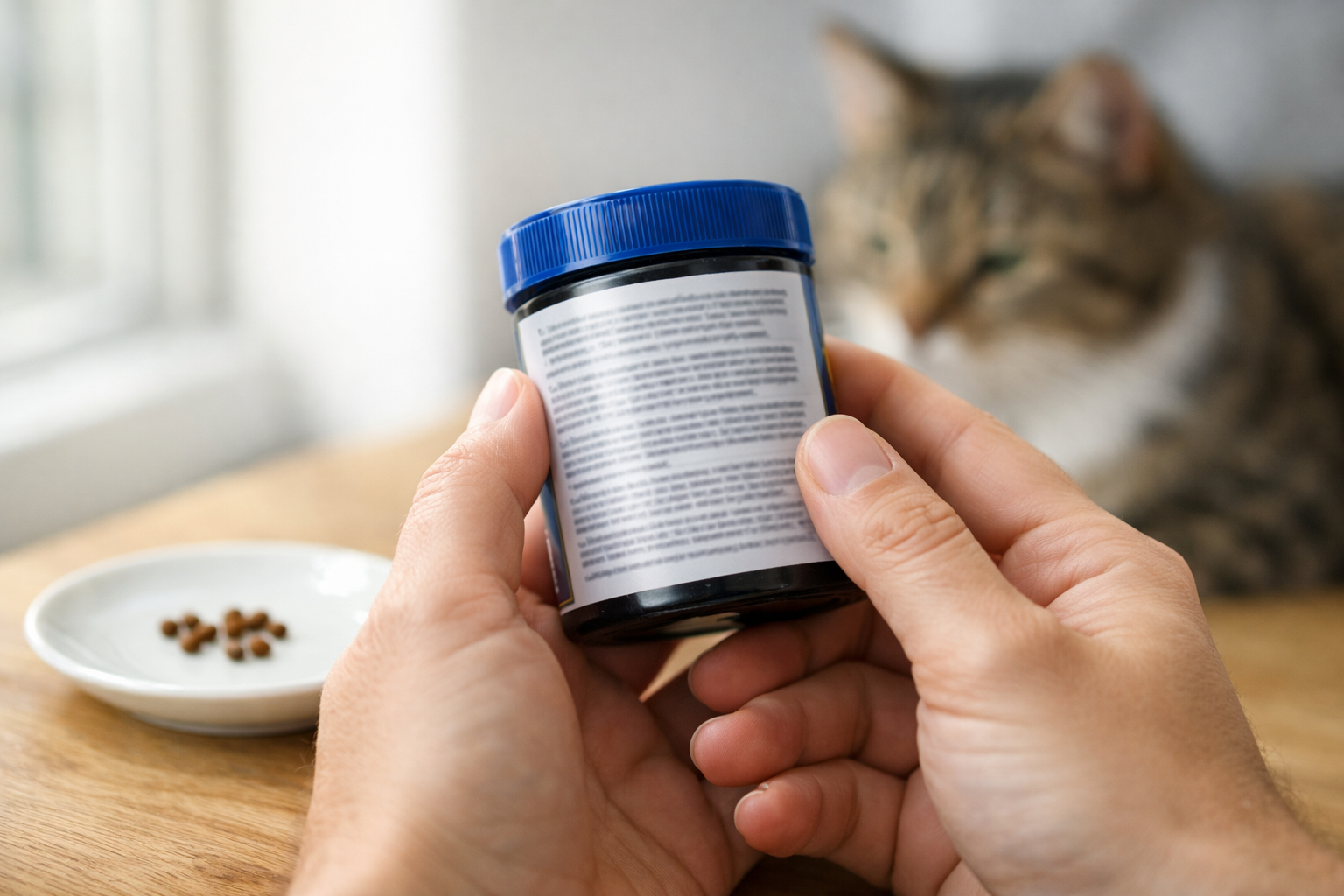
If your cat is breathing normally and acting like themselves, calmly work through these steps.
1. Remove the food and check the packaging
Put the container somewhere secure and collect any spilled pellets. Check whether the lid, seal, label, or container has been chewed. Don’t assume everything missing was swallowed; some may be scattered under furniture.
If your cat may have swallowed packaging, contact your veterinarian. Don’t pull on any string-like material protruding from the mouth or anus.
2. Identify exactly what your cat ate
Keep the original container or take clear photos of the label. Look for:
- The product name and ingredient list.
- Any wording identifying it as medicated feed.
- An expiration date and signs of dampness or mold.
- Possible contact with aquarium medication, cleaners, or other chemicals.
Color alone doesn’t tell you whether a pellet is toxic. If the label is unclear, a veterinarian or animal poison-control service can help assess the actual formulation.
3. Estimate the amount and timing
“A few pellets about 15 minutes ago” is more useful than “some fish food.” If the amount is unknown, say so. Note your cat’s approximate weight, age, existing medical conditions, and any symptoms.
There isn’t a reliable universal pellet count or teaspoon limit for cats. Products differ in concentration, ingredients, and pellet size, and cats differ in their vulnerability.
4. Choose monitoring or a veterinary call
For an otherwise healthy adult cat that ate only a few ordinary, unmedicated pellets and has no symptoms, close observation is generally reasonable. Keep fresh water available and offer the usual cat food at the normal mealtime unless your veterinarian advises otherwise.
Call your veterinarian promptly if your cat ate a substantial or unknown amount, the product is questionable, or your cat has a medical condition. Kittens and frail cats warrant a lower threshold for advice.
Do not induce vomiting or give milk, oil, salt, hydrogen peroxide, activated charcoal, or another home remedy. These can cause additional harm or complicate treatment.
Which situations need urgent veterinary help?
The product and your cat’s condition matter more than a blanket rule about fish food.
| What happened | Recommended response |
|---|---|
| A few plain, unmedicated pellets; cat appears normal | Remove access, check the label, and monitor closely. |
| A large or unknown amount, even without symptoms | Call your veterinarian for product-specific advice. |
| Medicated, moldy, or chemically contaminated food | Contact a veterinarian or animal poison-control service promptly; don’t wait for symptoms. |
| Possible swallowed plastic, foil, or lid pieces | Call your veterinarian because packaging can create a separate hazard. |
| Trouble breathing, collapse, seizures, or severe weakness | Seek emergency veterinary care immediately. |
Repeated vomiting, marked lethargy, abdominal pain, blood in vomit or stool, persistent diarrhea, or refusal to eat also warrant prompt veterinary contact. Don’t automatically attribute these signs to harmless stomach upset.
If your cat is choking, struggling to breathe, or collapsing, go to an emergency veterinary hospital rather than spending time estimating the amount eaten.
For exposure advice in the United States, ASPCA Animal Poison Control and Pet Poison Helpline are established resources. These are service recommendations, not a substitute for an examination, and consultation fees may apply. Have the package available when you call.
How long should you watch your cat afterward?
After a small exposure to ordinary, unmedicated fish food, watch your cat closely over the next 24 hours, including their next meals and litter-box visits. This is a practical observation period, not a guarantee that every possible problem will appear within that time.
Pay attention to:
- Vomiting or diarrhea.
- Drooling, repeated swallowing, or pawing at the mouth.
- Less interest in food or water.
- Unusual hiding, low energy, or apparent discomfort.
- Straining or other changes in litter-box behavior.
Contact your veterinarian if any concerning change appears. If packaging may have been swallowed, symptoms of an obstruction can develop later; veterinary advice is appropriate even when your cat initially seems fine.
For medicated feed or possible chemical exposure, don’t use a symptom-free observation period as reassurance. Ask for advice immediately because the appropriate response depends on the substance involved.
Why betta food shouldn’t become a cat treat
Even if your cat seems to enjoy it and has eaten it before without trouble, betta food isn’t a sensible routine treat.
Cats need a diet formulated for their life stage, with an appropriate balance of protein, amino acids, fatty acids, vitamins, and minerals. Fish food may contain some of these nutrients, but that doesn’t establish that its amounts or balance are suitable for cats.
For a cat’s main diet in the United States, look for a nutritional adequacy statement indicating that the food is complete and balanced for the appropriate feline life stage. An aquarium-food label is not a substitute for that statement.
Repeated access also makes accidental overeating more likely. A cat that learns to knock over the container may eventually get much more than a few pellets.
If you’d like to offer a fish-flavored reward, choose a treat labeled for cats. Treats should generally provide no more than about 10% of daily calories, with the rest coming from a complete and balanced diet. Cats on prescription diets or with food allergies may need stricter limits or different treats chosen with their veterinarian.
Are flakes, freeze-dried bloodworms, or medicated pellets different?
Yes—the actual product matters more than its shape. Pellets and flakes can have similar ingredients, while two pellet products can have very different formulations.
Ordinary pellets and flakes
A tiny accidental nibble of a conventional, unmedicated product is generally less concerning than a large serving. Neither form should be deliberately offered as a cat snack.
Freeze-dried aquarium foods
Bloodworms, brine shrimp, and similar foods sold for aquarium fish aren’t necessarily poisonous to cats, but they aren’t feline treats. Freeze-drying also doesn’t guarantee sterility. Don’t assume that a single-ingredient product is automatically risk-free, particularly for a medically vulnerable cat.
Medicated feed and treated food
A product containing medication requires individual assessment. So does ordinary feed that has been mixed with an aquarium treatment. Don’t try to judge safety from a medication name alone or calculate a feline dose yourself.
Keep the product label and contact your veterinarian or an animal poison-control service. The active ingredient, concentration, amount eaten, and cat’s weight all matter.
Keep fish food out of reach without making feeding difficult
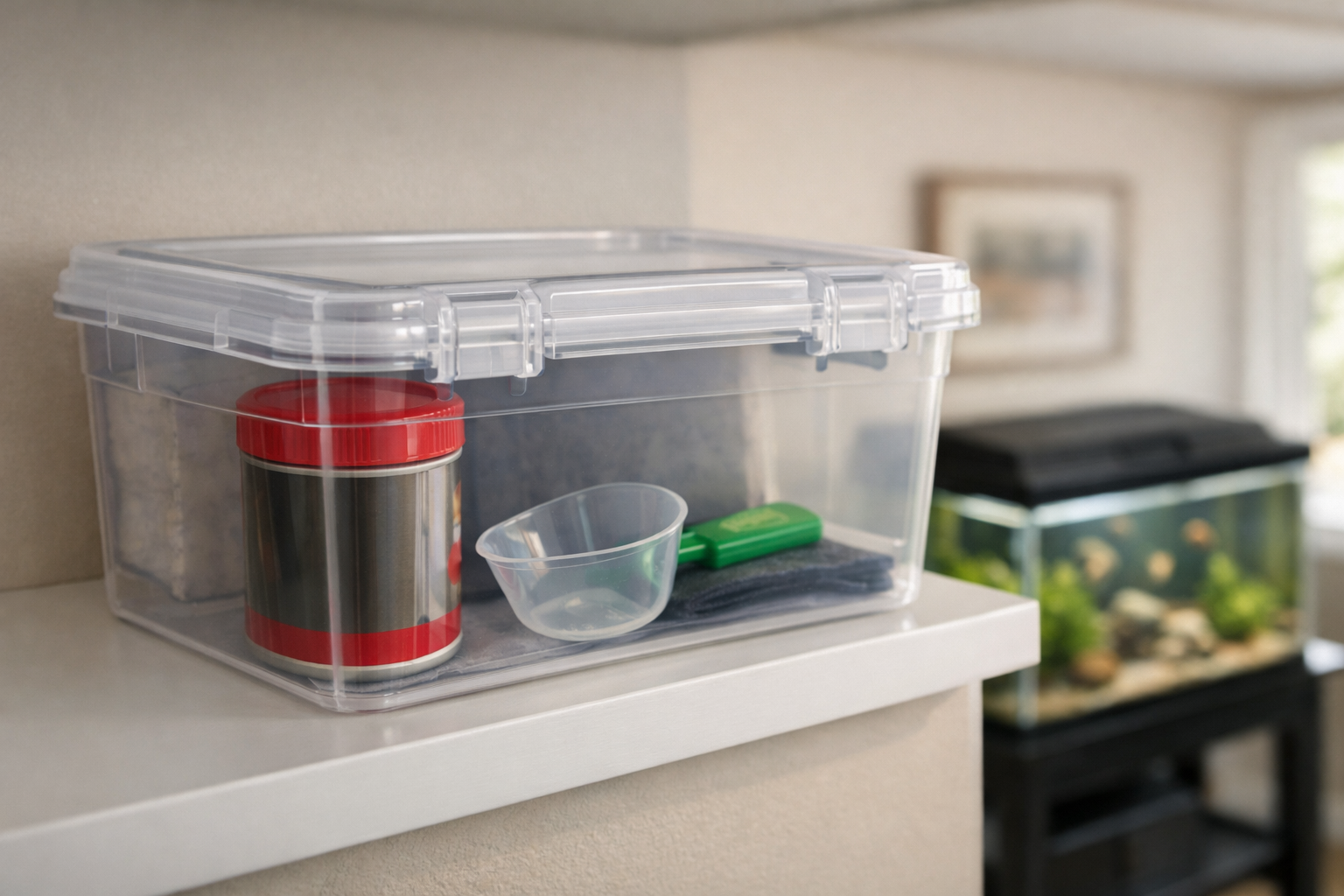
Fish food is easy to overlook because the container is small and often stays beside the aquarium. A secure storage routine is more dependable than trying to teach a curious cat to ignore a strong food smell.
- Use a closed cabinet or latched storage box. Height alone may not stop a climbing cat.
- Keep the original label. If you use a second container, retain the packaging so ingredients remain identifiable.
- Close the container immediately after feeding. Avoid leaving it open while cleaning the tank.
- Wipe up spills and put away the feeding scoop. Residue can encourage repeat visits.
- Store aquarium medications separately. This reduces mix-ups and helps you identify an exposure quickly.
If your cat consistently raids food containers or seems unusually hungry, mention it to your veterinarian, especially if it comes with weight loss, increased thirst, or other changes. Curiosity is common, but a new pattern deserves attention.
Common questions about cats eating betta fish food
Can one betta pellet kill a cat?
One ordinary, unmedicated betta pellet is very unlikely to cause fatal poisoning in a healthy cat. That reassurance doesn’t apply to an unidentified, medicated, or contaminated product. Breathing trouble or other severe symptoms require emergency care regardless of the amount eaten.
My cat ate betta food and vomited. What should I do?
Remove access and contact your veterinarian for advice, especially if the amount or ingredients are uncertain. Repeated vomiting, blood, weakness, pain, or inability to keep water down needs prompt care. Don’t assume vomiting means everything has left the stomach.
Is fish food safe because cats eat fish?
No. A familiar ingredient doesn’t make the finished product suitable for cats. Fish food is formulated for a different species, and its additives, nutrient balance, storage condition, and any medication still matter.
Can I use betta fish food if I’ve run out of cat food?
No. Betta food isn’t an appropriate meal replacement. Obtain your cat’s usual food or another complete and balanced feline food. If that isn’t possible promptly—particularly for a kitten or a cat on a medical diet—ask your veterinarian about a suitable short-term option.
Should I make my cat drink extra water?
Leave fresh water available, but don’t force water into your cat’s mouth. Forced fluids can enter the airway, and water doesn’t neutralize an unknown ingredient. Follow veterinary instructions if treatment is needed.
A small nibble of ordinary betta food usually calls for a label check and observation, not panic. Unknown ingredients, a larger exposure, swallowed packaging, or symptoms are reasons to get veterinary advice rather than guess.