
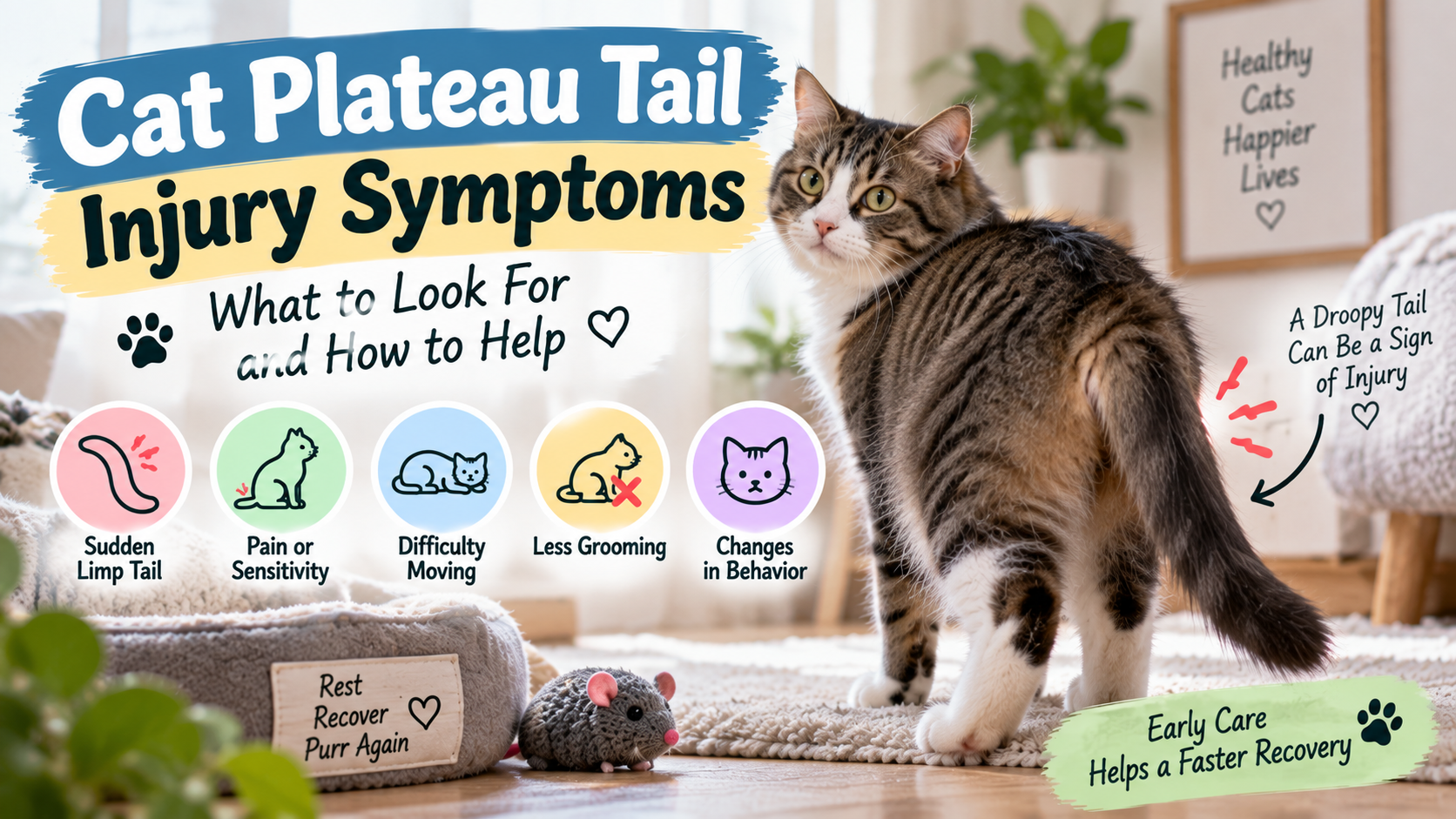
A cat’s tail is more than a furry decoration. It helps with balance, movement, and communication. A painful injury near the base of the tail can affect how your cat walks, uses the litter box, and controls the tail.
Cat plateau tail injury symptoms may include a limp or drooping tail, pain near the tail base, swelling, bruising, difficulty urinating or defecating, and weakness in the hind legs. Some injuries are mild, but an injury close to the tail base can also affect nerves that control the bladder, bowel, and back legs.
If your cat has suddenly lost tail movement, cannot urinate, is leaking urine or stool, or has trouble standing or walking, contact a veterinarian promptly. A tail injury can look small on the outside while causing more serious problems underneath.
What is a plateau tail injury in cats?
“Plateau tail” is not a standard veterinary diagnosis used for every tail injury. Cat owners may use the phrase to describe a flattened, bent, compressed, or damaged section of the tail, often near the tail base. It may refer to a tail that looks pressed down or has an unusual step, kink, or level area after trauma.
Possible causes include:
- A fall from furniture, a balcony, or another height
- A door closing on the tail
- The tail being pulled, stepped on, or caught in something
- A bite wound or fight injury
- A car or other blunt-force trauma
- A fracture or dislocation between tail bones
- Damage to the nerves at the tail base
The appearance of the tail alone cannot show how severe the injury is. A small-looking kink may be painful but stable, while a less obvious injury near the base may interfere with nerve function.
Common cat plateau tail injury symptoms
The most noticeable sign is often a change in the tail’s position or movement. But cats can hide pain, so look at the whole picture rather than focusing only on the tail.
1. A limp, drooping, or motionless tail
Your cat’s tail may hang down instead of being held normally. They may be unable to lift, curl, or swish it. Some cats can move the tip but not the rest of the tail, while others lose movement throughout the tail.
A suddenly limp tail is more concerning than a tail that has always had a slight curve. If your cat normally carries the tail upright but it now hangs loosely, arrange a veterinary examination.
2. A visible bend, flattening, kink, or unusual “step”
You may see that one section looks crooked, flattened, thicker, or lower than the section next to it. The tail may also appear shorter because part of it is bent.
Do not try to straighten it. Manipulating a fractured or dislocated tail can increase pain and may worsen tissue or nerve damage.
3. Pain or sensitivity near the tail base
A painful cat may:
- Flinch, growl, hiss, or bite when the area is touched
- Move away when you approach the hindquarters
- Keep the tail tucked down
- Sit or lie in an unusual position
- Stop grooming the tail
- Lick or chew the injured area
- Become quiet, irritable, or less social
Some cats show pain without vocalizing. A cat that suddenly avoids being picked up or stops jumping may be telling you that something hurts.
4. Swelling, bruising, bleeding, or skin damage
Look for swelling, warmth, redness, hair loss, a puncture wound, bleeding, or a patch of skin that has turned dark. Bite wounds can be tiny on the surface but become infected underneath.
A cold or pale tail tip can indicate reduced blood flow and needs prompt veterinary attention. Do not apply ice directly to the skin or use creams unless a veterinarian tells you to do so.
5. Changes in walking or balance
A tail injury near the base can sometimes occur with other injuries or nerve problems. Your cat may walk stiffly, limp, wobble, drag a hind leg, or have trouble jumping.
Balance problems are especially important to report. They may suggest that the injury is not limited to the tail.
6. Trouble urinating or defecating
Nerves near the tail base help control parts of the bladder and bowel. After a significant tail-base injury, a cat may have trouble passing urine or stool, lose control, or soil themselves without seeming aware of it.
Watch for:
- Repeated trips to the litter box with little or no urine
- Straining, crying, or restlessness in the litter box
- Urine dribbling or wet bedding
- Stool leaking without normal squatting
- Constipation or inability to pass stool
- A swollen, uncomfortable abdomen
A cat that cannot urinate is experiencing an emergency. Do not wait to see if the problem resolves on its own.
Symptoms that need urgent veterinary care
Seek urgent care if your cat has any of the following after a possible tail injury:
- Cannot urinate or is repeatedly straining without producing urine
- Has sudden loss of bladder or bowel control
- Cannot stand, walk normally, or use one or both hind legs
- Has a completely limp tail after trauma
- Has heavy bleeding, an open wound, or exposed tissue or bone
- Has a cold, pale, blue, or darkening tail
- Appears severely painful, weak, confused, or collapsed
- Was hit by a vehicle or suffered a fall from a significant height
- Has breathing problems or other injuries after the accident
Even if your cat seems calm, major trauma deserves a professional examination. Cats may appear quiet because they are frightened or in pain, not because they are uninjured.
What to do if you suspect a tail injury
1. Keep your cat still and calm
Move your cat to a small, quiet area or a carrier. Prevent running, climbing, and jumping. If your cat is frightened or painful, handle them as little as possible.
A carrier with the top removed can make it easier to place the cat inside without bending or pulling the tail. Support the body and hindquarters rather than lifting by the tail area.
2. Look without manipulating the tail
You can gently observe the tail from a short distance. Check for obvious swelling, bleeding, wounds, unusual color, and whether your cat can move it. Do not bend, massage, pull, straighten, or repeatedly press the tail.
If there is an open wound, cover it loosely with clean gauze or a clean cloth while traveling to the veterinarian. Avoid tight bandages, because swelling or a bandage that slips can reduce circulation.
3. Do not give human pain medicine
Many human medications are dangerous for cats. Acetaminophen, ibuprofen, and naproxen can cause serious poisoning, even in small amounts. Never give a pain reliever unless a veterinarian has prescribed it specifically for your cat and explained the dose.
4. Call a veterinarian
Tell the clinic what happened, when it happened, and what you have noticed. Mention whether your cat can walk, urinate, defecate, and move the tail. If there was a fall or impact, describe the height or force as accurately as you can.
How veterinarians diagnose a plateau tail injury
A veterinarian will usually begin with a physical and neurological examination. They may check:
- The shape, temperature, and circulation of the tail
- Pain and swelling along the tail
- Tail movement and muscle tone
- Sensation around the tail and hindquarters
- Hind-leg strength, walking, and reflexes
- Bladder size and ability to urinate
- Signs of infection or other trauma
X-rays may help show a fracture, dislocation, or change in the position of the tail bones. Depending on the injury, the veterinarian may recommend additional testing or imaging to assess soft tissues, nerves, or injuries elsewhere in the body.
A physical exam matters because a visible bend does not always tell you where the injury is or whether the nerves are working normally.
Treatment depends on the injury
Treatment varies based on the location and severity of the damage. A minor injury may need rest, pain control, and careful monitoring. An open wound may require cleaning, medication, and treatment for infection. A severe fracture, dislocation, damaged blood supply, or nonhealing wound may require a more involved procedure.
Your veterinarian may recommend:
- Prescription pain relief
- Restricted activity
- Wound care
- Antibiotics when infection is present or considered likely
- A protective collar if your cat keeps licking or chewing the area
- Treatment to help with urination or bowel movements
- Follow-up examinations or repeat imaging
- Surgery in selected serious cases
Do not splint or tape the tail at home unless your veterinarian gives you clear instructions. A poorly placed splint can cause pressure sores, swelling, or circulation problems.
Recovery and home care
Follow the treatment plan closely, even if the tail begins to look better. Nerve injuries can take time to declare themselves, and cats often return to normal activity before the tissues have healed.
At home, you may need to:
- Keep your cat in a restricted area with no tall furniture
- Use a low-sided, easy-to-enter litter box if movement is painful
- Keep food, water, and the litter box close together
- Check the tail and any wound as directed
- Stop licking with a protective collar if prescribed or recommended
- Give medication exactly as directed
- Track urine, stool, appetite, walking, and tail movement
A simple daily note can help. Record whether your cat urinated normally, passed stool, ate, walked comfortably, and showed any change in tail movement.
Contact the veterinarian if pain increases, swelling spreads, the wound smells bad, the tail changes color, your cat stops eating, or urination becomes abnormal.
Can a cat live with a bent or damaged tail?
Often, yes. Some cats live comfortably with a permanent kink, shortened tail, or reduced tail movement. The key issue is not always the tail’s appearance. It is whether the injury causes ongoing pain, poor circulation, infection, mobility problems, or loss of bladder and bowel control.
A healed tail may remain crooked without needing correction. But a tail that is painful, repeatedly injured, infected, or losing circulation may need additional treatment. Your veterinarian can help decide whether the tail is healing safely.
How to tell a tail injury from other problems
A tail that looks unusual is not always the result of a recent injury. Some cats are born with naturally short or kinked tails, and an old healed fracture may leave a permanent bend.
Other conditions can also cause tail changes or pain, including:
- Abscesses from bites
- Skin infections or parasites
- Arthritis near the spine or hips
- Anal gland problems
- Lower-back injuries
- Nerve disorders
- Pain from the pelvis or hind legs
A sudden change is more concerning than a stable shape your cat has always had. If you are unsure whether the tail is normal for your cat, compare older photos and arrange a veterinary check if there are any new symptoms.
How to prevent tail injuries
You cannot prevent every accident, but a few changes can lower the risk:
- Keep doors from slamming on a cat’s tail.
- Check recliners, rocking chairs, and folding furniture before moving them.
- Keep windows and balconies securely screened.
- Teach children not to pull or grab the tail.
- Provide safe climbing areas away from unstable shelves.
- Keep cats indoors or use a secure outdoor enclosure to reduce traffic injuries and fights.
- Check vehicles and equipment before starting them if cats may shelter nearby.
Supervise interactions with dogs and other pets, especially if one animal tends to chase or grab.
The main takeaway
Cat plateau tail injury symptoms can range from a visible kink and tenderness to serious problems involving the nerves, bladder, bowel, or hind legs. A limp tail, sudden loss of movement, swelling, skin damage, or pain after trauma should be evaluated by a veterinarian.
Keep your cat quiet, avoid manipulating the tail, never give human pain medicine, and seek urgent care for trouble urinating, loss of hind-leg function, severe trauma, or changes in tail color. Early assessment gives your cat the best chance of comfortable healing.
Frequently asked questions
What are the first signs of a plateau tail injury in a cat?
The first signs may include a drooping or motionless tail, a new kink or flattened section, pain when the tail base is approached, swelling, bruising, or reluctance to jump. Watch for changes in urination, walking, and litter-box behavior too.
Can a cat’s tail injury cause bladder problems?
Yes. A serious injury near the tail base can damage or irritate nerves involved in bladder and bowel control. Straining without producing urine, urine leakage, or sudden loss of bladder control requires prompt veterinary attention. Complete inability to urinate is an emergency.
Should I straighten my cat’s bent tail?
No. Do not straighten, pull, massage, or repeatedly bend a cat’s injured tail. The tail could be fractured, dislocated, or swollen, and manipulation may increase pain or damage. Keep your cat still and have a veterinarian examine it.
Is a limp tail in a cat always an emergency?
A limp tail is not always life-threatening, but it should be taken seriously, especially if it appeared suddenly or followed trauma. Emergency care is needed when a limp tail occurs with severe pain, bleeding, hind-leg weakness, abnormal tail color, or difficulty urinating or defecating.
How long does it take for a cat tail injury to heal?
Healing time depends on the type and location of the injury. A minor soft-tissue injury may improve with rest, while a fracture, nerve injury, or wound may take much longer and need follow-up care. Do not judge healing only by appearance; normal walking, urination, comfort, and wound healing also matter.
Can a cat still be happy with a permanently bent tail?
Many cats can live normally with a healed, permanently bent or shortened tail if it is not painful and does not interfere with movement, circulation, or bladder and bowel control. A veterinarian should evaluate a new or painful change before assuming it is harmless.
What pain medicine can I give my cat for a tail injury?
Do not give human pain medicines unless a veterinarian specifically prescribes a medication and dose for your cat. Common human medicines, including acetaminophen and ibuprofen, can be toxic to cats. Call a veterinary clinic for safe pain-control advice.
When should I take my cat to an emergency veterinarian?
Go to an emergency veterinarian if your cat cannot urinate, cannot walk normally, has uncontrolled bleeding, an open or crushed tail injury, a cold or darkening tail, severe pain, collapse, or significant trauma such as being hit by a vehicle or falling from a height.