
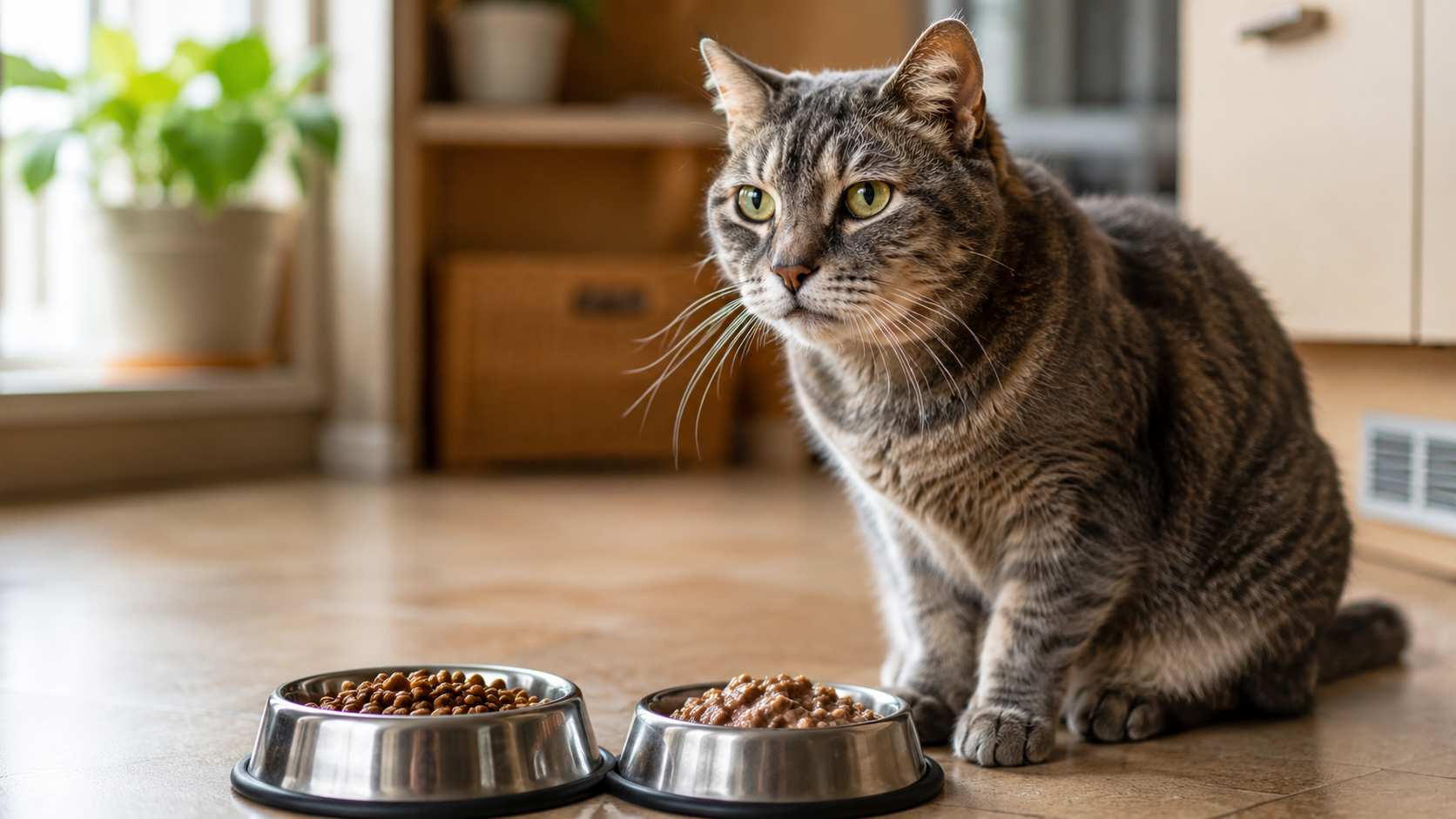
Most senior cats do best with two to three small, measured meals a day rather than free-feeding, spaced roughly 8–12 hours apart. The right amount depends on your cat’s ideal body weight, activity level, and any health conditions, not just her age. A general starting point is about 20 calories per pound of body weight per day, adjusted up or down based on body condition and your veterinarian’s guidance.
If you’ve noticed your older cat eating less, begging more, losing weight, or seeming pickier about food, a big part of the answer often comes down to how she’s being fed, not just what. This guide covers how to build a feeding schedule that fits an aging cat’s changing body, plus the warning signs that mean it’s time to call your vet instead of adjusting the schedule yourself.
Why Feeding Schedules Matter More as Cats Age
If you’ve noticed your older cat eating less, begging for food more often, or becoming unusually picky, the problem isn’t always the food itself. Sometimes it’s the feeding routine.
A consistent feeding schedule becomes increasingly important as cats grow older because their bodies simply don’t process food the same way they did in their younger years.
As cats age:
- Their metabolism usually slows down.
- They often become less active.
- Muscle mass gradually decreases.
- Digestion becomes less efficient.
- Their sense of smell may decline, making food less appealing.
- Dental disease can make eating large meals uncomfortable.
These changes mean that a feeding routine that worked perfectly when your cat was five years old may no longer be ideal at age twelve or thirteen.
Perhaps the biggest benefit of scheduled feeding is that it allows you to monitor your cat’s appetite closely. Appetite changes are often among the first warning signs of common senior illnesses such as chronic kidney disease, hyperthyroidism, diabetes, or dental disease.
A cat that grazes from a full bowl all day can slowly eat less for weeks without anyone noticing. With measured meals, however, you’ll quickly recognize when something isn’t right.
When Is a Cat Considered a Senior?
Cats don’t become “old” overnight. Instead, their nutritional needs gradually change as they move through different life stages.
| Age | Life Stage | Primary Nutrition Focus |
|---|---|---|
| 7–10 years | Mature Adult | Maintain healthy weight, support joints, preserve muscle mass |
| 11–14 years | Senior | High-quality protein, hydration, kidney support |
| 15+ years | Geriatric | Easy-to-chew foods, calorie-dense nutrition when needed, maximum hydration |
Although many cats remain active well into their senior years, preventive nutrition becomes increasingly important after age ten. Regular veterinary exams and routine weight monitoring become just as important as choosing the right food.
How Often Should Senior Cats Eat?
Most veterinarians recommend feeding healthy senior cats two to three measured meals per day, spaced as consistently as possible.
Some older cats, especially those with dental discomfort, reduced appetite, or certain medical conditions, may do better with three to four smaller meals instead of two larger ones.
Smaller meals offer several benefits for aging cats:
- They’re easier to digest.
- They reduce the chance of vomiting from an empty stomach.
- They help maintain steadier energy levels throughout the day.
- They make eating more comfortable for cats with sore mouths or missing teeth.
- They allow owners to monitor appetite more accurately.
There’s no single schedule that works for every cat, but consistency matters far more than the exact time on the clock.
Feeding Style Comparison
| Feeding Style | Best For | Things to Consider |
|---|---|---|
| 2 meals per day | Healthy senior cats with stable weight | Long gaps between meals may cause some cats to beg or vomit bile. |
| 3 small meals per day | Cats with reduced appetite, dental discomfort, or those who eat slowly | Requires a little more planning but is often easier on digestion. |
| 3–4 small meals per day | Very old cats, picky eaters, or cats recovering from illness | Helps encourage food intake without overwhelming the stomach. |
| Free-feeding | Rarely recommended for senior cats | Makes it difficult to monitor appetite and can contribute to obesity or delayed detection of illness. |
How Much Should a Senior Cat Eat?
There isn’t a single calorie recommendation that works for every senior cat.
The ideal amount depends on:
- Ideal body weight
- Body condition score
- Activity level
- Muscle mass
- Overall health
- Medical conditions such as kidney disease, diabetes, or hyperthyroidism
A commonly used starting point is:
Around 20 calories per pound of ideal body weight per day.
For example:
| Body Weight | Approximate Daily Calories |
|---|---|
| 6–8 lbs | 120–160 kcal |
| 8–10 lbs | 160–200 kcal |
| 10–13 lbs | 200–260 kcal |
| 13–16 lbs | 260–320 kcal |
These figures are only starting points. Your veterinarian may recommend more or fewer calories depending on your cat’s health and body condition.
Instead of relying solely on feeding charts printed on pet food bags, monitor your cat’s weight regularly and adjust portions gradually when necessary.
Monitor Body Condition, Not Just Weight
The number on the scale doesn’t always tell the whole story.
Older cats often lose muscle while maintaining the same body weight, so it’s equally important to assess body condition.
| Body Condition | What You’ll Notice | Recommended Action |
|---|---|---|
| Underweight | Ribs and spine are easily felt, pronounced waist | Schedule a veterinary exam and discuss increasing calorie intake. |
| Ideal | Ribs are easily felt with light pressure and a slight waist is visible | Continue the current feeding plan and monitor monthly. |
| Overweight | Thick fat pad on the abdomen, ribs difficult to feel | Reduce calorie intake gradually and encourage gentle daily activity. |
Regular monthly weigh-ins, combined with body condition checks, are one of the simplest ways to catch health problems before they become serious.
Sample Feeding Schedules by Situation
The best feeding schedule is one your cat can follow consistently every day. While the exact times aren’t important, keeping meals at roughly the same hours helps regulate appetite and makes changes in eating habits easier to spot.
Here are a few practical schedules that work well for different situations.
Healthy Senior Cat with a Stable Weight
This schedule works well for most healthy indoor senior cats.
| Time | Meal |
|---|---|
| 7:00 AM | Measured breakfast |
| 6:00 PM | Measured dinner |
| Throughout the day | Fresh water available in multiple locations |
Two measured meals are enough for many healthy senior cats, provided they’re maintaining a healthy body condition.
Senior Cat with a Reduced Appetite or Dental Discomfort
Cats that struggle to finish large meals often do better with smaller, more frequent portions.
| Time | Meal |
|---|---|
| 7:00 AM | Small breakfast |
| 1:00 PM | Small midday meal |
| 7:00 PM | Small dinner |
Smaller meals are often easier to chew and digest, especially for cats with dental disease or reduced appetite.
Senior Cat with Diabetes
Cats diagnosed with diabetes require a much more structured feeding routine.
Meals should usually be timed around insulin injections and remain as consistent as possible every day.
Never adjust a diabetic cat’s feeding schedule or portion sizes without consulting your veterinarian.
Senior Cat Prone to Weight Gain
Older indoor cats often become less active, making portion control especially important.
For these cats:
- Feed 2–3 measured meals daily.
- Measure every portion using a measuring cup or kitchen scale.
- Count treats as part of the daily calorie allowance.
- Avoid topping off the food bowl throughout the day.
Even small reductions in daily calories can make a significant difference over time.
Wet Food vs. Dry Food for Senior Cats
The type of food you choose doesn’t completely determine your feeding schedule, but it does influence hydration, portioning, and meal management.
Many veterinarians recommend including at least some wet food in a senior cat’s diet because aging cats naturally have a weaker thirst drive. As a result, they often consume less water than they actually need, increasing the risk of chronic dehydration and kidney problems.
| Food Type | Benefits for Senior Cats | Things to Consider |
|---|---|---|
| Wet Food | High moisture content, easier to chew, highly palatable, supports kidney and urinary health. | Should be served at mealtimes and discarded after about 30–60 minutes if uneaten. |
| Dry Food | Convenient, easy to measure, works well with automatic feeders, stores longer after serving. | Much lower moisture content and may be harder for cats with dental disease or missing teeth. |
Many senior cats do well on a combination of both wet and dry food.
For example:
- Wet food in the morning
- Dry food at midday using an automatic feeder
- Wet food again in the evening
This approach combines the hydration benefits of wet food with the convenience of dry food.
If your senior cat strongly prefers dry food, ask your veterinarian whether adding a small amount of warm water is appropriate. This may slightly increase moisture intake while making the kibble easier to chew.
Feeding Adjustments for Common Health Conditions
As cats age, medical conditions often become a bigger factor than age itself when deciding how often and what to feed.
If your veterinarian diagnoses a health condition, your cat’s feeding routine may need to change.
| Health Condition | Feeding Adjustment | Why It Helps |
|---|---|---|
| Chronic Kidney Disease (CKD) | Feed a prescription kidney-support diet that is typically lower in phosphorus and higher in moisture. | Supports kidney function and helps slow disease progression. |
| Hyperthyroidism | Feed consistent, calorie-rich meals because affected cats often burn calories unusually fast. | Helps reduce unintended weight loss while treatment is underway. |
| Diabetes Mellitus | Feed measured meals at consistent times, usually coordinated with insulin therapy. | Helps maintain more stable blood glucose levels. |
| Dental Disease | Offer soft wet food, pâté, or veterinarian-recommended diets that are easier to chew. | Encourages eating while minimizing discomfort. |
Important: Therapeutic or prescription diets should only be used under your veterinarian’s supervision.
How to Transition to a New Senior Cat Food
Changing your cat’s diet too quickly can cause digestive upset, especially in older cats with more sensitive stomachs.
Instead, transition gradually over 7 to 10 days.
| Days | Old Food | New Food |
|---|---|---|
| Days 1–3 | 75% | 25% |
| Days 4–6 | 50% | 50% |
| Days 7–9 | 25% | 75% |
| Day 10 | 0% | 100% |
If your cat develops vomiting, diarrhea, or refuses to eat during the transition, stay at the previous ratio for a few more days before increasing the amount of new food.
If digestive problems continue or your cat refuses food for more than a day, contact your veterinarian rather than forcing the transition.
Common Mistakes with Senior Cat Feeding Schedules
Even with the best intentions, many cat owners develop habits that make it harder to recognize health problems early.
Avoid these common mistakes:
- Leaving dry food available all day out of habit.
- Guessing portion sizes instead of measuring them accurately.
- Assuming a reduced appetite is simply part of getting older.
- Giving unlimited treats without counting their calories.
- Frequently changing feeding times.
- Continuing the same portions for years without adjusting for changes in weight or activity.
Small improvements in consistency can make a big difference in your senior cat’s long-term health and help you identify problems before they become serious.
Myth vs. Fact
There are plenty of misconceptions about feeding older cats. Believing these myths can make it harder to recognize health problems early or provide the nutrition your cat truly needs.
| Myth | Fact |
|---|---|
| “Older cats naturally eat less.” | A noticeable decrease in appetite isn’t something to ignore. It can be an early sign of dental disease, kidney disease, or another medical condition. |
| “Free-feeding is easier and just as healthy.” | While convenient, free-feeding makes it difficult to notice appetite changes and can contribute to weight gain in less active cats. |
| “If there’s food left in the bowl, my cat must be eating enough.” | A full bowl doesn’t tell you how much your cat actually ate. Measured meals make appetite much easier to monitor. |
| “All senior cats need fewer calories.” | Not always. Some senior cats need fewer calories because they’re less active, while others require the same or even more due to reduced digestive efficiency or medical conditions. |
| “Wet food isn’t necessary if my cat drinks water.” | Many older cats have a reduced thirst drive. Wet food provides additional moisture that supports kidney and urinary tract health. |
Warning Signs That Mean It’s Time to Call Your Veterinarian
A well-planned feeding schedule is helpful, but it isn’t a substitute for veterinary care. If your senior cat develops any of the following signs, it’s important to schedule an examination rather than simply adjusting the feeding routine.
- Noticeable weight loss or weight gain over several weeks
- Eating significantly less or refusing food for more than a day
- Increased thirst or more frequent urination
- Repeated vomiting or persistent diarrhea
- Difficulty chewing or refusing dry food
- Drooling while eating
- Lethargy or a sudden decrease in activity
- Begging constantly for food while continuing to lose weight
These symptoms may indicate conditions such as chronic kidney disease, hyperthyroidism, diabetes mellitus, inflammatory bowel disease, or painful dental disease. Early diagnosis often leads to more effective treatment and a better quality of life.
Practical Tips for Building a Healthy Feeding Routine
Creating a successful feeding schedule isn’t complicated. Consistency and observation are far more important than following the “perfect” timetable.
Here are a few habits that can make a meaningful difference:
- Feed your cat at approximately the same times every day.
- Measure every meal using a measuring cup or kitchen scale instead of estimating.
- Weigh your cat about once a month to monitor gradual changes.
- Check your cat’s body condition regularly, not just the number on the scale.
- Introduce new foods gradually over 7–10 days to reduce digestive upset.
- Keep food and water bowls away from the litter box.
- Place fresh water in multiple locations throughout your home.
- Consider an automatic feeder if you’re away during the day and need to maintain consistent meal times.
- Schedule veterinary wellness exams at least once a year, or every six months after age 10.
Small, consistent habits often have a greater impact on your cat’s long-term health than making frequent changes to diet or feeding times.
Frequently Asked Questions
How many times a day should a senior cat eat?
Most senior cats do well with two to three measured meals each day. Cats with reduced appetite or dental discomfort may benefit from three to four smaller meals instead.
How much should a 12-year-old cat eat each day?
A common starting point is about 20 calories per pound of ideal body weight per day, but your cat’s activity level, body condition, and medical history should guide the final amount. Your veterinarian can recommend the most appropriate calorie target.
Is it okay to free-feed a senior cat?
Free-feeding isn’t necessarily harmful, but it makes it much harder to notice early changes in appetite and can increase the risk of obesity. Measured meals provide better portion control and allow you to monitor your cat’s health more closely.
Should I feed my senior cat more or less than when they were younger?
It depends on the individual cat. Some senior cats need fewer calories because they’re less active, while others require the same or even more food due to muscle loss, reduced digestive efficiency, or medical conditions. Your cat’s body condition should guide portion adjustments rather than age alone.
What time should I feed my senior cat?
There isn’t one perfect feeding time. The most important factor is consistency. Many owners feed their cats roughly 12 hours apart, such as morning and evening, while others divide the daily food into three smaller meals.
My senior cat is eating less than usual. Should I simply feed more often?
Not without identifying the underlying cause. A reduced appetite can be one of the earliest signs of illness. If your cat continues eating less than normal, schedule a veterinary examination before making major dietary changes.
Does a diabetic senior cat need a different feeding schedule?
Yes. Cats with diabetes typically need meals that are carefully coordinated with insulin injections. Never change the feeding schedule or meal size without your veterinarian’s guidance.
Can I give treats between meals?
Yes, but treats should be given in moderation and counted as part of your cat’s total daily calorie intake to help prevent unnecessary weight gain.
Is wet food or dry food better for senior cats?
Many veterinarians recommend including wet food because its high moisture content helps support hydration and kidney health. Dry food can also be part of a healthy diet when portions are measured appropriately. The best choice depends on your cat’s individual health needs and preferences.
Do elevated food bowls help senior cats?
They can. Cats with arthritis, neck stiffness, or reduced mobility often find elevated bowls more comfortable because they reduce the need to crouch while eating. While they aren’t necessary for every senior cat, they may improve comfort for cats with age-related joint problems.
How can I tell if my senior cat is eating the right amount?
Regular weigh-ins and body condition checks are the most reliable indicators. If your cat begins gaining or losing weight unexpectedly, adjust the feeding plan with guidance from your veterinarian rather than making large changes on your own.
Final Takeaways
A healthy feeding schedule is one of the simplest ways to support your senior cat’s long-term health.
Keep these key points in mind:
- Feed two to three measured meals daily, or three to four smaller meals if your cat has a reduced appetite.
- Base portion sizes on ideal body weight, body condition, activity level, and overall health, not age alone.
- Include wet food whenever possible to help improve hydration and support kidney health.
- Avoid free-feeding if you want to monitor your cat’s appetite accurately.
- Weigh your cat regularly and watch for gradual changes in body condition.
- Transition to new foods slowly over 7–10 days.
- Never ignore persistent appetite changes, unexplained weight loss, increased thirst, vomiting, or lethargy. These symptoms deserve prompt veterinary attention.
A consistent feeding routine, combined with regular veterinary checkups and careful observation at home, gives your senior cat the best chance to stay healthy, comfortable, and active throughout their golden years.