
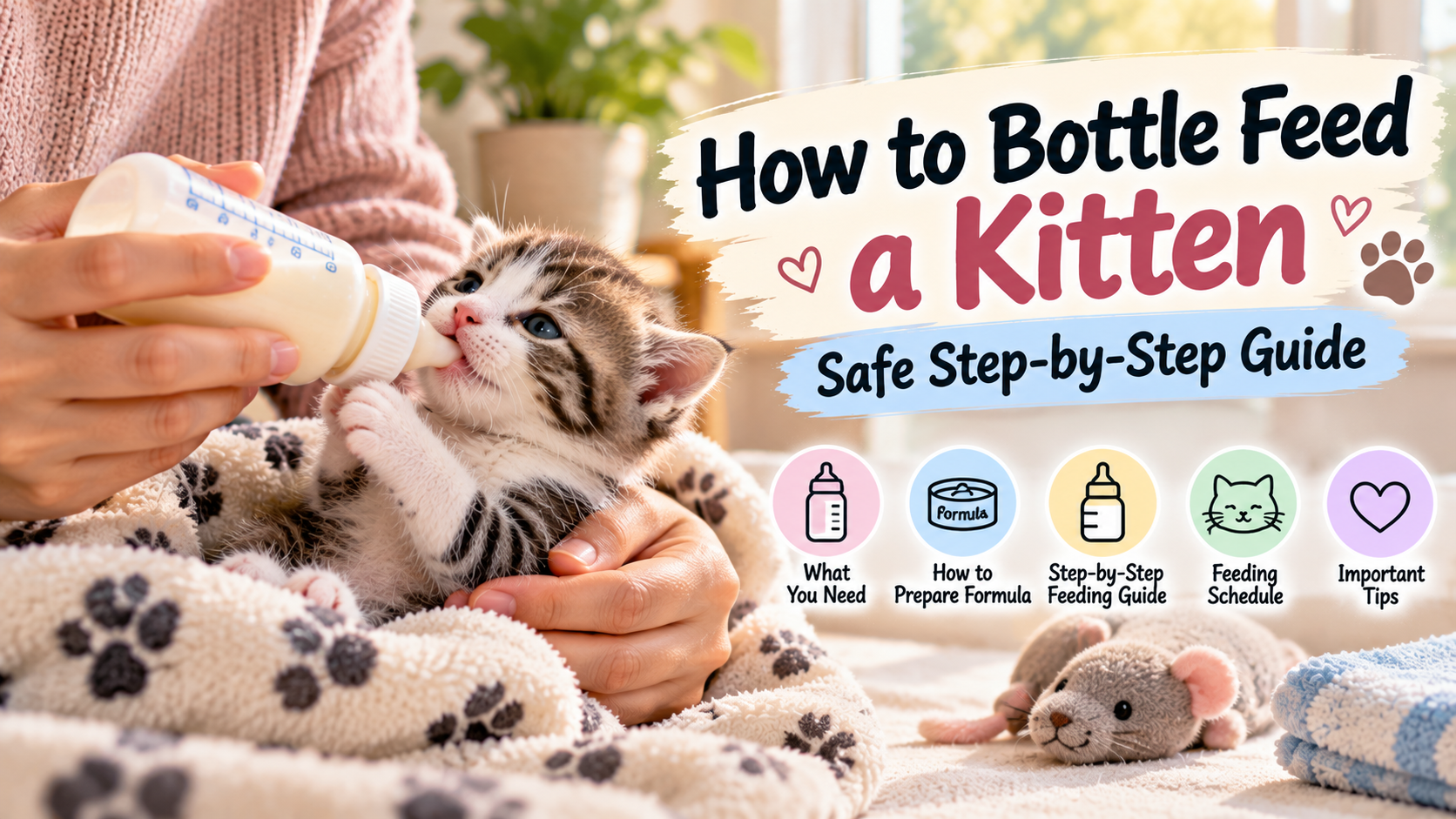
Bottle feeding a kitten can feel intimidating at first, especially when the kitten is tiny, weak, or crying for food. The good news is that the basic process is manageable once you have the right supplies and know how to keep the kitten warm, positioned correctly, and fed on a regular schedule.
Use a commercial kitten milk replacer, not cow’s milk, and never feed a chilled kitten until they have been warmed. Hold the kitten belly-down with the head in a natural position, let them suck at their own pace, and never squeeze formula into the mouth. After feeding, burp the kitten and gently stimulate them to urinate and pass stool if they are too young to do that on their own.
If the kitten is injured, very cold, limp, struggling to breathe, repeatedly vomiting, or refusing several feedings, contact a veterinarian or experienced animal rescue group promptly. Very young kittens can become dehydrated or weak quickly.
Before You Start: Make Sure the Kitten Needs a Bottle
A kitten found alone does not always need to be hand-raised. The mother may be nearby, or a nursing mother cat may be able to care for the kitten more successfully than a person can.
If the kitten is clean, warm, quiet, and has a rounded belly, watch from a safe distance to see whether the mother returns. Keep the kitten warm while you wait, but avoid leaving a very young kitten outside in cold weather or a dangerous area.
A kitten may need bottle-feeding if they are:
- Orphaned or separated from their mother
- Rejected by the mother or unable to nurse
- Too weak to latch
- Part of a large litter and not getting enough milk
- Being treated for an illness that prevents normal nursing
If possible, have a veterinarian estimate the kitten’s age and check their health. Age affects the type of care they need, including feeding frequency, stimulation, and whether they can use a litter box.
What You Need to Bottle Feed a Kitten
Gather your supplies before the kitten becomes hungry. Feeding should be calm and efficient, and searching for equipment while a kitten is crying can make the process harder.
You’ll usually need:
- Commercial kitten milk replacer in powder or ready-to-feed form
- A kitten nursing bottle with a soft nipple, or a feeding syringe recommended by a veterinarian
- Warm water if preparing powdered formula
- A clean towel or blanket
- A small kitchen scale that measures in grams
- A shallow dish or container for cleaning supplies
- A warm, safe nesting area
- Cotton balls, soft tissues, or a warm damp cloth for bathroom stimulation
Do not use a baby bottle designed for human infants unless a veterinarian specifically tells you to. The nipple may release milk too quickly or be difficult for a kitten to use.
Choose a nipple made for kittens and make sure the opening is small. Formula should come out slowly when the bottle is gently tipped or inverted. If it pours out, the hole is too large and the kitten could inhale the liquid.
How to Prepare Kitten Formula
Follow the mixing directions on the milk replacer package exactly. Different products have different instructions, and making the formula too concentrated or too diluted can cause digestive problems or poor nutrition.
For powdered formula:
- Wash your hands and clean the bottle, nipple, and mixing container.
- Measure the powder and water according to the package directions.
- Mix until there are no dry clumps.
- Warm only the amount you plan to use for that feeding.
- Test a drop on the inside of your wrist. It should feel warm, not hot.
A bottle warmer or bowl of warm water can heat the formula gently. Avoid microwaving the bottle because microwaves can create hot spots. If you do warm formula in a microwave-safe container, mix it thoroughly and test the temperature carefully before feeding.
Prepare and store formula according to the product label. Throw away formula that has been left out too long or that has been contaminated by a used nipple. When in doubt, make a fresh batch.
Never Feed a Cold Kitten
A chilled kitten may not be able to digest food normally. Feeding a cold kitten can increase the risk of serious problems, including regurgitation or aspiration.
Feel the kitten’s body and paws. If the kitten feels cool, place them in a warm nesting area with a safe heat source. A heating pad set on low and covered with several layers of fabric can help, but the kitten must be able to move away from the heat. Never place a kitten directly on a heating pad, and check often to make sure they are not becoming overheated.
Warm the kitten gradually. If they are very cold, limp, barely responsive, or breathing abnormally, seek veterinary help immediately instead of trying to force a feeding.
How to Bottle Feed a Kitten: Step-by-Step
Once the kitten is warm and the formula is ready, use the following method.
1. Wash Your Hands and Settle the Kitten
Wash your hands before handling the kitten. Place a towel on your lap or on a stable surface so the kitten has traction.
Keep the room quiet and hold the kitten gently. Young kittens often wiggle or cry at first, but rough handling can make them frightened and may cause them to breathe in formula if they suddenly jerk their head.
2. Hold the Kitten Belly-Down
Position the kitten on their stomach with the legs resting naturally underneath or slightly to the sides. Keep the head level or just slightly raised, as it would be during nursing from the mother.
Never feed a kitten on their back like a human baby. This position can allow formula to flow into the lungs. Do not hold the kitten upright or tip their head sharply backward either.
Support the kitten’s body with one hand and offer the bottle with the other. The kitten should be able to control the pace of feeding.
3. Offer the Nipple Gently
Touch the nipple to the kitten’s mouth and allow them to latch. You can place a tiny drop of formula on the nipple to encourage interest, but do not squirt formula into the mouth.
Some kittens need a few moments to understand what to do. Keep the nipple at a gentle angle so formula fills the tip without flooding the mouth.
If the kitten is healthy and hungry, they will usually begin sucking. Avoid pulling the bottle away repeatedly, as this can make latching more difficult.
4. Let the Kitten Suck at Their Own Pace
Feed slowly and watch the kitten closely. Normal nursing usually includes steady sucking with pauses to breathe.
Stop immediately if you notice:
- Formula coming from the nose
- Coughing, choking, gagging, or wheezing
- Milk bubbling around the mouth
- Difficulty breathing
- Sudden weakness or unusual stillness
If formula comes from the nose, stop the feeding and contact a veterinarian, especially if the kitten coughs or has trouble breathing. Formula entering the airways can lead to aspiration pneumonia, which is an emergency.
Never squeeze the bottle to force formula into the kitten’s mouth. Never force a syringe plunger quickly. Syringe-feeding can be dangerous if the liquid is delivered faster than the kitten can swallow, so ask a veterinarian or experienced neonatal-care provider to demonstrate it if a bottle is not working.
5. Follow the Formula Label and Veterinary Guidance
The amount a kitten needs depends on their age, weight, health, and the formula being used. Follow the product directions and any instructions from your veterinarian or rescue organization.
A scale is useful because a kitten’s weight gives you a better way to monitor progress than appearance alone. Weigh the kitten at the same time each day, or as advised by a professional, and write down:
- Weight
- Time and amount of each feeding
- Urination and bowel movements
- Vomiting or diarrhea
- Energy level and nursing behavior
A kitten that is not gaining weight, is losing weight, or becomes weaker needs professional evaluation. Do not increase the formula amount dramatically without guidance. Overfeeding can cause stomach upset, bloating, diarrhea, and discomfort.
How Often Do Kittens Need a Bottle?
Very young kittens generally need frequent feeding, including during the night. The exact schedule depends on age and weight, so a veterinarian or neonatal-care specialist should help you create a plan whenever possible.
As a general guide, kittens often need:
| Approximate age | Typical care needs |
|---|---|
| Newborn to about 1 week | Frequent formula feedings, warmth, and stimulation after each feeding |
| About 1 to 2 weeks | Frequent feedings continue; the kitten still needs careful temperature and bathroom support |
| About 2 to 3 weeks | Regular bottle-feeding remains important; eyes and movement may be developing |
| About 3 to 4 weeks | The kitten may begin showing interest in soft food, but many still need formula |
| About 4 to 5 weeks and older | Weaning can usually begin gradually if the kitten is healthy and ready |
These are broad age ranges, not a substitute for an individualized feeding plan. A kitten’s condition matters as much as their estimated age.
Try to keep feeding times consistent. A very young kitten may cry when hungry, but crying is not a reliable way to decide how much formula to give. Use the kitten’s weight, the formula instructions, and professional advice instead.
Do Kittens Need Help Going to the Bathroom?
Yes, very young kittens may need stimulation to urinate and pass stool. Mother cats normally lick the genital and anal areas after nursing. Kittens often cannot eliminate on their own until they are several weeks old.
After feeding:
- Hold the kitten securely over a towel.
- Use a warm, damp cotton ball, tissue, or soft cloth.
- Gently rub the genital and anal area with small, light strokes.
- Continue briefly until the kitten urinates or passes stool.
- Clean and dry the kitten afterward.
Do not rub hard or scrub the skin. Frequent moisture and friction can cause irritation, so keep the area clean and dry. If the kitten has not urinated, has a swollen belly, strains repeatedly, or has severe diarrhea, contact a veterinarian.
As the kitten grows and begins eating solid food, they may start using a shallow litter box. Use a safe, low-sided box and supervise at first.
Should You Burp a Bottle-Fed Kitten?
A gentle burp can help release swallowed air, although not every kitten needs to burp after every feeding.
Hold the kitten upright against your chest or support them in a natural position, then gently rub or pat their back. Keep the pressure light. Never shake, bounce, or slap a kitten.
If the kitten’s belly looks very round and uncomfortable, or if they repeatedly spit up, have diarrhea, or seem painful after feeding, ask a veterinarian to review the feeding technique and formula amount.
How to Clean Bottles and Nipples
Clean feeding equipment after every use. Leftover formula can support bacterial growth, which is especially risky for young kittens with immature immune systems.
A basic cleaning routine is:
- Rinse the bottle and nipple soon after feeding.
- Wash all parts with hot, soapy water.
- Use a small brush to clean the inside of the bottle.
- Rinse away all soap.
- Allow the parts to air-dry completely on a clean surface.
- Inspect the nipple regularly for tears, cracks, or an opening that has become too large.
Replace damaged nipples promptly. A worn nipple may release formula too quickly and increase the risk of choking or aspiration.
Common Bottle-Feeding Mistakes to Avoid
Small changes in technique can make a big difference. Avoid these common problems:
Feeding the Kitten on Their Back
This is one of the most dangerous mistakes because the kitten cannot control the flow as naturally. Keep the kitten belly-down, with the head in a neutral position.
Using Cow’s Milk
Cow’s milk does not provide the right nutrition for a growing kitten and may cause diarrhea. Use a commercial kitten milk replacer unless a veterinarian gives you different instructions.
Feeding a Chilled Kitten
Warm the kitten first. A cold kitten may not digest formula properly and may be too weak to suck safely.
Cutting the Nipple Hole Too Large
A fast flow can overwhelm a kitten. The formula should drip slowly, not pour out.
Squeezing the Bottle
The kitten should draw formula out by sucking. Forcing liquid into the mouth can cause choking or aspiration.
Overfeeding to Make Up for a Missed Feeding
Do not give a large amount all at once unless a veterinarian specifically directs you to do so. Contact a professional for advice if a kitten misses feedings or refuses to eat.
Ignoring Hygiene
Dirty bottles, old formula, or unwashed hands can contribute to stomach illness. Clean equipment after every feeding and follow storage directions.
Signs the Kitten May Be Getting Enough Food
A healthy, adequately fed kitten is usually warm, settles after feeding, and shows normal nursing behavior. They should have regular urination, and their weight should trend upward as they grow.
Still, a kitten can look satisfied and remain unwell. Keep daily records rather than relying only on behavior. Call a veterinarian if the kitten:
- Refuses to nurse or suddenly nurses less
- Is losing weight or not gaining weight
- Has repeated vomiting or watery diarrhea
- Has a swollen, painful, or hard belly
- Is unusually weak, limp, cold, or difficult to wake
- Has pale, gray, or bluish gums
- Coughs, wheezes, or has formula coming from the nose
- Has trouble breathing
- Has not urinated or is straining to eliminate
Very young kittens can deteriorate quickly, so it is better to ask for help early.
When to Contact a Veterinarian or Rescue Professional
Bottle-feeding advice is useful, but it cannot replace an examination when a kitten is sick. Contact a veterinarian promptly if you are unsure of the kitten’s age, the kitten is not nursing well, or the kitten has any warning signs.
Seek urgent care for breathing trouble, suspected aspiration, severe weakness, severe dehydration, seizures, uncontrolled bleeding, or a kitten that feels cold and does not respond normally.
A local animal shelter, neonatal kitten rescue, or veterinary clinic may also be able to help with weighing, formula selection, feeding demonstrations, and round-the-clock care. If you have never bottle-fed a kitten before, a hands-on demonstration can prevent dangerous mistakes.
How to Begin Weaning a Kitten
Many kittens start showing interest in soft food at around four weeks, but readiness varies. Do not stop bottle-feeding suddenly just because the kitten licks a little food.
To begin weaning, offer a small amount of wet kitten food mixed with kitten formula in a shallow dish. Let the kitten explore it. You may need to place a tiny amount on a clean finger or the kitten’s lips, but never push the face into the dish.
Continue offering formula while the kitten learns to eat. Gradually increase the amount of solid food and reduce bottle feedings as the kitten reliably eats, drinks, gains weight, and stays healthy. A veterinarian can help you decide when the transition is complete.
A Simple Bottle-Feeding Routine
A consistent routine makes care easier and helps you notice problems early.
- Wash your hands.
- Check that the kitten is warm and alert enough to feed.
- Prepare fresh formula according to the label.
- Test the temperature on your wrist.
- Place the kitten belly-down on a towel.
- Let the kitten latch and suck at their own pace.
- Stop if coughing, choking, or formula from the nose occurs.
- Burp gently if needed.
- Stimulate urination and bowel movements if the kitten is too young to eliminate alone.
- Clean the kitten and feeding equipment.
- Record the feeding and weigh the kitten as directed.
Bottle-feeding takes patience, but careful technique and regular monitoring can give a vulnerable kitten a much better chance to grow. Keep the kitten warm, use the correct formula, feed slowly, and get professional help whenever something does not seem right.