
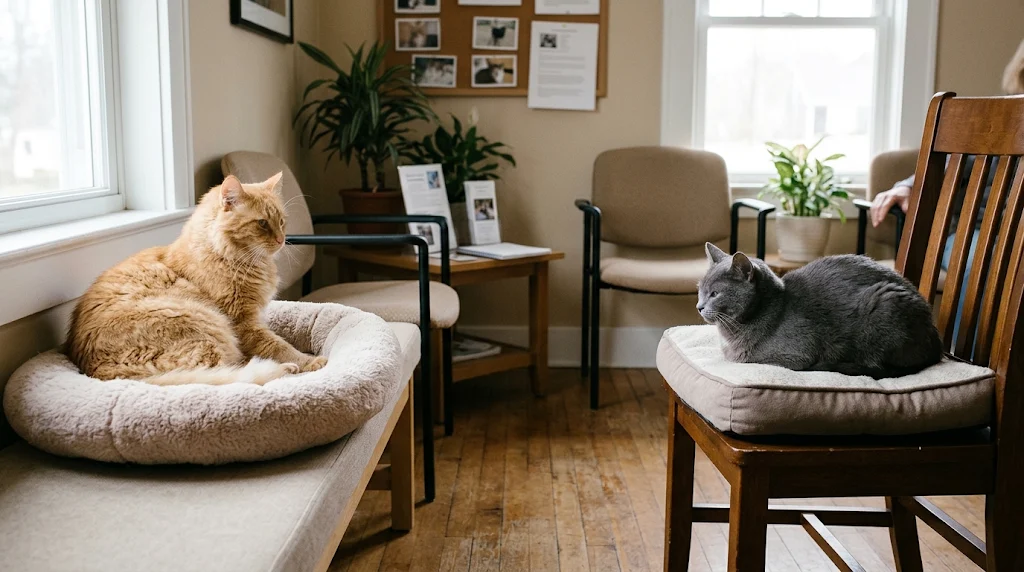
The shelter has two cats you like. One is a male who comes forward for attention, and the other is a female who watches quietly from her bed. Are male or female cats better pets once you get them home? Instead of assuming the male will be cuddly or the female will be independent, learn how each behaves in everyday situations.
Quick Answer: Neither male nor female cats make better pets as a general rule. Spayed females and neutered males can both be affectionate, playful, quiet, or independent. Choose a cat whose temperament, age, care requirements, and previous experiences match your household. Sex matters most when considering reproductive health and behaviors associated with intact cats.
Male vs. Female Cats: Differences That Actually Matter
Male cats tend to be larger on average, but there is plenty of overlap. Breed, genetics, development, and body condition all affect size. The MSD Veterinary Manual’s cat selection guide explains that spaying and neutering make behavior between the sexes more similar, especially where reproduction is concerned.
| Factor | Male cats | Female cats |
|---|---|---|
| Affection and sociability | Varies by individual | Varies by individual |
| Average size | Often somewhat larger | Often somewhat smaller |
| Reproductive behavior if intact | May roam, fight, and spray | May call loudly, try to escape, and become pregnant |
| Everyday care after sterilization | Food, play, litter, preventive care | Same basic needs |
| Urinary blockage risk | Higher because of anatomy | Lower, but not zero |
This isn’t a personality scorecard. Knowing a cat is male or female tells you relatively little about whether that individual will sit on your lap, welcome visitors, or enjoy being held.
Are Male Cats More Affectionate Than Females?
Some owners have owned unusually affectionate males and reserved females. Others report the opposite. These experiences can be true without establishing a rule that applies to other cats.
The cat that approaches you quickly during a shelter visit might enjoy attention, but it might also be excited about food or simply curious. The quiet cat might need time to feel secure in an unfamiliar room. Ask caregivers how the cat behaves when the building is quiet, when visitors come in, and after it has settled into a familiar routine.
According to Cats Protection’s adoption guidance, a cat’s temperament reflects a mix of inherited traits and experiences. A lap cat can be either sex. If affection matters to you, look for the type of interaction you want rather than a male or female label.
Also decide what affection means to you. A cat that follows you around or sleeps near your chair may enjoy your company without wanting to be carried. That can be an excellent relationship even if the cat rarely sits on your lap.
How Unneutered Cats Differ From Spayed or Neutered Cats
Reproductive status affects behavior more predictably than many popular male-versus-female personality claims.
Intact males
An unneutered male may seek mates, wander, fight other cats, or mark areas with urine. These behaviors can be difficult to manage indoors. Neutering can reduce mating-related behaviors, though spraying and conflict can persist for other reasons, including stress or medical problems.
Intact females
An unspayed female may become restless, vocal, or more determined to get outside during heat. Pregnancy brings additional care, health risks, and the responsibility of finding homes for kittens. Spaying prevents pregnancy and removes the normal heat cycle.
The American Veterinary Medical Association supports spaying or neutering cats by around five months of age, with individual timing discussed with a veterinarian. There is no need to wait for a female cat to have a litter before arranging appropriate sterilization.
If you adopt through a shelter, ask whether the procedure has already been completed and what follow-up care is needed. Don’t assume a cat is sterilized because it looks mature.
Which Sex Is Less Expensive or Easier to Care For?
There isn’t a dependable winner. A spay surgery may be priced differently from a neuter, but the actual cost depends on the clinic, the cat’s medical needs, and whether a rescue includes surgery in the adoption fee. Over a lifetime, health and lifestyle usually matter more to your budget than that initial difference.
Before adopting, compare local costs for preventive examinations, vaccines, parasite protection, dental care, food, litter, and emergency treatment. Set up a plan for unexpected bills. Our affordable cat food guide explains how to compare food costs without sacrificing appropriate nutrition.
One real sex-related health difference to know about is urinary obstruction. The Cornell Feline Health Center explains that male cats are more susceptible because of their narrower urethra. This is not a reason to avoid all male cats. It is a good reason to learn the warning signs: repeated straining with little or no urine requires emergency veterinary care in any cat.
Choosing a Cat for Your Actual Household
Imagine what a normal Tuesday looks like in your home. Is it quiet while you work, busy with children, or shared with a dog? Matching a cat to that environment matters more than finding the sex you’ve heard is best.
| Your household | What to prioritize |
|---|---|
| First-time owner working full-time | Adult with a known routine and manageable care needs |
| Children | Cat comfortable with gentle interaction, plus adult supervision and retreat areas |
| Existing dog | A documented history around dogs and a controlled introduction |
| Existing cat | Compatible energy, social history, and room for separate resources |
| Quiet apartment | Individual comfort indoors, with space to play, climb, and hide |
If there is a dog at home, read our guide to choosing a cat for a dog household. It focuses on the dog’s behavior and the ability to manage introductions rather than the cat’s sex.
An adult cat’s personality is often easier to assess because it has had time to develop. Our adult cat versus kitten comparison can help you choose the life stage that fits your schedule.
A Simple Shelter Interview That Helps You Decide
Ask the staff or foster caregiver these questions about each candidate:
- Does the cat seek company or prefer quiet time?
- How does the cat respond to petting, handling, and unfamiliar visitors?
- What is their usual activity level during the day?
- Have they lived with children or other animals before?
- Do they have medical, dietary, or behavioral needs that require additional care?
If you meet the two cats on different days, try meeting them again in a quiet setting if the shelter permits. Avoid provoking them to test patience. If a cat moves away, respect that choice. A single interaction may tell you less than weeks of observations from a foster home.
Frequently Asked Questions
Are male cats better for first-time owners?
Not automatically. A healthy adult of either sex with a predictable routine and a temperament that fits your home may be easier to care for than an energetic kitten.
Do female cats spray urine?
Yes, females can spray too. Sterilization can reduce mating-related marking, but continued marking may have other causes. Ask your veterinarian about a new change in litter habits.
Do male cats need more food than females?
Some larger cats may need more calories, but portions depend on weight, body condition, life stage, activity, and health. Sex alone isn’t a feeding formula.
Are female cats better with children?
There is no dependable sex-based rule. Choose a cat with suitable experiences and teach children to respect its space. Supervise interaction regardless of sex.
Should I adopt two cats of opposite sexes?
Sex is less important than compatibility once the cats are sterilized. Our one cat versus two guide explains the commitment of a pair. Intact opposite-sex cats must be managed to prevent unwanted breeding.
Look for the Cat You Want to Live With
Decide what care you can provide and what kind of companionship you hope for. Tell the adoption counselor those details before narrowing the search. The right cat may be the one you initially overlooked, regardless of whether it’s male or female.