
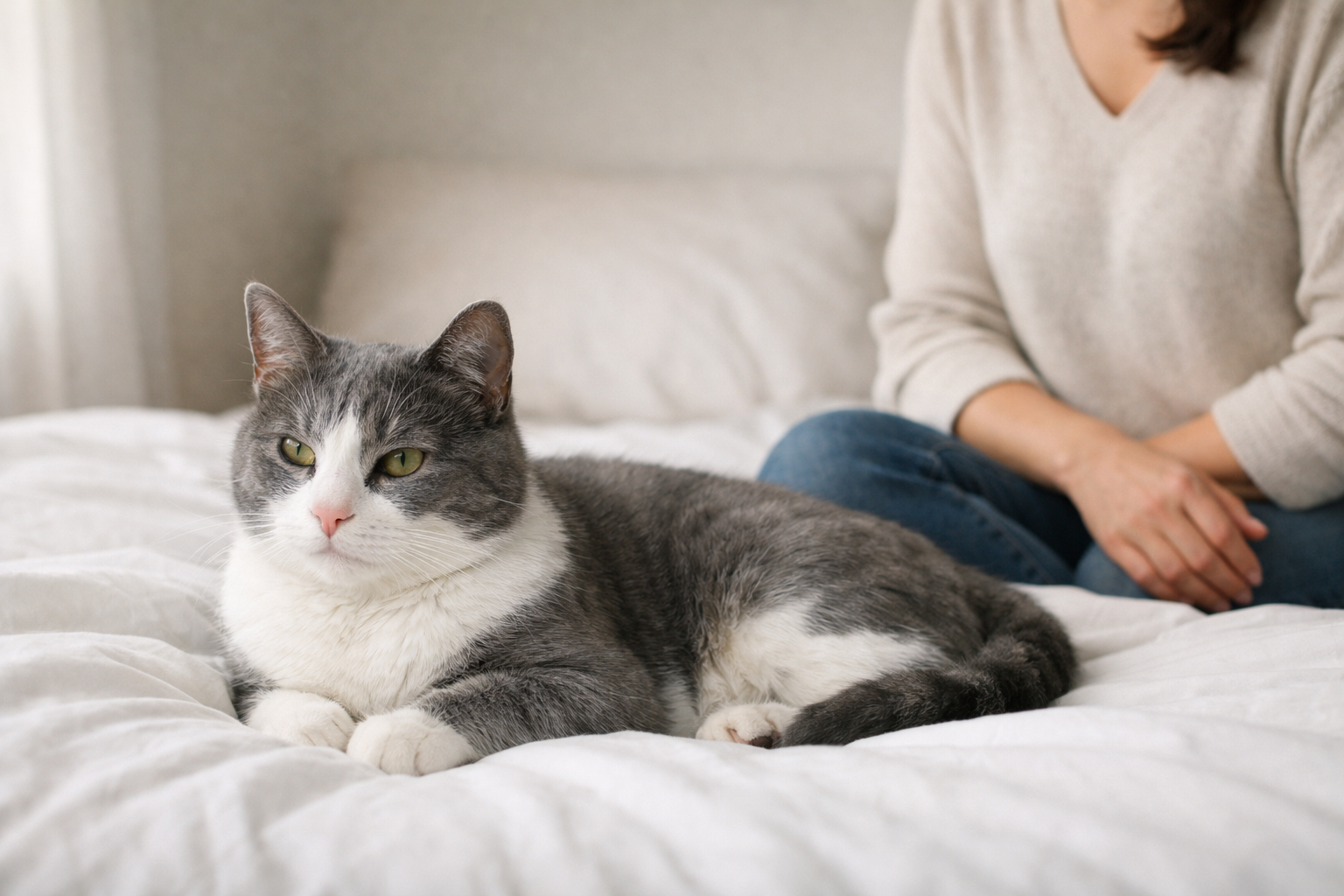
The best way to tell if your cat is getting better is to look for a steady return toward their normal habits: eating more willingly, breathing comfortably, using the litter box normally, moving with less discomfort, and showing more interest in their surroundings. Several signs improving together are more reassuring than one good meal or a brief burst of energy.
Recovery should also include improvement in the problem that made your cat ill. A friendlier cat who is still straining to urinate, for example, needs urgent care, not more observation.
Use your veterinarian’s recovery instructions as your main guide. If your cat hasn’t been examined, apparent improvement doesn’t necessarily mean the underlying problem has resolved.
Check for urgent problems before judging recovery
Some warning signs matter more than whether your cat seems brighter. Seek emergency veterinary care now if your cat has:
- Open-mouth breathing, obvious effort to breathe, or blue, gray, or unusually pale gums.
- Repeated attempts to urinate with little or no urine, especially in a male cat.
- Collapse, unresponsiveness, a seizure, or sudden inability to stand.
- Sudden painful weakness or paralysis of the back legs.
- Severe or rapidly worsening pain, uncontrolled bleeding, or a rapidly swollen abdomen.
- A suspected poisoning or swallowed string, medication, or other dangerous object, even if they currently seem better.
Call your veterinarian promptly for repeated vomiting, inability to keep water down, worsening weakness, or a marked decline in eating. If an adult cat has eaten nothing for about 24 hours, seek veterinary advice rather than waiting another day. Contact the vet sooner for kittens, cats with diabetes, or cats who are already ill or medically fragile. Overweight cats are also at particular risk of serious complications from prolonged poor intake.
These are general thresholds, not reasons to wait if something seems seriously wrong.
Signs your cat may be recovering
Compare your cat with their own healthy baseline. A naturally quiet senior cat and an energetic young adult won’t show recovery in exactly the same way.
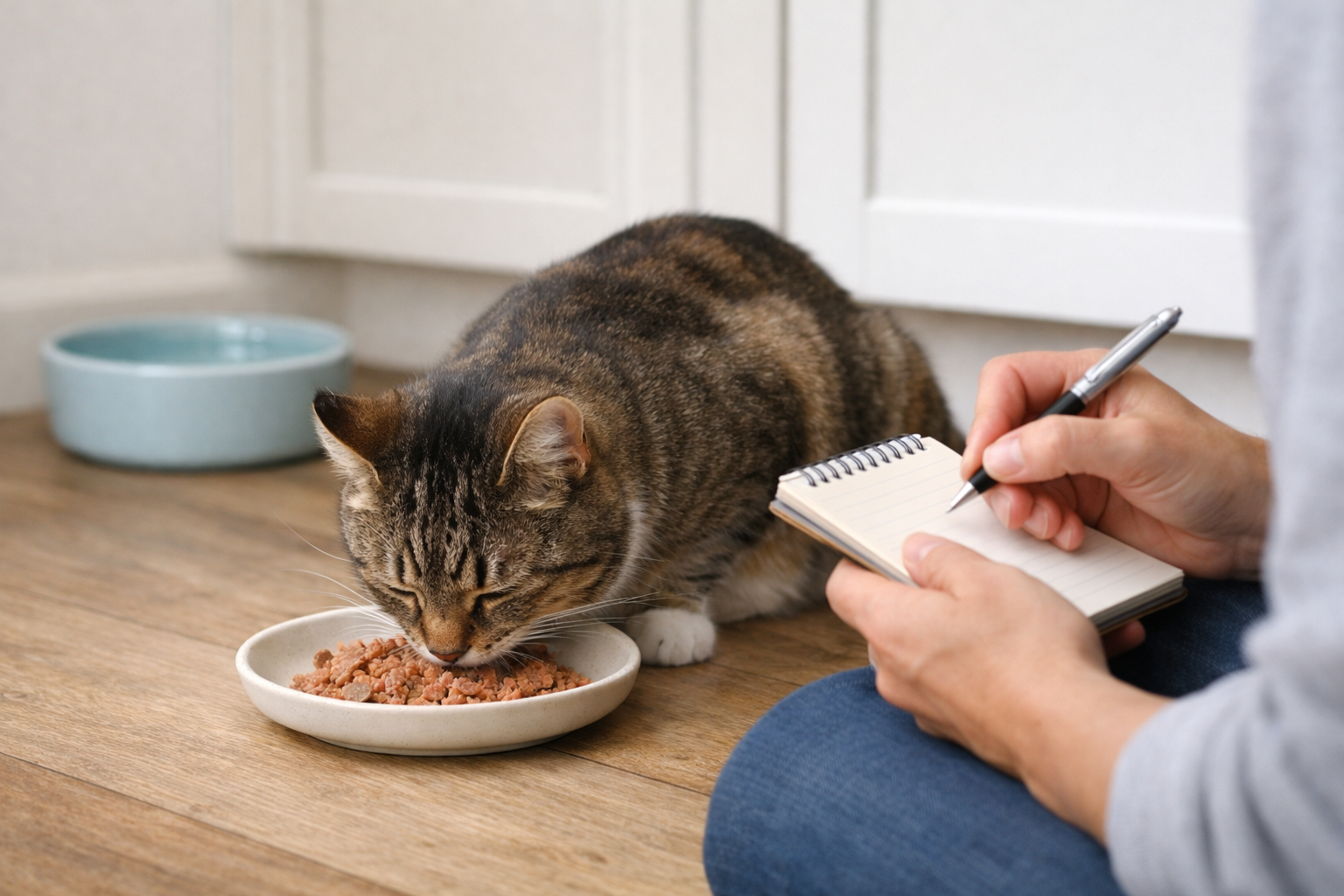
Appetite is returning consistently
A recovering cat may approach meals without coaxing, eat a larger share of their usual portion, and continue eating at later meals. Record the amount eaten rather than simply noting that they visited the bowl.
A few licks of gravy or several treats don’t necessarily add up to enough food. If your cat seems hungry but drops food, chews awkwardly, drools, or turns away after trying to eat, pain or nausea may still be interfering.
Follow any prescribed diet or feeding plan. Don’t force-feed or syringe-feed unless your veterinary team has specifically instructed you; these methods can cause distress and carry aspiration risks.
Breathing looks easy at rest
Comfortable breathing should look quiet and effortless, without an open mouth, pronounced abdominal pushing, or an extended neck.
If your vet has asked you to monitor breathing, count while your cat is asleep and not purring: one rise and fall of the chest equals one breath. Count for 30 seconds and multiply by two.
Many healthy sleeping cats breathe roughly 15–30 times per minute. A persistent increase above your cat’s usual rate deserves a call, especially with heart or lung disease. A repeatedly measured sleeping rate above 40 breaths per minute warrants prompt veterinary advice. Any visible breathing difficulty is an emergency regardless of the number.
Litter box habits are moving toward normal
Look for comfortable urination, urine amounts close to normal, and stool gradually returning to your cat’s usual consistency and frequency.
Passing a few drops of urine doesn’t rule out a developing blockage. Repeated squatting, crying, genital licking, or frequent trips with little output need urgent assessment.
Stool may be less frequent after reduced food intake, but repeated straining, vomiting, a painful abdomen, or ongoing lack of stool needs veterinary advice. Don’t give human laxatives or enemas without veterinary direction; some are dangerous for cats.
Movement and posture look more comfortable
A cat who feels better may change resting positions more easily, walk to food and water, or stop sitting in a tense, hunched posture. Their face may look less strained, and they may tolerate normal interaction more comfortably.
However, returning energy isn’t permission to jump or play after surgery or injury. Pain medication may make a cat feel more active before tissues have healed. Continue all prescribed activity restrictions.
Interest in everyday life is returning
Some recovering cats resume watching birds, greeting household members, grooming, or choosing familiar resting places. Others simply become more alert and responsive.
These are useful supporting clues, not proof of recovery. Cats may purr when stressed or painful, and a sick cat may still seek affection. A wet nose, warm ears, or one playful moment cannot reliably tell you whether an illness has resolved.
Look for improvement in the original problem
General behavior matters, but the main symptom should also improve. What counts as progress depends on the illness or procedure.
| Original problem | Useful signs of progress | Reasons to contact the vet |
|---|---|---|
| Vomiting or diarrhea | Fewer episodes, food staying down, improving appetite and stool | Repeated vomiting, blood, worsening weakness, inability to keep water down |
| Respiratory illness | Easier breathing, less discharge, appetite returning | Increased breathing effort, open-mouth breathing, declining intake |
| Injury or pain | More comfortable rest and movement within prescribed limits | Increasing swelling, new inability to bear weight, worsening pain |
| Surgery or wound care | Incision remains closed and dry, comfort gradually improves | Wound opening, discharge, odor, bleeding, spreading redness or swelling |
| Urinary illness | Comfortable urination with normal output | Repeated straining or little to no urine, seek urgent care |
A symptom stopping isn’t always enough by itself. For example, a cat who stops vomiting but also stops eating and becomes weaker isn’t showing a reassuring overall pattern.
For chronic kidney disease, heart disease, diabetes, and other ongoing conditions, home observations are only part of the picture. Your veterinarian may need an examination, bloodwork, urine testing, or imaging to assess whether treatment is working.
Keep a simple recovery log instead of relying on memory
A brief written record makes small changes easier to spot and helps your vet decide what to do next. Check at consistent times without repeatedly waking or handling your cat.
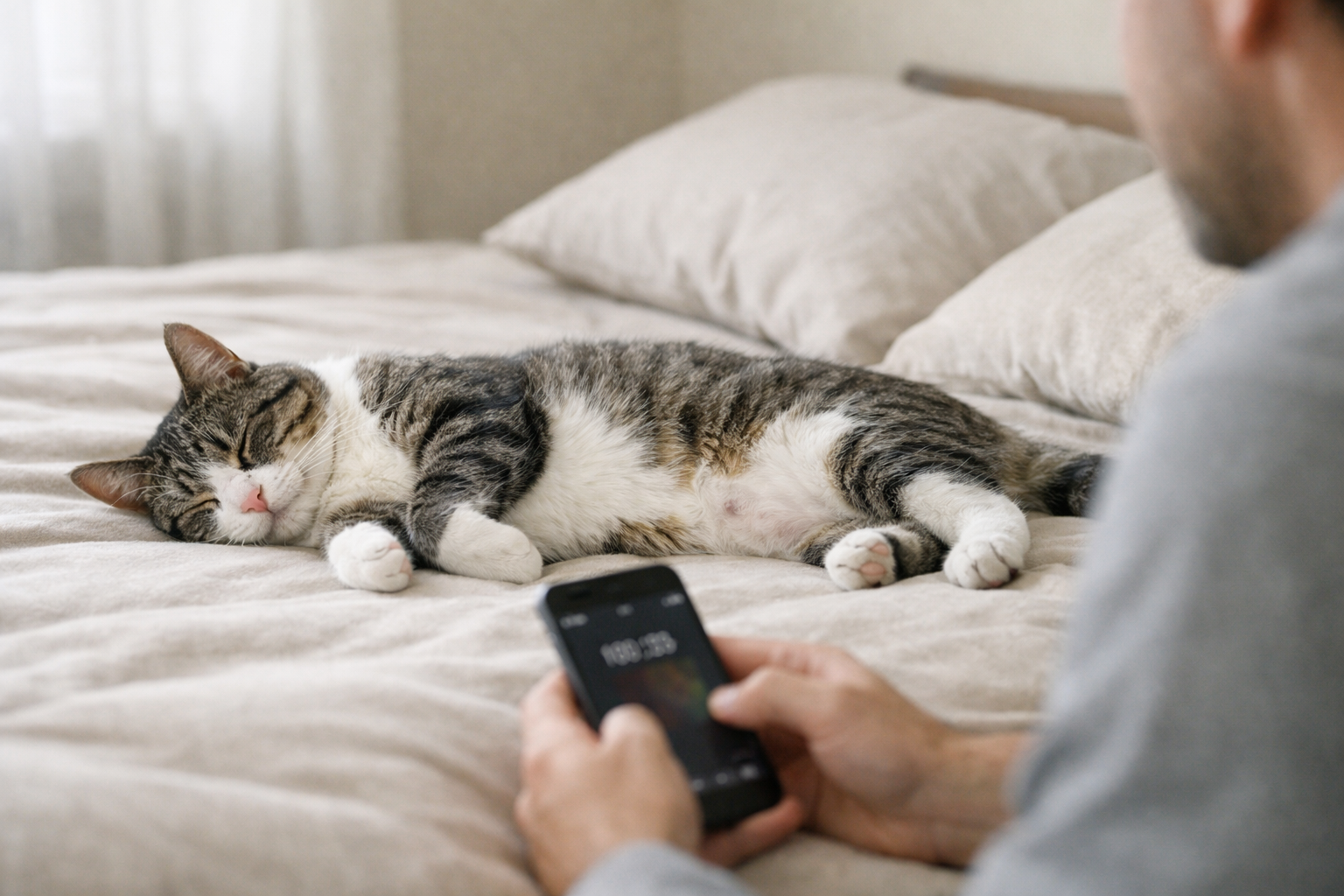
Record the following:
- Food: What you offered and approximately how much your cat ate.
- Water: Noticeable changes in drinking. Remember that wet food supplies water, too.
- Litter box: Urine output, stool consistency, straining, and accidents.
- Main symptom: Number of vomiting episodes, coughing episodes, or other relevant events.
- Comfort and activity: Hiding, posture, walking, rest, and interest in normal routines.
- Treatment: Medication times, missed doses, and possible side effects.
- Vet-requested measurements: Sleeping breathing rate, weight, or other monitoring your vet recommends.
A useful entry might read: “Morning: ate half the measured breakfast, one normal-sized urine clump, no vomiting overnight, walked to the window, medication given as directed.” That tells your vet much more than “seems a little better.”
In a multicat household, a quiet recovery room with your cat’s own food, water, and litter box can help you identify whose intake and output you’re seeing. Keep the setup comfortable and avoid unnecessary isolation if it causes distress.
Take a short video of unusual walking, coughing, or behavior if you can do so safely. Never delay urgent care to collect a recording.
How long should it take for a cat to get better?
There is no single normal recovery timeline. It depends on the diagnosis, severity, age, other medical conditions, and treatment. Recovery from anesthesia, an infection, a fracture, and a chronic disease flare-up can follow very different courses.
Before leaving the clinic, or during a follow-up call, ask:
- What should improve first?
- By when should I see that change?
- Which symptoms may continue temporarily?
- What specific changes mean I should call or go to an emergency hospital?
- When is the recheck, and will testing be needed?
Follow the timeline your veterinarian gives rather than a general internet estimate. If no timeline was provided, call to clarify, especially if appetite remains low, pain seems poorly controlled, or the main symptom isn’t changing.
Recovery can include quieter periods, but new symptoms, loss of progress, or worsening illness shouldn’t automatically be dismissed as a normal setback. One energetic afternoon doesn’t cancel out a full day of poor eating or increasing breathing effort.
Is your cat healing, or just sleepy from medication?
Some pain medicines, sedatives, and other treatments can make cats drowsy. After anesthesia, sleepiness or reduced coordination may also occur for a period described in the discharge instructions.
Sleep alone cannot distinguish healing from medication effects or worsening illness. More reassuring signs include being easy to rouse, responding normally when awake, breathing comfortably, and making the expected progress with eating and movement.
Call the veterinary team if your cat is more sedated than expected, difficult to wake, increasingly weak, or unable to stand normally. Difficult arousal accompanied by abnormal breathing or collapse requires emergency care.
Don’t skip, double, stop, or adjust medication on your own. If your cat vomits after a dose or you’re unsure whether a dose was swallowed, ask the clinic before giving more. Never give human pain relievers; acetaminophen and many other common products can be dangerous or fatal to cats.
Help recovery without doing too much
The goal is to make essential activities easy while following the treatment plan, not to test whether your cat is back to normal.
Make food, water, and the litter box easy to reach
Provide a quiet, comfortably warm resting area with a low, supportive bed. Use nonslip surfaces and reduce the need to climb stairs or jump. Place a clean litter box nearby but separate from food and water.
Offer the prescribed food in manageable portions. If your veterinarian allows it, gently warming wet food may make its smell more appealing; it should be warm, not hot. Avoid repeatedly switching foods or offering rich treats that could complicate digestive problems.
Respect restrictions even when your cat seems better
Continue incision protection, restricted activity, and medication exactly as directed until your veterinary team advises otherwise. Don’t remove a recovery collar simply because your cat hasn’t recently licked the wound.
Give antibiotics for the duration prescribed unless your veterinarian changes the plan. Improvement doesn’t automatically mean an infection has cleared.
Avoid stressful “checks”
Don’t press a painful abdomen, stretch an injured leg, or repeatedly pick up a cat who resists. Home skin-tent tests and nose moisture aren’t reliable ways to rule out dehydration or illness. Drinking more also doesn’t necessarily mean hydration is normal; increased thirst can be a symptom of disease.
Observe gently and report changes. If a measurement is needed, ask your veterinary team to show you a safe method.
When to update your veterinarian, even if there is some improvement
Contact the clinic if your cat improves in one area but remains significantly unwell in another. Examples include eating better while breathing faster, becoming more social while still vomiting, or walking more while an incision becomes swollen.
Also call if progress stalls before the expected milestone, symptoms return, medication is difficult to give, or you suspect side effects. Bring your recovery log and describe the change clearly:
“Since yesterday, she has eaten about half her usual amount and hasn’t vomited, but she is hiding more and seems uncomfortable when walking.”
Keep scheduled rechecks unless the clinic tells you otherwise. Some problems can appear better at home while still requiring treatment or follow-up testing.
Common questions about a cat’s recovery
Does purring mean my cat is feeling better?
Not necessarily. Cats may purr when content, but also when stressed or painful. Interpret purring alongside appetite, comfortable breathing, posture, litter box habits, and improvement in the original illness.
My cat ate treats but refused dinner. Is that improvement?
It shows some interest in food, but treats alone may not provide enough calories or balanced nutrition. Record the actual amount eaten and tell your vet if your cat continues refusing regular meals. Don’t keep waiting because they accepted a few treats.
Is grooming a sign that my cat is recovering?
A return to normal grooming can be encouraging, particularly if your cat had stopped while ill. However, repeated licking of one spot may indicate pain or irritation. Licking an incision can damage it and should be prevented as directed.
Should I wake my cat to check on them?
Usually, quiet observation is less stressful than repeatedly waking a resting cat. Watch breathing and posture, then assess responsiveness during normal care or medication times. Follow any specific overnight monitoring instructions from your vet. A cat who is unusually difficult to wake needs urgent assessment.
Can my cat seem normal before fully recovering?
Yes. Behavior and energy can improve before a wound, bone, or internal problem has fully healed. Continue prescribed treatment and activity restrictions, and keep recheck appointments even if your cat looks well.
The most reassuring recovery pattern is consistent improvement across several areas, with no new warning signs. Compare your cat with their usual self, track what actually changes, and let your veterinary team know when the trend doesn’t match the expected plan.