
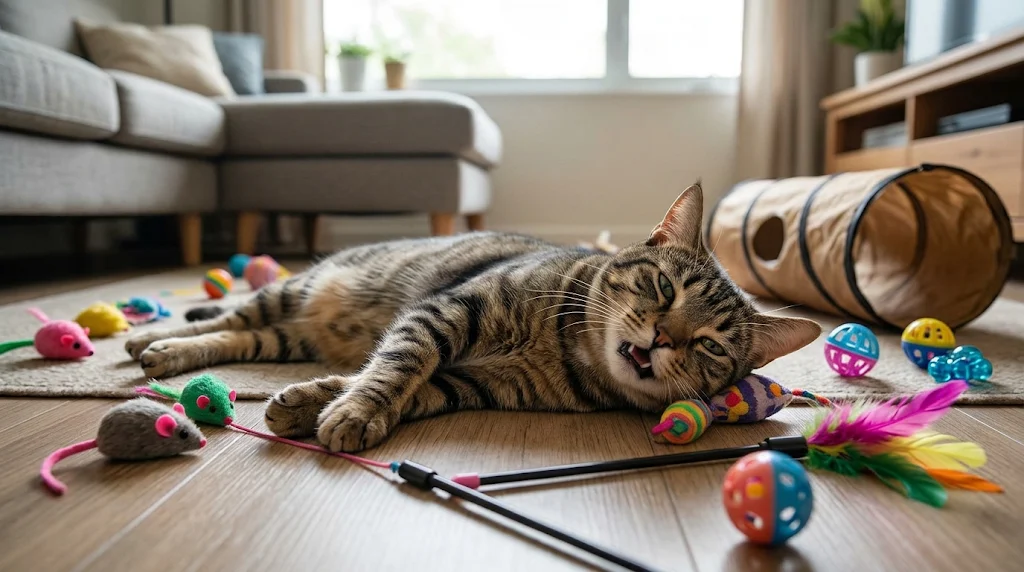
Your cat is chasing a feather wand across the living room, jumping over furniture, and racing after a toy mouse. It looks like they’re having the time of their life. But after a while, you might notice heavy breathing, a rapidly moving tail, or your cat suddenly biting your hand. That’s when you may wonder: can excessive playing harm cats?
Quick Answer: Yes, playing too intensely or for too long can cause physical exhaustion, muscle strains, joint injuries, overheating, and behavioral overstimulation in cats. Regular play is important for their health, but it should happen in short, manageable sessions with breaks. Watch your cat’s body language, let them rest when they lose interest, and never force them to keep playing.
The goal isn’t to make your cat completely exhausted. It’s to provide enough activity to keep them physically active and mentally satisfied without pushing them beyond their comfort level.
Is It Possible to Play With Your Cat Too Much?
Yes, but the answer depends on what you mean by too much.
Cats benefit from regular play because it gives them an outlet for their natural hunting instincts. Chasing, stalking, jumping, and pouncing help keep them active and mentally engaged.
However, a play session can become a problem when your cat gets too tired, too excited, or physically uncomfortable.
There are three main situations to understand:
- Physical overexertion: Your cat becomes too tired from intense running, jumping, or chasing.
- Behavioral overstimulation: Your cat becomes so excited or frustrated that they start biting, scratching, hissing, or acting aggressively.
- Physical injury: Rough play, repeated jumping, or sudden movements cause muscle or joint injuries.
These problems aren’t the same. A cat that starts swishing its tail and biting during play may be overstimulated rather than physically exhausted. A cat that suddenly limps after jumping may have an injury that needs veterinary attention.
The American Animal Hospital Association (AAHA) recommends short, regular play sessions rather than one long session. The right amount depends on your cat’s age, energy level, personality, and health.
7 Signs Your Cat Is Getting Too Much Play
Cats don’t always stop playing at the first sign of discomfort. Some become so focused on chasing a toy that they keep going even when they need a break.
Learning to recognize early warning signs can help prevent problems.
1. Panting or Breathing With an Open Mouth
This is one of the most important signs to watch.
Unlike dogs, cats don’t normally pant as a routine response to exercise. A cat may briefly pant after very intense play, particularly as a kitten, but it shouldn’t be treated as a normal goal or something to encourage.
If your cat starts breathing with an open mouth during play:
- Stop moving the toy immediately.
- Let your cat rest in a quiet, comfortable area.
- Make fresh water available.
- Keep an eye on their breathing as they settle down.
If the panting doesn’t stop, happens again with ordinary activity, or occurs while your cat is resting, contact your veterinarian. Panting accompanied by weakness, coughing, abnormal gum color, or collapse requires urgent veterinary attention.
The PetMD veterinary guide to cat panting explains that intense exercise can cause panting, but breathing problems and underlying medical conditions can look similar.
2. Your Cat Suddenly Lies Down and Refuses to Continue
Some cats naturally pause between bursts of activity. That’s normal.
However, if your cat repeatedly drops to the floor, struggles to get moving again, or seems unusually tired after playing, the session may be too intense.
Don’t wave the toy in their face to encourage them to continue. Let them decide whether they want another round.
A healthy play session should leave your cat interested and comfortable, not completely worn out.
3. Your Cat Starts Biting or Scratching During Play
Sometimes a cat begins a session gently but becomes increasingly rough.
You may notice:
- Biting your fingers or hands.
- Grabbing your arm with their front paws.
- Kicking with their back legs.
- Suddenly attacking your feet.
- Swatting at the toy with increased intensity.
This can happen when play becomes overstimulating or when the cat hasn’t learned appropriate play boundaries.
According to Cornell University’s feline behavior guidance, play aggression can involve stalking, chasing, pouncing, biting, and scratching.
Stop the interaction calmly. Avoid using your hands as toys, and redirect future play toward a wand toy or another appropriate object.
4. Your Cat’s Tail Starts Moving Rapidly
A rapidly twitching or lashing tail can indicate rising excitement, frustration, or irritation.
Pay attention if your cat also shows:
- Ears turning sideways or backward.
- Enlarged pupils.
- A stiff body.
- Skin twitching along the back.
- Sudden growling or hissing.
These signals suggest that your cat may be reaching their tolerance limit.
Don’t wait for a bite or scratch before ending the session. Give your cat some space.
5. Your Cat Starts Moving Awkwardly or Limping
Repeated jumping and sudden changes in direction can put stress on a cat’s muscles and joints.
You might notice:
- Limping after play.
- Stiff movements.
- Reluctance to jump onto familiar furniture.
- Holding one leg differently.
- Crying or reacting when a particular area is touched.
According to PetMD’s guide to sprains and strains in cats, overexertion from jumping, running, or rough play can cause soft-tissue injuries.
If your cat starts limping, stop play and prevent further jumping. Contact your veterinarian for advice, especially if the limp persists, your cat appears painful, or they won’t put weight on the leg.
6. Your Cat Becomes Unusually Irritable or Aggressive
A cat that was happily chasing a toy may suddenly hiss, growl, swat, or bite.
This doesn’t necessarily mean your cat has become aggressive.
They may be overstimulated, frustrated, frightened, or uncomfortable.
The important thing is to stop the interaction rather than trying to calm them by picking them up or petting them.
Our guide to why cats bite their owners explains how to recognize different biting patterns and respond appropriately.
7. Your Cat Starts Hiding or Avoiding You After Play
A cat that regularly needs to hide immediately after intense play may be feeling overwhelmed or stressed.
Give them access to a quiet hiding spot where nobody bothers them. Don’t pull them out or force another interaction.
If hiding is new or happens alongside appetite changes, reduced activity, or other unusual behavior, arrange a veterinary checkup.
What Can Happen If a Cat Plays Too Much?
Most healthy cats recover from ordinary play without a problem. However, repeatedly pushing a cat beyond their physical or behavioral limits can create several issues.
| Potential Problem | What May Happen |
|---|---|
| Physical exhaustion | Unusual tiredness and reduced interest in activity |
| Muscle strain | Pain, stiffness, or reluctance to move |
| Joint injuries | Limping or discomfort after jumping |
| Overheating | Excessive panting, weakness, or other heat-related symptoms |
| Behavioral overstimulation | Biting, scratching, hissing, or irritability |
| Frustration | Increased agitation, especially during unsuccessful chasing games |
Can Too Much Play Cause Muscle or Joint Injuries?
Yes. Cats can injure soft tissues when they run, jump, twist, or land awkwardly.
The risk may be greater for:
- Overweight cats carrying extra pressure on their joints.
- Cats with arthritis.
- Kittens that haven’t developed good movement control.
- Cats recovering from surgery or an injury.
- Cats with existing mobility problems.
For these cats, the answer isn’t to eliminate play. It’s to choose activities that match their physical abilities.
How Much Playtime Does a Cat Actually Need?
There isn’t one perfect daily playtime for every cat.
AAHA suggests an average of two or three interactive play sessions lasting around 10 to 15 minutes each. It also recommends adjusting the routine according to age, personality, activity level, and health.
These figures are a starting point, not a strict exercise prescription.
| Cat’s Life Stage | A Practical Approach |
|---|---|
| Young kittens | Several short play opportunities throughout the day |
| Adult cats | A few regular interactive sessions, adjusted to interest and energy |
| Senior cats | Shorter, gentler sessions with plenty of breaks |
| Overweight cats | Gradual, low-impact activity |
| Cats with arthritis or health problems | A veterinarian-guided exercise routine |
The Cats Protection guide to cat play also emphasizes that play frequency varies with age and individual preference.
Your cat’s behavior matters more than completing a particular number of minutes.
How to Play With Your Cat Without Overdoing It
You don’t need expensive toys or complicated exercise routines. A few simple changes can make play safer and more enjoyable.
1. Choose Short Sessions Instead of One Long Session
Try splitting play into a few sessions throughout the day.
For example:
- Morning: A short wand-toy session.
- Afternoon: A puzzle feeder or rolling toy.
- Evening: Another interactive session before dinner.
If your cat starts showing signs of fatigue or overstimulation, stop earlier.
2. Use Wand Toys to Control the Intensity
Wand toys allow your cat to chase and pounce without encouraging them to attack your hands.
Move the toy like natural prey. Let it move away, disappear briefly behind furniture, and pause before moving again.
Avoid making your cat jump repeatedly toward high shelves or slippery surfaces.
3. Let Your Cat Catch the Toy
A cat’s natural hunting sequence includes stalking, chasing, pouncing, and catching.
If your cat spends the entire session chasing something they can never catch, they may become frustrated.
The Battersea guide to playing with cats recommends allowing cats to complete parts of this natural hunting sequence.
Let your cat grab and bite a suitable toy before ending the session.
4. Be Careful With Laser Pointers
Laser pointers can encourage movement, but they don’t provide something physical for your cat to catch.
If you use one, never shine it into your cat’s eyes or encourage unsafe jumps. Finish by directing the light toward a physical toy or offering a small appropriate reward.
A study published in Animals found associations between more frequent laser-pointer play and several owner-reported repetitive behaviors. The study was observational, so it does not prove that laser pointers directly cause these problems.
Read the published research on laser-pointer play and repetitive behaviors for more context.
5. Keep Hands and Feet Out of the Game
Don’t encourage your cat to chase your fingers, bite your hands, or attack your feet under a blanket.
These habits can make rough play harder to manage as your cat grows.
Use toys that keep some distance between your hands and your cat’s teeth and claws.
6. Put Away Unsafe Toys After Play
String, ribbons, elastic bands, and wand toys can become dangerous if a cat chews or swallows them.
Use interactive toys under supervision and store them safely afterward. Check toys regularly for damaged pieces that could be swallowed.
7. Give Your Cat Time to Calm Down
Don’t abruptly turn an exciting game into rough handling or forced cuddling.
Slow the toy’s movement, allow a final catch, and give your cat time to settle.
A small meal or appropriate treat afterward may fit naturally into the routine, as long as it is included in their daily food allowance.
How to Adjust Playtime for Senior and Overweight Cats
Some cats need a different approach because of their age, weight, or health.
Senior Cats
Older cats can still enjoy chasing toys, batting objects, and exploring.
However, they may have reduced stamina or joint stiffness.
Try:
- Moving toys along the floor instead of high into the air.
- Using soft toys they can grab while lying down.
- Offering several brief sessions.
- Providing nonslip surfaces.
- Avoiding repeated jumps onto high furniture.
The Cats Protection senior cat guide recommends gentle, regular play that matches an older cat’s abilities.
Overweight Cats
Overweight cats may benefit from regular movement, but suddenly encouraging them to sprint or jump repeatedly isn’t a good starting point.
Begin with gentle activities such as:
- Slowly moving a wand toy across the floor.
- Encouraging short walks around the room.
- Using food puzzles.
- Placing toys at easy-to-reach locations.
Ask your veterinarian about a suitable exercise and weight-management plan, especially if your cat has difficulty moving.
Cats With Arthritis or Existing Health Conditions
Cats with arthritis, heart disease, respiratory problems, or recent injuries may need specific activity limits.
Don’t assume that an activity is safe simply because your cat appears interested.
Ask your veterinarian which movements are appropriate and whether any activities should be avoided.
What Should You Do If Your Cat Has Already Overplayed?
If your cat seems unusually tired after a long session, stop the activity and let them rest.
Here are some sensible steps:
- Move the toy away and allow your cat to settle.
- Provide a quiet, comfortable space.
- Keep fresh drinking water available.
- Avoid encouraging more running or jumping.
- Observe their breathing, movement, and general behavior.
If you notice limping or stiffness, prevent additional strenuous activity and contact your veterinarian.
Don’t massage a painful leg, force your cat to walk, or give human pain medication.
When Is Excessive Playing a Veterinary Emergency?
Some signs should never be ignored.
| Symptom | What to Do |
|---|---|
| Brief panting immediately after very intense play that settles with rest | Stop play and monitor closely |
| Panting that continues or returns without intense activity | Contact your veterinarian promptly |
| Limping or persistent stiffness | Arrange a veterinary examination |
| Excessive panting with drooling, vomiting, or weakness | Seek urgent veterinary attention |
| Pale, blue, or abnormal gum color | Emergency veterinary care |
| Collapse or severe breathing difficulty | Emergency veterinary care immediately |
Cornell University identifies excessive panting, drooling, vomiting, diarrhea, weakness, and collapse among the warning signs of heatstroke in cats.
If you suspect overheating, move your cat to a cooler area, gently wet their fur with cool rather than very cold water, and contact a veterinarian immediately.
Read Cornell’s feline heat-safety guidance.
Frequently Asked Questions
Can playing with my cat for an hour hurt them?
It depends on the type of activity and how the hour is divided. An hour of continuous, intense chasing is not a good idea. Several short sessions with rest and independent enrichment throughout the day are usually a better approach.
Can kittens overexercise?
Yes. Kittens have plenty of energy and may continue playing enthusiastically, but their growing bodies are still developing. Offer several short opportunities for play, provide safe toys, and allow them to rest whenever they choose.
Should I stop playing if my cat starts panting?
Yes. Stop the activity and allow your cat to recover. Cats don’t normally pant as readily as dogs. If the breathing doesn’t settle, occurs at rest, or comes with other concerning symptoms, seek veterinary advice.
Is it bad if my cat wants to play all day?
Not necessarily. Some cats have high energy levels and enjoy frequent short play sessions. The important thing is to provide appropriate breaks and avoid forcing prolonged activity.
Can too much play make a cat aggressive?
Overstimulation can lead to biting, scratching, swatting, or other aggressive-looking behavior. Stop the session when you notice warning signals and redirect future play toward appropriate toys.
How do I know if my cat is tired or just bored?
A bored cat may lose interest in one toy but become interested when you offer a different activity. A tired or uncomfortable cat may move more slowly, lie down repeatedly, show unusual breathing, or avoid movement. If you notice sudden changes or signs of pain, contact your veterinarian.
Play Should Be Fun, Not Exhausting
Playing with your cat is one of the simplest ways to support their physical health, mental stimulation, and relationship with you. But more activity isn’t always better.
Use short sessions, watch your cat’s body language, allow breaks, and choose toys that match their abilities. Most importantly, stop when your cat shows signs of discomfort or exhaustion.
A good play session should leave your cat happy, relaxed, and comfortable enough to come back for another game later.