
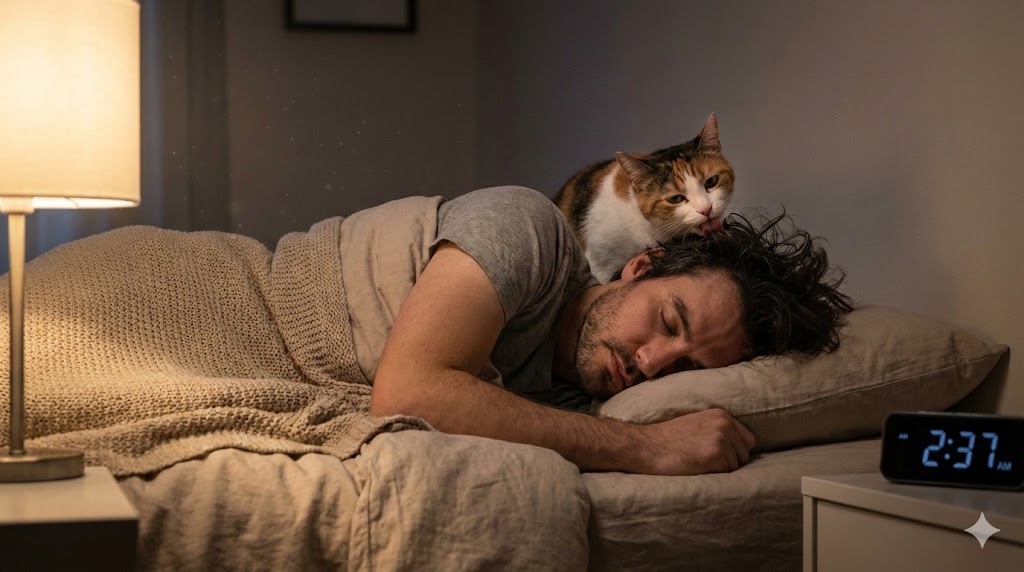
It is late at night. You feel a rough, sandpaper tongue on your head. You wake up and ask, why does cat lick hair? Do not worry, as this is a sign of pure love. But we must make sure it is safe for them. Let us find out why.
Why Does Cat Lick My Hair?
Here is the short answer to your question. You may wonder why cats lick hair. It is usually a sweet sign of love. But there are safety rules too.
- True Bonding: This is a cat hug. They groom you to show deep trust. It means you are part of their family group.
- Scent Marking: They mix their scent with yours. This tells the world that you belong to them. It makes them feel safe.
- Safety Warning: Be very careful with hair products. Minoxidil and essential oils are toxic to cats. Do not let them lick if you use these.
Why does Cat Lick Hair at Night
Ever notice how your cat chooses the quiet of night to turn into your personal hairdresser? It’s not random. Cats lick hair for reasons rooted in love, instinct, and comfort. When it happens after dark, it often carries even deeper meaning.
1. It’s Their Version of a Hug (Affection & Bonding)
This is the number one reason. In the wild, cats groom each other to build trust. It’s called allogrooming, a fancy word for social grooming. So when your cat licks your hair, they’re saying, “You’re part of my crew.”
It’s not just cute, it’s a connection. Especially at night, when the world is quiet, your cat may seek closeness. Grooming is how they express deep emotional safety. It’s more than licking it’s love.
2. They’re Marking What’s Theirs (Territory & Scent)
Your head isn’t just a head, it’s prime real estate. Cats have scent glands in their mouths and tongues. Licking you transfers their scent, marking you as “theirs.”
If your cat sleeps with you and licks your hair, they’re doing what they’d do in a bonded cat group: mixing scents to feel united. It may sound possessive, but in cat language, it’s pure devotion.
3. Your Shampoo Smells Like a Snack (Curiosity & Taste)
Many shampoos have fruity, minty, or floral scents that trigger curiosity. Cats are sensory-driven. They might be drawn to your hair because it smells interesting, warm, or even salty after a long day.
If your shampoo contains ingredients like coconut, lavender, or essential oils, that could be why they lick it. Some cats even prefer licking after a shower when your hair is damp and aromatic. But be cautious, some ingredients can be harmful (we’ll cover that soon).
4. It Calms Their Nerves (Emotional Comfort)
Licking isn’t always about you. Sometimes, it’s about them. Cats often lick themselves or others to self-soothe. It’s a calming action that helps reduce anxiety, just like a child hugging a blanket.
If your cat licks your hair more during stressful times after visitors leave, during loud noises, or after changes in routine it might be their way to settle themselves. Nighttime, with its stillness, is a natural moment for this.
Normal vs Problematic Hair Licking
A little lick now and then? Totally fine. But when it turns into an every-night ritual or your cat starts chewing your hair like it’s breakfast something deeper might be going on.
Let’s break down what’s normal and what’s not, so you can spot the difference with ease.
What’s Normal Cat Licking Behavior?
Most cats lick hair as a way to bond. It’s their version of petting you back. You might notice it:
- After playtime or cuddles
- When they’re feeling calm and secure
- Occasionally, not obsessively
This is completely healthy. Think of it like a fuzzy high-five.
When Licking Becomes a Concern
If your cat starts licking your hair every night, for long periods, or gets frustrated when you stop them it’s no longer cute. That kind of pattern may point to:
- Compulsive behavior from anxiety or boredom
- Overgrooming, often tied to stress or medical issues
- Pica a condition where cats eat non-food items (like hair)
You know your cat best. If the behavior seems tense, restless, or constant it’s a red flag, not a love letter.
Red Flags to Watch Out For
Here’s a quick checklist to help you spot when licking crosses the line:
| Behavior | Should You Worry? |
| Licks hair once in a while | No, totally normal |
| Licks hair every night, same time | Mild concern – monitor |
| Gets upset if stopped | Yes – potential compulsion |
| Starts chewing or eating hair | Yes – vet visit advised |
| Pulls your hair or claws your scalp | Yes – needs redirection |
| Also licking furniture or walls | Possible anxiety or illness |
If you spot any of these, don’t panic but don’t ignore it either. Talk to your vet, especially if the behavior is new or growing worse.
Breed-Specific Behaviors
Not all cats speak the same love language. Some will lick your hair like it’s their life mission. Others? They’ll look at you like you’ve lost your mind if you try to pet them too long.
That’s because different breeds show affection in different ways. When asking why cats lick hair, your cat’s breed may be part of the answer.
Cats Who Love to Groom Their Humans
Some cats are born snugglers. These breeds are known for their social, nurturing behavior and that includes grooming your hair:
- Ragdoll: Nicknamed “puppy cats” for a reason. They love close contact and may lick to bond.
- Siamese: Vocal, emotional, and people-oriented. Licking is often how they show love.
- Burmese: Loyal and gentle, these cats often groom those they trust deeply.
- Tonkinese: Super affectionate. They enjoy sleeping next to your head and grooming hair while they do.
- Oriental Shorthair: Energetic and attention-seeking, they often groom to stay close to their human.
These breeds are more likely to engage in allogrooming, especially during quiet, nighttime hours.
Independent Cats That Rarely Lick
Some breeds are more reserved. It doesn’t mean they don’t love you but they’re less likely to groom your hair:
- British Shorthair: Calm and polite, but not very hands-on.
- Russian Blue: Sweet but shy, they prefer quiet closeness over licking.
- Scottish Fold: May bond deeply, but rarely groom people.
- Norwegian Forest Cat: More independent, prefers to do its own thing.
- Persian: Known for regal chillness grooming you isn’t high on their to-do list.
If you own one of these breeds and still wonder why cats lick hair in your case, it might be less about breed and more about individual personality or stress.
Grooming Behavior by Breed: Quick Comparison
| Cat Breed | Likely to Lick Hair? | Grooming Style | Personality Notes |
| Ragdoll | ⭐⭐⭐⭐⭐ | Gentle, slow grooming | Affectionate, relaxed |
| Siamese | ⭐⭐⭐⭐☆ | Intense, emotional | Very people-focused |
| Burmese | ⭐⭐⭐⭐☆ | Nurturing, consistent | Loyal and loving |
| British Shorthair | ⭐☆☆☆☆ | Rare grooming | Reserved but sweet |
| Russian Blue | ⭐⭐☆☆☆ | Occasional, subtle | Shy but observant |
Tip: Breed gives a clue, but every cat is unique. Even a standoffish Persian might surprise you with a late-night grooming session when they’re feeling especially close.
Wet Hair vs Dry Hair: Does It Make a Difference?
If you’ve ever stepped out of the shower only to have your cat zoom in and start licking your hair like it’s catnip, you’re not alone. Many cat parents wonder why cat lick hair more when it’s wet and no, it’s not because they want to help you style it.
Turns out, the moisture, scent, and even the temperature of your hair all play a part in this quirky ritual.
Scent Matters More Than You Think
When your hair is wet, scents rise up more easily. That fancy shampoo you love? It might smell delicious to your cat. Fruity, floral, or minty scents can draw their attention, especially if your cat is scent-driven (many are).
Even unscented products can leave behind chemical traces or a salty scalp smell both of which can pique feline curiosity. To your cat, it’s a sniff-and-lick buffet.
The Texture Feels Good (or Weird)
Cats explore the world with their tongues. The texture of damp hair feels very different from dry hair. It moves, clumps, and cools in a way that fascinates them. Some cats enjoy the smooth drag of their tongue on wet strands; it’s almost like grooming fur.
Others might just be puzzled. That confusion sometimes triggers repetitive licking, especially in sensitive breeds.
Warmth and Comfort Play a Role
Post-shower hair is warm and soft. To your cat, that might mimic the comfort of a warm kitten belly or cozy fur coat. It makes them feel close, safe, and emotionally bonded.
Nighttime adds another layer: the house is calm, you’re relaxed, and your cat seizes the moment to bond, licking your freshly washed hair as a soothing bedtime ritual.
Why It Happens More at Night
Your hair may not be wetter at night, but your cat is more alert. Cats are crepuscular they’re most active at dawn and dusk. If your evening routine includes a shower, fresh clothes, and cuddles, you’ve unintentionally set the perfect “lick my hair” mood.
Health & Safety Warning: Is Your Hair Dangerous to Your Cat?
We love our cats. They love our hair. But here’s the part most owners don’t realize your hair might not be safe for them.
Cats don’t just lick for fun. They swallow tiny traces of whatever is on your scalp. That means your shampoo, conditioner, styling spray, or scalp serum could all end up inside your cat. And unfortunately, not all of it is harmless.
Some Products Are Silent Poisons
Ingredients that are safe for humans can be toxic to cats. If your hair products include any of the following, you need to keep your cat away:
- Minoxidil (found in hair loss treatments like Rogaine): can cause severe poisoning even in small amounts
- Tea Tree Oil: highly toxic to cats, even topically
- Essential Oils (eucalyptus, peppermint, lavender): may trigger drooling, vomiting, or liver damage
- Menthol & Camphor: often found in cooling or anti-dandruff products dangerous if licked or inhaled
Even if your product smells nice or is “natural,” it’s not necessarily safe. Cats’ livers can’t break down certain compounds the way ours can.
🐾 Pro Tip: If your product warns against ingestion by humans, it’s definitely not safe for your cat to lick.
Signs Your Cat Might Be Sick from Licking Hair
If your cat has accidentally ingested something toxic from your hair, they may not show signs right away. Here’s what to watch for:
- Excessive drooling
- Vomiting or diarrhea
- Trembling or weakness
- Labored breathing
- Sudden lethargy
- Unusual behavior like hiding or pacing
If you notice any of these signs and suspect it could be from licking your hair, contact your vet or a pet poison helpline immediately.
What to Do Instead
You don’t need to give up your nighttime bonding. But a few small changes can keep your cat safe:
- Check your hair products for toxic ingredients (especially Minoxidil and essential oils)
- Switch to pet-safe, fragrance-free options if licking is common
- Keep your hair up or wear a sleep cap if you’ve recently applied a risky product
- Distract your cat with a soft toy, calming music, or evening play to reduce licking urges
It’s sweet that your cat wants to groom you. But safety comes first. Loving them means protecting them even from our own shampoo.
When You Should Stop the Licking
It’s cute at first. A midnight lick here, a playful tongue there. But at some point, you ask yourself: “Should I let this continue?”
If you’re searching why cats lick hair, chances are the licking has gone from sweet to… relentless. Don’t worry, stopping the behavior doesn’t mean breaking the bond. You just need the right mix of redirection and gentle limits.
1. Redirect Gently, Don’t Scold
Cats don’t respond well to punishment. Raising your voice or pushing them away only causes stress and might make them lick more later as a coping mechanism.
Instead, try this:
- Gently move your head away or roll over
- Offer a soft toy or plush to lick instead
- Rub a scent-free cloth they’ve kneaded before (comfort by association)
Cats respond best to quiet, consistent signals. The goal isn’t to shame them, it’s to shift the behavior.
2. Add Play Before Bed
A tired cat is a calm cat. If your cat licks your hair mostly at night, add 10–15 minutes of playtime before bed.
Use a wand toy or feather teaser. Let them stalk, chase, and “catch.” After play, feed them a small snack. This mimics a natural hunt–eat–groom–sleep cycle.
It’s one of the easiest ways to reduce licking linked to boredom or restlessness.
3. Create Loving Boundaries
If your hair has unsafe products or if the licking disrupts your sleep, set a soft barrier without breaking trust.
Here’s how:
- Sleep with your hair up in a bun or silk wrap
- Use a light scarf or hoodie to cover your scalp
- Shift your cat to a soft bed beside yours (add your scent with a worn shirt)
You’re not rejecting their love. You’re just drawing the line between bonding and bedtime.
4. When to Call in the Pros
If your cat:
- Licks obsessively
- Chews and eats hair
- Gets agitated when stopped
- Shows other anxious behaviors
It’s time to call your vet. These may signal compulsive grooming, anxiety, or underlying illness.
A feline behaviorist or vet can help build a plan from calming aids to deeper health checks. This isn’t just about stopping the licking. It’s about understanding why your cat does it.
Quick Comparison: When Hair Licking Is Fine and When It’s Not
Sometimes, the answer to why cat lick hair is sweet and simple. Other times, it’s a signal you shouldn’t ignore. Use this table to decode what your cat’s licking might really mean and what you should (or shouldn’t) do about it.
| Cause | Normal or Not? | Emotional Meaning | Action Needed? |
| Bonding lick | Normal | Trust / Love | None – enjoy the moment |
| Licking shampoo scent | Normal but risky | Curiosity | Check for toxins |
| Obsessive licking | Not normal | Anxiety / Stress | Gentle redirection |
| Hair chewing | Dangerous | Compulsive behavior | Vet visit needed |
When in doubt, trust your gut. If your cat’s behavior feels intense, strange, or just “off,” it’s always safer to get a professional opinion.
Conclusion: A Strange Habit, A Strong Bond
Let’s be real, waking up to a sandpaper tongue in your hair isn’t what most people dream of. But in your cat’s world, it’s a high compliment. If you’ve ever wondered why cat lick hair, the answer is simple and sweet: it’s their way of saying you belong.
This quirky grooming ritual is part affection, part instinct, and sometimes, part stress relief. For most cats, it’s harmless and even heartwarming. For some, it can signal anxiety or health issues hiding beneath the surface.
So next time your furry friend gives your hair a lick, smile but stay smart. Know the signs, set gentle boundaries, and always keep safety in mind. And if the licking feels off, trust your gut. A quick chat with your vet can make all the difference.
Because love should be weird but never risky.
FAQ: Why Cat Lick Hair – Common Questions Answered
Why does my cat lick my hair only at night?
Cats are more active during dawn and dusk. Nighttime is quiet, calm, and ideal for bonding. Licking your hair is often their way of showing love and claiming comfort.
Is it bad if my cat eats my hair?
Yes, eating hair can lead to digestive issues or blockages. If your cat chews or swallows hair, it’s best to stop the behavior and consult your vet.
What shampoos are unsafe for cats?
Avoid products with minoxidil, tea tree oil, essential oils, menthol, or camphor. These ingredients can be toxic even in small amounts if ingested by your cat.
Do certain breeds lick more than others?
Yes, affectionate breeds like Ragdolls, Siamese, and Burmese are more likely to groom their humans. Independent breeds tend to show love in other ways.
How do I stop my cat from licking my hair?
Use gentle redirection, play with your cat before bed, or cover your hair. Avoid punishment it causes stress and may worsen the habit.
Refference:
PetMD – Cat Grooming Behavior
https://www.petmd.com/cat/behavior/why-does-my-cat-groom-me
Details the reasons behind mutual grooming, social bonding, and feline behavior cues.
Cats.com – Hair Licking Causes
https://cats.com/why-does-my-cat-lick-my-hair
Explains common motivations for licking, including affection, anxiety, and sensory attraction.
ASPCA – Toxic Household Items for Cats
https://www.aspca.org/pet-care/animal-poison-control/cats-plant-list
Lists toxic substances including essential oils and hair product ingredients dangerous to cats.